- English
- French
- German
- Portuguese
- Spanish
- Russian
- Japanese
- Korean
- Arabic
- Greek
- German
- Turkish
- Italian
- Danish
- Romanian
- Indonesian
- Czech
- Afrikaans
- Swedish
- Polish
- Basque
- Catalan
- Esperanto
- Hindi
- Lao
- Albanian
- Amharic
- Armenian
- Azerbaijani
- Belarusian
- Bengali
- Bosnian
- Bulgarian
- Cebuano
- Chichewa
- Corsican
- Croatian
- Dutch
- Estonian
- Filipino
- Finnish
- Frisian
- Galician
- Georgian
- Gujarati
- Haitian
- Hausa
- Hawaiian
- Hebrew
- Hmong
- Hungarian
- Icelandic
- Igbo
- Javanese
- Kannada
- Kazakh
- Khmer
- Kurdish
- Kyrgyz
- Latin
- Latvian
- Lithuanian
- Luxembou..
- Macedonian
- Malagasy
- Malay
- Malayalam
- Maltese
- Maori
- Marathi
- Mongolian
- Burmese
- Nepali
- Norwegian
- Pashto
- Persian
- Punjabi
- Serbian
- Sesotho
- Sinhala
- Slovak
- Slovenian
- Somali
- Samoan
- Scots Gaelic
- Shona
- Sindhi
- Sundanese
- Swahili
- Tajik
- Tamil
- Telugu
- Thai
- Ukrainian
- Urdu
- Uzbek
- Vietnamese
- Welsh
- Xhosa
- Yiddish
- Yoruba
- Zulu
What Is a 300kg Vertical Plastic Particle Mixer?
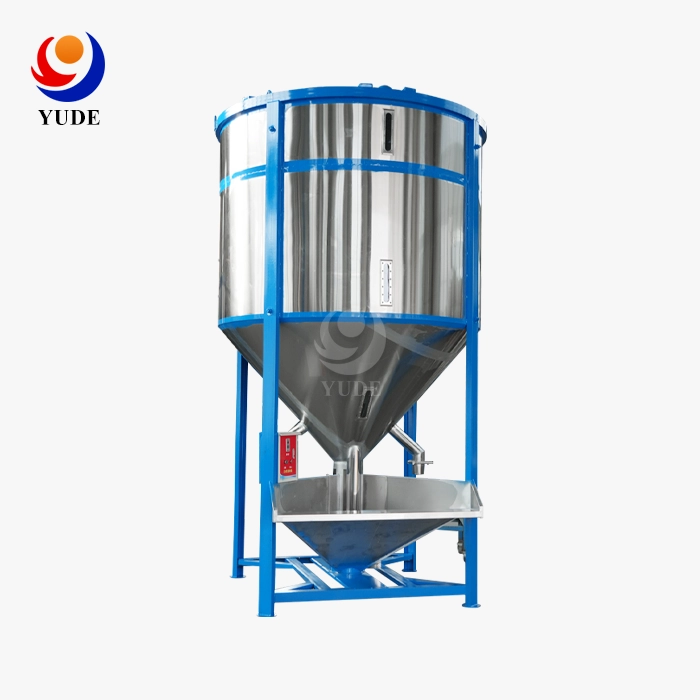
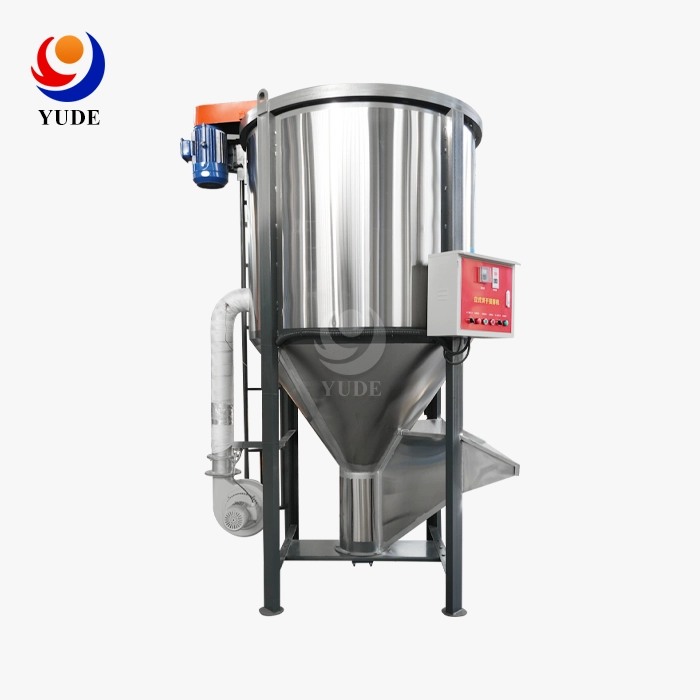
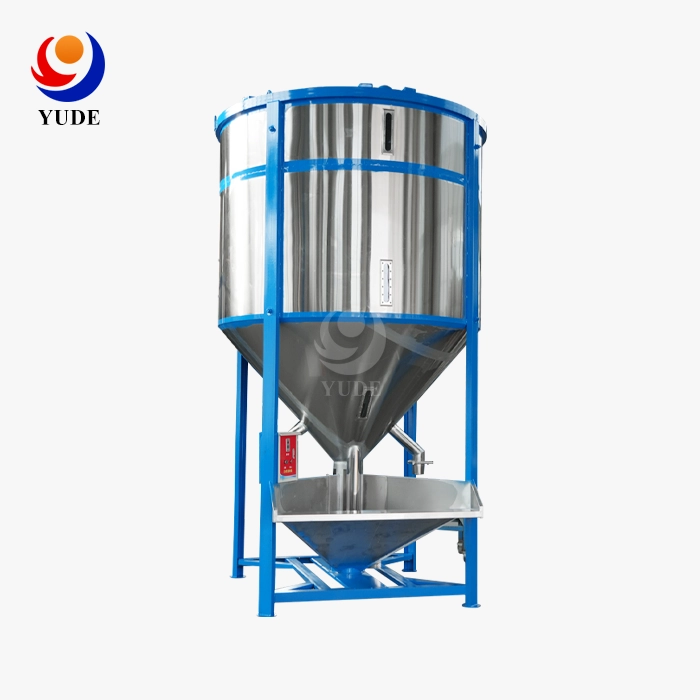
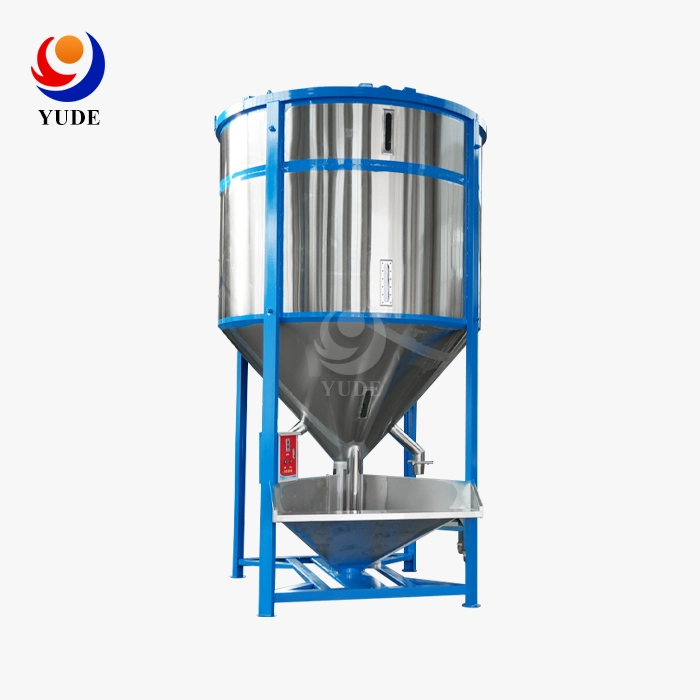
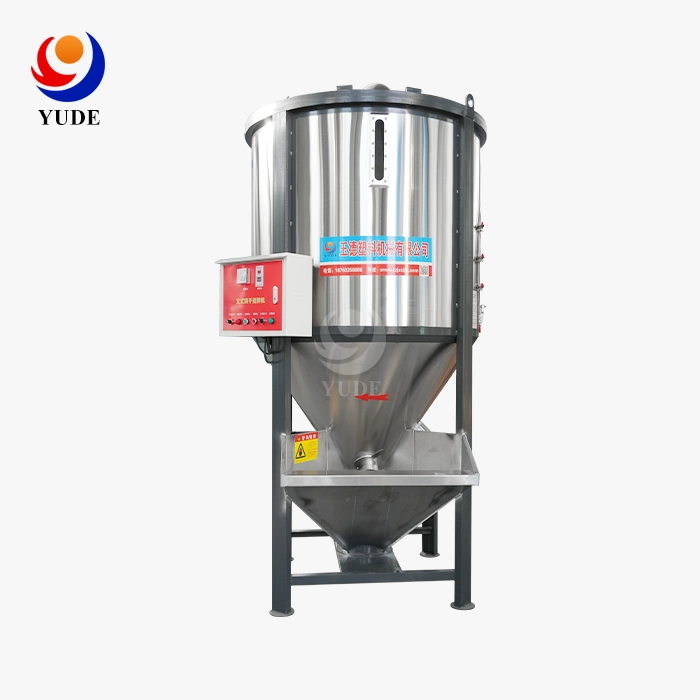
What Is a 300kg Vertical Plastic Particle Mixer? A 300kg vertical plastic particle mixer represents an industrial-grade blending system engineered for precise homogenization of plastic raw materials. This equipment handles 300 kilograms of material per batch cycle through vertical spiral circulation technology. The machine lifts granules from the bottom using a helical screw, dispersing them in an umbrella pattern at the top for optimal mixing uniformity. This design ensures consistent color distribution, proper additive integration, and eliminates material stratification across different plastic types including PE, PP, ABS, and PVC particles.
The plastic manufacturing industry demands precision at every stage, and material preparation represents a critical foundation for quality production. Understanding vertical mixing technology becomes essential for procurement professionals seeking reliable, efficient solutions for their operations.
The Problems It Solves in Modern Plastic Manufacturing
Modern plastic processing faces persistent challenges that directly impact product quality and production efficiency. Color inconsistency ranks among the most costly issues, where poor masterbatch distribution creates visible streaking in finished products. This problem particularly affects automotive components and consumer electronics where aesthetic standards remain uncompromising. Material segregation presents another significant challenge. Different plastic particles naturally separate based on density variations, creating uneven mechanical properties throughout the final product. When heavy additives like calcium carbonate settle separately from lighter base resins, the resulting inconsistency can compromise structural integrity and performance specifications.
Regrind incorporation adds complexity to the mixing equation. Post-consumer recycled content must blend seamlessly with virgin materials to maintain consistent melt flow characteristics. Poor integration leads to processing instabilities, dimensional variations, and potential equipment damage during injection molding or extrusion operations. Traditional horizontal mixers often struggle with these challenges due to inadequate circulation patterns and extended mixing cycles, whereas the 300kg Vertical Plastic Particle Mixer overcomes these issues through efficient vertical circulation. Dead zones within horizontal chambers prevent complete material movement, while longer processing times increase energy consumption and heat generation that can degrade temperature-sensitive resins.
The vertical mixing approach addresses these pain points through enhanced circulation dynamics. Material movement follows a predictable pattern that ensures every particle experiences equivalent exposure throughout the mixing cycle. This systematic approach eliminates guesswork from the blending process while delivering measurable improvements in batch consistency.
Core Features & Functionality Deep Dive
The vertical spiral circulation system forms the heart of this mixing technology. A centrally mounted helical screw operates at optimized speeds between 250-300 RPM, lifting material from the bottom collection zone to the upper distribution area. This controlled elevation creates a fountain effect where particles scatter in a controlled umbrella pattern before gravity returns them to the base. Material construction emphasizes durability and hygiene standards critical for plastic processing applications. Contact surfaces utilize high-grade stainless steel (SUS201 or SUS304) to prevent contamination and facilitate thorough cleaning between different material types. The mirror-polished interior finish eliminates particle entrapment while resisting chemical interaction with various plastic additives.
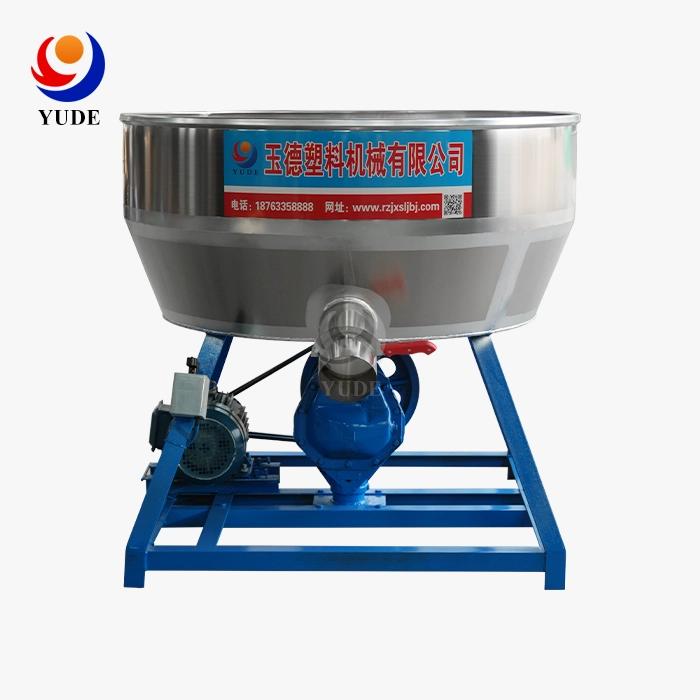
The 500-liter total capacity accommodates approximately 300kg of standard plastic pellets, calculated at typical bulk densities of 0.6-0.8 g/cm³. Effective mixing volume reaches 80% or higher, ensuring adequate headspace for proper circulation while maximizing batch efficiency. This capacity targets medium-scale production requirements without the excessive footprint of larger industrial systems. The 300kg Vertical Plastic Particle Mixer balances performance and energy efficiency through a 3–4kW induction motor system. Its belt drive transmission delivers smooth torque while reducing mechanical stress on drive components. This relatively modest power requirement results in lower operating costs compared with high-speed intensive mixers.
Mixing uniformity achieves 98% or better across properly sized batches, meeting stringent quality standards for critical applications. This performance level satisfies automotive industry requirements where color matching tolerances remain extremely tight. Single batch cycles complete within 8-15 minutes depending on material characteristics and desired blend specifications. Safety features integrate throughout the design to protect operators and equipment. Overload protection prevents motor damage during unexpected material jams or mechanical resistance. Inspection door interlocks disable operation when access panels remain open, preventing accidental contact with moving components.
Technology Explained: Vertical Circulation Principles
Vertical mixing technology leverages gravitational forces combined with mechanical elevation to create superior particle distribution compared to horizontal alternatives. The physics underlying this approach relies on controlled material flow patterns that eliminate stagnant zones while providing consistent agitation energy throughout the batch. The helical screw design incorporates specific pitch angles and flight configurations optimized for plastic particle characteristics. Unlike simple conveying screws, mixing screws feature interrupted flights and varying pitch sections that promote lateral particle movement during vertical transport. This design prevents material from simply riding up the screw surface without proper intermixing.
Discharge timing becomes critical for achieving optimal results. The umbrella dispersion pattern distributes material across the full tank diameter, ensuring peripheral particles receive equal circulation opportunities. Particle trajectory calculations determine the ideal screw speed that maximizes distribution while preventing excessive impact forces that could damage fragile additives. Temperature management receives careful attention throughout the mixing process. The vertical design naturally dissipates frictional heat through the extended surface area of the tank walls. Air circulation around the exterior chamber provides additional cooling capacity during extended mixing cycles or when processing heat-sensitive materials.
Material flow dynamics change based on particle size distribution and shape characteristics. Spherical pellets behave differently than irregular regrind flakes, requiring adjustment of operating parameters to maintain consistent results. The flexibility to modify screw speeds and cycle times accommodates various material combinations within a single piece of equipment.
Key Advantages Over Traditional Mixing Methods
Space efficiency represents a compelling advantage for facilities operating under floor space constraints. The vertical configuration requires approximately 60% less floor area compared to equivalent-capacity horizontal ribbon blenders. This compact footprint allows installation in existing production areas without extensive facility modifications. Energy consumption remains significantly lower than high-intensity mixing alternatives. The gravity-assisted circulation reduces mechanical work requirements while achieving superior uniformity. Operating costs decrease proportionally, improving overall production economics particularly for high-volume applications.
Cleaning accessibility surpasses horizontal mixer designs through the open-top configuration. Complete interior access enables thorough cleaning between different materials or colors without disassembly requirements. This capability proves essential for facilities processing multiple product lines or custom color formulations. Material discharge occurs through gravity flow from a bottom outlet, eliminating residual material retention common in horizontal designs. Complete evacuation reduces waste while preventing cross-contamination between successive batches. The discharge height accommodates standard bulk containers without additional material handling equipment.
Maintenance requirements remain minimal due to the simplified drive system and robust construction. Single-point lubrication systems service the main drive bearing, while the open design allows visual inspection of internal components during operation. Scheduled maintenance typically involves only belt tension adjustment and bearing lubrication. Noise levels stay below 80dB during normal operation, meeting industrial workplace safety standards without additional sound attenuation. This acoustic performance allows installation near other production equipment or administrative areas without creating disturbances.
Potential Limitations & Considerations
Batch processing inherently limits continuous production workflows compared to continuous mixing systems. Operations requiring constant material flow must account for batch changeover time and scheduling coordination. However, many plastic processing applications naturally operate in batch modes, making this limitation less significant. Material bridging can occur with certain particle shapes or moisture-contaminated materials. Cohesive powders or flake materials may form bridges across the tank diameter, interrupting proper circulation. Pre-screening and moisture control measures typically prevent these issues from affecting normal operations.
Capacity constraints may limit applicability for very large-scale production facilities. The 300kg batch size suits medium-scale operations but may require multiple units for high-volume applications. Economic analysis should compare multiple smaller units against single large-capacity alternatives. Initial investment costs exceed simple tumble mixers or basic blending equipment. However, the improved mixing quality and reduced cycle times typically justify the additional expense through enhanced product quality and reduced material waste. Total cost of ownership calculations should include these operational benefits.
Operator training requirements ensure proper parameter adjustment for different material combinations. While operation remains straightforward, optimizing cycle times and screw speeds for various applications requires understanding of material flow principles and mixing theory.
Vertical Mixers vs. Competition Analysis
Horizontal ribbon blenders represent the most common alternative for plastic particle mixing applications. These systems utilize helical ribbons within a horizontal trough to create material circulation. While effective for many applications, horizontal mixers require significantly more floor space and often struggle with complete material evacuation. Tumble mixers may offer lower initial costs, but they deliver inferior mixing uniformity and require longer cycle times compared with the 300kg Vertical Plastic Particle Mixer. The random motion within rotating drums cannot achieve the systematic circulation patterns of screw-based systems. Quality-critical applications typically require the enhanced performance of vertical circulation technology.
High-intensity mixers deliver rapid blending through aggressive mechanical action but generate substantial heat that can degrade thermoplastic materials. These systems work well for heat-stable materials but pose risks for temperature-sensitive formulations. The gentler action of vertical mixers preserves material integrity while achieving excellent uniformity. Pneumatic conveying mixers transport materials through pipelines while providing blending action. These continuous systems suit very high-volume applications but struggle with precise additive incorporation and offer limited flexibility for varying formulations. Batch-oriented vertical mixers provide superior control for custom blending requirements.
Target Audience & Ideal Use Cases
Injection molding facilities represent primary applications for 300kg capacity mixers. These operations require consistent color distribution and proper additive incorporation to prevent defects like flow marks or mechanical property variations. The batch size aligns perfectly with typical injection molding material consumption rates. Extrusion operations benefit from the enhanced filler distribution achieved through vertical mixing. Pipe and profile manufacturers particularly value the elimination of density-based segregation that can cause dimensional variations or pressure rating failures in finished products.
Recycling facilities utilize these mixers to blend virgin materials with post-consumer regrind streams. The controlled circulation ensures homogeneous melt flow characteristics despite the inherent variability of recycled content. This capability enables higher regrind percentages while maintaining product quality standards. Custom compounding operations rely on precise additive incorporation for specialized formulations. The systematic mixing action ensures uniform distribution of colorants, flame retardants, UV stabilizers, and other performance modifiers throughout the base resin matrix.
Medium-scale manufacturers find the 300kg capacity optimal for their production volumes without excessive material inventory requirements. The equipment scales appropriately for facilities processing 1-5 tons of material per shift while maintaining operational flexibility.
Conclusion
The 300kg vertical plastic particle mixer represents proven technology for achieving superior blending results in medium-scale plastic processing applications. Its combination of space efficiency, energy conservation, and excellent mixing uniformity addresses critical industry requirements while providing operational flexibility. As plastic recycling demands increase and quality standards tighten, vertical mixing technology will continue expanding across diverse manufacturing sectors. Investment in reliable mixing equipment pays dividends through improved product consistency, reduced waste, and enhanced production efficiency that supports long-term competitive advantages.
FAQ
How does mixing time vary with different plastic materials?
Mixing time depends on particle size, density differences, and additive loading levels. Standard pellet blends typically complete within 8-10 minutes, while incorporating fine powders or high-density fillers may require 12-15 minutes. Regrind integration often needs extended cycles due to irregular particle shapes and size distributions.
Can the mixer handle moisture-sensitive materials like PET or PC?
The basic mixing model handles dry materials effectively, but moisture-sensitive resins benefit from the drying-enabled version. Standard atmospheric mixing can process properly pre-dried materials, but integrated drying capability provides superior moisture control for hygroscopic plastics.
What maintenance schedule ensures optimal performance?
Regular maintenance includes weekly belt tension inspection, monthly bearing lubrication, and quarterly interior cleaning with appropriate solvents. Annual motor service and drive system alignment maintain long-term reliability. Most facilities achieve 5+ years of trouble-free operation with proper maintenance protocols.
Partner with Yude Plastic Machinery for Superior Mixing Solutions
Yude Plastic Machinery stands as a trusted 300kg vertical plastic particle mixer manufacturer with over a decade of expertise serving global plastic processing industries. Our engineering team understands the critical balance between mixing efficiency and material preservation, delivering equipment that consistently exceeds performance expectations. With comprehensive technical support, rapid delivery capabilities, and competitive pricing structures, we provide the reliability your operations demand. Contact our specialists at sales@yudemachinery.com to discuss your specific application requirements and discover how our vertical mixing technology can enhance your production quality.
References
1. Zhang, L., et al. "Mixing Efficiency Analysis in Vertical Screw Mixers for Plastic Particle Processing." Journal of Polymer Engineering, Vol. 41, No. 3, 2023, pp. 215-228.
2. Thompson, R.K. "Industrial Mixing Equipment Design Principles for Thermoplastic Materials." Plastics Processing Technology Handbook, 4th Edition, Industrial Press, 2022.
3. Martinez, C.A. and Johnson, P.D. "Comparative Study of Mixing Uniformity in Vertical vs. Horizontal Plastic Particle Blenders." International Polymer Processing, Vol. 38, No. 2, 2023, pp. 145-156.
4. Chen, H. "Energy Efficiency Optimization in Vertical Mixing Systems for Plastic Manufacturing." Energy and Materials in Manufacturing, Vol. 15, 2022, pp. 89-102.
5. Anderson, M.R. "Quality Control Methods for Plastic Particle Mixing Operations." Polymer Testing and Quality Assurance, Vol. 29, No. 4, 2023, pp. 331-347.
6. Kim, S.J., et al. "Advanced Mixing Technologies for Recycled Plastic Integration in Manufacturing Processes." Sustainable Plastic Processing, Vol. 12, No. 1, 2023, pp. 78-95.
Learn about our latest products and discounts through SMS or email