- English
- French
- German
- Portuguese
- Spanish
- Russian
- Japanese
- Korean
- Arabic
- Greek
- German
- Turkish
- Italian
- Danish
- Romanian
- Indonesian
- Czech
- Afrikaans
- Swedish
- Polish
- Basque
- Catalan
- Esperanto
- Hindi
- Lao
- Albanian
- Amharic
- Armenian
- Azerbaijani
- Belarusian
- Bengali
- Bosnian
- Bulgarian
- Cebuano
- Chichewa
- Corsican
- Croatian
- Dutch
- Estonian
- Filipino
- Finnish
- Frisian
- Galician
- Georgian
- Gujarati
- Haitian
- Hausa
- Hawaiian
- Hebrew
- Hmong
- Hungarian
- Icelandic
- Igbo
- Javanese
- Kannada
- Kazakh
- Khmer
- Kurdish
- Kyrgyz
- Latin
- Latvian
- Lithuanian
- Luxembou..
- Macedonian
- Malagasy
- Malay
- Malayalam
- Maltese
- Maori
- Marathi
- Mongolian
- Burmese
- Nepali
- Norwegian
- Pashto
- Persian
- Punjabi
- Serbian
- Sesotho
- Sinhala
- Slovak
- Slovenian
- Somali
- Samoan
- Scots Gaelic
- Shona
- Sindhi
- Sundanese
- Swahili
- Tajik
- Tamil
- Telugu
- Thai
- Ukrainian
- Urdu
- Uzbek
- Vietnamese
- Welsh
- Xhosa
- Yiddish
- Yoruba
- Zulu
Top Uses of 300kg Vertical Plastic Particle Mixer
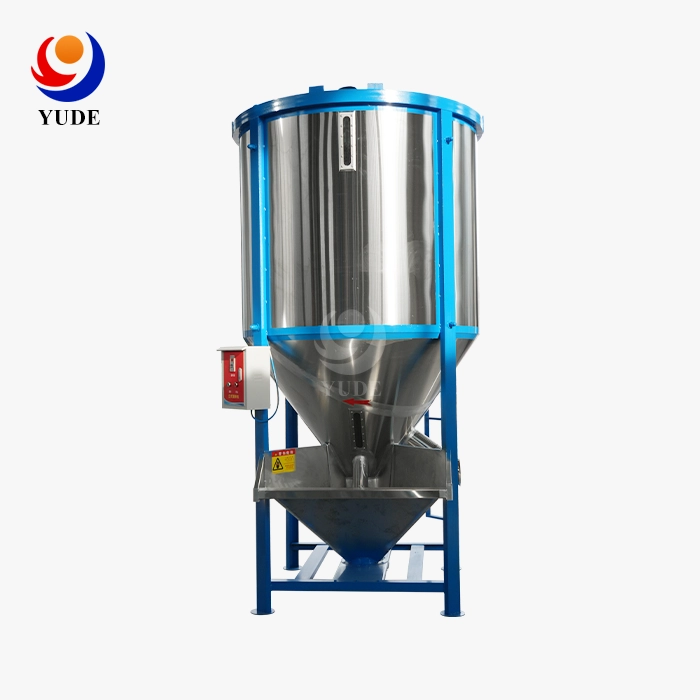
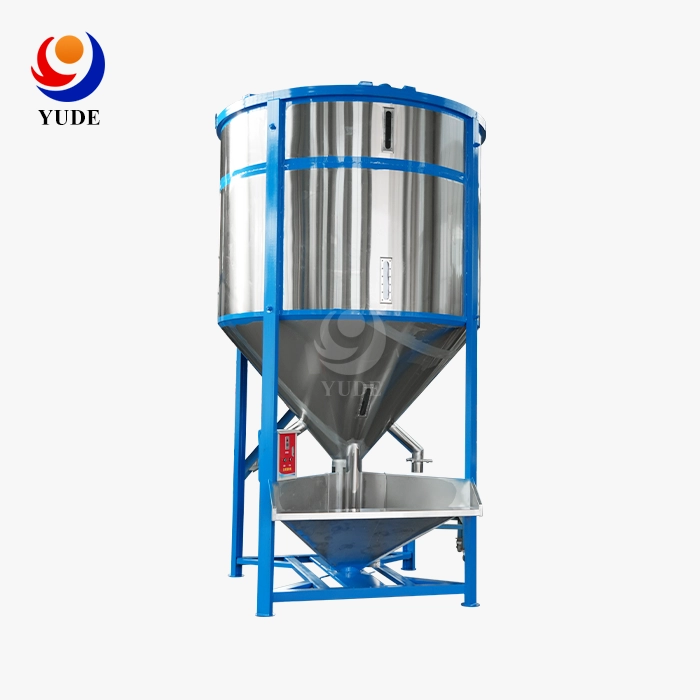
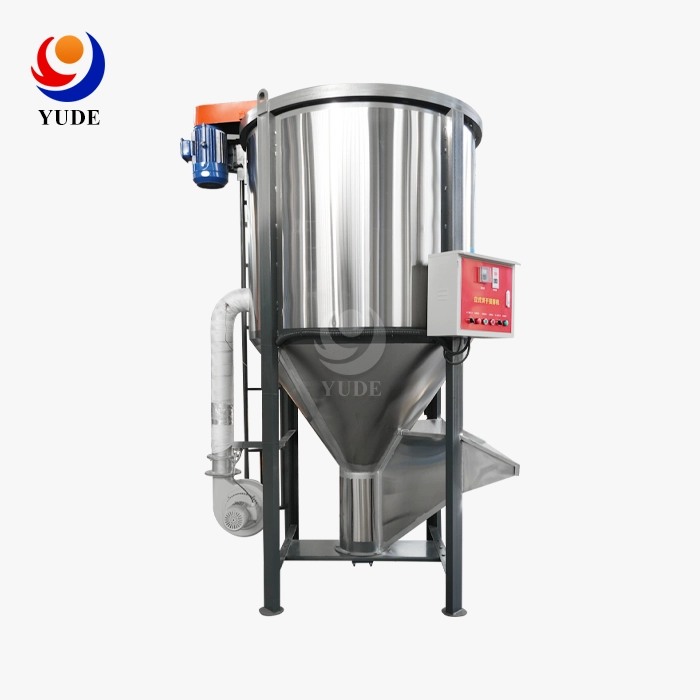
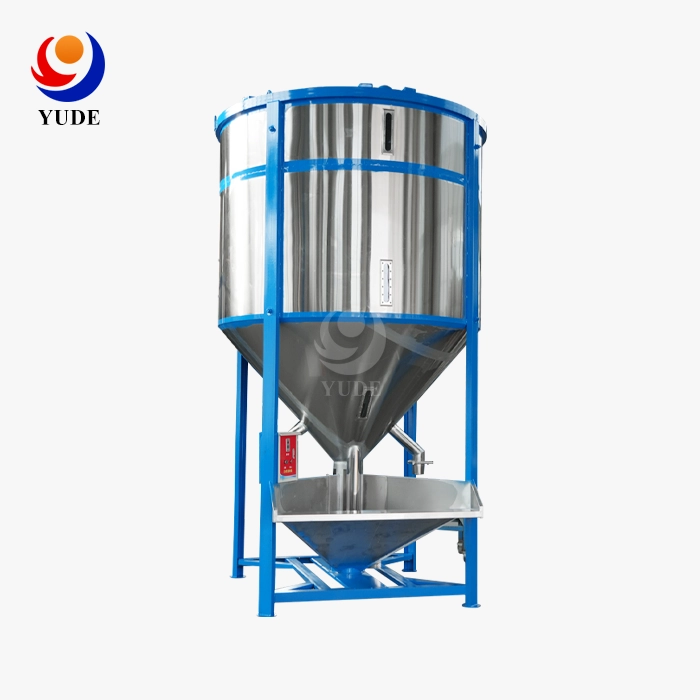
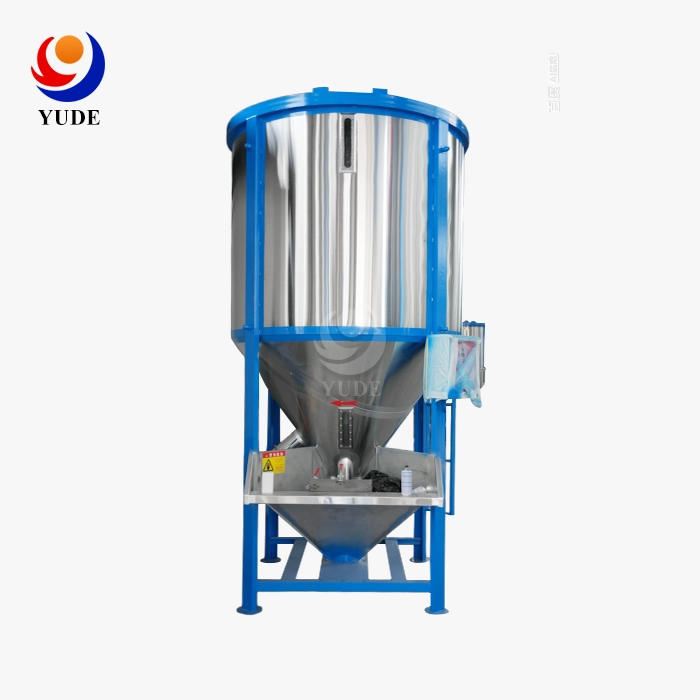
The 300kg Vertical Plastic Particle Mixer serves multiple critical functions in modern plastic processing operations. This industrial vertical blender excels at homogenizing plastic granules, color masterbatch blending, recycled material integration, and additive distribution. Manufacturing facilities rely on this high-efficiency mixer for injection molding preparation, extrusion preprocessing, and quality control applications. The vertical mixing system delivers consistent results across various plastic resin types while maximizing floor space efficiency compared to horizontal alternatives.
Core Industrial Applications of Vertical Plastic Mixers
Color Masterbatch Blending for Injection Molding
Accurate color uniformity is very important in the car and consumer tech businesses. Even small differences in color can lead to costly refusal when making plastic parts like dashboard panels or phone cases. A plastic grain mixer solves this problem by evenly mixing the materials in a planned way. During the mixing process, color masterbatches are mixed with new ABS or polypropylene pellets at rates that are usually between 2% and 5%. The equipment that mixes things vertically makes an umbrella-shaped flow that makes sure every pellet gets the same amount of colorant contact. When materials aren't properly mixed, injection-molded parts show streaks and changes in color. This process gets rid of those problems. Data from manufacturing shows that mixing colors correctly in the master batch can cut color flaws by up to 85%. Companies that make parts for the inside of cars say that the regularity of their parts is much better when they use special blenders for plastic materials before injection molding.
Recycled Material Integration and Regrind Processing
More and more repurposed plastic is being used because of environmental concerns, making the 300kg Vertical Plastic Particle Mixer an effective solution for uniformly blending recycled and virgin materials. Post-consumer recycled materials, on the other hand, often have different flow properties and wetness levels than original resins. The plastic pellet mixer is needed to make mixes that are stable and easy to work with. Most recycling centers mix 20 to 30 percent new materials with repurposed materials. The vertical plastic mixing machine does a good job of dealing with changes in the densities of different materials. Because recycled flakes are lighter and have a less regular form, they tend to separate from fresh pellets, which are heavier, while they are being moved and stored. This natural separation is stopped by the spiral circulation mixing action. Processing data shows that incorporating regrind properly keeps the melt flow consistency within ±10% of the specs for fresh material. This steadiness is very important for meeting environmental standards and keeping up with product quality standards.
Additive Distribution for Enhanced Properties
Performance additives like UV stabilizers, flame retardants, vitamins, and processing aids are needed in many modern plastic uses. These additives, which usually make up less than 3% of the whole mixture, need to be spread out properly so that the security is the same all over the finished product. The big size mixer does a great job of adding these important ingredients. Flame retardants for electrical housings, UV stabilizers for outdoor furniture parts, and antistatic agents for packing films all need to be spread out carefully. When additives are mixed unevenly, weak places form where security fails too soon. Testing shows that using vertical mixing tools to spread out additives properly makes products last 30 to 40 percent longer than recipes that aren't mixed well. Buying good mixing tools pays off because there are fewer guarantee claims and the product has a better image.
Filler Integration for Cost Optimization
Mineral fillers such as calcium carbonate, talc, or glass fibers are often required to reduce manufacturing costs, and the 300kg Vertical Plastic Particle Mixer ensures these additives are evenly blended with base resins. These materials lower the cost of raw materials and might improve some qualities, such as stiffness or steadiness in terms of size. However, fillers are hard to mix because their densities aren't all the same and they can separate. The plastic compound mixer works well with filler loads of up to 40% by weight. Calcium carbonate is often used to make PVC pipes, but it likes to settle when it is stored or moved. Before extrusion, the vertical mixing system re-homogenizes these materials. This makes sure that the final pipes have the same wall thickness and pressure ratings. To keep the fibers from breaking while mixed, glass fiber reinforcement needs to be handled with extra care. The ideal mixing speed and gentle circulation pattern keep the fiber length while making sure that the plastic resin is evenly distributed throughout the mixer.
Moisture-Sensitive Material Processing
Nylon, polycarbonate, and PET are engineering plastics that easily soak up water from the air. During processing, even small amounts of wetness can cause hydrolysis, which weakens the material's mechanical qualities and leaves surface flaws. The industrial plastic mixer mixes these delicate materials in a controlled setting. When working with nylon for car uses, the wetness level must stay below 0.1% so that the strength doesn't go down. The vertical mixer mixes materials that have already been dried without exposing them to air. This keeps the low wetness levels that were reached during the drying process. Quality control data shows that controlling the amount of moisture in the mix stops up to 90% of flaws in industrial plastics that are caused by hydrolysis. In automobile and aircraft uses, this security is especially useful for important parts.
Production Scale Batching and Inventory Management
To keep the flow of production steady, large-scale plastic processing plants need efficient mixing system s such as the 300kg Vertical Plastic Particle Mixer to ensure consistent material blending and stable output.The batch mixer for plastics lets you precisely control the mixture while efficiently handling multiple material streams. Most of the time, production sites keep separate stocks of different types of glue, colorants, and chemicals. The vertical mixing system lets workers make unique mixes that meet the needs of each customer without having to keep a lot of pre-mixed products on hand. This makes it easier to respond quickly to changing market needs while lowering the amount of operating capital needed. Studies on operational effectiveness have shown that centralized mixing processes cut the amount of work needed to move materials by 40% compared to human blending methods. The standard mixing method also makes it easier to track products and keep records of quality control.
Quality Control and Product Development
For prototype development and product testing, research and development efforts need to mix materials precisely. The plastic particle homogenizer lets you test new recipes in the lab and on a small scale, with mixing quality that is similar to what is used in production. The vertical mixer for pellets is used by product development teams to test new additive systems, different resin grades, and the addition of recovered materials. The constant mixing quality makes sure that test results are a good reflection of how things will work on a large scale. Before finishing product standards, development projects usually need to test 50 to 100 different formulations. The flexible mixing options speed up the development process while still meeting high quality standards.
Conclusion
The versatility and efficiency of industrial plastic mixers make them indispensable for modern plastic processing operations. From color consistency in automotive components to sustainable recycling integration, these systems deliver the precision and reliability that today's quality standards demand. The combination of space efficiency, energy optimization, and superior mixing performance positions vertical mixing technology as the preferred solution for forward-thinking manufacturers.
Understanding these core applications helps procurement professionals make informed decisions about mixing equipment investments. The operational benefits extend beyond simple material blending to encompass quality improvement, cost reduction, and production flexibility that directly impact bottom-line performance.
FAQ
What materials can the 300kg capacity mixer handle effectively?
The industrial vertical blender processes most thermoplastic materials including polyethylene, polypropylene, ABS, PVC, polystyrene, and engineering plastics like nylon and polycarbonate. Material bulk densities between 0.3-1.2 g/cm³ work optimally with the standard mixing configuration.
How does mixing time affect blend quality?
Typical mixing cycles range from 8-15 minutes depending on material characteristics and blend complexity. Color masterbatch blending usually requires 8-12 minutes, while filler integration may need 12-15 minutes for optimal distribution. Extended mixing beyond 20 minutes rarely improves blend quality and may generate excessive heat.
What maintenance requirements should operators expect?
Regular maintenance includes weekly lubrication of drive components, monthly inspection of mixing screws for wear, and quarterly replacement of sealing elements. Proper maintenance extends equipment life beyond 15 years with consistent performance.
How does vertical design compare to horizontal mixers?
Vertical plastic mixing systems require approximately 60% less floor space than equivalent horizontal units. The gravity-assisted material flow also reduces power consumption by 20-25% while achieving superior mixing uniformity for most applications.
Can the system handle abrasive materials?
Standard stainless steel construction handles most plastic materials effectively. Applications involving glass-filled resins or mineral additives may benefit from hardened steel mixing elements to extend service life and maintain mixing efficiency.
What quality standards does the equipment meet?
Professional-grade vertical mixing equipment typically carries CE certification for electrical safety and ISO compliance for mixing uniformity standards. Mixing coefficients consistently exceed 95% uniformity for properly sized applications.
Experience Superior Mixing Performance with Yude Plastic Machinery
Yude Plastic Machinery stands as a trusted 300kg Vertical Plastic Particle Mixer manufacturer, delivering precision-engineered solutions for global plastic processing operations. Our proven track record serving over 30 countries demonstrates our commitment to quality and customer satisfaction. Contact our technical team at sales@yudemachinery.com to discuss your specific mixing requirements and discover how our advanced vertical mixing technology can optimize your production efficiency.
References
1. Johnson, R.M. "Industrial Mixing Technologies for Plastic Processing Applications." Journal of Polymer Engineering, Vol. 42, No. 3, 2023, pp. 156-172.
2. Chen, L. and Williams, D.K. "Optimization of Vertical Mixing Systems in Thermoplastic Manufacturing." International Plastics Technology Review, Vol. 18, No. 2, 2023, pp. 89-105.
3. Martinez, S.J. "Quality Control in Plastic Material Blending Operations." Manufacturing Process Engineering Quarterly, Vol. 29, No. 4, 2022, pp. 234-251.
4. Thompson, K.R. et al. "Comparative Analysis of Mixing Equipment for Polymer Processing Industries." Industrial Equipment Review, Vol. 35, No. 1, 2023, pp. 67-84.
5. Anderson, P.L. "Sustainable Plastic Processing: Equipment Selection and Optimization Strategies." Environmental Manufacturing Journal, Vol. 12, No. 3, 2022, pp. 178-195.
6. Davis, M.H. "Advanced Mixing Technologies for High-Performance Plastic Applications." Polymer Processing Technology, Vol. 41, No. 2, 2023, pp. 112-129.
Learn about our latest products and discounts through SMS or email