- English
- French
- German
- Portuguese
- Spanish
- Russian
- Japanese
- Korean
- Arabic
- Greek
- German
- Turkish
- Italian
- Danish
- Romanian
- Indonesian
- Czech
- Afrikaans
- Swedish
- Polish
- Basque
- Catalan
- Esperanto
- Hindi
- Lao
- Albanian
- Amharic
- Armenian
- Azerbaijani
- Belarusian
- Bengali
- Bosnian
- Bulgarian
- Cebuano
- Chichewa
- Corsican
- Croatian
- Dutch
- Estonian
- Filipino
- Finnish
- Frisian
- Galician
- Georgian
- Gujarati
- Haitian
- Hausa
- Hawaiian
- Hebrew
- Hmong
- Hungarian
- Icelandic
- Igbo
- Javanese
- Kannada
- Kazakh
- Khmer
- Kurdish
- Kyrgyz
- Latin
- Latvian
- Lithuanian
- Luxembou..
- Macedonian
- Malagasy
- Malay
- Malayalam
- Maltese
- Maori
- Marathi
- Mongolian
- Burmese
- Nepali
- Norwegian
- Pashto
- Persian
- Punjabi
- Serbian
- Sesotho
- Sinhala
- Slovak
- Slovenian
- Somali
- Samoan
- Scots Gaelic
- Shona
- Sindhi
- Sundanese
- Swahili
- Tajik
- Tamil
- Telugu
- Thai
- Ukrainian
- Urdu
- Uzbek
- Vietnamese
- Welsh
- Xhosa
- Yiddish
- Yoruba
- Zulu
Working Principle of Closed Plastic Mixing Machine
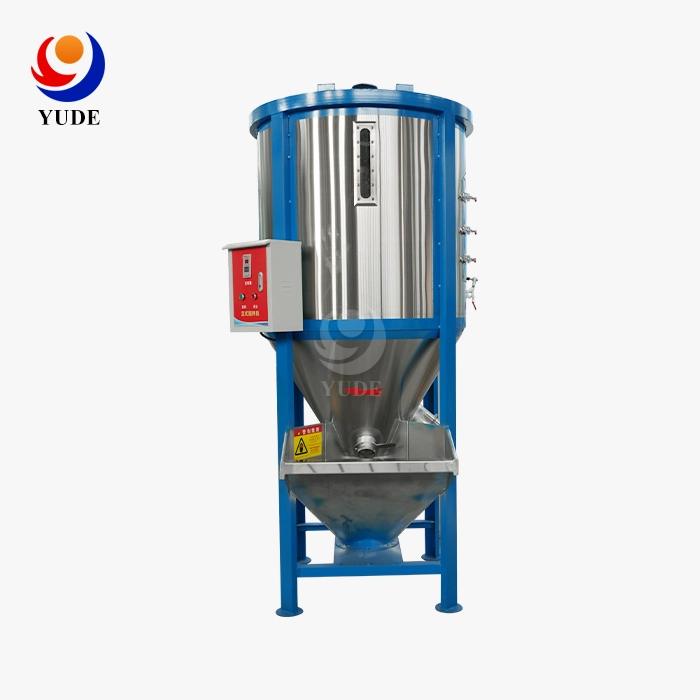
A closed plastic mixing machine blends pellets, masterbatch, and additives inside a sealed chamber. A motor turns a shaft fitted with paddles, ribbons, or a screw. This movement lifts, folds, and spreads the material until every sample looks the same. Then the outlet opens and releases the finished blend. A stainless steel plastic particle mixer https://www.yudemachinery.com/plastic-mixer/stainless-steel-plastic-particle-mixer follows this same working principle, yet its 304 stainless steel barrel and mixing parts resist rust and clean easily. That matters in food packaging, medical plastics, and cosmetic packaging, where one stray particle can ruin a batch.
I wrote this guide for quality directors, production managers, and buyers who want to understand the process before they request a quote.
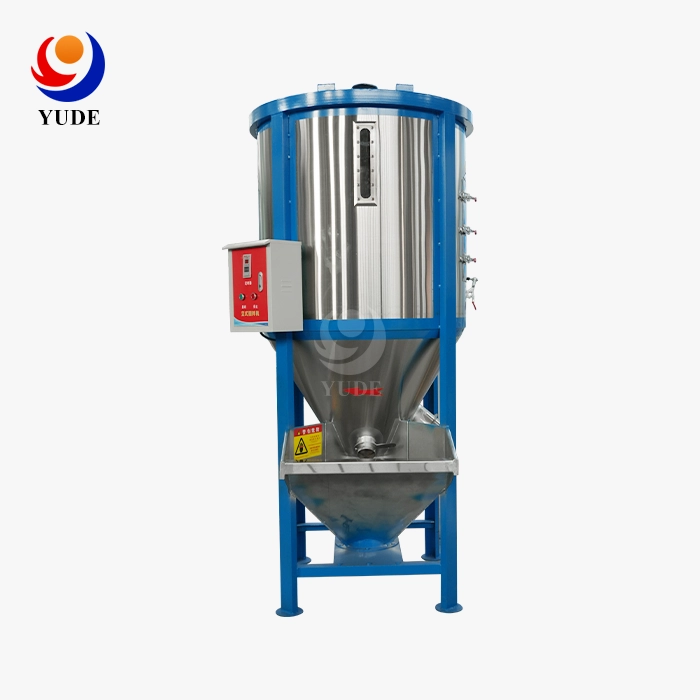
How a Closed Plastic Mixing Machine Works
What Makes a Mixer "Closed"
If you load the mix into a closed mixer, it stays in a closed cylinder until you empty it. Things can fall in and out of a blender when you open it. That difference is important because small bits of dirt and dust change the mix and lead to rejects. The cover on a closed machine lets pellets, grains, masterbatch, powders, and fillers come in. While the machine is running, the inspection covers stay shut. To keep the work area safe, many plants add dust gathering or safe transfer. This design is used for making color compounds, extruding plastic, and mixing recycled plastic.
The Five Steps of the Working Principle
There are five steps in the circle. First, the operator adds the ingredients according to the plan. Second, when the cover is closed, the room is shut. Third, a motor drives a shaft that moves straps, ribbons, or a screw. This makes them rise, fold, and circle around. Plaques are pulled to the top by a screw in the middle of a normal vertical form. They then fall down the barrel wall. With this motion and low shear, the pellets don't break. Fourth, over and over circulation spreads out particles of different sizes and densities. The fifth step is for the switch to turn on. The mix is then sent to a packaging line, an extruder, a hopper, or a machine that shapes the dough. In what order the ingredients are added, how fast the batch is even depends on how fast it is mixed and how full it is.
Main Components and What Each One Does
It's clear that each part does its job. The chamber holds the batch, and the parts that touch it are made of stainless steel, which doesn't rust and is simple to clean. The flow path is set by the blades and shaft. The motor and gearbox make torque. Thanks to seals and bearings, oil and dust stay out of the product and the parts that work. The outflow valve controls how much is let out. Cover interlocks, emergency stops, and overload protection are some different types of safety parts. Our stainless steel plastic particle mixer has a three-phase asynchronous motor that turns the shaft at 30 to 60 r/min. This keeps it steady and quiet. It has safety features that stop the motor before a problem gets worse in case of overload, fire, or phase failure.
Choosing the Right Mixer Type and Material
Mixer Types for Plastic Granules
It is easier to connect horizontal mixers to conveyor belts and they move more material per hour. However, vertical mixers take up less space on the floor. Ribbon blades can slowly mix fat, while paddles can lift and fold with more force. High-speed units cut down on cycles and do a great job of spreading out additives, but they heat things up because they rub against each other. Units with less speed work better with resins that don't like being heated. This is helpful for plants that have a lot of different SKUs because it makes it easy to change recipes. For steady lines with a lot of work, continuous systems work best. No matter how it is set up, a stainless steel plastic particle mixer always does the same job. The only things that change are the flow path and the shape of the blades. Vertical color mixers, small plastic particle mixers (300 kg to 500 kg), black plastic mixers, and stainless steel mixers are all made by Yude Plastic Machinery. The vertical plastic mixers come in sizes from 600 kg to 10 tons.
Stainless Steel vs. Carbon Steel Mixers
In general, it works for dry resins that don't corrode and costs less. Stainless steel is the best option when dealing with a lot of washing, chemicals, or water. Type 304 has between 18% and 20% chromium and between 8% and 10.5% nickel, according to ASTM A240. Chrome forms a thin film that keeps rust from forming. Type 201 has only 3.5% to 5.5% nickel, and it rusts faster in wet places. Some plants use a carbon steel frame with stainless steel touch parts to keep costs low. Make sure you get written proof of the grade when you buy a stainless steel plastic particle mixer for a medical or food line. Also, check to see if the frame on the outside needs to be painted.
Where the 304 Stainless Steel Pellet Mixer Fits
The stainless steel plastic particle mixer we have here is made of stainless steel and can be used for anything. There is no waste because the barrel and mixing parts are made of 304 stainless steel. They won't rust and are easy to clean. These are good plastics for this because they keep germs out. They are used to package food, medical supplies, and high-tech chemicals that people use every day. For this model, you can change the volume that works, the mixing is even up to 98% of the time, and the shaft spins at 30 to 60 r/min. To avoid cross-contamination, a masterbatch plant can switch between colors that don't go together, like black and white. This is possible because stainless steel is smooth and simple to clean.
The Plastic Pellet Mixing Process, Step by Step
Prepare the Recipe Before You Start
Before the motor starts, it's important to mix everything well. You should check the type of resin, the pellet size, the bulk density, the wetness, and the ability to mix with additives. Always check the weight of each ingredient, because a small mistake in the main batch can change the color of the whole batch. Water is very important for hygroscopic resins because they can stick to walls and clump together. As the recipe says, add the main resin first, then the masterbatch, fillers, colorants, and lubrication. People who package food and medicine also write down lot numbers at this point so that an inspector can later find each batch. That way, every shift can follow the same steps. I believe the filling order should be written in the work directions.
Set Speed, Time, and Fill Level
You shouldn't guess these settings; you should check them out. Test groups should be made and samples should be taken regularly. When pellets are put together the right way, it takes about 10 to 15 minutes for them to become equal. That depends on how fast and what shape the blades are. Most of the time, it takes 15 to 20 minutes to mix powder and pellets. Too much material in the chamber makes it impossible to fold, and too little material wastes cycles. It doesn't help to mix it for longer once it's already even. It gets warmer, more energy is used, and division can take place. Make a note of the choices that worked best, and then save them to the recipe card.
Discharge Without Undoing the Blend
During discharge, a good mix can split up again. Different pellets and powders move at different speeds in a falling stream. Do not make the drop height too high or the machine shake too much. Also, move the batch quickly to the next step. Closed transport keeps formulations that are delicate or dusty clean. Make sure the outlet opens all the way and doesn't leave a lot of pellets behind. They can get on other things when you switch them out if it does. The inside should be smooth. Our stainless steel plastic particle mixer is made of 304 stainless steel, which doesn't leave any residue. This makes it easier to clean between SKUs.
How to Select and Verify a Stainless Steel Plastic Particle Mixer?
Match Capacity and Features to Your Process
Start with the process instead of the product number. Tell it what kind of resin you want, how much you want to load and unload each hour, the bulk density, and the lot size. It says how much weight it can hold, but the real limit is the barrel's useful volume. Before the weight that was given is reached, a low-density material is put into the barrel, so check that the pellets you have match the 500 kg number. Then look at how well the ingredients are mixed, how much power it uses, how long it takes to clean, and how simple it is to keep up. When someone asks me to look at a request for a stainless steel plastic particle mixer, I always ask about the voltage and frequency. This is because businesses in the US use 60 Hz power. People who want to buy often ask about things like load cells, PLC control, automatic loading, and dust extraction. Tell us what you need, and we'll tell you what we can do for you.
Quality Checks to Request Before You Buy
Writing claims is not enough. Any stainless steel plastic particle mixer should pass four checks. One way to tell the difference between real 304 or 316 steel and 201 steel that rusts quickly is to use a handheld XRF analyzer to check the nickel and chromium content. This is the second step. A profilometer reading makes sure that the finish on the inside is the right Ra value. When it comes to hygiene, surfaces that touch the product should usually have a thickness of 0.8 µm or less. For the third reason, making sure the shaft and paddles are balanced to grade G2.5 under ISO 1940-1 prevents vibrations and keeps the bearings safe. For the fourth reason, a dye penetrant test on paddle welds finds little gaps that could hold stuff. The FDA says in 21 CFR 211.65 that objects that come into touch with the product must not react with it, add to it, or soak it up.
Confirm Performance With a Trial Run
A test run turns claims into numbers. After adding the real resin and additives, take samples at several different times and places during the discharge. Test it for whatever is important to your product: the amount of color, the amount of additives, or the amount of moisture. Compare the results to your goal, such as the consistency of 98% or more that our stainless steel plastic particle mixer should have. You can figure out how many batches you can make in an hour by writing down the time it takes to fill, mix, release, and add up all the weights of the batches. Pay attention to noise, shaking, dust leaks, and how the safety stops work. Finally, time how long it takes to clean the machine after you change the color. This time to clean is often part of the test for people who want to buy food or medicine.
Troubleshooting, Maintenance, and Supplier Evaluation
Common Problems and Quick Fixes
There are a few key things that cause most trouble. It's most often because the bowls were put in the wrong order, the mixing took too little time, or the blades were worn out. People separate things when the quantities or sizes of the things are very different from each other. It usually doesn't happen inside the barrel, but during discharge or conveying. Too much speed, friction, or weight can make heat build up. The gaskets, seals, or extraction links are worn out if there is dust on the cover. Make changes to one setting at a time and test them on a small group of people to make sure they work. If two colors are still streaky after 10 minutes, add two or three minutes before you touch the speed. If you change a lot of settings at once, you might not see what the real problem is.
A Simple Maintenance Routine
Preventive care makes the blend better and keeps the process safe. Watch for buildup of stuff, listen for odd sounds, and feel for vibrations during each shift. Be sure to test the cover interlocks and emergency stops as well. Regular checks should be done on the gearbox oil, electrical connections, sensors, bearings, seals, shafts, blades, couplings, and electrical connections. Rough fillers, like glass fiber and mineral powder, make blades wear out faster, so use them less often between use. If the load is more than 30% glass fiber, you should ask about carbide-coated or strengthened blade edges. Clean the chamber corners, the exit, and the shaft plugs every time you change the color or formula. Keep track of how many hours it's been used, how often it's been oiled, fixed, and what extra parts it needs. If you check on a stainless steel plastic particle mixer often, it won't get stuck for long periods of time.
How to Evaluate a Mixer Supplier
A good provider should connect the mixer to your whole process. Ask for pictures of the general plan, electrical specs, records of checks, owner's guides, and lists of spare parts. Before you place an order, make sure you understand the guaranty terms, how to install the product, how to get online help, and how the goods will be packed for ocean freight. In Shandong, Yude Plastic Machinery is a business that makes and sells things. Our team can make effective volumes and non-standard sizes to fit your needs. We also offer multilingual operation interfaces and after-sales service 24 hours a day, seven days a week, through local service partners in other countries. We've worked with tens of thousands of people and sent goods to over 30 countries. Things are checked by quality control when they come in, while they're being made, and again when they're done. When you get a quote on a stainless steel plastic particle mixer, you should be clear about the standards you follow, the type of material, the bulk density, the batch size, and the output.
Conclusion
A closed plastic mixing machine mixes pellets and chemicals in a room that is sealed off from the outside world. It does this by controlling the loading, the mechanical circulation, and the measured output. It's important to set the right loading order, speed, mixing time, fill level, and material qualities in order to get precision. Food, medicine, and cosmetics should be packed in stainless steel instead of carbon steel because it doesn't rust and is easier to clean. A stainless steel plastic particle mixer made of 304 stainless steel and stainless steel can be used for this. It has a shaft that spins 30 to 60 times per minute and a consistency of at least 98%. People who want to buy something should look at the steel type, surface finish, balance, and quality of the welds. The results should then be confirmed by a trial that is representative of the whole group. The quality of the blend stays the same over time because it is maintained regularly and comes from a supplier that provides documentation and support after the sale.
FAQ
What is a stainless steel plastic particle mixer used for?
Pollution doesn't get into the plastics used to package food, medicines, or everyday chemicals because pellets, masterbatch, and additives are mixed together.
How long does mixing take?
It takes about 10 to 15 minutes for blends of pellets to become uniform. Most mixes with powder need 15 to 20 minutes. You can find the exact time for your recipe by doing a test run.
Why choose 304 over 201 stainless steel?
More nickel is in Type 304 than in Type 201. This makes it less likely to rust, especially in damp places or with plastics that soak up water.
Can it handle glass-fiber filled plastics?
Fillers with more than 30% glass fiber can scratch surfaces, but stainless steel lasts a long time. Get in touch with us about blade edges that have been hardened or covered in carbide.
What protection does the motor have?
Overload, overheating, and phase failure are all things that can't happen with this three-phase asynchronous motor.
Request a Quote from Yude Plastic Machinery
People in more than 30 countries buy stainless steel plastic particle mixers made by Yude Plastic Machinery. We make them out of stainless steel. Please email sales@yudemachinery.com with the type of resin, batch size, and cleanliness needs you have, and our team will help you find a 304 stainless steel model with the right sizes and features. You can also see all of our products at yudemachinery.com.
References
- Harnby, N., Edwards, M. F., and Nienow, A. W. Mixing in the Process Industries, Butterworth-Heinemann, 1992.
- Paul, E. L., Atiemo-Obeng, V. A., and Kresta, S. M. Handbook of Industrial Mixing: Science and Practice, Wiley, 2004.
- U.S. Food and Drug Administration. 21 CFR Part 211, Current Good Manufacturing Practice for Finished Pharmaceuticals, 2023.
- ASTM International. ASTM A240/A240M, Standard Specification for Chromium and Chromium-Nickel Stainless Steel Plate, Sheet, and Strip, 2020.
- International Organization for Standardization. ISO 1940-1, Mechanical Vibration: Balance Quality Requirements for Rotors in a Constant (Rigid) State, 2003.
- Zweifel, H., Maier, R. D., and Schiller, M. Plastics Additives Handbook, Hanser Publishers, 2009.
Learn about our latest products and discounts through SMS or email