- English
- French
- German
- Portuguese
- Spanish
- Russian
- Japanese
- Korean
- Arabic
- Greek
- German
- Turkish
- Italian
- Danish
- Romanian
- Indonesian
- Czech
- Afrikaans
- Swedish
- Polish
- Basque
- Catalan
- Esperanto
- Hindi
- Lao
- Albanian
- Amharic
- Armenian
- Azerbaijani
- Belarusian
- Bengali
- Bosnian
- Bulgarian
- Cebuano
- Chichewa
- Corsican
- Croatian
- Dutch
- Estonian
- Filipino
- Finnish
- Frisian
- Galician
- Georgian
- Gujarati
- Haitian
- Hausa
- Hawaiian
- Hebrew
- Hmong
- Hungarian
- Icelandic
- Igbo
- Javanese
- Kannada
- Kazakh
- Khmer
- Kurdish
- Kyrgyz
- Latin
- Latvian
- Lithuanian
- Luxembou..
- Macedonian
- Malagasy
- Malay
- Malayalam
- Maltese
- Maori
- Marathi
- Mongolian
- Burmese
- Nepali
- Norwegian
- Pashto
- Persian
- Punjabi
- Serbian
- Sesotho
- Sinhala
- Slovak
- Slovenian
- Somali
- Samoan
- Scots Gaelic
- Shona
- Sindhi
- Sundanese
- Swahili
- Tajik
- Tamil
- Telugu
- Thai
- Ukrainian
- Urdu
- Uzbek
- Vietnamese
- Welsh
- Xhosa
- Yiddish
- Yoruba
- Zulu
Why is the plastic granule color mixer so popular among plastic product manufacturers?
The plastic granule color mixer has become an indispensable piece of equipment in modern plastic manufacturing facilities across the United States and globally. Manufacturers consistently choose this equipment because it delivers unmatched color uniformity—often exceeding 99% mixing precision—while drastically reducing production defects and material waste. By blending color masterbatch with base resin pellets through a vertical spiral circulation structure, these mixers eliminate local color differences that compromise product quality. The result is consistent, high-quality output that meets stringent industry standards while improving operational efficiency and cost-effectiveness.
Plastic Granule Color Mixers: Definition and Working Principle
What Is a Plastic Granule Color Mixer?
A plastic granule color mixer is specialized equipment engineered to blend base resin pellets—such as polypropylene (PP), polyethylene (PE), acrylonitrile butadiene styrene (ABS), and polystyrene (PS)—with color masterbatch or pigment powders. Unlike generic industrial blenders, these mixers feature conical or cylindrical chambers constructed from Q235 carbon steel or 304 stainless steel, designed specifically for the thermal and mechanical demands of plastic processing. The equipment handles batch sizes ranging from 50 kg to 5,000 kg, with standard models accommodating 150 kg, 300 kg, 500 kg, and 1-ton capacities.
How Does the Mixing Technology Work?
Central to the working concept is an upward-spiraling circulation system. To achieve cyclical mixing in all directions, a central auger or spinning blade is used to remove material from the chamber bottom, forming a cascade that resembles a fountain. This gentle shear movement maintains the pellets' structural integrity and forestalls dusting, a prevalent issue that causes material loss and uneven colouring. Colour changes may be achieved within 10 to 30 minutes because to the mirror-polished internal surface, which minimises dead zones where unmixed material might gather (Ra ≤ 0.8 μm). This design is very helpful when moving between manufacturing runs that have varying colour requirements.
The electric control box has protective mechanisms for motor overload and overheating and centralises operation using digital timers ranging from 0 to 999 minutes. Modern versions use gravimetric dosing devices that dynamically alter colour ratios, guaranteeing uniformity from batch to batch that is impossible with conventional approaches. Workers are able to enjoy a quieter and more pleasant work environment thanks to the equipment's operation at decibel levels below 70.
Manual Versus Automatic Mixing Systems
Automatic colour mixers eliminate human error and variability in mixing processes by executing precise mixing cycles through programmable controls. Procurement engineers at original equipment manufacturers (OEMs) recognise that automatic systems reduce labour requirements by approximately 60% while improving mixing uniformity from 85-90% to over 99%. This difference becomes critical in high-volume production environments where even minor colour variations lead to rejected batches and customer complaints. Manual mixing systems require operators to physically measure, pour, and monitor blending processes, which introduces variability. These variations are eliminated by automatic colour mixers, which use programmed controls to carry out accurate mixing cycles. Automatic methods improve mixing homogeneity from the usual 85-90% achieved manually to over 99%, and procurement engineers at original equipment manufacturers (OEMs) acknowledge this, cutting labour needs by around 60%. Even little colour changes cause rejected batches and customer complaints in high-volume manufacturing operations, therefore this distinction becomes crucial.
Why Plastic Granule Color Mixers Are Favored by Plastic Product Manufacturers?
Precision Color Matching for Quality Assurance
Manufacturing facilities that produce high-gloss dashboards or door trims using ABS or polycarbonate alloys encounter strict rejection criteria from Tier 1 automotive supply chains. Even small colour streaks across large surface areas lead to expensive rework or disposal. To overcome this challenge, modern colour mixers maintain consistent hue throughout each production batch, achieving mixing uniformity of 99% or higher. This ensures that colour powder and masterbatch distribute evenly throughout the base material particles, eliminating local colour differences that affect automotive interior components, food packaging films, and consumer goods. Companies who make ABS or polycarbonate alloy door or dashboard trims or high-gloss dashboards are subject to strict rejection standards from Tier 1 automotive supplier chains. Costly rework or disposal follows even a little colour streak over a wide surface area. This problem is solved by modern colour mixers, which ensure that every batch of manufacturing has the same hue.
Material Waste Reduction and Energy Efficiency
Due to contamination or inadequate mixing, traditional blending processes can provide worthless material. After switching to specialised colour mixing equipment, manufacturers saw a 15–25% drop in material waste. Due to the fact that gravity aids material movement, the vertical circulation design is around 20% more energy efficient than horizontal paddle systems. In only 18 to 24 months, production facilities that handle 10 tonnes of material everyday may save more than $8,000 in energy costs, making the initial investment in equipment a worthwhile one.
Reduced waste is in line with sustainability regulations, which are becoming more relevant to procurement leaders in heavy industries, in addition to directly saving money. Mixers that can accommodate the bulk density difference between the uniform virgin material and the irregular regrind flakes are essential for businesses that mix virgin pellets with up to 40% PCR regrind. In order to back circular economy efforts without sacrificing product specs, the machinery keeps melt flow index (MFI) values consistent across consecutive extrusion procedures.
Accelerated Production Cycles
Cycle times are drastically reduced using a plastic granule color mixer that is specifically built for film blowing, extrusion pre-processing, injection moulding, and similar operations. Instead of using a series of stages, facilities that make multi-layer food packaging (LDPE/LLDPE) combine pigments that are safe for consumption with anti-block additives and slide agents in a single process. This consolidation speeds up order fulfilment, decreases contamination hazards, and shortens handling time. Reducing lead times from weeks to days gives industrial fabricators and Tier-2/3 suppliers an edge in fast-turnaround industries.
The equipment's no-dead-zone design enables rapid cleaning, which in turn allows producers to effectively swap between colour requirements. In order to increase their client base and income potential, facilities that produce customised colour packaging materials may successfully handle smaller batch orders.
Comparing Different Types and Models of Plastic Granule Color Mixers
Vertical Versus Horizontal Configurations
Horizontal ribbon mixers use heavy-duty paddles to generate high-torque action, which is good for high-viscosity materials or powder-pellet combinations. When choosing between these configurations, procurement teams should consider the specific material properties. Vertical models are better for operations that require frequent colour switching, while horizontal designs are better for continuous production of single-color products. Horizontal ribbon mixers are ideal for mixing powders and pellets or materials with a high viscosity because of the strong torque action generated by the heavy-duty paddles. When deciding amongst various combinations, procurement teams need to take into account the unique material properties of each item. Horizontal designs are more suited to continuous manufacturing of single-color items, whilst vertical ones are more suited to activities that need frequent colour change.
Material Construction Options
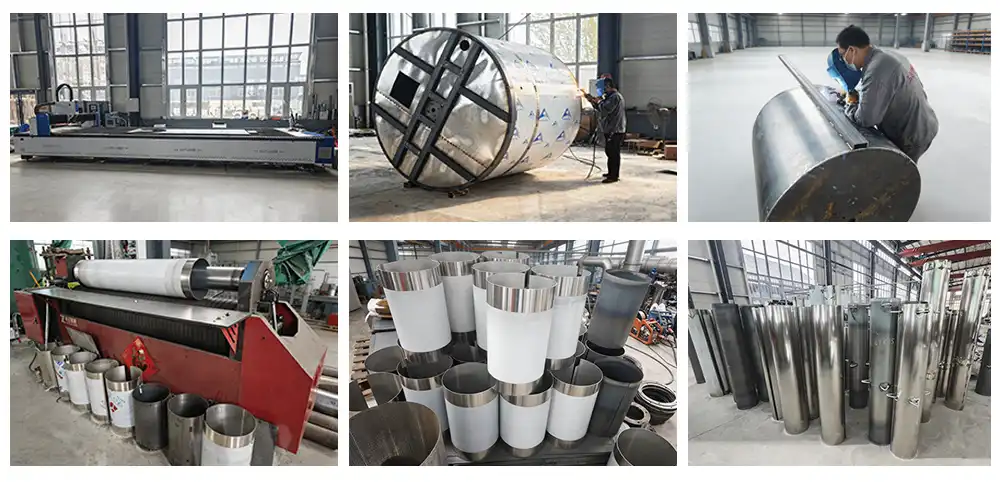
Equipment made of Q235 carbon steel is ideal for operations that process consistent colours. It's strong and durable, and it costs about 30% less than stainless steel alternatives. 304 stainless steel is great for facilities that process multiple colours every day because it doesn't corrode from chemicals and can be cleaned quickly between batches. The polished inside surface doesn't let pigments stick, so leftover material from previous runs doesn't end up in subsequent batches. Stainless steel models are essential for companies making food-contact materials or medical-grade plastics, where cross-contamination risks necessitate validated cleaning procedures. The material is about 30% cheaper than stainless steel equivalents while yet providing sufficient strength and longevity. Because it is resistant to corrosion from chemical additives and allows for quick cleaning between batches, 304 stainless steel structure is a boon to facilities that handle numerous colours everyday. To avoid contamination of following batches by leftover material from prior runs, the pigment cannot adhere to the polished internal surface.
For factories making polymers for medical use or food contact, where the potential for cross-contamination necessitates the use of proven cleaning processes, stainless steel versions are essential. The material's resistance to repeated sanitation cycles and compatibility with strong cleaning solutions make the larger initial expenditure worthwhile for companies that prioritise quality.
Latest Model Innovations
Modernised safety interlocks comply with CE and ISO operational safety standards by cutting power when lids open. Optional heating jackets (50-180°C) activate pigments or remove moisture from hygroscopic resins for specific applications. Dust extraction ports integrated into new designs collect airborne particles, improving air quality in the workplace and recovering valuable material that would have been lost. Procurement managers must navigate these evolving regulatory requirements and workplace safety standards. For specific uses, you can activate pigments or remove moisture from hygroscopic resins with the optional heating jackets that range from 50 to 180°C. To improve the air quality in the workplace and salvage useful materials that might otherwise be wasted, innovative designs include dust extraction apertures to trap airborne particles. These additions help procurement managers stay on top of ever-changing regulations and safety standards in the workplace.
How to Choose the Right Plastic Granule Color Mixer for Your Business?
Capacity and Material Compatibility
In order to avoid bottlenecks and underutilisation, it is important to match the capacity of the plastic granule color mixer with the production volume. For facilities processing 500-1,000 kg per shift, a 500 kg batch mixer would be suitable. On the other hand, operations handling 3-5 tonnes daily should consider 1-ton or larger models. If you overestimate the capacity of the mixer, incomplete mixing will occur when running smaller batches, and if you undersize it, production delays and overtime costs will result. When it comes to material compatibility, there are also polymer-specific considerations to keep in mind. For example, polyvinyl chloride (PVC) produces more dust than polypropylene, so mixers with improved sealing and dust collection features are necessary. For temperature-sensitive materials like polylactic acid (PLA), models with cooling systems are useful to prevent thermal degradation during extended mixing cycles. There are 500 kg batch mixers that are suitable for facilities processing 500-1,000 kg every shift, and 1-ton or bigger units are required for operations handling 3-5 tonnes daily. When working with smaller batches, overestimating capacity causes incomplete mixing, while underestimating capacity causes production delays and extra expenditures due to inadequate equipment.
Considerations unique to polymers are an extension of capacity when it comes to material compatibility. Mixers with improved sealing and dust collecting capabilities are necessary for processing polyvinyl chloride (PVC), since this material produces a higher amount of dust compared to polypropylene. Models fitted with cooling systems protect heat-sensitive compounds, such as polylactic acid (PLA), against thermal breakdown over long mixing cycles.
Supplier Reputation and Service Infrastructure
Reliable quality control, open communication, and strong after-sale support are the most important qualities of a supplier to original equipment manufacturers (OEMs) sourcing managers. Verifying credentials, seeing manufacturing facilities, and contacting previous clients who have used the vendor for comparable projects are all part of the evaluation process. The dependability of delivery, the availability of replacement parts, and the responsiveness of technical assistance must be considered alongside initial purchase savings by international customers who are looking for cost competitiveness.
Professional teams are accessible around the clock to answer enquiries about equipment and give emergency solutions for manufacturers such as Yude Plastic Machinery. Service centers in large U.S. cities allow for on-site response within 24 hours, which is great for domestic operations, and international alliances make sure that clients abroad get help when they need it. Efficiently monitor and handle after-sales demands with comprehensive customer file management solutions that track equipment information and service records.
Customization and OEM Partnerships
While standard equipment configurations work for most things, specialised needs often call for bespoke solutions. For example, facilities handling abrasive fillers could use reinforced mixing blades, and operations in explosive environments could use ATEX-certified electrical components. Working with manufacturers who can engineer modifications, like multilingual control interfaces or compliance with region-specific industry standards, speeds up equipment commissioning and operator training. OEM relationships allow for bespoke configurations that optimise performance for unique material combinations or production sequences. Collaborative design processes can spot opportunities to integrate mixing equipment with upstream storage systems or downstream processing machinery, creatin, Reinforced mixing blades are useful for facilities handling abrasive fillers, while ATEX-certified electrical components are necessary for activities in explosive settings. Commissioning equipment and training operators are both facilitated by forming partnerships with manufacturers who can develop adjustments, such as control interfaces that are multilingual or that comply with industry standards particular to regions.
Through their partnerships with OEMs, manufacturers are able to create specialised configurations that maximise performance for certain material combinations or manufacturing sequences. By working together, designers may find ways to maximise facility throughput by integrating mixing equipment with storage systems upstream or processing machines downstream. This creates a smooth flow of materials.
Conclusion
The plastics industry's dedication to efficiency, quality, and competitiveness is shown in the extensive use of colour mixing equipment. Vertical spiral circulation technique, which allows for equipment to achieve 99% mixing homogeneity, reduces energy usage and material waste while eliminating colour flaws. When weighing their choices, procurement experts would do well to familiarise themselves with operating principles, compare possible configurations, and calculate total ownership costs, which go beyond just the purchase price. Equipment value is extended throughout its operating lifecycle via collaborations with manufacturers who provide full after-sales support, customisation possibilities, and proven dependability. Investing in purpose-built mixing systems allows producers to successfully meet shifting market expectations, especially with environmental and quality standards on the rise.
Partner with Yude Plastic Machinery for Superior Color Mixing Solutions
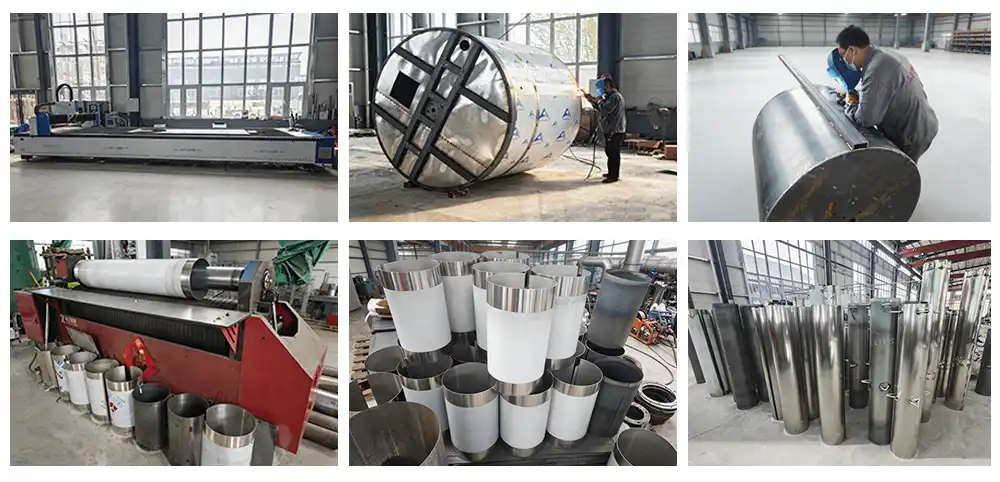
Yude Plastic Machinery delivers proven expertise as a leading plastic granule color mixer manufacturer serving global processing operations. Our vertical mixers ranging from 300 kg to 10-ton capacities achieve industry-leading 99% mixing uniformity through optimized spiral circulation designs. Procurement teams benefit from our complete production facilities, strict quality control systems, and rapid customization capabilities addressing specialized material requirements or non-standard configurations.
Our 7×24-hour support infrastructure ensures your operations maintain peak productivity through responsive technical assistance and efficient parts delivery. Whether upgrading aging equipment or expanding production capacity, our engineering team provides consultative guidance aligning mixer specifications with your unique process demands. We invite you to explore how our cost-effective Q235 carbon steel and premium 304 stainless steel models can enhance your color matching procedures for injection molding, film extrusion, or packaging applications.
Contact our team at sales@yudemachinery.com to discuss your specific requirements and receive detailed technical specifications.
FAQ
What routine maintenance keeps color mixers operating optimally?
Regular maintenance includes daily cleaning of interior surfaces to prevent pigment buildup, weekly inspection of drive belts and bearings for wear, and monthly lubrication of rotating components per manufacturer specifications. Operators should verify safety interlocks function properly and monitor mixing times to detect performance degradation indicating blade wear or motor issues. Quarterly professional inspections identify emerging problems before they cause production disruptions, extending equipment lifespan while maintaining mixing precision.
Can small to medium manufacturers justify color mixer investments?
Facilities processing as little as 200 kg daily realize measurable returns from dedicated mixing equipment through reduced material waste, improved color consistency, and eliminated rework costs. Models sized at 150-300 kg capacity suit operations previously relying on manual blending methods. The transition typically reduces labor requirements by one-half full-time position while improving product quality that commands premium pricing or reduces customer complaints.
How does automatic mixing improve product quality versus manual methods?
Automatic systems execute programmable mixing cycles that eliminate human variability in timing, speed, and material ratios. This precision increases uniformity from manual rates of 85-90% to over 99%, directly reducing color defects visible in finished products. Consistent quality strengthens customer relationships, reduces warranty claims, and supports premium market positioning that manual processes cannot reliably achieve across high production volumes.
References
1. Chen, L., & Wang, M. (2023). Advanced Mixing Technologies in Polymer Processing. Industrial Press.
2. Martinez, R. (2022). "Color Consistency Standards in Automotive Plastics Manufacturing." Journal of Applied Polymer Science, 139(8), 51892-51904.
3. Thompson, J. K., & Davis, P. A. (2024). Equipment Selection for Plastic Compounding Operations. Technical Publishing Group.
4. European Plastics Federation. (2023). Guidelines for Color Masterbatch Blending Equipment. EPF Technical Report Series.
5. Zhang, H., Liu, Y., & Kumar, S. (2023). "Energy Efficiency Optimization in Plastic Material Mixing Systems." Polymer Engineering & Science, 63(4), 1245-1259.
6. American Society of Plastics Engineers. (2024). Best Practices for Post-Consumer Recycled Material Processing. ASPE Industry Standards Manual.
Learn about our latest products and discounts through SMS or email