- English
- French
- German
- Portuguese
- Spanish
- Russian
- Japanese
- Korean
- Arabic
- Greek
- German
- Turkish
- Italian
- Danish
- Romanian
- Indonesian
- Czech
- Afrikaans
- Swedish
- Polish
- Basque
- Catalan
- Esperanto
- Hindi
- Lao
- Albanian
- Amharic
- Armenian
- Azerbaijani
- Belarusian
- Bengali
- Bosnian
- Bulgarian
- Cebuano
- Chichewa
- Corsican
- Croatian
- Dutch
- Estonian
- Filipino
- Finnish
- Frisian
- Galician
- Georgian
- Gujarati
- Haitian
- Hausa
- Hawaiian
- Hebrew
- Hmong
- Hungarian
- Icelandic
- Igbo
- Javanese
- Kannada
- Kazakh
- Khmer
- Kurdish
- Kyrgyz
- Latin
- Latvian
- Lithuanian
- Luxembou..
- Macedonian
- Malagasy
- Malay
- Malayalam
- Maltese
- Maori
- Marathi
- Mongolian
- Burmese
- Nepali
- Norwegian
- Pashto
- Persian
- Punjabi
- Serbian
- Sesotho
- Sinhala
- Slovak
- Slovenian
- Somali
- Samoan
- Scots Gaelic
- Shona
- Sindhi
- Sundanese
- Swahili
- Tajik
- Tamil
- Telugu
- Thai
- Ukrainian
- Urdu
- Uzbek
- Vietnamese
- Welsh
- Xhosa
- Yiddish
- Yoruba
- Zulu
Why Choose a Large Vertical Mixer for Plastic Granules?
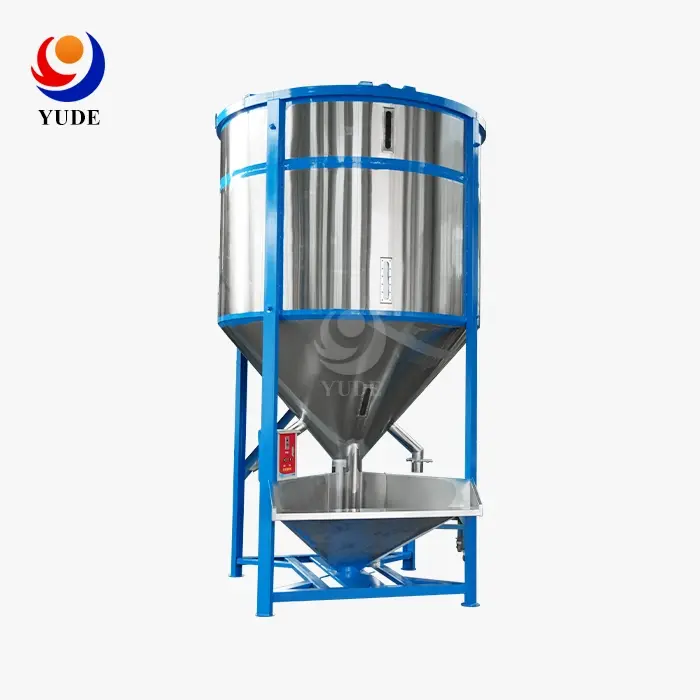
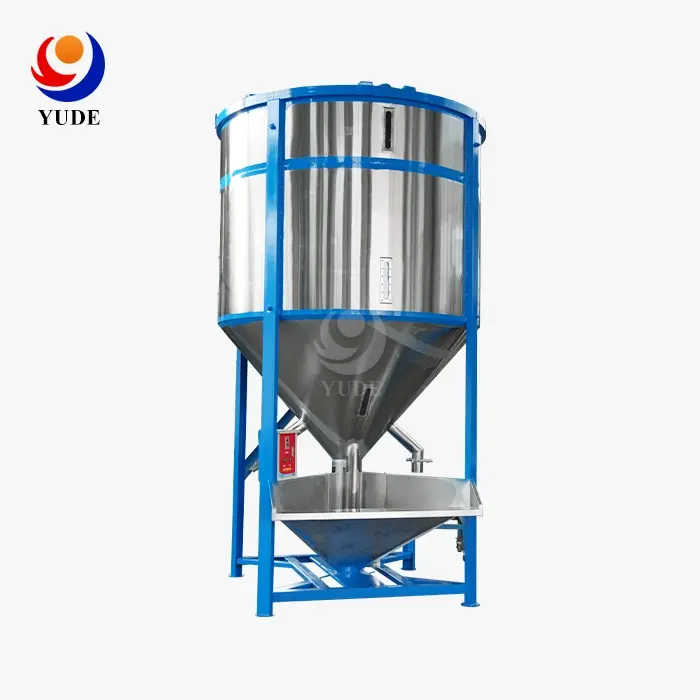
If you run a PE or PP film blowing line, manage an injection molding shop, or distribute plastic machinery to local markets, you already know that uneven mixing is one of the fastest ways to generate waste and lose profit. A spiral type large vertical mixer solves this problem directly. It lifts material from the bottom of a tall cylindrical silo and disperses it downward along the outer wall, creating a continuous three-dimensional circulation that reaches mixing uniformity of ≥ 98%. For plastic granules — where color consistency, additive distribution, and feed rhythm all matter — this design delivers measurable results without burning through your electricity budget.
Understanding Spiral Type Large Vertical Mixers and Their Working Principle
How the Spiral Mechanism Works?
In a cylinder-shaped container, a single vertically placed screw (auger) turns, pulling grains up through the middle and letting them fall down the sides. This is how it works in a nutshell. This "center-lifting, periphery-dropping" circulation keeps going until the CV (Mixing Coefficient of Variation) falls below 5% very quickly and with little shear force. It is important to keep the shape of the granules when working with glass-filled compounds or masterbatch pellets that are easy to break because of the low-shear action.
Key Technical Specifications
The moving shaft speed on Yude's vertical mixing equipment is 30 to 60 r/min. The machine is stable and doesn't shake much because it has a three-phase asynchronous motor and a heavy-duty gear reducer. The total amount can be between 600 kg and 10 tons per batch, depending on the model. This way, companies that blow films and plants that make injection molds can perfectly match the mixer's capacity to the feed rate of their production lines, so they don't have to buy equipment that is too big for their needs.
Energy Consumption and Efficiency
Ribbon blenders need 30% to 50% more energy per ton of material than a spiral type large vertical mixer. This is because vertical screw mixers use gravity to help them work, while ribbon blenders try to fight it. The difference in how well they work has a real effect on how much film factories that spend a lot on electricity have to pay each month. With a standard 15- to 20-minute cycle per 5-ton batch, the machine can keep up with most mid-volume production schedules without moving too slowly.
Advantages of Using Spiral Type Large Vertical Mixers for Plastic Granules
If you want to find the best mixer for PE, PP, ABS, or PVC powders, you should not only look at how fast it blends, but also how safe the product is and how little it costs per kilogram. These are the main advantages this kind of tools has:
- Mixing uniformity ≥ 98%: The vertical screw circulation eliminates dead spots through a conical hopper base and a bottom-reaching auger design. For film blowing applications, where color streaks directly translate into rejected rolls, this level of homogeneity is a hard production requirement rather than a marketing claim.
- Material-compatible construction: The Q235 carbon steel barrel carries an anti-stick inner wall coating, and the screw blades use wear-resistant material that extends service life even when processing mineral-filled or abrasive compounds. For glass-filled plastics, Tungsten Carbide hard-facing on the screw flights can extend wear life by three to four times.
- Space-efficient vertical footprint: A vertical silo-style mixer saves up to 70% of floor space compared to a horizontal ribbon blender of equivalent capacity. This matters in densely packed packaging factories across Guangdong, Vietnam, or Indonesia where every square meter of floor carries a cost.
- Gentle handling of sensitive materials: Because the screw rotates slowly at 30–60 r/min with low shear, it does not degrade the surface of recycled regrind or fracture color masterbatch pellets the way high-speed horizontal paddles can.
There are fewer color rejects, less energy use, and longer breaks between upkeep. These benefits fix the main problems that people in film blowing, injection molding, and compound production say they have. This makes it clear that vertical screw technology should be used when the batch size is greater than 500 kg.
Applications and Industry Use Cases of Spiral Type Large Vertical Mixers
Plastic Film Blowing and Injection Molding
For the normal pre-process, vertical screw mixers are used to mix color masterbatch and chemicals with new PE or PP pellets before they go to the extruder. Adding warm air flow to a shop that makes home goods, gadget housings, or car parts can turn the mixer into a drying bin that can get rid of any water in the hygroscopic ABS or PET before the shot is made. The number of color-streak rejects goes down by a lot when film companies switch from mixing colors by hand in bags to using a special vertical blending system.
Chemical Powders and Agricultural Inputs
Things other than metals can be worked with vertical screws. The low-shear vertical screw mixes trace minerals and vitamins into batches of several tons of grain without sorting the grains. This is done when making animal feed. Light fillers and heavy cementitious binders are mixed in a horizontal drum to make building materials. If they were mixed any other way, differences in density would cause layers to form. The closed-vessel design keeps dust inside, which is helpful anywhere powder is handled.
Compounding and Masterbatch Production
For compounders, big vertical batch mixers are used to make the mixture smooth before the twin-screw extruder takes over. They mix different kinds of plastics with fillers, chemicals that stop flames, and tools that make the process easier. When you pre-blend in a vertical silo, the feed to the extruder changes less. In this way, the melt pressure stays steady, and the throughput is more consistent. It has been shown that some compounding plants can make 10–15% more by adding a vertical pre-mixing step before extrusion.
How to Choose the Right Large Vertical Mixer for Your Plastic Granule Needs?
Match Capacity to Your Production Line
First, find out how much your machine needs in an hour. Then, make sure the mixer can handle at least two full production hours of work per batch. Between 600 kg and 10 tons, Yude has models for every need. This means that most medium-sized businesses can use one of the standard sizes without having to make a custom vessel. To avoid supply gaps, make sure that the mixer's discharge rate matches the equipment further downstream's feed rhythm.
Evaluate Configuration and Floor Constraints
You can get a vertical mixer that takes up less room, but before you order one, look at your ceiling height. A 4- to 5-meter-tall 10-ton silo with a drive unit on top is possible. For people who are short, a model with less space and faster cycles might be the best choice. In most cases, vertical choices are better than horizontal ones because horizontal ones take up more room and use more energy per ton. That is, unless your building doesn't allow for height.
Consider OEM and After-Sales Requirements
When looking for used machinery as a machinery distributor, OEM customization is just as important as performance. Custom brand applications, foreign control interfaces, and packing that is good for sea freight, like fumigated wooden boxes that keep out rust and water, are all things that Yude can do for a spiral type large vertical mixer. Prices for most models come with standard delivery times of 15 to 20 days. This helps merchants in Africa, Southeast Asia, or the Middle East plan ahead for when their customers will be available.
Leading Brands and Supplier Insights for Spiral Type Large Vertical Mixers
Factory Direct vs. Authorized Dealer
Prices are shown right away when you buy factory straight from a company like Yude Plastic Machinery. You can also talk to the engineering team about any changes you need. Authorized sellers are able to help you in your own language and keep extra parts in stock in your own country. When things are down, this can speed up response times in places where shipping straight from China takes three to four weeks. The best model for you will rely on where you live, how easy it is to get expert help, and how often you plan to need new parts.
What to Verify Before Placing an Order?
Professional buyers should ask for Factory Acceptance Testing (FAT) records that show the screw shaft run-out tolerance (usually less than 1 mm per meter), records of the weld integrity inspection, material certification for the grade of vessel steel, noise level data from a four-hour empty-run test (with the goal of being below 80 dB), and numbers for the bearing temperature rise. They show that the machine will work as expected when it is making things all the time, not just when it is being used for a short time to show off.
Yude's Market Position
Shandong Yude Plastic Machinery Co., Ltd. has worked with a huge number of customers over the years. These customers are in the chemical, food packaging, and plastic goods industries. The company has an after-sales service system that is open seven days a week, twenty-four hours a day. It has local service teams in other countries and within 24 hours, on-site replies in the United States. It can handle big orders at low prices per unit because it can make a lot of things. Because of this, it's a good choice for both people who buy plants directly and retailers who are building supply networks in their regions.
Conclusion
When working with plastic grains, the biggest problems are poor color distribution, needing a lot of energy, and having to stop production when equipment breaks down. A spiral type large vertical mixer with spiral screws can solve these problems. This line of Yude equipment is great for factories that blow films, companies that do injection molding, and companies that sell machinery. It is built to last, doesn't take up much space, and can hold between 600 kg and 10 tons of stuff. Make sure the capacity match, building height, FAT paperwork, and after-sales support are all right before you buy. For as long as it works, this will keep your money safe.
FAQ
How long does a typical mixing cycle take?
A standard cycle for a 5-ton batch runs approximately 15 to 20 minutes depending on material bulk density and shaft speed setting. The low-shear spiral action means over-mixing is generally not a concern, so operators can run the cycle to completion without monitoring granule degradation.
Can this equipment handle liquid additives?
Yes. Atomizing spray nozzles can be installed on the top cover or along the screw housing to inject liquid binders, lubricants, or processing oils into the falling curtain of material during blending. This makes the equipment suitable for coating applications in compound and masterbatch production.
What maintenance does the bottom bearing require?
Because the bottom bearing is submerged in material during operation, Yude uses sealed, self-lubricating external housing bearings with an air purge seal. Operators should check the air purge seal pressure at scheduled intervals to confirm that fine powder is not entering the bearing race and causing premature wear.
How does the mixer prevent material dead zones?
The conical hopper base combined with a bottom-reaching auger ensures that material along the outer vessel wall continuously slides downward into the screw intake zone. This design eliminates the stagnant pockets that are common in flat-bottomed horizontal drum mixers.
Is the equipment suitable for recycled regrind mixed with virgin pellets?
Yes. The low rotational speed (30–60 r/min) and low-shear screw action handle the density difference between regrind flakes and virgin pellets without causing segregation or granule fracture, which is the standard requirement in plastic recycling and compounding workflows.
Get a Quote from Yude Plastic Machinery — Trusted Spiral Type Large Vertical Mixer Supplier
The vertical screw mixing equipment that Yude Plastic Machinery makes is made to work in real factories, not just on paper. The team can help you with a wide range of technical issues, including finding the right 600 kg color mixing unit for a film line or a spiral type large vertical mixer for a compounding operation. They can also give you OEM options and full technical proposals. Send us an email at sales@yudemachinery.com or go to https://yudemachinery.com/ to get a price right away. Here are some things that will help you mix better.
References
- Tadmor, Z., & Gogos, C. G. Principles of Polymer Processing. Wiley-Interscience, 2006.
- Mixing Technology Insight. Vertical vs. Horizontal Blender Selection Guide for Bulk Solids. Powder and Bulk Engineering, 2019.
- Rosato, D. V., & Rosato, M. G. Injection Molding Handbook. Springer, 2000.
- Harper, C. A. Handbook of Plastics Technologies. McGraw-Hill, 2006.
- Paul, E. L., Atiemo-Obeng, V. A., & Kresta, S. M. Handbook of Industrial Mixing: Science and Practice. Wiley-Interscience, 2004.
- Plastics Technology Magazine. Optimizing Color Masterbatch Dispersion in Film Extrusion Processes. Plastics Technology, 2021.
Learn about our latest products and discounts through SMS or email