- English
- French
- German
- Portuguese
- Spanish
- Russian
- Japanese
- Korean
- Arabic
- Greek
- German
- Turkish
- Italian
- Danish
- Romanian
- Indonesian
- Czech
- Afrikaans
- Swedish
- Polish
- Basque
- Catalan
- Esperanto
- Hindi
- Lao
- Albanian
- Amharic
- Armenian
- Azerbaijani
- Belarusian
- Bengali
- Bosnian
- Bulgarian
- Cebuano
- Chichewa
- Corsican
- Croatian
- Dutch
- Estonian
- Filipino
- Finnish
- Frisian
- Galician
- Georgian
- Gujarati
- Haitian
- Hausa
- Hawaiian
- Hebrew
- Hmong
- Hungarian
- Icelandic
- Igbo
- Javanese
- Kannada
- Kazakh
- Khmer
- Kurdish
- Kyrgyz
- Latin
- Latvian
- Lithuanian
- Luxembou..
- Macedonian
- Malagasy
- Malay
- Malayalam
- Maltese
- Maori
- Marathi
- Mongolian
- Burmese
- Nepali
- Norwegian
- Pashto
- Persian
- Punjabi
- Serbian
- Sesotho
- Sinhala
- Slovak
- Slovenian
- Somali
- Samoan
- Scots Gaelic
- Shona
- Sindhi
- Sundanese
- Swahili
- Tajik
- Tamil
- Telugu
- Thai
- Ukrainian
- Urdu
- Uzbek
- Vietnamese
- Welsh
- Xhosa
- Yiddish
- Yoruba
- Zulu
Key Specifications to Check Before Buying an Industrial Plastic Mixer
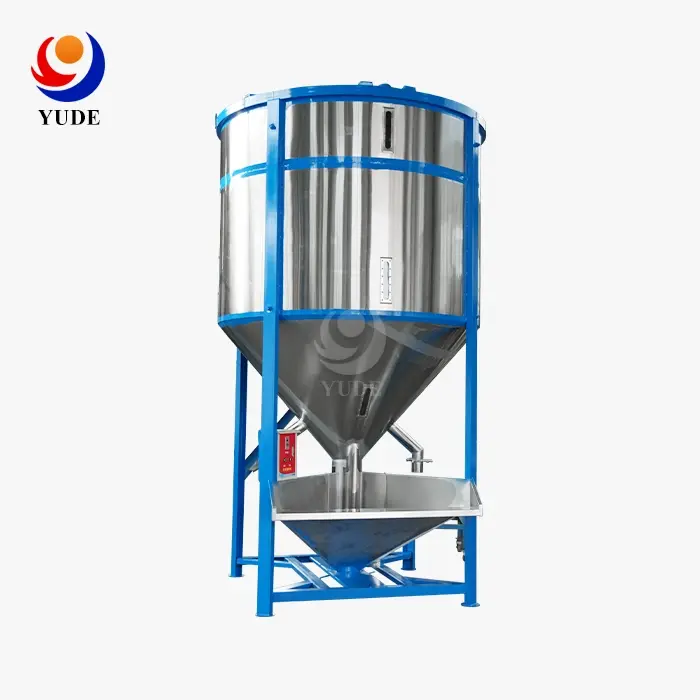
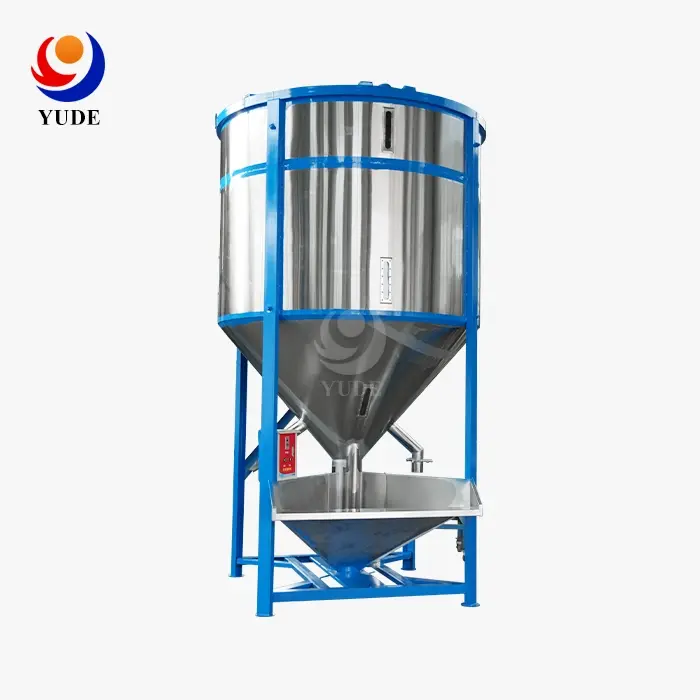
Buying an industrial plastic mixer is a significant investment, and getting the specifications wrong can cost your production line weeks of downtime and thousands of dollars in wasted material. Whether you run a film-blowing operation, an injection molding plant, or distribute equipment to regional markets, understanding what to look for before signing a purchase order matters. A spiral type large vertical mixer, for instance, combines a vertical single-screw structure with gravity-assisted circulation to deliver mixing uniformity of 98% or above—making it one of the most efficient options for PE, PP, ABS, and PVC pellet blending today.
Understanding How Vertical Spiral Mixers Work
The Core Mixing Mechanism
An Archimedean screw is mounted inside a cylinder or cone-shaped silo of a large vertical plastic mixer. The screw spins at 30–60 r/min, moving material from the bottom to the top and back again. This makes a three-dimensional circulation pattern. This "center-lift, periphery-drop" action gets rid of areas that aren't moving without making too much heat, which is a big benefit over horizontal methods with high shear.
Why Vertical Design Suits Plastic Processing?
When compared to ribbon blenders of the same size, the vertical footprint saves up to 70% of floor room. In places where floor space is limited, like film-blowing and injection molding shops, this is a useful feature. The design also lets almost no material stay at the release point, which lowers the risk of cross-contamination when changing resin colors or grades.
Material Compatibility
LDPE, HDPE, PP, ABS, and PVC are just some of the plastics chunks and powders that this equipment can work with. The Q235 carbon steel inner wall has an anti-stick covering that keeps pellets from sticking to it. Wear-resistant screw blades make the blades last longer when working with filled or rough materials. For mixing color masterbatches, the low-shear motion spreads out the pigment without breaking up the pellets.
Critical Specifications to Evaluate Before Purchase
Mixing Uniformity and Shaft Speed
The standard for color masterbatch dispersion in film and injection applications is a CV of less than 5%, which means that the color is spread out evenly 98% of the time. Make sure the supplier can give you test data that is written down, not just a printed sheet of specifications. For pellet mixing, shaft speeds between 30 and 60 r/min are normal. Speeds outside of this range could mean that the design isn't right for your material.
Motor, Drive, and Power Consumption
Look for a heavy-duty gear reducer that goes with a three-phase asynchronous motor. This mixture gives stable torque at full load and can handle the power changes that happen a lot in factories. When it comes to energy use per ton, a spiral type large vertical mixer is about 30–50% less than ribbon blenders. When you consider that electricity costs a lot at film plants, this difference quickly adds up over the course of a production year.
Vessel Construction and Surface Treatment
The material of the barrel and the finish on the inside walls have a direct effect on how long it lasts and how well it works. Standard PE and PP pellet uses are good for Q235 carbon steel with an anti-stick coating on the inside. Ask for a mirror-polished stainless steel inner surface (Ra ≤ 0.8 µm) if you want to use sticky additives or pigment powders. Ask for material certification at all times—positive material identification (PMI) with a spectrometer verifies the alloy grade, not just the label on the paper work.
Comparing Vertical Spiral Mixers with Other Mixer Types
Here is a simple comparison of the most common ways to mix materials in industry:
- Vertical spiral mixer: Gentle, low-shear blending, up to 70% smaller footprint, 30–50% lower energy per ton, near-zero material retention. Best for large-batch pellet and powder homogenization in plastic processing and recycling.
- Ribbon blender: High throughput but demands wide floor space and consumes more power. Material retention in the trough is a persistent cleaning challenge when switching formulations.
- Paddle vertical mixer: Good for coarser materials but delivers less uniform dispersion for fine color masterbatches. Mixing CV is typically higher than a spiral design at equivalent batch sizes.
- Horizontal drum mixer: Simple and low-cost at small volumes, but impractical beyond 500 kg per batch and offers no integrated drying capability.
These differences are most important when your production line uses more than one type of resin during a shift or when color consistency has a direct effect on the number of rejects. Compared to paddle or ribbon designs, a vertical spiral design cuts down on both the time it takes to change over and the amount of scrap that is made.
Maintenance, Troubleshooting, and After-Sales Support
Routine Maintenance Schedule
A vertical plastic mixer that is well taken care of should need less than three days of unplanned downtime a year. As part of regular maintenance, the gearbox is oiled once a week, the screw blades are checked for wear every month, and the bottom bearing seal is checked every three months. Since the bottom bearing touches the material directly, using a sealed, self-lubricating housing keeps powder from getting into the bearing race, which is a typical place for failure that sellers don't always think about.
Common Issues and Quick Fixes
Uneven color distribution in the finished mix is usually caused by one of three things: the shaft speed of a spiral type large vertical mixer being set too low, the batch volume being higher than the rated capacity, or a worn screw flight that can't reach the vessel wall within the allowed deflection range (usually less than 1 mm per meter of shaft length). When it comes to abrasive glass-filled compounds, screw flights with tungsten carbide hard-facing last three to four times longer than blades that haven't been treated.
What Good After-Sales Support Looks Like?
It is imperative that spare parts are always available. Make sure you know how long it will take to get wear parts like screw blades, shaft seals, and gearbox parts before you place an order. Most mechanical problems can be fixed within 24 hours if the supplier has a 7x24 service system and local service outlets (or verified regional partners for buyers from outside of the country). You should specifically ask the provider about their customer file management system. This will let you know if they keep track of your equipment past or treat each service call as a one-time deal.
Procurement Guide: Making the Right Choice for Your Business
Match Capacity to Production Rhythm
Note that stated capacity and effective amount are not the same thing. Make sure you know the exact working volume for the bulk density of the material you are using. A 5-ton batch of low-density LDPE pellets and a 5-ton batch of dense PVC compound act in very different ways. Standard models range from 600 kg to 10 tons, and established manufacturers can make machines to order.
Evaluate Supplier Capability Honestly
Before you even look at the price, you should check three things: can the supplier provide Factory Acceptance Testing (FAT) documentation; do they offer OEM or multilingual interface options for export markets; and does their standard delivery window (15–20 days for standard models) work with your production schedule? A company that has worked with thousands of people in over 30 countries has experience that can be checked, which a new company can't offer.
Total Cost of Ownership
One thing that can change is the initial price. Think about how much energy the machine will use over the next five years, how often the blades will need to be replaced, and any costs related to downtime caused by parts not being available. A mixer that costs 10% more but uses 20% less electricity usually pays for itself in 18 months, which is well within the 12–18-month ROI goal that most mid-size injection molding plants set for equipment purchases.
Conclusion
Not just what looks good on a data sheet is enough to choose the right industrial plastic mixer. You also need to make sure that the machine's confirmed specs match the way you make things. When making a choice, things like mixing uniformity, shaft speed, motor configuration, vessel material, and after-sales infrastructure are all very important. If you choose the right spiral type large vertical mixer, it will always blend evenly (≥98%), use less energy, and have a small footprint that works in both film-blowing and injection molding settings. If you take the time to check each parameter with test data that has been written down, you will be sure that your purchase will pay off.
FAQ
What plastics work best in a vertical spiral mixer?
Most basic thermoplastic pellets and powders, as well as PE, PP, ABS, and PVC, mix well. The low-shear screw motion is also good for dispersing color masterbatches without breaking up the shape of the pellets. For plastics that absorb water, like ABS or PET, a model with built-in warm-air movement adds a drying step to the mixing cycle.
How long does a standard mixing cycle take?
At normal shaft speeds of 30–60 r/min, a 5-ton batch usually gets fully mixed in 15–20 minutes. Because the shear forces are so low, over-mixing doesn't happen very often.
Can liquid additives be introduced during mixing?
Yes, atomizing spray nozzles can be put on the top cover or along the screw housing to add coating oils or liquid binders to the stream of falling material.
What lead time should I expect for a standard model?
Standard models from well-known brands usually ship within 15 to 20 days. Lead times may be longer if you need custom quantities or non-standard configurations. Check with your supplier before making a commitment.
How do I verify build quality before delivery?
Ask for proof of Factory Acceptance Testing that includes checking the shaft's run-out (deflection < 1 mm/m), the weld's integrity, the noise level (< 80 dB during continuous empty run), and the bearing's temperature rise (maximum atmospheric +40°C).
Get a Custom Quote from Yude Plastic Machinery
As much as 10 tons, Yude Plastic Machinery makes all kinds of vertical plastic mixers. These mixers have been shown to mix plastic evenly 98% of the time, come with heavy-duty gear reducers, and have interfaces that can be used in multiple languages for buyers around the world. Yude makes straight spiral type large vertical mixer models and sends standard models within 15–20 days. They also offer OEM customization for wholesalers. You can get a detailed quote today by emailing sales@yudemachinery.com or going to https://yudemachinery.com/.
References
- Mixing Technology Insight. Industrial Powder & Bulk Solids Mixing Equipment Guide. Powder and Bulk Engineering, 2022.
- Rosato, D.V. & Rosato, M.G. Plastics Technology Handbook. Springer, 2021.
- Harper, C.A. Handbook of Plastics Technologies. McGraw-Hill, 2006.
- Todd, D.B. Plastics Compounding: Equipment and Processing. Hanser, 1998.
- Society of Plastics Engineers. Plastics Processing Technology Annual Review. SPE, 2023.
- European Hygienic Engineering & Design Group (EHEDG). Hygienic Design of Mixing Equipment for Industrial Applications. EHEDG, 2020.
Learn about our latest products and discounts through SMS or email