- English
- French
- German
- Portuguese
- Spanish
- Russian
- Japanese
- Korean
- Arabic
- Greek
- German
- Turkish
- Italian
- Danish
- Romanian
- Indonesian
- Czech
- Afrikaans
- Swedish
- Polish
- Basque
- Catalan
- Esperanto
- Hindi
- Lao
- Albanian
- Amharic
- Armenian
- Azerbaijani
- Belarusian
- Bengali
- Bosnian
- Bulgarian
- Cebuano
- Chichewa
- Corsican
- Croatian
- Dutch
- Estonian
- Filipino
- Finnish
- Frisian
- Galician
- Georgian
- Gujarati
- Haitian
- Hausa
- Hawaiian
- Hebrew
- Hmong
- Hungarian
- Icelandic
- Igbo
- Javanese
- Kannada
- Kazakh
- Khmer
- Kurdish
- Kyrgyz
- Latin
- Latvian
- Lithuanian
- Luxembou..
- Macedonian
- Malagasy
- Malay
- Malayalam
- Maltese
- Maori
- Marathi
- Mongolian
- Burmese
- Nepali
- Norwegian
- Pashto
- Persian
- Punjabi
- Serbian
- Sesotho
- Sinhala
- Slovak
- Slovenian
- Somali
- Samoan
- Scots Gaelic
- Shona
- Sindhi
- Sundanese
- Swahili
- Tajik
- Tamil
- Telugu
- Thai
- Ukrainian
- Urdu
- Uzbek
- Vietnamese
- Welsh
- Xhosa
- Yiddish
- Yoruba
- Zulu
How Does a Vertical Plastic Color Mixer Work?
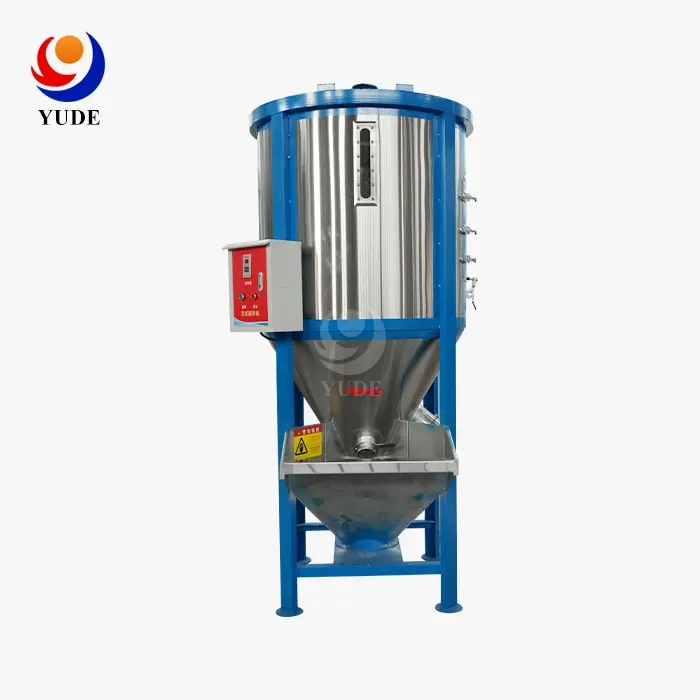
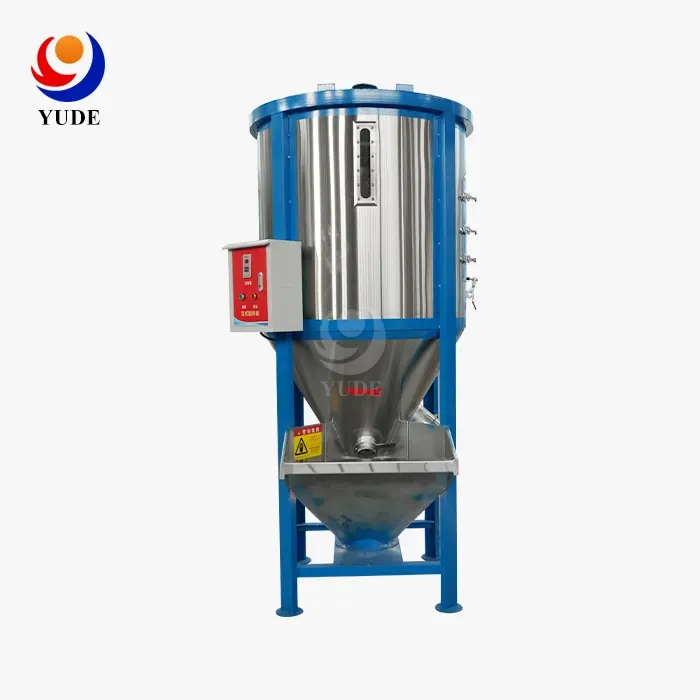
A vertical plastic color mixer works by using a centrally mounted spiral screw inside a conical or cylindrical chamber. The screw continuously lifts plastic pellets and color masterbatch from the bottom and releases them at the top, where they cascade down the inner wall by gravity. This repetitive circulation creates a fountain-like flow that distributes pigment evenly across every pellet. A quality pellets vertical color mixer achieves mixing uniformity of ≥99%, making it a trusted choice for color masterbatch producers who cannot afford batch-to-batch color variation.
Understanding the Basics of a Vertical Plastic Color Mixer
What It Is and Why It Matters?
Vertical Plastic Color Mixer is a machine used for mixing plastic pellets, color masterbatch and functional additives. The driving motor and screw are vertical so they are mounted on the top or the bottom of a tall cylindrical vessel. This allows the machine to have a tiny footprint on the floor and still be able to process huge batches. This translates into batch consistency for organizations producing color masterbatches and it’s checked by customers who see the delta E values on completed goods.
Key Mechanical Components
The machine consists of four basic parts: an electronic control cabinet, a low-speed spiral screw (typically rotating with a speed of 8-25 rpm), a gear reducer with overload protection, and a mixing chamber in the form of a cone or a cylinder. The low-shear spinning keeps the pellets from being broken and prevents the fine dust that is created by quicker agitators. The machine is protected against motor overload and over-temperature. Before the machine fails, it will send a notification to the operator.
Material Construction Options
Yude Plastic Machinery gives you two options for chamber materials for a pellets vertical color mixer. Q235 carbon steel is a cheap option for applications that need a single color or low contamination. The mirror-polished inside of 304 stainless steel doesn't let pigment stick to it, so color changes happen faster and more completely. Cross-contamination is much less likely with stainless steel for makers who often switch from dark shades to light ones, which is known to be very hard to do.
Benefits and Applications of Vertical Color Mixers in Plastic Pellet Processing
Vertical color mixers are unique not only because of what they do but also because of how quickly they do it. Because gravity helps the pellets move downhill, vertical ribbon blenders use less motor energy per ton of blended material than horizontal ribbon blenders of the same size. The small vertical footprint also keeps useful space on the factory floor.
Here are the main benefits that this tools brings to daily work:
- Mixing uniformity ≥99%: The spiral lifting circulation structure guaranties that color powder and masterbatch are coated on each pellet surface before batch discharge. This directly supports a Delta E of less than 1.0 for batch to batch color change, which is a level specified in quality contracts by many automotive and packaging companies.
- Integrated heating option: Temperature aided mixing helps to disperse wax coated pigments as well as some functional additives that require heat to move freely over particle surfaces. PID controlled heating offers ±1.5°C accuracy and prevents localized overheating which might harm delicate resins.
- Dust containment: Color powder is contained within the vessel in the enclosed chamber and low screw speed, safeguarding workshop air quality and decreasing housekeeping time between batches.
These benefits solve real problems in production. Shops that do injection molding make sure that high-gloss consumer goods don't get color streaks. Film blowing lines keep the color the same over long production runs. Brand owners give strict color specs to packaging converts in the form of Pantone or CIE Lab coordinates.
Injection Molding Pre-Blending
Operators put base resin and masterbatch into the vertical mixer for 15 to 40 minutes before putting pellets into an injection press. The mixed product then goes into the press hopper, so each shot comes from a pool of material that has already been mixed. When the colors are the same at the start and end of a shift, there is no waste at the beginning.
Film Blowing and Pipe Extrusion
A steady, even feed is needed for continuous extrusion lines. The big mixing silo acts as a buffer, evening out small changes in the concentration of the masterbatch. In this way, the "fish eye" flaws or structural problems that happen when pigment clusters enter the die unevenly are avoided.
Regrind Integration
Facilities that deal with used industrial waste mix new pellets with regrind chips that are different sizes and densities. The vertical screw action evens out this mixed feed's physical differences, which keeps the press hopper from becoming stratified.
Vertical Color Mixer vs. Other Mixing Technologies — Making the Right Choice
Vertical vs. Horizontal Mixers
Horizontal ribbon blenders move stuff from side to side with paddles that spin. When mixing smooth, round pellets, they tend to leave dead spots near the end walls, but they work well for powders. With a vertical mixer, there are no dead zones because the screw pulls material from the very bottom of the cone and spreads it out over the whole batch area. For the same amount of space, horizontal units also take up about two to three times as much floor space.
Vertical vs. Tumbler Blenders
Tumbler blenders turn the whole container, which works well for pellets that don't stick together but isn't useful for weights over 500 kg because it puts too much stress on the mountings of the container. There is no change in how a vertical color mixer works when it goes from 300 kg to 10 tons, which makes it more flexible as production volume rises.
Capacity and Budget Alignment
You can buy small models from Yude that weigh 300–500 kg, medium-sized ones that weigh 600 kg to 3 tons, and huge silos that weigh up to 10 tons. Each size of pellets vertical color mixer uses the same vertical spiral circulation principle, which makes it easy for operators who have learned how to use one model to use another. Buyers should match the mixer's capacity to about 60–70% of their daily flow needs. This way, buyers can leave room for production spikes without filling the mixer.
Maintenance and Troubleshooting Tips for Prolonged Mixer Performance
Routine Cleaning Protocol
Use dry compressed air or an ATEX-rated cleaner to clean the mixing area between color changes. Electrical parts should not come in contact with water. After removing the air, wipe the inside wall of 304 stainless steel cells with a dry cloth. The best way to stop cross-color contamination is to clean the inside of the container before the next batch.
Lubrication and Wear Inspection
Check the oil level in the gear reducer every 500 hours of use and replace the lubricant once a year or as directed by the manufacturer. Every three months, look for wear marks on the spiral screw and the chamber wall. Because abrasive fillers speed up wear on contact surfaces, inspections should be done once a month when working with mineral-filled compounds or materials loaded with glass fibers.
Diagnosing Uneven Mixing
If finished batches have different colors, it's usually because the vessel is too full (more than 90%), there wasn't enough time to mix, or the screw is worn out and can't lift the material from the bottom as well as it used to. Before calling for help, most uniformity issues can be solved by lowering the batch size to 80–85% of the stated capacity and making the cycle time 5–10 minutes longer.
Procurement Guidance: How to Select and Buy the Best Vertical Color Mixer?
Defining Your Technical Requirements
Start with three numbers: the number of color changes you do per shift, the goal batch size in kilograms, and the types of resins you handle. These three numbers tell you what kind of chamber material (carbon steel or 304 SS) you need, whether you need to heat the chamber, and what range of screw speeds will work best for your pellets' shape and size.
Evaluating Suppliers
Ask for material certificates for the chamber (304 or 316 SS mill test reports), documentation from CE or ISO, and records of the PID controller's calibration. Ask the supplier if they can do a test run with your own formula and resin. Before delivering, Yude Plastic Machinery tests the recipe to make sure it is correct. This takes the guesswork out of buying something.
International Buyer Considerations
Make sure the supplier can ship in a fumigated wooden box, give you instructions in more than one language, and change the control panel to fit the electrical standards in your area. Yude sells its products in more than 30 countries and has ties with local service providers to make sure that spare parts and expert help are always available. Before you sign, the lead time, the scope of the warranty, and the prices of spare parts should all be written down.
Conclusion
One of the hardest things about working with plastic is getting the color to spread evenly from batch to batch without slowing down production. A pellets vertical color mixer solves this problem. The low-shear rotating, vertical spiral lifting, and optional PID heating all work together to make sure that the mixing is regular, which formula engineers can check and quality managers can record. Picking the right mixer is important for keeping your products consistent and keeping good relationships with your customers, whether you make color masterbatch, modified compounds, or high-gloss packaging materials. First, figure out how much capacity you need, what materials you need, and how often you need to switch over. Then, match those factors with a provider who can back up performance claims with test data.
FAQ
Can a vertical color mixer handle multiple pellet types at the same time?
Yes. Within the same batch, the vertical screw circulation makes a full-vessel tumbling motion that works with cylindrical, spherical, and irregular regrind chips that are all pellet shapes. To let material move easily from the bottom to the top, it's important to keep the fill level below 90% of the capacity.
How often should I perform maintenance on a vertical color mixer?
If you're in a constant production setting, you should clean the chamber every time you switch colors, check the screw and gear reducer once a month, and change the gear oil every 500 hours or once a year. Every four weeks, the screw should be checked for wear in places that work with gritty mineral fills.
How much energy does a vertical mixer use compared to a horizontal blender?
It takes less work for the drive motor on a vertical mixer to move one ton of material because gravity helps the pellets move downward. Most of the time, vertical units use 20–35% less electricity than horizontal ribbon blenders of the same capacity. However, the exact savings depend on the density of the resin and the batch cycle time.
What is the standard mixing cycle time?
Within 15 to 40 minutes, most pellet and masterbatch mixes are 99% equal. The exact time depends on the concentration of the masterbatch, the texture of the pellet's surface, and whether heating is on or off.
Ready to Source a Pellets Vertical Color Mixer? Contact Yude Plastic Machinery
Yude Plastic Machinery makes vertical color mixers with PID heating, 304 stainless steel chambers, and CE/ISO approval. Their sizes range from 300 kg to 10 tons. We are a reliable pellets vertical color mixer supplier that works with over 30 countries. We offer formula verification testing, OEM labeling, and after-sales support 7 days a week, 24 hours a day. Send your batch size, resin type, and how often you want to change colors to sales@yudemachinery.com or go to yudemachinery.com to get a quote that fits your needs.
References
- Harper, C. A. (Ed.). Handbook of Plastics Technologies. McGraw-Hill, 2006.
- Rosato, D. V., & Rosato, M. G. Injection Molding Handbook (3rd ed.). Springer, 2000.
- Todd, D. B. "Mixing of Polymers." Plastics Engineering, Society of Plastics Engineers, 1998.
- Tadmor, Z., & Gogos, C. G. Principles of Polymer Processing (2nd ed.). Wiley-Interscience, 2006.
- Plastics Technology magazine. "Color Consistency in Masterbatch Production." Gardner Business Media, 2021.
- Brydson, J. A. Plastics Materials (7th ed.). Butterworth-Heinemann, 1999.
Learn about our latest products and discounts through SMS or email