- English
- French
- German
- Portuguese
- Spanish
- Russian
- Japanese
- Korean
- Arabic
- Greek
- German
- Turkish
- Italian
- Danish
- Romanian
- Indonesian
- Czech
- Afrikaans
- Swedish
- Polish
- Basque
- Catalan
- Esperanto
- Hindi
- Lao
- Albanian
- Amharic
- Armenian
- Azerbaijani
- Belarusian
- Bengali
- Bosnian
- Bulgarian
- Cebuano
- Chichewa
- Corsican
- Croatian
- Dutch
- Estonian
- Filipino
- Finnish
- Frisian
- Galician
- Georgian
- Gujarati
- Haitian
- Hausa
- Hawaiian
- Hebrew
- Hmong
- Hungarian
- Icelandic
- Igbo
- Javanese
- Kannada
- Kazakh
- Khmer
- Kurdish
- Kyrgyz
- Latin
- Latvian
- Lithuanian
- Luxembou..
- Macedonian
- Malagasy
- Malay
- Malayalam
- Maltese
- Maori
- Marathi
- Mongolian
- Burmese
- Nepali
- Norwegian
- Pashto
- Persian
- Punjabi
- Serbian
- Sesotho
- Sinhala
- Slovak
- Slovenian
- Somali
- Samoan
- Scots Gaelic
- Shona
- Sindhi
- Sundanese
- Swahili
- Tajik
- Tamil
- Telugu
- Thai
- Ukrainian
- Urdu
- Uzbek
- Vietnamese
- Welsh
- Xhosa
- Yiddish
- Yoruba
- Zulu
When does a plastic granule mixer need a heating and drying system?
A plastic granule mixer needs a heating and drying system when processing hygroscopic materials such as ABS, PET, PVC, or nylon that absorb moisture from the air. If pellets enter a molding or extrusion machine with residual moisture above 0.02–0.05%, the result is bubbles, splay marks, or weak mechanical properties in finished parts. Seasonal humidity, cold storage conditions, and regrind integration all raise moisture risk. Adding a heating and drying system to your pellet blending equipment is not optional in these cases — it is the difference between acceptable output and costly scrap.
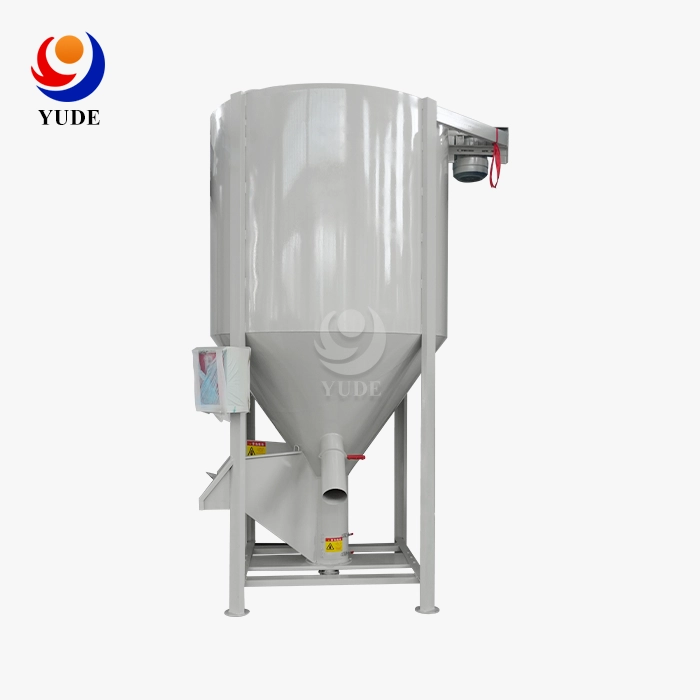
Understanding Plastic Granule Mixers and Their Core Functions
Before you decide if you need a heating and drying system, it's helpful to know what they do and how different types work with different things.
How Vertical Pellet Mixers Work?
A shaft or helix stirrer spins and moves things from the bottom of a cylinder-shaped chamber to the top, where they can be released. This makes a steady flow that moves the blend around like a waterfall. You can still mix it 98% of the time after 5 to 15 minutes. Most of the time, the screw spins at a speed of 200 to 400 RPM. The grains don't turn into dust because of this.
Equipment Design Variants
The tools used to mix pellets can be set up either across or straight down, and they may or may not have the ability to heat up. The vertical units use less energy per ton than the horizontal units with paddles. This is because they take up less floor space and let gravity help the material move. Some kinds have warmer walls, heating coils inside, or warm air pushed through them to keep the material warmer while it is being mixed.
Where Heating and Drying Fit In?
You don't always need heat. You don't have to do this often if you mix PE or PP before an extruder line. But if the substance soaks up water, changes temperature quickly, or has chemicals that react, it needs a mixer to keep the temperature stable before it goes to the machine that extrudes or injects.
Identifying When a Heating and Drying System Is Necessary
Adding things to keep things warm and dry will depend on the material, the work area, and the people who will be using it.
Hygroscopic Plastic Materials
Plastics that can take water from the air are polyester, ABS, PET, and PC. It is against SABIC's rules for PC glue to be more than 0.02% wet before it can be used. A little extra water is all it takes to make silver lines, surface cracks, or holes in the metal. Before they get to the machine's mouth, the pellets are mixed with water and dried.
High-Humidity Production Environments
Asia, along the coast of China, or in the warm parts of the Middle East have factory floors that are over 70% humid for most of the year. Things that don't soak up water can get wet on the outside when they are moved or kept. A hot mixing tool can take care of this right away.
Regrind and Recycled Material Integration
Flakes and fresh pellets have different amounts of water. They can hold more water because their rough surface area is bigger. Because the new and repaired materials have different amounts of water, this is done so that the end part doesn't break when the parts are mixed. This is something that is often done when making things for the market and car trim.
Comparing Mixers With and Without Heating and Drying Systems
You can build things with both kinds of tools. To make the best choice, you need to know what you have, how much you want to make, and some strict rules.
Performance Difference in Output Quality
A plastic granule mixer that doesn't get hot is good for dry materials that don't soak up water, like PE or PP. Be sure to keep the temperature low. It is possible to measure the quality of a batch by how much water it has when ABS, PET, or filled materials are added. As long as the PID temperature control keeps the temperature within ±1.5°C of the exact level, each batch is made the same way. That makes the difference smaller over time, which means that changes in color or mechanical qualities are less likely to happen.
Energy Consumption and Operating Cost
It takes more electricity to run tools that mix hot things. But the combined way usually has lower net running costs. They don't use a separate dryer because they mix and dry at the same time. This saves time and energy and speeds up the drying process. It also takes less time to fix problems that machines have caused by water. You can get your money back in 12 to 18 months if the price of scrap metal drops by only 1% to 2%.
Automation and Process Integration
These days, vertical pellet mixers with heating systems can send data about temperature and humidity to a main system that controls production. When injection molders work with auto or medical clients, they need to show proof that they prepared the materials as part of their quality certification. That's what this service for tracking batches helps them do. It is easy to use mixers that don't get hot, but they can't play this record.
Best Practices for Using Heating and Drying Systems in Plastic Granule Mixers
Follow the right steps and keep your hot mixing system in good shape to get the most out of it.
Set Correct Temperature and Time Parameters
It is said what temperature and length of time work best for each resin. PET needs to be dried at 160°C to 180°C for 4 to 6 hours most of the time. A mixer with built-in heating works faster and uses less energy because it stirs while heating, which makes it better at collecting heat. Always look over the supplier's specs and get new tools when they're dull.
Routine Cleaning and Inspection
When things are left on hot surfaces, they break down and get dirty in the next batch. Steel of the 304 grade is often used to make useful things, and it's simple to clean from one material or color to another. If you can reach panels without tools, it takes a lot less time to clean them. Check the heaters and weather sensors once a month.
Calibrate PID Controls Regularly
Each batch is different when the PID system changes by more than 3°C. Checking the heater's accuracy against a reference temperature on a regular basis keeps it within the ±1.5°C range needed for stable output. This is very important if you want to work with plastics that have changed color because the temperature changes how the filler spreads out and how well it works mechanically.
How to Choose the Right Plastic Granule Mixer with Heating and Drying Features?
It's important that the specs of the machine you choose fit the work you need to do, not the other way around.
Assess Your Material Requirements First
First, make a list of everything you use and how water changes it. This is the first thing you should do when you make something out of ABS, PC, or PET. If you only work with PE or PP in a room that stays a certain temperature, you might not need a tall mixer. The price will also go down.
Match Capacity to Production Throughput
You can figure out how much batch space you need by adding a delay to the usage per hour. You can mix things for 30 minutes, and your injection line can move 150 kg/hour. You need to be able to hold at least 75 kg to keep a cushion. You should weigh at least 100 kg. Any size of business can use the vertical mixing tools that Yude Plastic Machinery sells. It weighs between 300 kg and 10 tons.
Evaluate Supplier Support and Customization Capability
Because it has different temperature settings, a hot mixer is harder to use than a regular mixer for pellets. Pick a company that makes plastic granule mixers that can help you with engineering, can make different forms for different materials, and will be there for you after the sale. Get tools that can be used with the injection molding or extrusion line you already have without having to be changed a lot. It will help you save time and money.
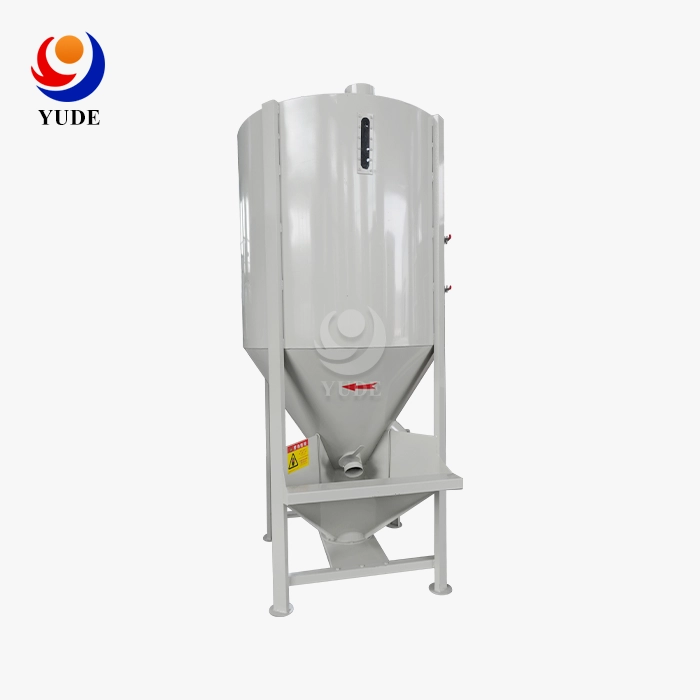
Conclusion
When working with plastics that don't like water, in places with a lot of humidity, or when you need to use regrind, you need to heat and dry the pellets. With the right plastic granule mixer, you can change how much waste there is, how always there is waste, and how well the line works in general. What kind of material, how much, and what level of quality should all be able to be done with the right tools. As far as warmth goes, a mixed-heated system is better because it makes things safer and less likely to go wrong. Dry things can be mixed well in regular vertical mixers.
FAQ
In order to find out if upgrading is possible, we need to look at how the equipment was made in the first place.
Can I retrofit a heating system onto my existing mixer?
The walls of the room need to be moved and the amount of power it can handle needs to be checked. Talk to the person who made it before you change anything.
Which plastic materials always require drying before processing?
Plastics like PBT, ABS, PC, nylon (PA6/PA66), and PET always soak up water and need to be dried first. When they're inside, PS, PP, and PE don't mind getting wet as much and don't need to be dried as often.
How often should heating elements be inspected?
First, going over things once a month is a good idea. Temp monitors should be fully calibrated every three months or whenever data on output quality shows that there is too much batch difference.
Does a heated mixer replace a standalone dehumidifying dryer?
Not all the time. If you need to keep the moisture level below 0.02% in PET or PC lines, you should still use a special dehumidifying fan. A warm mixer can help you dry and treat your hair a little.
Get a Customized Mixing Solution from Yude Plastic Machinery
Yude Plastic Machinery has helped many plastic businesses in more than 30 countries. Ten tons of stuff can fit in our biggest vertical plastic granule mixer. PID can change the temperature, and the screens for the users can be made in more than one language. SUS 304 steel can be used to make them. People who buy a plastic granule mixer from us can get help seven days a week, 24 hours a day. All of our buildings also have service available 24 hours a day. To get a quote or help with something technical, email us at sales@yudemachinery.com or visit yudemachinery.com.
References
- Harper, C. A. (Ed.). Handbook of Plastics Technologies. McGraw-Hill, 2006.
- Ossipov, P. & Todd, D. B. "Drying of Hygroscopic Polymers Before Processing." Plastics Technology, 2011.
- Brydson, J. A. Plastics Materials (7th ed.). Butterworth-Heinemann, 1999.
- Rosato, D. V. & Rosato, M. G. Injection Molding Handbook (3rd ed.). Kluwer Academic Publishers, 2000.
- Throne, J. L. Technology of Thermoforming. Hanser Publishers, 1996.
- PlasticsEurope. Plastics — The Facts 2022: An Analysis of European Plastics Production, Demand and Waste Data. PlasticsEurope, 2022.
Learn about our latest products and discounts through SMS or email