- English
- French
- German
- Portuguese
- Spanish
- Russian
- Japanese
- Korean
- Arabic
- Greek
- German
- Turkish
- Italian
- Danish
- Romanian
- Indonesian
- Czech
- Afrikaans
- Swedish
- Polish
- Basque
- Catalan
- Esperanto
- Hindi
- Lao
- Albanian
- Amharic
- Armenian
- Azerbaijani
- Belarusian
- Bengali
- Bosnian
- Bulgarian
- Cebuano
- Chichewa
- Corsican
- Croatian
- Dutch
- Estonian
- Filipino
- Finnish
- Frisian
- Galician
- Georgian
- Gujarati
- Haitian
- Hausa
- Hawaiian
- Hebrew
- Hmong
- Hungarian
- Icelandic
- Igbo
- Javanese
- Kannada
- Kazakh
- Khmer
- Kurdish
- Kyrgyz
- Latin
- Latvian
- Lithuanian
- Luxembou..
- Macedonian
- Malagasy
- Malay
- Malayalam
- Maltese
- Maori
- Marathi
- Mongolian
- Burmese
- Nepali
- Norwegian
- Pashto
- Persian
- Punjabi
- Serbian
- Sesotho
- Sinhala
- Slovak
- Slovenian
- Somali
- Samoan
- Scots Gaelic
- Shona
- Sindhi
- Sundanese
- Swahili
- Tajik
- Tamil
- Telugu
- Thai
- Ukrainian
- Urdu
- Uzbek
- Vietnamese
- Welsh
- Xhosa
- Yiddish
- Yoruba
- Zulu
What structure does plastic particle tilt spiral feeding machine use?
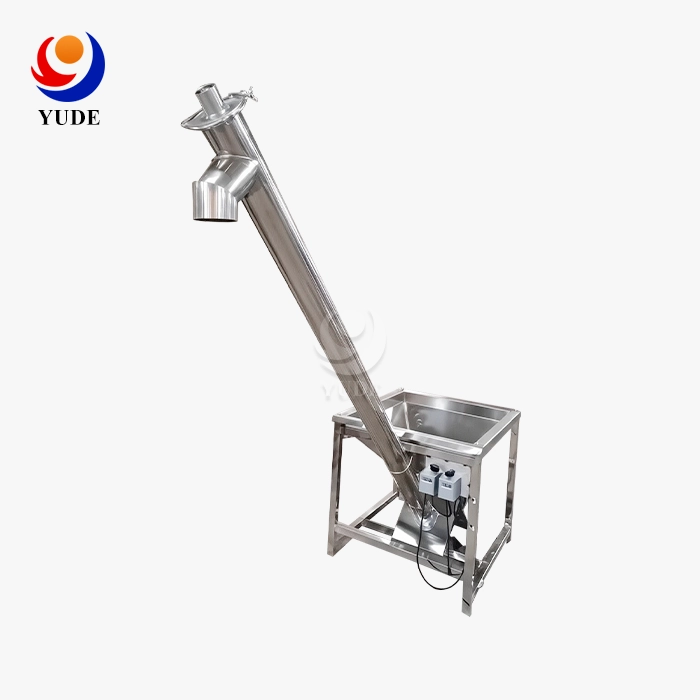
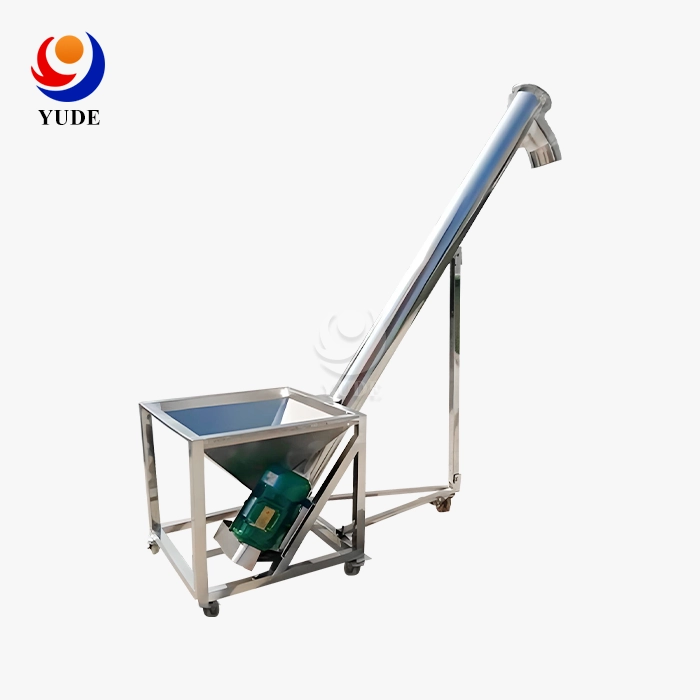
A plastic particle tilt spiral feeding machine https://www.yudemachinery.com/plastic-particle-feeder/plastic-particle-tilt-spiral-feeding-machineuses an enclosed inclined tube with a rotating screw inside it. A hopper takes in the pellets, a motor and gear reducer turn the screw, and the spiral flight lifts the material the slope to an outlet above the receiving machine. A frame holds the tube at the chosen angle, while a control panel and sensors start and stop the feeding. I see buyers choose this structure because it raises pellets without changing the building. This guide explains each part, how the parts work together, and how to match them to your plant.
What Are the Main Structural Components of a Plastic Particle Tilt Spiral Feeding Machine?
Hopper and Material Inlet
A plastic particle tilt spiral feeding machine starts at the hopper, which receives pellets, granules, or regrind from a bag, a box, or a loader. Its shape matters. Smooth, steep walls let material slide toward the screw, while a poor shape lets pellets bridge and starve the feeder. The inlet opening also sets how fast material drops onto the flight. Hopper volume, inlet height, and wall angle can be customized, so tell the supplier whether you want fewer refills or a smaller footprint. I always ask for this volume first, since it drives the rest of the layout.
Inclined Tube, Screw Shaft, and Flight
The tube is the enclosed channel that carries the pellets. Inside it, the screw shaft holds a spiral flight, and the flight edge pushes material forward with each turn. Pitch, flight diameter, and the gap between flight and tube wall decide how much material moves per turn. The ANSI/CEMA 350 standard for screw conveyors treats these as core design variables. Tight gaps suit fine pellets, while wider gaps suit irregular regrind that could jam. Because the tube is closed, dust stays in and room moisture stays out. That matters for resins such as PA and PET, which absorb water from the air.
Drive Unit, Frame, Controls, and Safety Devices
At the high end, a motor and gear reducer drive the screw through a coupling. A discharge outlet then drops the pellets into a machine hopper, a dryer, a mixer, or a storage bin. The frame holds the tube at the chosen angle, and some designs add height adjustment or caster wheels. A control panel starts and stops the motor, and a level sensor tells the feeder when the receiving hopper is full. Overload protection and an emergency stop guard the motor and the operator. Ask for the wiring diagram before purchase, so your electrician can tie the feeder into the existing control cabinet.
How Does a Plastic Particle Tilt Spiral Feeding Machine Work?
From Hopper to Outlet in Four Steps
The cycle is easy to follow for a plastic particle tilt spiral feeding machine. First, pellets fill the hopper. Second, the motor and reducer turn the screw at a set speed. Third, the spiral flight pushes the pellets up the tube, one pocket at a time. Fourth, the pellets fall from the outlet into the extruder, the dryer, or the mixer. When a level sensor sees a full receiving hopper, a PLC or relay signal stops the motor. When the level drops, the motor restarts. This automatic refill ends the trips up a ladder with a bag of resin. Speed, angle, pitch, fill level, and pellet traits all affect output.
Which Plastics a Tilt Spiral Feeder Handles
Virgin pellets of PE, PP, ABS, PS, PET, PA, and PC flow freely and convey easily. Masterbatch and additives also move through the tube, but they need tighter dosing control. Recycled pellets and regrind are tougher because their shapes are uneven, and they can bridge or slide back on a slope. For those materials, buyers often ask for larger clearances, an anti-bridging device, or a flight designed for flakes. Material name alone does not settle the choice. Particle size, moisture, bulk density, temperature, dust, and flowability matter just as much. A material test removes the guesswork.
How to Estimate Capacity
Sizing a plastic particle tilt spiral feeding machine starts with a simple relationship: capacity ≈ screw volume per revolution × speed × fill factor × bulk density. Larger diameter, longer pitch, and higher speed raise the number. Slope lowers it, because pellets slide back along the flight. Research on screw conveyors, including the discrete element study by Owen and Cleary (2009), shows that throughput falls as inclination rises. Catalog ratings use set materials and conditions, so real output can differ. I suggest adding a margin for startup, refill cycles, and future growth, without oversizing so far that you waste power and floor space. Always size the unit at the actual installation angle.
How Does a Tilt Spiral Feeder Fit Low Ceilings and Older Plants?
Set Angle and Length to the Space
Picture a plant with a ceiling around 14 feet high, where pipes, ducts, and columns fill the overhead zone. A plastic particle tilt spiral feeding machine solves this by trading height for length. A longer tube at a gentler angle reaches the same outlet height as a short, steep one, and it can run diagonally around obstacles. The right angle depends on the pellet shape. Round pellets hold a steeper slope than flakes and regrind, so confirm the allowed angle for your actual material before you fix the layout. Angle and length are the first two numbers I check on any retrofit.
Match Connections and Follow the Installation Order
After the angle, check the connection points. Measure the inlet height so operators and loaders can reach it. Then measure the discharge height and the opening on the receiving machine, such as a molding hopper, an extruder throat, or a mixer inlet. Size and seal the flanges so pellets and dust stay inside. Set the frame on a stable floor first, secure the supports and any caster brakes, then fit the tube. Electrical work follows: check voltage, grounding, motor protection, emergency-stop wiring, and sensor connections. A rigid screw runs in a straight line, so raise any route turn with the engineer early. Finish with an empty run and a material trial to check rotation, output, noise, vibration, and leaks.
What to Send Before Ordering
Retrofit work depends on exact numbers. I ask clients to send three things:
- Site photos and a dimensioned sketch: Show the ceiling height, beams, pipes, columns, and walkways along the proposed route. A hand drawing with measurements is enough for a first review, and it lets the engineer spot conflicts before any metal is cut. Include the floor-to-ceiling clearance at the tightest point.
- Material and output details: Name the resin, pellet or regrind size, bulk density, and the target kilograms or pounds per hour. Add moisture level and dust content if you know them. These numbers decide screw size, pitch, and the safe angle, so they carry the most weight in the quote.
- Connection and power data: Give the inlet height, outlet height, receiving flange size, voltage, phase, and any PLC or control cabinet details. Your electrician will also want to know where to tie in the signal wires. Clear data here helps the team plan the installation inside your shutdown window.
With these, the engineer can propose an angle and length and return a layout drawing before you commit.
How Does a Tilt Spiral Feeder Compare with Other Conveying Equipment?
Versus Vacuum Loaders
Vacuum loaders move pellets through a pipe with suction. They suit long runs, many pickup points, and fully enclosed transfer, but they need a pump and filters that require cleaning. A plastic particle tilt spiral feeding machine moves material mechanically along a direct path, so it does not depend on airflow. It works well for a single lift between two points. If one material must reach six machines across a large hall, a vacuum system may fit better. If you need one steady lift from a floor-level hopper to a mixer or dryer, the screw is simpler.
Versus Belt and Vertical Screw Conveyors
Belt conveyors treat pellets gently and let you see the material, yet they need more floor length and connect less directly to a machine throat. Vertical screw conveyors lift straight up and save floor space, but they need full overhead height, which defeats the purpose in a low building. The tilted design sits between the two. It uses less floor length than a flat belt and less height than a vertical screw. Each type has a place, and I do not recommend one for every plant. Distance, lift height, layout, and material fragility decide the choice.
Versus Gravimetric Dosing
A feeder moves material; it does not weigh it. A gravimetric dosing system measures the feed by weight and controls ratios for masterbatch and additives. Some lines use both: the plastic particle tilt spiral feeding machine lifts base resin into a hopper, and a dosing unit meters the additive. Mixing is a third function, because a mixer blends colors and additives after the feeder delivers them. If your recipe tolerance is tight, plan on dosing equipment. If you only need steady replenishment of a machine hopper, a feeder with a level sensor does the job.
How Can Buyers Select, Pair, and Maintain a Plastic Particle Tilt Spiral Feeding Machine?
Choose Steel Grade and Controls
Carbon steel suits standard industrial plants and keeps cost down. Stainless steel resists corrosion and cleans easier, which helps with frequent color changes or food-contact packaging. Make sure the quote names one grade clearly, because mixed grades on a data sheet cause disputes at delivery. Review speed control, level-based automation, PLC connection, safety functions, and maintenance access before you buy. Look past price as well. Compare customization ability, spare-part supply, manuals, commissioning help, and the total cost of ownership over several years.
Pairing the Feeder with a Yude Vertical Mixer
A plastic particle tilt spiral feeding machine often feeds a mixer first, then a molding or extrusion machine. Yude Plastic Machinery builds vertical plastic mixers with a single-screw mixing structure that keeps material circulating. They suit PE, PP, ABS, and PVC pellets, with mixing uniformity of 98% or higher and a stirring shaft speed of 30 to 60 r/min. A three-phase asynchronous motor, matched to the tonnage, drives a heavy-duty gear reducer. The barrel is Q235 carbon steel with an anti-stick coating on the inner wall, and the screw blades are wear-resistant. Effective volume can be customized by model. These mixers serve granulation, injection molding, and film blowing pre-processes, including color mixing and modification.
Common Problems and Routine Checks
Uneven feeding, low output, bridging, vibration, and motor overload account for most complaints. Bridging often comes from moisture or irregular particles, so check the hopper and material first. Low output can come from the wrong screw speed or a steep angle. Vibration points to misalignment, worn bearings, or foreign objects in the tube. Overload can mean a jam or an undersized motor. Adjust speed gradually, and clean the tube whenever you change colors. A routine check covers fasteners, seals, gearbox oil, electrical connections, sensors, and safety devices. Keep a wear log, because it shows when spare parts will be needed.
Conclusion
A plastic particle tilt spiral feeding machine is a complete conveying system, not just a screw with a motor. The hopper, enclosed inclined tube, rotating screw, drive unit, discharge outlet, frame, sensors, and controls work together to lift free-flowing pellets along a closed path. Output depends on screw size, pitch, speed, fill level, bulk density, and angle, and it falls as the slope rises. Regrind and flakes need more care than virgin pellets. Compared with vacuum loaders, belts, and vertical screws, the tilted design suits single lifts in low or crowded spaces, while dosing units handle exact additive control. Good selection starts with angle, length, connection heights, material data, and steel grade, followed by correct installation and regular checks.
FAQ
What does a quotation for a plastic particle tilt spiral feeding machine need?
Share the material type, particle size, bulk density, target output, lift height, connection sizes, voltage, and control needs. Site photos help the engineer check the route.
Can a tilt spiral feeder handle regrind?
Often yes, but regrind usually needs a gentler angle, larger clearance, or an anti-bridging device. A material test confirms the right setup.
Does a steeper angle change output?
Yes. Output falls as the angle rises, so size the machine at the real installation angle.
Is carbon steel or stainless steel better?
Carbon steel fits standard plants and controls cost. Stainless steel suits corrosion risk and frequent cleaning.
How does it differ from a vacuum loader?
A screw lifts pellets mechanically along a direct path. A vacuum loader uses suction and suits long runs to many machines.
Request a Plastic Particle Tilt Spiral Feeding Machine Recommendation or Quotation
Looking for a plastic particle tilt spiral feeding machine supplier that reviews your floor plan before quoting? Yude Plastic Machinery manufactures plastic mixers, exports to more than 30 countries, and offers customized solutions, non-standard sizes, multilingual operation interfaces, and 7×24-hour after-sales support. Email your material, output, height, and voltage to sales@yudemachinery.com, or visit yudemachinery.com. Our engineers will study your layout and reply with a suggested configuration.
References
1. Conveyor Equipment Manufacturers Association, Screw Conveyors for Bulk Materials (ANSI/CEMA 350), 2015
2. Owen, P.J. and Cleary, P.W., Prediction of Screw Conveyor Performance Using the Discrete Element Method (DEM), Powder Technology, 2009
3. Roberts, A.W., The Influence of Granular Vortex Motion on the Volumetric Performance of Enclosed Screw Conveyors, Powder Technology, 1999
4. McGlinchey, D. (Ed.), Bulk Solids Handling: Equipment Selection and Operation, Blackwell Publishing, 2008
5. Rosato, D.V., Rosato, D.V., and Rosato, M.G., Injection Molding Handbook, Springer, 2000
6. Kutz, M. (Ed.), Applied Plastics Engineering Handbook: Processing and Materials, Elsevier, 2011
Learn about our latest products and discounts through SMS or email