- English
- French
- German
- Portuguese
- Spanish
- Russian
- Japanese
- Korean
- Arabic
- Greek
- German
- Turkish
- Italian
- Danish
- Romanian
- Indonesian
- Czech
- Afrikaans
- Swedish
- Polish
- Basque
- Catalan
- Esperanto
- Hindi
- Lao
- Albanian
- Amharic
- Armenian
- Azerbaijani
- Belarusian
- Bengali
- Bosnian
- Bulgarian
- Cebuano
- Chichewa
- Corsican
- Croatian
- Dutch
- Estonian
- Filipino
- Finnish
- Frisian
- Galician
- Georgian
- Gujarati
- Haitian
- Hausa
- Hawaiian
- Hebrew
- Hmong
- Hungarian
- Icelandic
- Igbo
- Javanese
- Kannada
- Kazakh
- Khmer
- Kurdish
- Kyrgyz
- Latin
- Latvian
- Lithuanian
- Luxembou..
- Macedonian
- Malagasy
- Malay
- Malayalam
- Maltese
- Maori
- Marathi
- Mongolian
- Burmese
- Nepali
- Norwegian
- Pashto
- Persian
- Punjabi
- Serbian
- Sesotho
- Sinhala
- Slovak
- Slovenian
- Somali
- Samoan
- Scots Gaelic
- Shona
- Sindhi
- Sundanese
- Swahili
- Tajik
- Tamil
- Telugu
- Thai
- Ukrainian
- Urdu
- Uzbek
- Vietnamese
- Welsh
- Xhosa
- Yiddish
- Yoruba
- Zulu
What material does plastic feeder convey?
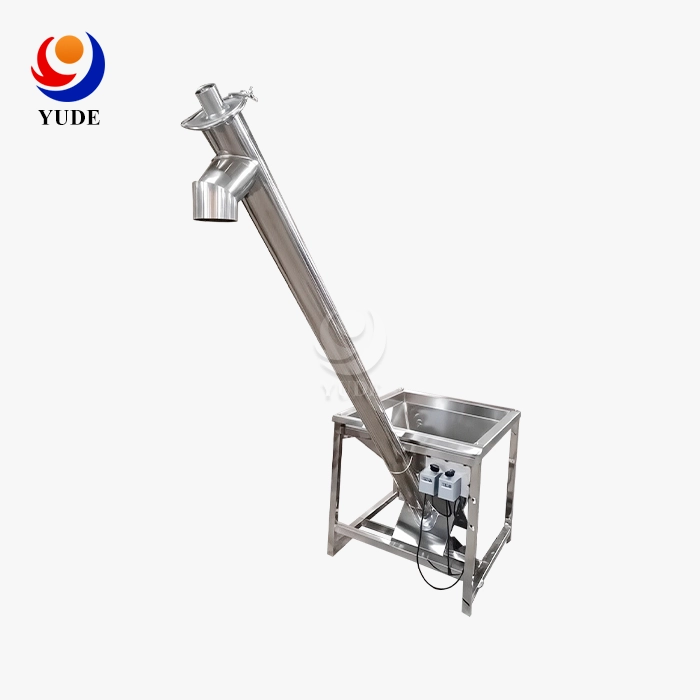
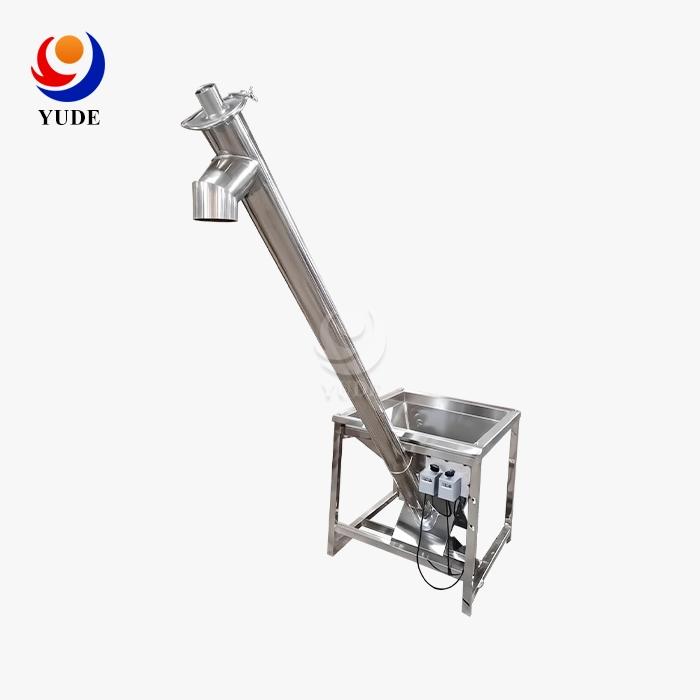
A plastic feederhttps://www.yudemachinery.com/plastic-particle-feeder/plastic-feeder conveys different materials depending on where you use it. On a farm, it holds dry animal feed such as grain, pellets, and mash. In a factory, the equipment we build moves plastic pellets, also called granules, to a mixer, granulator, injection molding machine, or film blowing line. At Yude Plastic Machinery, I focus on this second meaning. Our Universal Plastic Pellet Feeder delivers dry pellets at a steady, adjustable rate through sealed pipes. Below, I explain which materials suit this equipment, which ones need a different design, and how to choose a unit for your line.
Understanding What a Plastic Feeder Conveys
Two Meanings of the Term
People use the phrase "plastic feeder" for two different things. The first is a feeder made of plastic, such as a chick feeder, a hanging poultry feeder, or a birdseed tray. These molded products hold dry feed, seeds, and supplements. The second is equipment that moves plastic material, such as virgin pellets, through a production line. In the first case, the name describes the body of the product. In the second, it describes the cargo. Buyers often mix these up during an online search, and that costs them time. If you run a molding, extrusion, or granulation plant, you need the second type, so the rest of this article follows that meaning.
What Our Pellet Feeder Conveys
The Universal Plastic Pellet Feeder is built for plastic production lines. It conveys plastic pellets with uniform, stable feeding, and you can adjust the speed to match the output of each line. Sealed feeding pipes keep dust from leaking into the workshop. An electric control cabinet runs the unit centrally and links its operation with mixers, granulators, and injection molding machines. You can use it in plastic granulation, injection molding, and film blowing lines, and it can match mixers of various tonnages. That pairing raises the level of automation and reduces manual loading at the hopper.
How It Differs From Conveyors and Hoppers
A hopper only stores material. A conveyor only moves it from one point to another. A pellet feeder does both jobs in a controlled way: it takes pellets from a supply point and delivers them at an adjustable rate to the next machine. That rate matters. Too much material wastes resin and floods the machine throat, while too little leaves the machine starved. I also ask buyers to think about the signal link. A feeder tied to the control cabinet can start and stop with the mixer or molding machine, while a plain conveyor runs until someone switches it off.
What Materials Can a Plastic Feeder Convey?
Pellets and Granules for Everyday Production
In a factory, a plastic feeder handles dry, free-flowing pellets as its main cargo. These include virgin resin such as polyethylene and polypropylene, plus granules that come out of a granulation line. Pellets usually measure a few millimeters across, which lets them flow evenly through a sealed pipe. I group the common jobs this way: pellets feeding an injection molding machine, resin heading to a film blowing line, and mixed batches moving from a vertical mixer to the next step. When your material is dry, clean, and uniform in size, the Universal Plastic Pellet Feeder fits well. Send us your resin grade and pellet size, and we will confirm the match before you order.
Materials That Need Another Design
Some materials need a different feeder, and I would rather say so up front. Our unit uses Q235 carbon steel, which is practical and cost-effective for dry pellets. Carbon steel can rust when it touches moisture, so wet material, washed flakes from a recycling line, or corrosive additives may call for stainless steel or a protective option. Fine powders, shredded film, and irregular regrind also flow differently from pellets and may bridge or jam a pellet feeder. Sticky or oily compounds leave residue and need frequent cleaning. If your line handles any of these, send a sample or a description, and our technical team will tell you honestly what the equipment can and cannot do.
How Pellet Properties Affect Feeding
Four properties decide how well pellets move: size, moisture, bulk density, and flowability. ASTM D1895 describes standard methods for measuring apparent density, bulk factor, and pourability of plastic materials, so you can compare lots with real numbers. Jenike's research on bulk solids, published in 1964, explained how material can arch across an outlet and stop flowing, which many operators call bridging. Pellets bridge less often than powders, yet a damp lot or a mix of sizes can still cause trouble. Hygroscopic resins such as nylon also need drying before processing, and a feeder does not replace a dryer. Check these properties before you finalize your choice.
Main Types, Benefits, and Limits of a Plastic Feeder
Main Types by Application
Farm feeders come as chick feeders, troughs, hanging units, and pan feeders, and each suits one kind of animal. Factory feeders follow a different logic. They are grouped by the line they serve: a granulation line, an injection molding workshop, or a film blowing line. Within that group, you can choose manual gravity-fed loading or a motor-driven unit with a control cabinet. For plants that run many machines, the controlled version makes more sense because it links to the mixer and the molding machine. Our Universal Plastic Pellet Feeder belongs in this controlled group. It is an industrial product, not a farm product.
Practical Benefits for Production Lines
A plastic feeder gives your line three clear benefits. Feeding is uniform and stable, so the machine receives material at a steady rate. The speed is adjustable, which lets you match each line's output instead of running everything at one setting. Sealed feeding pipes limit dust leakage, which keeps the floor cleaner and cuts material loss. Add the electric control cabinet, and the feeder works in step with mixers, granulators, and injection molding machines. Together, these features support automation and reduce waste. I cannot promise a specific saving for every plant, because results depend on your resin, layout, and current loading method. I suggest a trial comparison against your manual process.
Limits You Should Know
Every design has limits, and I prefer to state them clearly. The Universal Plastic Pellet Feeder is made for pellets, not for powders, wet flakes, or abrasive filled compounds that wear steel quickly. Its Q235 body suits dry workshops better than damp ones. Its speed control adjusts the feed rate, but I do not present it as a high-precision, multi-component dosing system. Plastic-bodied farm feeders have their own limits: low-cost ones may crack, warp, or fade under UV light. Knowing these edges early helps you avoid a poor match and a costly return.
Plastic Feeder vs. Metal or Wooden Feeder: Which Is Better?
Where a Plastic Body Works
A plastic body weighs little, resists rust, and cleans easily, which is why it dominates farm and garden use. Polypropylene and polyethylene are common resins for these products, and ABS or engineering plastics appear where impact matters. Resin choice, wall thickness, UV stabilizers, and molding quality all affect service life. In a humid barn, a plastic feeder often resists moisture better than bare steel. In a production plant, though, the unit moves pellets continuously and works with a control cabinet, so frame strength and drive matter more than low weight. Before you buy any outdoor unit, ask the maker for the resin grade and UV treatment.
Where Q235 Carbon Steel Fits
Q235 is a common structural carbon steel, and the number refers to a minimum yield strength of 235 MPa. It gives a rigid frame at a practical price, which suits a dry plant floor. Its weakness is corrosion: ASM Handbook Volume 13A covers how iron-based metals corrode in moist or chemical settings. That is why I recommend the Universal Plastic Pellet Feeder for dry pellets and talk openly about options when your environment is humid. For hygiene-critical work, stainless steel is the better contact surface. Yude Plastic Machinery already builds stainless steel plastic mixers, so we can discuss special material needs with you.
Wooden Feeders and the Final Choice
Wooden feeders for a plastic feeder suit decorative or traditional settings, yet they need more upkeep and moisture protection, so they rarely appear in industrial work. For a molding or film plant, the real comparison is between plastic, carbon steel, and stainless steel. Ask yourself four questions. Is the material dry? Does the unit need to link with a control cabinet? Will humidity or washdown be present? Do local rules require a specific material? If most answers point to dry pellets in a controlled workshop, a Q235 pellet feeder is a sound, economical choice. If humidity or corrosion is likely, raise it with us first.
Choosing, Installing, and Buying From a Plastic Feeder Manufacturer
Choosing the Right Unit
Start with your line data: resin type, pellet size, target output per hour, number of machines, and the distance from the supply point to each hopper. Then check the interface with the mixer or machine, including height, flange size, and the control signal. Many problems start because nobody owns that interface, so I ask each buyer to name one responsible party in the purchase order. Confirm your plant's electrical standard as well, since many US plants run at 60 Hz. Request the power rating, conveying capacity, and outline dimensions in writing, because your layout drawing and electrical load calculation need them. Send us your line data, and we will confirm the match.
Installing and Cleaning
Mount the feeder on a firm, level base, and align the sealed feeding pipe so it meets the hopper without gaps. Connect the control cabinet to the mixer or molding machine, then test the interlock before you load production resin. Run a small test batch and watch the flow for blockages. For cleaning, empty the remaining pellets, remove dust and residue with dry methods, and keep water away from carbon steel parts. If moisture gets in, dry the unit thoroughly. When you switch resin or color, clean the contact surfaces carefully to avoid cross-contamination, and follow the maintenance instructions from your supplier.
Buying in Bulk and Choosing a Manufacturer
If you are adding lines, ask for a multi-unit quotation, a delivery schedule by batch, and a written split of responsibility for the interface. Separate the price of equipment, packaging, freight, and taxes, and confirm the Incoterm, payment terms, and who prepares customs documents. Yude Plastic Machinery exports to more than 30 countries across Southeast Asia, the Middle East, Europe, and South America, and works with overseas agents. We run full-process quality inspection from raw materials to the finished unit and offer 7×24 after-sales support. We can also customize multilingual operation interfaces and modifications for local standards. Review these points with any supplier you consider.
Conclusion
A plastic feeder can mean a molded farm feeder for dry animal feed or equipment that moves plastic pellets in a factory, and the second meaning applies to production lines. Dry, free-flowing pellets suit the Universal Plastic Pellet Feeder, which offers steady feeding, adjustable speed, sealed pipes, and centralized control that links with mixers, granulators, and injection molding machines. Wet, abrasive, powdery, or corrosive material needs a different design or material, mainly because Q235 carbon steel can rust. Size, moisture, density, and flowability decide performance. The interface, electrical standard, and material choice deserve review before a purchase. Comparing plastic, carbon steel, and stainless steel against your operating environment gives the clearest decision.
FAQ
What material does a plastic feeder convey in a factory?
It conveys dry plastic pellets to mixers, granulators, injection molding machines, and film blowing lines. Pellet size, moisture, and flow behavior decide the final fit, and wet, powdery, or sticky material needs a different design.
Can the Universal Plastic Pellet Feeder handle wet material?
I do not recommend it. The body uses Q235 carbon steel, which can rust when it meets moisture. If your process involves wet or corrosive material, tell us early so we can discuss special material requirements.
Does the feeder connect with other machines?
Yes. The electric control cabinet supports interlinked operation with mixers, granulators, and injection molding machines. Confirm the height, flange, and signal details in writing before delivery.
What information do you need for a quotation?
Send the resin type, pellet size, required output, number of units, voltage and frequency, and destination country. If you need several units, add your target delivery dates, and our team will discuss a delivery plan with you.
Contact Yude Plastic Machinery for Your Plastic Feeder Quote
Yude Plastic Machinery is a plastic feeder manufacturer and mixer producer serving customers in more than 30 countries. Send your resin type, pellet size, output target, and number of units to sales@yudemachinery.com, and our team will recommend a Universal Plastic Pellet Feeder configuration, backed by 7×24 after-sales support. Visit yudemachinery.com to review our mixer range, and ask about multi-unit quotations and multilingual interfaces.
References
1. ASTM D1895 Standard Test Methods for Apparent Density, Bulk Factor, and Pourability of Plastic Materials, ASTM International, 2017
2. Storage and Flow of Solids, Utah Engineering Experiment Station, 1964
3. ASM Handbook, Volume 13A: Corrosion: Fundamentals, Testing, and Protection, ASM International, 2003
4. Injection Molding Handbook, Springer, 2000
5. Plastics Extrusion Technology, Hanser Publishers, 1997
6. Principles of Polymer Processing, Wiley, 2006
Learn about our latest products and discounts through SMS or email