- English
- French
- German
- Portuguese
- Spanish
- Russian
- Japanese
- Korean
- Arabic
- Greek
- German
- Turkish
- Italian
- Danish
- Romanian
- Indonesian
- Czech
- Afrikaans
- Swedish
- Polish
- Basque
- Catalan
- Esperanto
- Hindi
- Lao
- Albanian
- Amharic
- Armenian
- Azerbaijani
- Belarusian
- Bengali
- Bosnian
- Bulgarian
- Cebuano
- Chichewa
- Corsican
- Croatian
- Dutch
- Estonian
- Filipino
- Finnish
- Frisian
- Galician
- Georgian
- Gujarati
- Haitian
- Hausa
- Hawaiian
- Hebrew
- Hmong
- Hungarian
- Icelandic
- Igbo
- Javanese
- Kannada
- Kazakh
- Khmer
- Kurdish
- Kyrgyz
- Latin
- Latvian
- Lithuanian
- Luxembou..
- Macedonian
- Malagasy
- Malay
- Malayalam
- Maltese
- Maori
- Marathi
- Mongolian
- Burmese
- Nepali
- Norwegian
- Pashto
- Persian
- Punjabi
- Serbian
- Sesotho
- Sinhala
- Slovak
- Slovenian
- Somali
- Samoan
- Scots Gaelic
- Shona
- Sindhi
- Sundanese
- Swahili
- Tajik
- Tamil
- Telugu
- Thai
- Ukrainian
- Urdu
- Uzbek
- Vietnamese
- Welsh
- Xhosa
- Yiddish
- Yoruba
- Zulu
Can the effective volume of plastic particle powder screw feeder be customized?
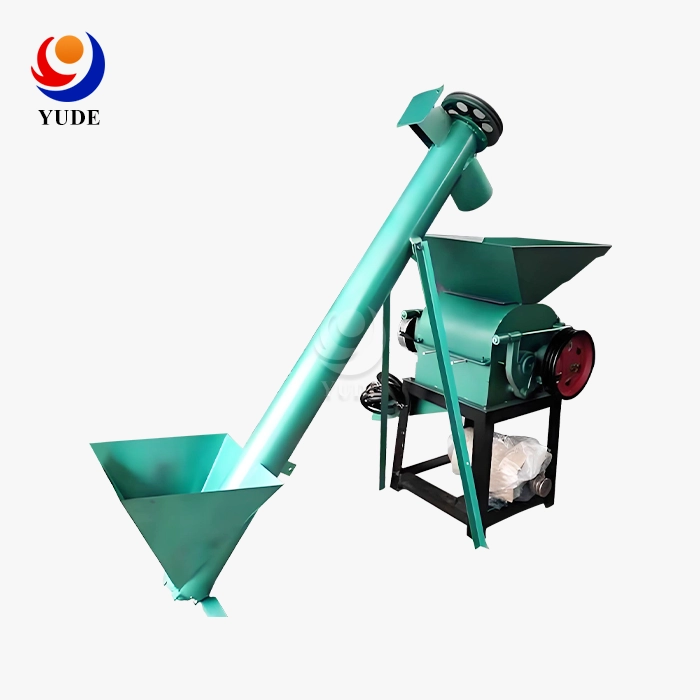
The effective volume of a plastic particle powder screw feeder https://www.yudemachinery.com/search?keywords=plastic%20particle%20powder%20screw%20feedercan be customized. The effective volume is the amount of material the unit can hold and deliver consistently, and it is always smaller than the hopper's total geometric volume. Manufacturers adjust it by changing hopper dimensions, screw size, outlet shape, sensors, and control settings. The right number depends on your material, feed rate, refill schedule, and available space. I will walk through how those factors work, how to choose a volume for extrusion, injection molding, and film blowing, and what information to send a supplier so your quote matches your line.
What Determines the Effective Volume of a Plastic Particle Powder Screw Feeder?
Total, Usable, Minimum, and Reserve Volume
Total volume is the full geometric space inside the hopper. Usable volume is the part you can fill and empty during normal running. Minimum volume is the level below which the screw can starve, or the feed rate starts to drift. Reserve volume is the buffer that keeps production going while an operator or loader refills the hopper. I always tell buyers to separate these four numbers on a spec sheet. A hopper marked 800 liters might give only a fraction of that as stable working volume once you subtract headspace and the minimum level. Asking for the usable figure prevents surprises after installation.
How Material Properties Change the Number
Bulk density sets how many kilograms fit in each liter. PVC resin powder, ground calcium carbonate, and PE pellets all differ, so one hopper holds a different weight of each. Flowability matters just as much. Fine, cohesive powders can form a bridge or a rat hole above the screw, and the material above the outlet never reaches the flights. Moisture, static charge, particle size, and compressibility push in the same direction: sticky or packed material lowers the volume you can use with confidence. In a PVC pipe dry-blend line, a gap in feed can show up as wall thickness variation. I treat bridging as a design problem, not a user mistake. Engineers measure flow properties with shear testing such as ASTM D6128 to set hopper angles and outlet sizes.
A Simple Way to Estimate Working Volume
Use this formula: working volume in liters equals feed rate in kg/h, times hours between refills, divided by bulk density in kg/L. Say a line feeds 200 kg/h (about 440 lb/h), you want a two-hour refill interval, and your measured bulk density is 0.6 kg/L. That gives about 667 liters, or roughly 23.6 cubic feet. Then add the minimum level and a reserve on top, and check the headroom in your plant. Measure bulk density on your own sample, for example with ASTM D1895, because datasheet values can differ from what sits in your bins. Treat the result as a starting point that a feeding test should confirm.
How Is the Effective Volume of a Plastic Particle Powder Screw Feeder Customized?
Hopper and Screw Geometry
The most direct changes are physical. A manufacturer of a plastic particle powder screw feeder can adjust hopper width, height, and length, set the working level, move the outlet, and change screw diameter, pitch, and length. A wide, low hopper fits a plant with limited ceiling height. A taller hopper cuts the number of refills. Neither choice helps if the material bridges, because extra storage adds weight on the powder and can pack it harder at the outlet. For that reason, I select hopper volume and screw size together. A larger screw moves more material per revolution, so the unit can hold the required feed rate at a lower speed.
Sensors, Agitators, and Flow Aids
Controls keep the unit inside its stable working range. Level sensors signal when to refill, and load cells allow loss-in-weight control for tighter dosing. For cohesive powders, designers may add agitators, bridge breakers, vibrators, or fluidizing devices to keep material moving toward the screw. These are options you choose based on your material, not add-ons everyone needs. Free-flowing pellets often run well without them, while fine powders such as PVC resin or mineral fillers may need help. Settings like the low-level alarm and refill trigger are also adjustable, so you can change the usable volume without touching the steel.
Dust Control and Contact Surfaces
Dust is a daily concern with powders, and it often triggers the purchase request in the first place. Sealed covers and connections for dust extraction keep fine particles inside the system and out of workshop air. Contact surfaces matter too. Stainless steel is common where additives are corrosive or cleaning is frequent, while wear-resistant screw surfaces suit abrasive fillers such as ground calcium carbonate, which wears screws and shaft seals over months of running. Quick-release parts and inspection doors shorten color changes. Each of these features takes up space or changes the internal shape, so I bring them into the volume discussion from the start.
Choosing Volume for a Plastic Particle Powder Screw Feeder in Different Applications
Extrusion and Compounding Lines
Extruders and compounding lines run for long periods, and any gap in feed shows up in the product. These lines usually favor a larger working volume, automatic refilling, and gravimetric control, and some applications use twin-screw configurations. In a PVC pipe or profile plant, the feeder has to match the batch time of the mixer, not just the top speed on a datasheet. A buyer who sends me the hourly output and the mixing cycle gets a far more useful recommendation than one who asks only for the biggest model. Abrasive fillers add one more check: screw and seal wear, because worn parts change the delivery per revolution.
Injection Molding and Film Blowing
Injection molding often runs in short cycles with easy access for refilling, so a compact unit with a smaller working volume usually works for a plastic particle powder screw feeder. Film blowing sits between the two. It needs steady output, and the color or additive ratio changes the look of the film, so dosing consistency matters more than a huge hopper. This is where Yude's vertical mixer fits. It is built for pre-processes such as plastic granulation, injection molding, and film blowing, and it handles pellet color mixing and modification. Blending the pellets before they reach the machine, then feeding at a steady rate, keeps the recipe stable. The effective volume of the mixer is customizable by model, so you can match it to your line.
Powders, Pellets, and Recycled Material
PVC powder, polyethylene powder, and masterbatch behave differently in a feeder. Pellets such as PE or PP flow freely and need little agitation. Fine powders and additives cohere and need flow aids. Recycled material brings irregular shapes, contamination, and changing bulk density, which raises the bridging risk and makes gravimetric control more attractive. Because of these differences, I recommend testing your real material instead of relying on a general table. A sample run shows the minimum stable fill level, the feed range, and any cleaning problems. Material changeover is another test point, since residue left in the hopper can affect the next batch.
Effective Volume, Capacity, and Dosing Accuracy: How Do They Relate?
Three Related but Different Numbers
Effective volume (liters), feeding capacity (kg/h), and dosing accuracy (percent) answer different questions. Volume tells you how long the feeder runs between refills. Capacity tells you how much material it delivers per hour. Accuracy tells you how closely the delivered amount matches the setpoint. Buyers often ask first, "How many kilograms per hour?" That is a fair question, and when you compare quotes for a plastic particle powder screw feeder, the answer should come with a verified feeding range for your material, not only a maximum. Ask for the nominal volume and the tested range side by side. An accuracy figure such as ±0.5% only means something when the supplier states the test conditions.
Volumetric vs. Gravimetric Feeding
A volumetric feeder counts screw revolutions and assumes each turn delivers the same volume of material. If bulk density changes, the weight delivered changes with it. A gravimetric, or loss-in-weight, feeder weighs the hopper and adjusts screw speed in real time to hold the target rate. It costs more, but it corrects for density shifts, which is why it suits recycled material and high-filler recipes. Volumetric feeding works well when density stays steady and accuracy needs are moderate. Refill moments need a closer look, because the control briefly cannot trust the weight signal while new material enters. Ask any supplier how accuracy behaves during refill and under what conditions the stated figure was measured.
How Volume Choices Affect Accuracy
Size the working volume of a plastic particle powder screw feeder with accuracy in mind. An undersized hopper means frequent refills and unstable pressure at the screw. An oversized hopper can raise residence time, compaction, and segregation of blended material. Screw speed, wear, calibration, and installation vibration also affect the result. Wear matters most with abrasive fillers: as the flights wear, delivery per turn changes, so schedule calibration checks. A repeatability test is simple. Collect the output over equal time intervals at several speeds, weigh each sample, and compare the results. Run it with your real material, because a test with a different powder tells you little about your line.
Customization Options for a Plastic Particle Powder Screw Feeder Order
Standard or Custom?
A standard plastic particle powder screw feeder is enough when the material flows freely, the needed capacity matches an existing size, space is flexible, and accuracy needs are moderate. Customization pays off when the hopper must fit a tight space, the material bridges or compacts, the volume is unusually small or large, or the unit must connect to a specific extruder, mixer, or control system. Custom work adds engineering, special materials, testing, and documentation to the price. Compare total value instead of the purchase price alone. Maintenance, downtime, scrap, and integration effort often cost more than the difference between two quotes.
What Yude Plastic Machinery Can Customize
Shandong Yude Plastic Machinery Co., Ltd. makes vertical plastic mixers from 600 kg to 10 tons, small pellet mixers of 300 to 500 kg, stainless steel mixers, and vertical color mixers. The vertical single-screw design circulates material smoothly and suits PE, PP, ABS, and PVC pellets, with mixing uniformity of at least 98%. The stirring shaft runs at 30 to 60 r/min, driven by a three-phase asynchronous motor matched to tonnage and a heavy-duty gear reducer. The barrel is Q235 carbon steel with an anti-stick coating on the inner wall, and the screw blades are wear-resistant. Placed ahead of a plastic particle powder screw feeder, this mixer gives an even blend before dosing. We customize effective volume by model, and we also build non-standard sizes, handle special material mixing needs, and offer multilingual operation interfaces and modifications for local industry standards.
How to Specify Your Request
A clear specification gets you an accurate quote. Send the material name and a sample, particle size, bulk density range, moisture content, flowability, feed rate, dosing accuracy, and operating temperature. Define the effective volume with your refill interval, minimum level, reserve, and installation space. Add the upstream and downstream equipment, your plant voltage and control needs, dust extraction, and maintenance access. When you request a plastic particle powder screw feeder quote, also ask for drawings, tested capacity data, spare-parts details, warranty terms, delivery schedule, and commissioning support. Our 7×24 after-sales team and customer equipment records keep service questions traceable after delivery.
Conclusion
The effective volume of a plastic particle powder screw feeder is a design setting rather than a fixed hopper size, and it can be customized. It depends on bulk density, flowability, feed rate, refill interval, and available space, and it is adjusted through hopper shape, screw size, outlet position, sensors, and control settings. Pellets, powders, and recycled material need different working volumes and flow aids, and extrusion, injection molding, and film blowing each call for a different balance. Volume, capacity, and dosing accuracy are separate specifications, and gravimetric control corrects density changes that volumetric feeding cannot. A larger hopper does not guarantee better feeding. The dependable path is to define the working range, test the real material for repeatability, and compare total cost, including maintenance, downtime, and waste.
FAQ
Is effective volume the same as hopper volume?
No. Hopper volume is geometric space. Effective volume is the part you can fill and empty while feeding stays stable, after you subtract headspace, minimum level, and bridging risk.
How do I calculate the volume I need?
Multiply feed rate by hours between refills, then divide by bulk density. For 200 kg/h, two hours, and 0.6 kg/L, the result is about 667 liters before reserve. Confirm it with a feeding test.
Is a bigger hopper always better?
No. Extra material can pack cohesive powder and increase residence time and segregation. Choose volume together with screw size and flow aids.
When should I choose a twin-screw design?
Twin-screw units are often chosen for cohesive powders or higher rates, while single-screw units suit free-flowing pellets. A feeding test confirms the choice.
What information do you need for a quote?
Send your material and sample, particle size, bulk density, feed rate, refill interval, accuracy target, equipment connection, and installation space.
Request Your Custom Plastic Particle Powder Screw Feeder Plan
Yude Plastic Machinery can review your plastic particle powder screw feeder requirements together with our vertical mixers, which offer at least 98% mixing uniformity and customizable effective volume. Send your material, sample, feed rate, and space details to sales@yudemachinery.com, and our engineers will recommend a matching setup. Whether you need a plastic particle powder screw feeder supplier or a mixing partner, our 7×24 after-sales team supports you. Visit yudemachinery.com for details.
References
1. Jenike, A.W. Storage and Flow of Solids, Bulletin 123, Utah Engineering Experiment Station, 1964
2. ASTM International, ASTM D6128 Standard Test Method for Shear Testing of Bulk Solids Using the Jenike Shear Cell, 2016
3. ASTM International, ASTM D1895 Standard Test Methods for Apparent Density, Bulk Factor, and Pourability of Plastic Materials, 2017
4. Perry's Chemical Engineers' Handbook, 9th Edition, McGraw-Hill, 2019
5. Giles, H.F., Wagner, J.R., and Mount, E.M. Extrusion: The Definitive Processing Guide and Handbook, William Andrew, 2014
6. Zweifel, H., Maier, R.D., and Schiller, M. Plastics Additives Handbook, 6th Edition, Hanser Publishers, 2009
Learn about our latest products and discounts through SMS or email