- English
- French
- German
- Portuguese
- Spanish
- Russian
- Japanese
- Korean
- Arabic
- Greek
- German
- Turkish
- Italian
- Danish
- Romanian
- Indonesian
- Czech
- Afrikaans
- Swedish
- Polish
- Basque
- Catalan
- Esperanto
- Hindi
- Lao
- Albanian
- Amharic
- Armenian
- Azerbaijani
- Belarusian
- Bengali
- Bosnian
- Bulgarian
- Cebuano
- Chichewa
- Corsican
- Croatian
- Dutch
- Estonian
- Filipino
- Finnish
- Frisian
- Galician
- Georgian
- Gujarati
- Haitian
- Hausa
- Hawaiian
- Hebrew
- Hmong
- Hungarian
- Icelandic
- Igbo
- Javanese
- Kannada
- Kazakh
- Khmer
- Kurdish
- Kyrgyz
- Latin
- Latvian
- Lithuanian
- Luxembou..
- Macedonian
- Malagasy
- Malay
- Malayalam
- Maltese
- Maori
- Marathi
- Mongolian
- Burmese
- Nepali
- Norwegian
- Pashto
- Persian
- Punjabi
- Serbian
- Sesotho
- Sinhala
- Slovak
- Slovenian
- Somali
- Samoan
- Scots Gaelic
- Shona
- Sindhi
- Sundanese
- Swahili
- Tajik
- Tamil
- Telugu
- Thai
- Ukrainian
- Urdu
- Uzbek
- Vietnamese
- Welsh
- Xhosa
- Yiddish
- Yoruba
- Zulu
What is the speed range of the stirring shaft of plastic particle powder screw feeder?
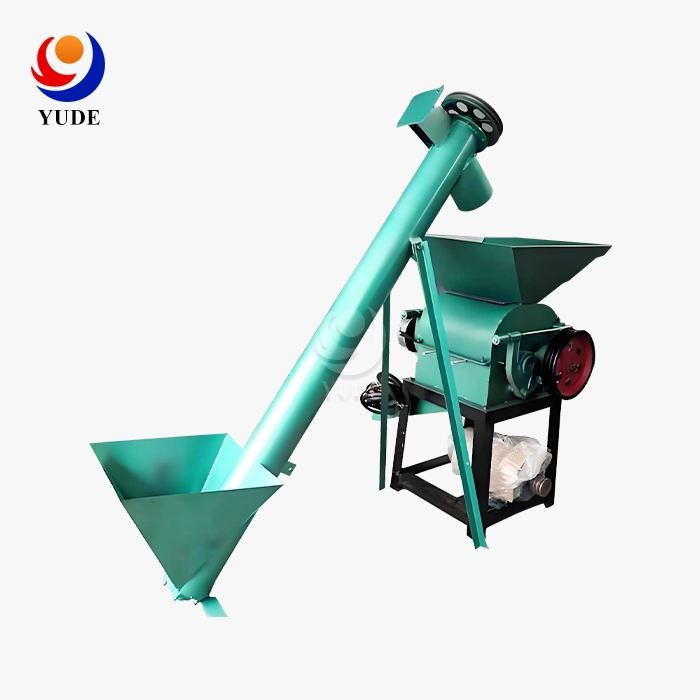
The stirring shaft of a plastic particle powder screw feederhttps://www.yudemachinery.com/plastic-particle-feeder/plastic-particle-powder-screw-feeder usually runs between 5 and 60 rpm as a starting range. Free-flowing pellets need only 5–15 rpm. General granules and regrind run near 10–30 rpm, and cohesive powders often need 20–60 rpm. The shaft should have its own speed setting, because the screw sets output while the shaft only keeps material moving into the screw. I treat these numbers as starting points. Material trials, calibration, and a continuous feeding test confirm the final setting for your formula.
Typical Stirring Shaft Speed Range
Reference Speeds by Material Type
A PVC pipe line usually handles four components: PVC resin powder, heavy calcium carbonate, powder stabilizer, and color powder. Each one flows differently, so one shaft speed rarely fits every material. Pellets and regrind move easily and need gentle stirring, which also protects them from breakage. Fine resin and calcium powders pack under their own weight, so they need a more active shaft to break bridges. These ranges come from common industry practice rather than a single standard. I recommend treating them as a first setting and adjusting from there with test data from your own material.
Why Shaft Speed and Screw Speed Differ
Screw speed sets the feed rate. The stirring shaft conditions the material above the screw inlet. When both run from one drive, a change in output also changes the agitation. That can cause flooding at low output or starving at high output. An independent drive lets the operator hold a steady shaft speed while the screw changes for each recipe. For cohesive powders and precision dosing, I consider independent control a basic requirement. It also lets you raise agitation only when the hopper needs it, without disturbing the feed rate that your mixer batch time depends on.
The Speed Window of the Yude Vertical Mixer
Shandong Yude Plastic Machinery builds a vertical single-screw mixer for PE, PP, ABS, and PVC pellets. Its stirring shaft runs at 30 to 60 r/min, with mixing uniformity of 98% or higher. A three-phase asynchronous motor sized to the tonnage and a heavy-duty gear reducer drive it. The barrel is Q235 carbon steel with an anti-stick coating on the inner wall, and the screw blades resist wear. This machine suits pre-process work such as granulation, injection molding, and film blowing, including pellet color mixing and modification. It works upstream, so its speed window serves pellet blending, while the agitator window of a plastic particle powder screw feeder serves flow control inside the hopper.
How the Stirring Shaft Works and What Sets Its Speed
Main Parts and the Shaft's Role
A typical plastic particle powder screw feeder contains a hopper, stirring shaft, screw conveyor, motor and gearbox, speed controller, and discharge outlet. Gravimetric versions add load cells. The shaft loosens material above the screw inlet and spreads it evenly across the screw channel. It does not perform the main conveying. In a PVC dry-blend line, this matters because uneven screw filling shows up as uneven output, and uneven output leads to wall thickness variation in pipe. A steady fill is the real purpose of the shaft, and speed is only the tool for reaching it.
Material and Hopper Factors
Material properties come first. Pellets need gentle agitation, while powders, regrind, electrostatic compounds, and moisture-sensitive blends need more active help. Arpad Jenike's research on hopper flow showed that outlet size and wall angle decide whether a bulk solid arches or flows. Geometry therefore limits what any rpm setting can fix. Shaft diameter, blade shape, blade clearance, and material head pressure also matter. Calcite, the main mineral in heavy calcium carbonate, has a Mohs hardness of 3, so it wears blades and screws over time. Higher shaft speed usually adds wear, so abrasion belongs in the speed decision.
Capacity and Accuracy Targets
Many buyers first ask, "How many kilograms per hour?" Output depends on screw size, screw speed, and fill, not on the stirring shaft. Raising shaft rpm does not reliably raise throughput, and it can pack the material. When you size a plastic particle powder screw feeder, match it to the batch time of your mixer instead of chasing the maximum number. Temperature, humidity, duty cycle, and dust control also affect the final speed. Tight dosing favors gravimetric loss-in-weight control, which weighs the hopper and adjusts screw speed to hold the set rate when bulk density changes.
How to Select and Compare Feeder Configurations?
A Step-by-Step Way to Choose Speed
When I review a plastic particle powder screw feeder with a customer, I start with the material: form, particle size, bulk density, moisture, flowability, abrasiveness, and static behavior. Next, I name the actual problem, such as bridging, rat-holing, poor screw filling, flooding, or segregation. Then I set the shaft at the lowest practical speed and raise it in small steps. At each step, I measure feed rate, bulk-density stability, motor load, and repeatability. ASTM D6128 describes shear testing with the Jenike cell, which gives measured flow properties for hopper design instead of guesses. I record the setting that holds output steady with the least agitation.
Single-Screw and Twin-Screw Feeders
Single-screw feeders suit pellets and free-flowing granules, and they need simple, low-intensity agitation. Twin-screw feeders give better control for cohesive powders, difficult blends, and materials that do not fill one screw evenly. In a PVC pipe line, fine resin and calcium powder often fall into the second group. A twin-screw design, a stronger agitator, or both may be necessary. The configuration also changes the practical shaft speed, because a screw that fills evenly can reduce the agitation the hopper needs. Ask your supplier to explain why a given configuration fits your powder.
Volumetric, Gravimetric, and Flexible Screw Options
Volumetric feeders are simpler to operate, but their output drifts when bulk density changes. Gravimetric feeders measure actual mass flow, so they suit compounding and additive dosing where the ratio matters. Rigid screw feeders generally meter more precisely than flexible screw conveyors, which buyers choose mainly for layout flexibility and material transfer. If your pipe wall thickness keeps varying, a drifting ratio is a likely cause. In that case, I would examine gravimetric control before adjusting rpm. Match the option to your tolerance and your material, not only to the lowest quote on the table.
Problems, Installation, and Maintenance
What Goes Wrong at the Wrong Speed
Too low a speed allows bridging, rat-holing, intermittent discharge, and uneven screw filling. Too high a speed can compact the material, raise dust, add heat, and break pellets into fines. A plastic particle powder screw feeder can also drift because of poor synchronization between the agitator and screw drives, changing bulk density, weak calibration, or segregation in the hopper. The fix starts with small speed changes, then hopper and blade inspection, moisture control, better surface finishes, and recalibration. Raising rpm cannot repair a hopper or screw that is the wrong size for the material.
Installation and Calibration Steps
Mount the feeder on a rigid, level support and align the hopper, screw housing, and discharge outlet. Before startup of a plastic particle powder screw feeder, check shaft rotation, gearbox oil, clearances, electrical connections, and load-cell zeroing where fitted. Confirm your plant's supply voltage and frequency before the motor is built, since many U.S. plants run 460 V or 480 V at 60 Hz. Then calibrate the agitator and screw separately. Collect timed samples and test several output levels, not just one. Multi-point checks show whether output stays proportional to screw speed across the full range.
Maintenance for Abrasive Compounds
Inspect paddles, screw flights, bearings, seals, gearbox, vibration, and motor current on a schedule based on operating hours. A plastic particle powder screw feeder that handles heavy calcium carbonate or other mineral fillers wears screws and shaft seals faster, so shorten the inspection interval and keep spare screws and seals in stock. One day of line downtime usually costs more than a spare set. Ask the supplier for replacement guidance and spare-parts pricing in writing before you order. Record the hours each wear part lasts, and your own data will soon predict the next change better than any estimate.
Choosing a Plastic Particle Powder Screw Feeder and Setting the Operating Strategy
What to Define Before You Request a Quote
When you request a quote for a plastic particle powder screw feeder, give the supplier the material type, particle size, bulk-density range, target capacity, minimum stable feed rate, hopper volume, accuracy target, control method, construction materials, and cleaning needs. Confirm whether the agitator and screw have independent speed control, and whether the unit is volumetric or gravimetric. Ask about bridging prevention, custom hopper and screw designs, spare parts, installation support, and documentation. U.S. buyers should also ask which electrical standard the control panel follows, since many plants expect NFPA 79 for industrial machinery. A complete brief shortens the quoting cycle and avoids rework.
How a Supplier Should Verify Shaft Performance
A supplier should test the plastic particle powder screw feeder with your actual pellets, powder, regrind, or compound. Trials should run several agitator and screw speeds while recording stable output, minimum controllable feed rate, screw filling, and material behavior. Repeated weighing tests show accuracy and short-term variation, and a longer run shows stability. Mechanical checks cover shaft balance, bearings, gearbox torque, motor load, guarding, emergency stops, sealing, surface finish, and cleanability. For export orders, request drawings, electrical diagrams, manuals, test records, and spare-parts lists. Yude Plastic Machinery can provide multilingual operating interfaces and equipment changes to meet local industry standards.
A Stable Operating Strategy
Stable feeding usually comes from the lowest effective agitator speed, not an aggressive one. Begin at a conservative setting and raise rpm only after you see bridging, rat-holing, or uneven filling. Tune the agitator and screw together while watching feed rate, hopper weight, motor current, vibration, and material temperature. Save a recipe for each material grade and formulation. Recalibrate after any change in resin supplier, moisture, particle size, bulk density, additive ratio, hopper design, or screw setup. Trend data from these readings can show a blockage forming before it stops the line.
Conclusion
The stirring shaft in a plastic particle powder screw feeder commonly starts between 5 and 60 rpm. Pellets sit near 5–15 rpm, granules and regrind near 10–30 rpm, and cohesive powders near 20–60 rpm. These figures are starting points because flowability, hopper geometry, screw size, abrasion, and accuracy targets all shift the right setting. The shaft conditions material for the screw, and the screw sets output, so independent speed control, correct hopper design, and gravimetric metering matter more than any single rpm number. Wrong speeds cause bridging, rat-holing, dust, or pellet breakage. Trials with real material, separate calibration, scheduled inspection of worn parts, and the lowest effective agitator speed keep feeding stable.
FAQ
What is the normal speed range for a plastic particle powder screw feeder stirring shaft?
Most units start between 5 and 60 rpm. Pellets run near 5–15 rpm, granules and regrind near 10–30 rpm, and cohesive powders near 20–60 rpm. Confirm each value with a trial on your material.
Does the stirring shaft need to turn faster than the screw?
No. The two parts do different jobs. The screw sets the feed rate, and the shaft keeps material flowing into it. Independent control lets you adjust each one without affecting the other.
What speed does the Yude vertical mixer use?
Its stirring shaft runs at 30 to 60 r/min, with mixing uniformity of 98% or higher, for pellets such as PE, PP, ABS, and PVC.
How often should I inspect the shaft and screw?
Base the interval on operating hours, abrasiveness, and duty cycle. Mineral-filled compounds such as heavy calcium carbonate call for shorter intervals.
Request a Stirring Shaft Speed Recommendation
Send your material details to Yude Plastic Machinery at sales@yudemachinery.com, and our team will review your formula and suggest a suitable stirring shaft speed. If you are comparing a plastic particle powder screw feeder supplier, we offer custom designs, multilingual operating interfaces, and 7×24 after-sales support. Visit yudemachinery.com for product details, and share your capacity, bulk density, and voltage so we can prepare a clear technical quotation.
References
- Jenike, A.W. – Storage and Flow of Solids, Bulletin 123, Utah Engineering Experiment Station, 1964
- Schulze, D. – Powders and Bulk Solids: Behavior, Characterization, Storage and Flow, Springer, 2008
- ASTM International – ASTM D6128 Standard Test Method for Shear Testing of Bulk Solids Using the Jenike Shear Cell, 2016
- McGlinchey, D. (Ed.) – Bulk Solids Handling: Equipment Selection and Operation, Blackwell Publishing, 2008
- Woodcock, C.R. and Mason, J.S. – Bulk Solids Handling: An Introduction to the Practice and Technology, Springer, 1987
- Rhodes, M. – Introduction to Particle Technology, Wiley, 2008
Learn about our latest products and discounts through SMS or email