- English
- French
- German
- Portuguese
- Spanish
- Russian
- Japanese
- Korean
- Arabic
- Greek
- German
- Turkish
- Italian
- Danish
- Romanian
- Indonesian
- Czech
- Afrikaans
- Swedish
- Polish
- Basque
- Catalan
- Esperanto
- Hindi
- Lao
- Albanian
- Amharic
- Armenian
- Azerbaijani
- Belarusian
- Bengali
- Bosnian
- Bulgarian
- Cebuano
- Chichewa
- Corsican
- Croatian
- Dutch
- Estonian
- Filipino
- Finnish
- Frisian
- Galician
- Georgian
- Gujarati
- Haitian
- Hausa
- Hawaiian
- Hebrew
- Hmong
- Hungarian
- Icelandic
- Igbo
- Javanese
- Kannada
- Kazakh
- Khmer
- Kurdish
- Kyrgyz
- Latin
- Latvian
- Lithuanian
- Luxembou..
- Macedonian
- Malagasy
- Malay
- Malayalam
- Maltese
- Maori
- Marathi
- Mongolian
- Burmese
- Nepali
- Norwegian
- Pashto
- Persian
- Punjabi
- Serbian
- Sesotho
- Sinhala
- Slovak
- Slovenian
- Somali
- Samoan
- Scots Gaelic
- Shona
- Sindhi
- Sundanese
- Swahili
- Tajik
- Tamil
- Telugu
- Thai
- Ukrainian
- Urdu
- Uzbek
- Vietnamese
- Welsh
- Xhosa
- Yiddish
- Yoruba
- Zulu
What is mixing uniformity of plastic particle tilt spiral feeding machine?
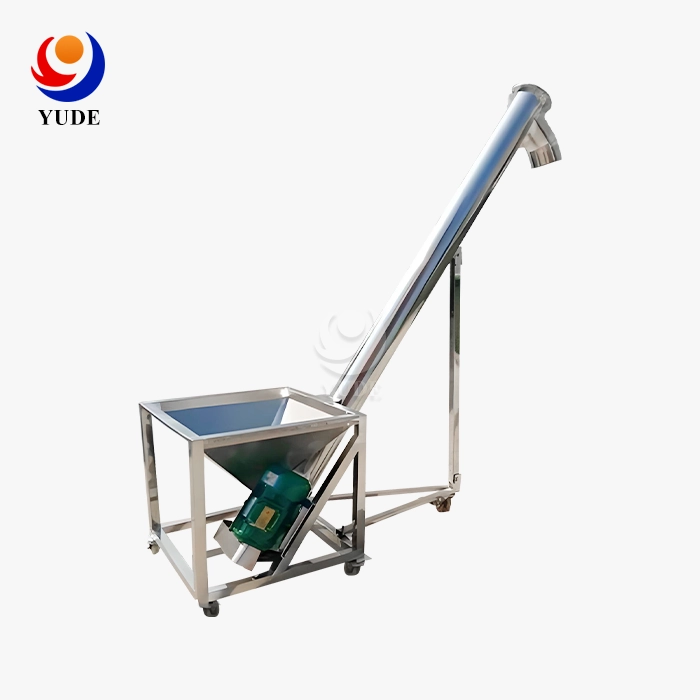
Mixing uniformity of a plastic particle tilt spiral feeding machine https://www.yudemachinery.com/plastic-particle-feeder/plastic-particle-tilt-spiral-feeding-machinedescribes how evenly resin pellets, masterbatch, additives, and regrind are spread in the material that leaves the feeder. The machine mainly lifts and meters material. It can redistribute particles a little, but it does not replace a dedicated mixer or blender. Even delivery keeps injection molding, extrusion, and film blowing steady, and it protects color and additive balance. In this guide, I explain what drives uniformity, how to test it, how to improve it, and how a vertical single-screw mixer from Yude Plastic Machinery fits into the line.
What Is Mixing Uniformity in a Plastic Particle Tilt Spiral Feeding Machine?
Feeding Uniformity, Blending Uniformity, and Discharge Consistency
People use "mixing uniformity" loosely, so I separate three ideas. Feeding uniformity means the feeder delivers the same mass of material every minute. Blending uniformity means each handful of discharge holds the same share of resin, masterbatch, additive, and regrind. Discharge consistency means the stream leaves the outlet without surges or gaps.
A plastic particle tilt spiral feeding machine controls the first and third ideas well, and it may redistribute particles a little along the way. Strong blending belongs to a mixer or a gravimetric blender. Mixing up these ideas leads to costly mistakes. A buyer who expects a feeder to blend masterbatch evenly will often see color streaks, and the real fix is a mixing step upstream. Injection molding machines and extruders react quickly to ratio shifts, which show up in part weight, color, and surface finish.
How a Tilt Spiral Feeder Moves Material
Pellets drop from a hopper into the inlet of a rotating spiral. The screw turns inside an inclined tube and pushes the material upward. Gravity, friction against the tube wall, screw rotation, and particle shape all shape the flow. At the discharge end, the pellets enter an injection molding machine, extruder, blender, storage bin, or weighing system.
Operators can add sensors, variable-frequency drives, overload protection, timers, and level controls so the unit runs with little manual work. The incline explains why many plants choose this design. When ceiling height or floor space limits a retrofit, a tilted tube reaches the target hopper without building changes. Even so, the plastic particle tilt spiral feeding machine's main job stays controlled conveying and metering. Any blending comes from the tumbling motion inside the flights, and that motion is gentle compared with a true mixer.
What Factors Decide Uniformity?
Four groups of factors interact. First, design: spiral pitch, diameter, flight shape, shaft design, and rotation speed set residence time and the risk of dead zones. Second, material: pellets, flakes, regrind, and masterbatch differ in size, density, shape, moisture, friction, and static charge, so they move at different speeds.
Third, installation for a plastic particle tilt spiral feeding machine: hopper shape, outlet size, tube length, and angle control flow. A poor hopper causes bridging or starvation. Fourth, operation: screw speed, feed rate, and hopper level change from shift to shift. I advise buyers to judge these together. A steeper angle usually lowers real capacity because more material slides back along the flights. A unit sized at a gentle angle may fall short once you tilt it to fit a low ceiling. Light masterbatch and heavy fillers also separate easily in a shared hopper, because vibration pushes the heavier particles downward.
How Do You Measure and Improve Uniformity?
Testing Feeding and Blending Performance
I look at two things: how the feeder performs and how the finished product behaves. Throughput testing records actual output over a set time, which reveals short-term swings and long-term drift. Composition testing compares samples from the start, middle, and end of a feeding cycle, especially when resin, color masterbatch, additives, and regrind run together.
Useful numbers include average output, deviation, and coefficient of variation, which divides the standard deviation by the average. Product weight, color consistency, and additive dispersion show how the line reacts. Factory and site acceptance tests should use your real materials whenever possible. Record capacity, power draw, noise, material loss, and discharge stability in writing. Ask the supplier to test your plastic particle tilt spiral feeding machine at the installation angle you plan to use, because a result at a different angle will not predict your line.
Common Causes of Poor Uniformity
Most problems trace back to a short list. Particle segregation happens when size and density differ, and loading or vibration sorts the particles. Wrong capacity selection comes next, since a catalog maximum rarely equals the stable rate for your resin or regrind. Unsuitable screw geometry and excessive motor speed can pulse the flow. Hopper bridging and material starvation interrupt the stream.
Moisture, dust, irregular flakes, and sticky material restrict flow. Worn flights, damaged bearings, residue, or contamination change discharge behavior over time. When a customer reports uneven color, I ask about the hopper, the angle, and the screw speed before I blame the feeder itself. Regular checks of wear parts, contact surfaces, and sensors catch most issues before they reach the product. A small stock of seals, bearings, and screw sections also shortens downtime when something wears out.
Practical Ways to Improve Uniformity
Start by matching the feeder to the real material. Gather particle size, bulk density, moisture content, additive ratio, temperature, target throughput, conveying height, and duty cycle. ASTM D1895 gives a standard way to measure the bulk density of plastic materials, and that number drives screw sizing.
Run controlled trials to find the most stable screw speed and feed rate, and use variable-frequency control to adjust for each formula. Size the hopper volume and outlet so material does not surge or starve, and add flow aids when the material sticks. Keep conveying routes short and direct to cut residence time and segregation. If a plastic particle tilt spiral feeding machine still cannot deliver the blend you need, add a separate mixer, dosing unit, or mixing hopper ahead of it. Blending first and conveying second keeps the recipe intact.
How to Choose the Right Plastic Particle Tilt Spiral Feeding Machine
Tilt Spiral Feeder vs. Other Conveying Solutions
An inclined spiral feeder suits short-to-medium distances, controlled discharge, and fairly simple installation. Against a vacuum loader, it usually has fewer parts and handles pellets gently. Pneumatic systems often win for enclosed, centralized, or long-distance routes. Vertical screw conveyors save floor space when lifting, but capacity and service access must fit the layout.
Compared with manual loading, an automatic screw feeder brings steadier delivery, less labor, and better traceability in high-volume work. Construction material also matters. Stainless steel contact parts resist corrosion and clean easily, which helps when colors change often. Carbon steel with a protective coating can work in less demanding settings. Always confirm the exact material in the quotation, because buyers sometimes assume stainless steel when the offer lists carbon steel. The CEMA screw conveyor standard offers sizing guidance, and you can ask any supplier which design rules they follow.
A Selection Checklist
Define the application first: injection molding, extrusion, compounding, recycling, blending, or simple transfer. Then confirm throughput, bulk density, conveying height and distance, working hours, installation space, and the materials involved. Review hopper volume, spiral diameter, tube length, inclination angle, motor power, outlet position, control cabinet, and cleaning access.
Measure your site before you talk to a supplier. In retrofit work, ceiling height and nearby piping often set the angle and length before anything else does. Count total cost of ownership too: energy use, maintenance, spare parts, labor, downtime, warranty, and technical support. Ask for testing with your own materials, plus drawings, OEM customization, an electrical configuration for your power supply, installation guidance, and export service. Plants in the United States typically run 60 Hz three-phase power, so state your voltage and frequency in your first message.
Yude Vertical Single-Screw Mixer for Blending Before Feeding
Since a feeder conveys more than it blends, I pair it with a mixer. Our vertical mixer uses a single-screw, high-efficiency structure that keeps material circulating smoothly. It mixes plastic pellets such as PE, PP, ABS, and PVC, with mixing uniformity of 98% or higher. The stirring shaft turns at 30 to 60 r/min, and the effective volume can be customized by model.
A three-phase asynchronous motor, matched to the tonnage, drives a heavy-duty gear reducer for stable operation. The barrel is Q235 carbon steel with an anti-stick coating on the inner wall, and the screw blades are wear-resistant, which extends service life. Yude Plastic Machinery builds vertical mixers from 600 kg to 10 tons, small mixers from 300 kg to 500 kg, stainless steel mixers, and vertical color mixers. These options fit different line capacities, so a buyer can choose a plastic particle tilt spiral feeding machine for lifting and a mixer for blending.
Applications, Installation, and Commissioning
Where These Systems Work Best
Spiral feeders move resin and additives in injection molding, extrusion, compounding, and recycling lines. In injection molding, steady pellet delivery supports consistent part weight, color, and cycle performance when the feeder matches the machine hopper, dryer, receiver, or blender. Extrusion and compounding lines often need continuous feeding and fixed ratios between resin, regrind, and additives.
Recycling lines add dust, flakes, irregular sizes, and changing bulk density, which also wear the flights faster. For masterbatch and additives, a separate dosing or blending step gives tighter control of the formula. Our vertical mixer fits pre-processes such as plastic granulation, injection molding, and film blowing, and it meets the needs of pellet color mixing and modification. It works with production lines of different capacities. A plastic particle tilt spiral feeding machine then carries the finished blend up to the processing machine.
Installation Checks Before Anyone Lifts a Wrench
Before installation, verify floor strength, available space, conveying height, discharge position, cleaning access, voltage, frequency, grounding, and control compatibility. Support the feeder and hopper firmly and align them so no sharp restriction disrupts flow.
For retrofit projects in older plants, I suggest sending site photos, a rough sketch, and the ceiling height. With those, a supplier can recommend an angle and length that clear pipes and equipment. Plan the work around your shutdown window too, and ask for delivery time and any minimum order before you commit. Request installation drawings and operating manuals in clear English. Maintenance crews and safety reviewers rely on those documents, and a machine-translated manual slows approval. Yude Plastic Machinery can build non-standard sizes and offers multilingual operation interfaces and equipment changes that follow local industry standards.
Commissioning Steps
Start with a no-load test. Confirm rotation direction, vibration, noise, and motor behavior. Then add material gradually while you watch motor current, throughput, discharge consistency, temperature, and hopper level at several speeds. Check that sensors, emergency stops, overload protection, and automatic start-stop logic all work. An overload relay stops the motor when a jam raises torque, which protects the drive.
Log the results, because they become your baseline for later troubleshooting. Then train operators with written procedures for operation, cleaning, maintenance, safety, and troubleshooting, and list the approved materials. A good handover also covers color-change cleaning, since residue often causes off-spec parts. For the mixer, I record shaft speed and batch time so the team can repeat a recipe exactly on the next shift. If your plastic particle tilt spiral feeding machine and mixer arrive together, test them as one system.
Conclusion
Mixing uniformity in a plastic particle tilt spiral feeding machine means steady delivery and an even material blend at the outlet, although the feeder mainly conveys and meters. Pitch, diameter, speed, hopper shape, particle properties, and installation angle all affect the result, so buyers should judge them together. Throughput and composition tests with real materials, plus standard bulk density data, show whether a system performs. Segregation, wrong capacity, bridging, and wear cause most problems, and short routes, correct sizing, and variable-frequency control reduce them. Where a feeder cannot blend enough, a separate mixer handles that task. The vertical single-screw mixer described here reaches 98% or higher uniformity, and careful site checks and commissioning keep the whole line stable.
FAQ
Can a tilt spiral feeder blend pellets and regrind?
It conveys and meters first, and certain screw designs add limited blending. When density, size, or moisture differ, pre-blend the material or use controlled dosing, a gravimetric blender, or a mixer such as our vertical single-screw model.
How do I size the capacity?
Use the stable throughput for your resin, bulk density, conveying height, angle, and duty cycle. Do not rely on maximum catalog output, because capacity usually drops as the angle rises.
How often should I clean the feeder?
Clean it when you change material or color. Set the schedule by operating hours, abrasiveness, and contamination risk, and ask the supplier how the tube and screw come apart.
Does the Yude mixer handle PVC and ABS?
Yes. The vertical single-screw mixer blends PE, PP, ABS, and PVC pellets, with stirring shaft speed from 30 to 60 r/min.
Request a Plastic Particle Tilt Spiral Feeding Machine Recommendation
Yude Plastic Machinery builds vertical mixers and customizes non-standard sizes for customers in more than 30 countries and regions. Send your material type, target capacity, conveying height, power supply, and site photos to sales@yudemachinery.com, and our team will review them. Looking for a plastic particle tilt spiral feeding machine supplier to plan a mixer-and-feeder line? Visit yudemachinery.com for details.
References
1. Handbook of Industrial Mixing: Science and Practice, Wiley, 2004
2. Screw Conveyors for Bulk Materials, CEMA Standard 350, Conveyor Equipment Manufacturers Association, 2015
3. Mixing in the Process Industries, Butterworth-Heinemann, 1992
4. Plastics Extrusion Technology, Hanser, 1997
5. ASTM D1895, Standard Test Methods for Apparent Density, Bulk Factor, and Pourability of Plastic Materials, ASTM International, 2017
6. Plastics Additives Handbook, Hanser, 2009
Learn about our latest products and discounts through SMS or email