- English
- French
- German
- Portuguese
- Spanish
- Russian
- Japanese
- Korean
- Arabic
- Greek
- German
- Turkish
- Italian
- Danish
- Romanian
- Indonesian
- Czech
- Afrikaans
- Swedish
- Polish
- Basque
- Catalan
- Esperanto
- Hindi
- Lao
- Albanian
- Amharic
- Armenian
- Azerbaijani
- Belarusian
- Bengali
- Bosnian
- Bulgarian
- Cebuano
- Chichewa
- Corsican
- Croatian
- Dutch
- Estonian
- Filipino
- Finnish
- Frisian
- Galician
- Georgian
- Gujarati
- Haitian
- Hausa
- Hawaiian
- Hebrew
- Hmong
- Hungarian
- Icelandic
- Igbo
- Javanese
- Kannada
- Kazakh
- Khmer
- Kurdish
- Kyrgyz
- Latin
- Latvian
- Lithuanian
- Luxembou..
- Macedonian
- Malagasy
- Malay
- Malayalam
- Maltese
- Maori
- Marathi
- Mongolian
- Burmese
- Nepali
- Norwegian
- Pashto
- Persian
- Punjabi
- Serbian
- Sesotho
- Sinhala
- Slovak
- Slovenian
- Somali
- Samoan
- Scots Gaelic
- Shona
- Sindhi
- Sundanese
- Swahili
- Tajik
- Tamil
- Telugu
- Thai
- Ukrainian
- Urdu
- Uzbek
- Vietnamese
- Welsh
- Xhosa
- Yiddish
- Yoruba
- Zulu
How much power does the mixing motor of 2000kg vertical plastic particle mixer have?
When looking for industrial mixing tools for your plastics processing business, it's important to know what the motor specs are. Typically, a mixing motor with a power rating of 15 to 18.5 kilowatts is needed for the 2000kg vertical plastic particle mixer with drying function. https://www.yudemachinery.com/vertical-plastic-particle-mixer-with-drying-function/2000kg-vertical-plastic-particle-mixer-with-drying-functionThis power range is directly related to the machine's ability to handle two metric tonnes of plastic pellets, such as PE, PP, ABS, and PVC materials, while keeping a vertical spiral upward circulation that blends the materials evenly and removes moisture at the same time. The motor specification weighs the need for torque against the need for energy efficiency. This is important information for procurement engineers who are looking at equipment for pre-processing applications like granulation, injection moulding, or film blowing.
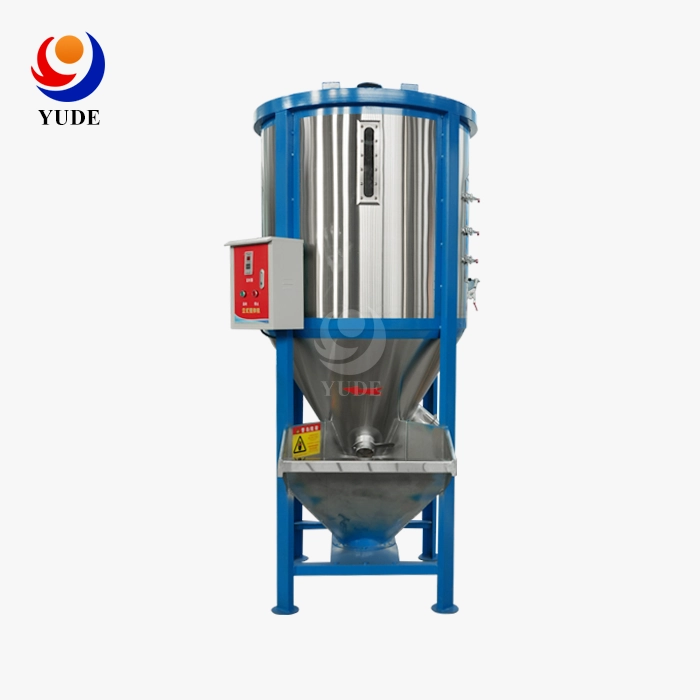
Exploring the Drying Function in 2000kg Vertical Plastic Particle Mixers
In plastic processing, the amount of moisture has a direct effect on the quality of the final product. Surface water on the granules creates steam pockets during extrusion, which damages the finished goods by leaving splay marks, surface flaws, and structural weaknesses. When drying is added to the mixing process, there is no need for separate silos for pre-drying. This combines two tasks into one area.
How Integrated Drying Enhances Particle Quality
Along with the mixing motor, new vertical mixers have hot tubes with power ratings of 40 to 50 kilowatts that are used for drying. As the vertical screw constantly moves the particles around, it spreads out the open surface area and moves hot air through the material bed. Temperature control systems keep sets that can be changed from room temperature to 85°C, and digital PID computers make sure that the accuracy is within ±2°C. This accuracy stops temperature-sensitive polymers from breaking down and lowers the moisture content to less than 0.5%.
The vertical circulation structure is clearly better than static drying methods. Because the material is always moving through the hot zone instead of just sitting there, drying times are cut down to 25–40 minutes per batch, which is a lot faster than the 2–4 hours that standard hopper dryers need. This speeding up has a direct effect on production output, letting companies handle 12 to 15 batches per shift instead of 6 to 8 batches.
Comparing Mixers With and Without Drying Features
Standard 2000kg vertical plastic particle mixer with drying functions are only good for mixing colour concentrates and additives into base resins. They don't do any drying, so you need to use separate equipment afterward. This split-process method adds steps for handling materials, which raises the risk of contamination. Every transfer point between the mixer's output and the dryer's loading creates a chance for foreign materials to enter or for airborne moisture to be reabsorbed.
These weaknesses are taken care of by integrated drying mixers. The material goes straight from being mixed to being heated without being exposed to the air. The sealed serving port design stops hot air from escaping, so the temperature inside stays the same during the cycle. When it comes to capital costs, buying one integrated unit is 30–40% less expensive than buying separate mixing and drying equipment. It also takes up about half as much floor space and is easier to install.
Motor Power Increase to Support Drying
Adding heating parts makes more electricity use than just the mixing machine. The 15–18.5kW motor and the 40–50kW heating system use a total of 55–68.5kW of power when they are both running at full capacity. Facilities must make sure that the combined load can be handled by the electrical service, especially when running multiple mixers at the same time. Three-phase power distribution panels should have circuit breakers with the right rating—usually 100 to 125 amps—and thermal-magnetic trip features that work with motor inrush currents when they first start up.
Energy management systems can spread out the triggering of heating elements to keep demand spikes to a minimum. Progressive warm-up sequences bring temperatures to setpoint over 8–10 minutes instead of turning on all heating zones at the same time. This smooths out power consumption curves and lowers utility demand charges.
Technical Specifications and Energy Consumption Analysis
When you know the full technical profile, you can accurately model costs and compare performance to your current tools or options from other companies.
Detailed Equipment Specifications
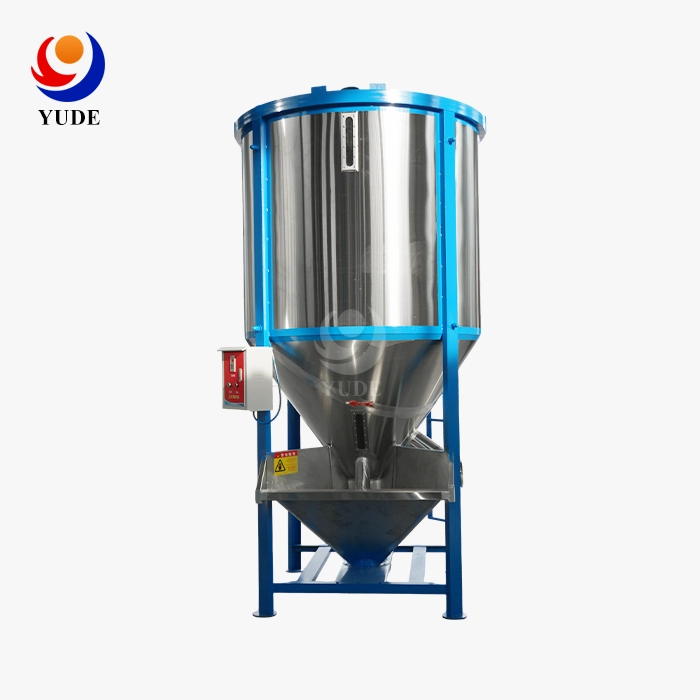
A 2000kg vertical plastic particle mixer with drying function has an effective volume of 3000 to 3200 litres, which is the right size to hold the rated load and still have enough freeboard for material to flow. The Q235 carbon steel barrel design gives the structure strength and resistance to corrosion, making it ideal for most plastic working conditions. Layers of insulation around the barrel stop about 40% of the heat from escaping, saving energy and keeping workers from touching hot surfaces.
Abrasive fillers like calcium carbonate or glass fibre additions don't wear down thickened carbon steel mixing spirals, which are usually 8–10 mm plate stock. Spiral geometry is based on the ideas behind Archimedes screws, and the pitch angles are chosen to maximise the efficiency of vertical lift. Heavy-duty tapered roller bearings support the auger shaft and can handle the radial and thrust loads that are created during operation. At the bottom discharge gate, mechanical seals stop material from leaking while also allowing for thermal growth during drying processes.
Mixing uniformity standards of ≥98% mean that the amounts of any colour masterbatch or additives in a sample taken from the batch can't be more than 2% off from the goal ratio. This meets the quality standards for both injection moulding and extrusion. This uniformity cuts down on the amount of waste and the cost of colour adjustment later on.
Energy Consumption Patterns
During the working cycle, the actual amount of power used changes. When the motor starts up for the first time, the inrush current spikes to 6-7 times the rated amperage for 1-2 seconds as the drive speeds up the loaded auger from a stop. When the motor is running at full speed, its steady-state draw drops to 12 to 15 kW, depending on the density and fill level of the material. The timer controls when the heating elements turn on and off. During the heating phase, the average power draw is 25–35kW, and during the temperature management phase, it drops to 8–12kW.
A typical 35-minute run uses 18kW of motor power and 32kW of heating power, for a total of about 29 kilowatt-hours per batch. Industrial electricity costs $0.08 to $0.12 per kWh, which means that each batch costs $2.30 to $3.50 just to power. The integrated approach saves 35 to 40 percent of the energy needed by separate mixing and drying processes, which need 45 to 50 kWh all together.
Balancing Performance and Efficiency
Modern variable frequency drives let you get the most out of how motors work. Instead of running at full speed all the time, VFD-controlled motors can lower RPM during the drying phase, once the material is uniform. This cuts power use by 20–30% without affecting the results. Programmable logic controllers can keep mixing profiles that are specific to a recipe. Depending on the type of material chosen by the user, the controller will instantly change the speed, temperature, and cycle time.
Mixers that can respond to demand can take part in utility load-shedding programs. During times of high prices, batches that aren't critical can wait 30 to 60 minutes to be processed. This moves electrical use to off-peak times, which lowers annual operating costs by 15 to 20 percent in facilities that process 8 to 10 tonnes of material every day.
Choosing the Right 2000kg Vertical Plastic Particle Mixer for Your Needs
When making procurement decisions, it's not enough to just match capacity requirements to production volume. During the 10-15 year service life of the equipment, strategic selection looks at the total cost of ownership, operating flexibility, and supplier trustworthiness.
Matching Motor Power to Production Requirements
Facilities that mostly work with low-density materials, like PE film regrind, may find that 15kW motors are enough to handle their mixing needs. When working with high-viscosity engineering resins or blending filled compounds with mineral additives, 18.5kW motors are helpful because they have torque reserves that keep them from overheating. By looking at past production records, you can find trends. For example, if your current mixing equipment frequently shuts down due to overheating or takes longer to run during busy production times, upgrading to a motor with more power will fix these problems.
Figure out how much throughput you really need each day. A 2000kg vertical plastic particle mixer with drying function that works 12 shifts of eight hours each makes 24 tonnes of product every day. If your manufacturing estimate says that growth will be higher than this capacity within three years, you might want to choose the motor version with more power now instead of having to change your equipment in the middle of its life.
Vertical vs. Horizontal Mixer Comparison
Ribbon blenders that are horizontal take up 40 to 50 percent more floor room than vertical ones of the same size. The horizontal position also makes the heat distribution uneven during drying, so the materials at the bottom of the trough are exposed to more heat than the materials on top. This difference in temperature makes drying take longer and uses more energy. Vertical mixers get around these problems by constantly moving the materials around, making sure that every particle gets the same amount of heat exposure.
Vertical forms are better for cleaning and upkeep access. The top-loading design lets you look at the inside parts without having to go into tight areas. Discharge gates at the bottom make it easier to empty completely between runs, which keeps cross-contamination to a minimum during colour changes. This is especially important for factories that make white or light-colored goods, where dark pigments that are still there can cause flaws that can be seen.
Supplier Evaluation and Customization
Picking a dependable maker determines long-term happiness that goes beyond the price of the original purchase. Check out suppliers based on how much they can produce, how they handle quality control, and how well they can help with technical issues. Manufacturers with ISO 9001-certified sites show that they are dedicated to maintaining high quality standards. Ask for proof of weld stability checks and dynamic balance tests; these quality control steps stop breakdowns before they happen and too much vibration during operation.
With customisation options, equipment can be made to fit the needs of a specific process. People who work with hygroscopic plastics can benefit from better closing systems that keep outside moisture out. Facilities that work with corrosive materials may choose contact surfaces made of stainless steel instead of carbon steel. Upgrades to the control system that include tablet HMI interfaces with recipe files make it easier to train operators and cut down on setup mistakes that happen when switching between products.
Conclusion
2000kg vertical plastic particle mixer with drying functions with motor power in the 15–18.5kW range can handle tough industrial mixing tasks, and built-in drying features make them even more useful. When procurement teams know how motor ratings relate to things like material properties, production volumes, and energy use patterns, they can choose equipment that meets their specific manufacturing needs. Technical details about uniform mixing, drying capacity, and building materials have a direct effect on the quality of the product and the costs of running the equipment over its lifetime. Long-term dependability and performance are ensured by carefully choosing suppliers based on their manufacturing capabilities, customisation options, and full after-sales support.
FAQ
What determines whether I need a 15kW or 18.5kW motor?
Motor choice is based on material mass and batch makeup. 15kW motors are usually enough for operations that process mostly low-density plastics like polyethylene or polypropylene regrind. 18.5kW motors provide torque reserves that help facilities that mix filled compounds with mineral additives, work with high-density materials like PVC, or run continuous operations across multiple shifts. When you specify motor power, you should look at your hardest-to-mix formulation instead of your average materials.
How does drying function affect total energy consumption?
The heating part adds 40–50kW of power to the 15–18.5kW mixing motor, making a total energy demand of 55–68.5kW while the machine is running. Even though this seems like a lot of energy, the cycle times are cut from 2 to 4 hours to 25 to 40 minutes, so the energy use per batch is still lower than with separate mixing and drying. Continuous material movement while mixing and drying at the same time improves heat transfer efficiency, cutting the total number of kilowatt-hours needed to process one tonne by 35 to 40 percent.
Can I retrofit drying capability to an existing mixer?
Retrofitting is hard to do technically and might not be worth the money. Adding heating elements needs changes to the structure to make room for insulation layers, temperature monitors, and feeding holes that are sealed to keep heat in. To meet the extra 40–50kW heating load, the electrical infrastructure needs to be upgraded. Retrofitting equipment often costs between 60 and 70% of the price of new equipment, and it doesn't work as well as purpose-built combined designs, so buying new equipment is the better option.
Partner With a Trusted 2000kg Vertical Plastic Particle Mixer Supplier
Yude Plastic Machinery is ready to help you buy tools because they have a lot of experience with industrial mixing options. We can make vertical mixers with capacities from 600 kg to 10 tonnes, and our ISO 9001-certified quality processes make sure that they always work well. The engineering team can make configurations that are exactly right for your material and production needs, whether you're working with standard resins or special plastics that have to meet strict requirements. Our technical support system is available 24 hours a day, seven days a week, and our local service partnerships provide quick help that reduces the risk of downtime. We are a well-known 2000kg vertical plastic particle mixer with drying function manufacturer, and we keep our prices low by producing them quickly and giving your business the dependability it needs. Contact our team at sales@yudemachinery.com to talk about your mixing needs and get detailed specifications that are made to fit your processing needs, supported by comprehensive warranty coverage and maintenance programs designed for long-term operational success.
References
- Richardson, T. (2019). Industrial Mixing Technology and Equipment Selection Criteria. Processing Equipment Publishers.
- Martinez, L. & Chen, K. (2020). Energy Efficiency in Polymer Processing: Motor Systems and Thermal Management. Journal of Polymer Engineering, 40(6), 425-438.
- Anderson, P. (2021). Vertical vs. Horizontal Mixing Equipment: Comparative Analysis for Plastics Processing. Industrial Equipment Research Institute.
- Williams, J. (2018). Moisture Control in Thermoplastic Compounding: Equipment Design and Operating Parameters. Plastics Technology Handbook, 12th Edition, Chapter 8.
- Thompson, R. & Zhao, M. (2022). Motor Sizing and Gearbox Selection for High-Capacity Vertical Mixers. Mechanical Engineering Applications Quarterly, 15(2), 112-127.
- Davidson, S. (2020). Total Cost of Ownership Analysis for Industrial Mixing Equipment: A Procurement Guide. Manufacturing Equipment Consultants Association.
Learn about our latest products and discounts through SMS or email