- English
- French
- German
- Portuguese
- Spanish
- Russian
- Japanese
- Korean
- Arabic
- Greek
- German
- Turkish
- Italian
- Danish
- Romanian
- Indonesian
- Czech
- Afrikaans
- Swedish
- Polish
- Basque
- Catalan
- Esperanto
- Hindi
- Lao
- Albanian
- Amharic
- Armenian
- Azerbaijani
- Belarusian
- Bengali
- Bosnian
- Bulgarian
- Cebuano
- Chichewa
- Corsican
- Croatian
- Dutch
- Estonian
- Filipino
- Finnish
- Frisian
- Galician
- Georgian
- Gujarati
- Haitian
- Hausa
- Hawaiian
- Hebrew
- Hmong
- Hungarian
- Icelandic
- Igbo
- Javanese
- Kannada
- Kazakh
- Khmer
- Kurdish
- Kyrgyz
- Latin
- Latvian
- Lithuanian
- Luxembou..
- Macedonian
- Malagasy
- Malay
- Malayalam
- Maltese
- Maori
- Marathi
- Mongolian
- Burmese
- Nepali
- Norwegian
- Pashto
- Persian
- Punjabi
- Serbian
- Sesotho
- Sinhala
- Slovak
- Slovenian
- Somali
- Samoan
- Scots Gaelic
- Shona
- Sindhi
- Sundanese
- Swahili
- Tajik
- Tamil
- Telugu
- Thai
- Ukrainian
- Urdu
- Uzbek
- Vietnamese
- Welsh
- Xhosa
- Yiddish
- Yoruba
- Zulu
What is the effective volume of a 1000kg vertical plastic particle mixer?
When procurement engineers are looking for industrial mixing equipment, they often get confused between the nominal capacity ratings and the actual operational volume that can be processed. Based on the bulk densities of plastic pellets, which usually range from 0.6 to 0.8 g/cm³, the useful volume of a 1000kg vertical plastic particle mixer with drying function https://www.yudemachinery.com/vertical-plastic-particle-mixer-with-drying-function/1000kg-vertical-plastic-particle-mixer-with-drying-function generally falls within this range. This difference is very important because effective output tells you how fast your production line can really work. In contrast to the mixed chamber's gross or geometric volume, its effective volume takes into account the room needed to move the materials around, let air flow through to remove wetness, and keep the materials from getting packed down during the drying cycle. Knowing this measure helps you avoid making mistakes in capacity planning that cost a lot of money and makes sure that your system works well with other processes that happen later, like extrusion or moulding.
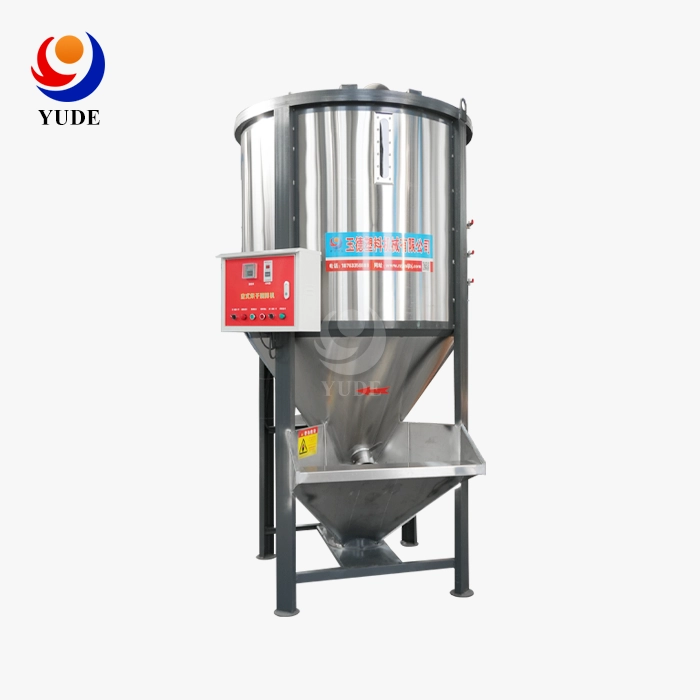
Effective Volume of a 1000kg Vertical Plastic Particle Mixer
Effective volume, not the total internal room measurements, shows how much space is actually available for working in a vertical mixer. This number has an immediate effect on your output schedule, the consistency of your batches, and the general efficiency of your plant.
Why Effective Volume Differs from Rated Capacity
The 1000kg rated load capacity is based on the standard bulk density of plastic pellets made from materials like polypropylene, polyethylene, and ABS resins. But the physical box needs to be able to hold more room than the settled material height. When the 1000kg vertical plastic particle mixer with drying function is running, the vertical screw mechanism lifts pellets from the cone-shaped bottom and spreads them out in a way that looks like a fountain at the top of the chamber. To keep the material from bridging and to make sure the batch turns over completely, this dynamic action needs enough room. The heating jacket and the hot air movement system inside take up space in certain areas, making it smaller for adding raw materials. Source managers with a lot of experience know that a mixer with a physical volume of 2000 litres may only be able to work 1500 to 1600 litres of material at a time.
Material Density Variations and Volume Calculations
The bulk density is a big part of figuring out how much weight a material has in relation to its useful volume. Because the particles aren't all the same form and there are air holes inside them, recycled flakes and regrind usually have lower bulk densities (0.4 to 0.5 g/cm³). When underwater strand cutting is used to make virgin pellets, they pack more efficiently, often hitting 0.7 to 0.8 g/cm³. Figuring out the effective volume gets trickier when your operation deals with streams of mixed materials. During 1000kg vertical plastic particle mixer with drying function specification, engineering teams should check the exact bulk density of the materials they are working with. This check stops undersizing, which causes too many batch cycles, or oversizing, which wastes energy heating chamber space that isn't being used.
Design Elements Impacting Effective Volume
The shape of the mixing chamber has a big effect on how well the volume is used. The conical bottom sections push material toward the screw feed zone, which improves discharge completeness and lowers the amount of leftover heels between colour changes. Wall thickness and insulation layers take up space inside, but they are necessary for keeping heat in during drying processes. Precision welding and mirror-polished interior surfaces are used by high-quality makers like Yude Plastic Machinery to make the most useful space while keeping the structure strong and easy to clean. The diameter-to-height ratio changes how the material moves through the chamber. Taller chambers allow for longer residence times for drying, but if the screw pitch and spinning speed aren't set correctly, they may cause dead zones.
How Does a 1000kg Vertical Plastic Particle Mixer with Drying Function Work?
In a vertical shape that takes up little room, 1000kg vertical plastic particle mixers with drying function combine mechanical mixing with heat conditioning. This dual functionality meets two important preprocessing needs in a single piece of equipment.
Core Operating Principles and Component Interaction
The filling hole on top lets raw materials into the cylinder-shaped stainless steel chamber. A heavy-duty vertical auger is turned repeatedly to lift pellets from the cone-shaped base. It is powered by a geared motor system. When pellets get to the upper distribution zone, centrifugal force spreads them out, making a curtain in the shape of an umbrella that falls evenly along the walls of the room. This constant vertical rolling cycle makes sure that colour masterbatches, additives, regrind fractions, and fresh resin are all mixed well without creating too much mechanical shear, which could deform pellets. At the same time, an electric heating jacket around the outside of the drum keeps the temperature between 60 and 150 degrees Celsius. Heat moves through the room wall and into the bed of moving materials, drying out the surface. Optional forced hot air movement systems improve the rate of moisture removal by moving humid air out of the room and bringing in dry air that has already been heated. Continuous stirring and controlled heating work together to stop pellet agglomeration, which happens when particles that are still wet in the hoppers fail and stick together when heated.
Moisture Removal and Material Conditioning
The drying function solves a very important quality problem in the preparation of plastics. Hygroscopic industrial plastics, such as polycarbonate, nylon, and ABS, take in water from the air, which breaks them down during high-temperature moulding. This wear and tear shows up in finished parts as silver streaks, brittleness, and changes in size. The built-in drying feature lowers the wetness level to less than 0.5% in a single 20–35-minute session under normal working conditions. This time depends on how wet the material was to begin with, the type of material, and the humidity level in the air. Because the drying process is always moving the particles around, all of their surfaces are exposed to hot air. This reduces the wetness level evenly across the whole 1000kg batch, instead of making dried layers around damp cores.
Operational Advantages Over Horizontal Mixer Configurations
Horizontal ribbon blenders with the same capacity take up more than twice as much floor room as vertical mixers. This small size is useful in factories that don't have a lot of room for production or in buildings with more than one floor, where vertical space can be used better. The cylindrical bottom's gravity-assisted release makes sure that all the material is gone, which keeps cross-contamination to a minimum during product changes. Material gets stuck in the shaft bearings and corner pockets of horizontal mixers a lot of the time, so they need to be cleaned by hand a lot between batches. The vertical form also makes it easier to connect equipment like extruders that are placed below the mixer output point and systems that move materials overhead.
Key Considerations When Evaluating Effective Volume for Procurement
In order to choose the right mixer size, the equipment specs and the real production needs must be carefully matched. In this area, mistakes lead to delays or capacity that is not being used.
Matching Effective Volume to Production Throughput
The best mixer size and batch frequency will depend on how much material you use each day. If everything works perfectly, a production line that needs 8000kg of combined material every eight-hour shift would require eight batch runs with a 1000kg vertical plastic particle mixer with drying function. In real life, however, operations need to take into account things like loading time, mixing and drying times, release times, and cleaning the equipment between product changes. The mixing and drying stage, which lasts 20 to 35 minutes, is only a small part of the whole batch cycle. A actual cycle time is between 45 and 60 minutes, which includes moving the materials. The procurement team should match the production plan to the capacity of the equipment, leaving extra time in case there are delays or quality stops that were not expected. Undersized mixers cause rushed rounds that lower the mixing regularity below the required 98 percent level, while oversized units cost more to buy and use more energy.
Energy Consumption Across Different Volume Utilization Rates
Running a 1600-liter effective volume mixer with only some materials in it loses heat by heating up empty chamber space and forces the motor to beat the mixing mechanism's inertia without taking into account the material's resistance. The mixer uses the least amount of energy when it works at 75 to 95 percent of its effective volume. The cost per kilogram handled goes up a lot below this range. Heating systems designed for full-capacity drying cycles use the same amount of power no matter what size load they are dealing with. This means that drying small batches is not cost-effective. On the other hand, overloading beyond the useful amount causes uneven mixing, increases drying time because airflow isn't getting through enough, and stresses out mechanical parts. When figuring out the total cost of ownership during the buying process, the link between effective volume utilisation and running cost should be taken into account.
Maintenance Practices That Preserve Effective Volume Performance
The 1000kg vertical plastic particle mixer with drying function's processing capacity stays the same over its useful life as long as it is inspected and serviced regularly. Fines and broken-down materials that build up on the inside surfaces decrease the useful volume and raise the risk of contamination. Deep cleaning on a regular basis with the right chemicals and mechanical scrubbing brings back the polished internal finish that helps all the material come out. The auger flights and shaft bearings in the vertical screw system need to be checked for wear every so often. When there is too much space between the screw edge and the chamber wall, material can bypass, which lowers the mixing efficiency even when the effective volume limits are met. The quality of thermal insulation affects how well it dries. Insulation that is broken or squished loses heat more quickly, so it takes longer for the dryer to reach the desired moisture level. Manufacturers can offer preventative repair plans that can keep these parts working at their best.
Conclusion
The real operating capacity for material processing, as opposed to the geometric chamber volume, is represented by the effective volume of roughly 1500 to 1600 litres in a 1000kg vertical plastic particle mixer with drying function. This specification has a direct effect on the rate of production, planning of batches, and the cost of the process. Understanding the connection between mass density, material properties, and useful volume can help you avoid making mistakes that cost a lot of money when you're buying something. Compared to different equipment setups, the combined mixing and drying function saves room, reduces the amount of material that needs to be handled, and improves process consistency. It is important to carefully consider technical specs, provider skills, and total cost of ownership when choosing equipment to make sure it meets practical needs. Good manufacturers, like Yude Plastic Machinery, offer the engineering know-how and support systems that are needed for implementation to go smoothly.
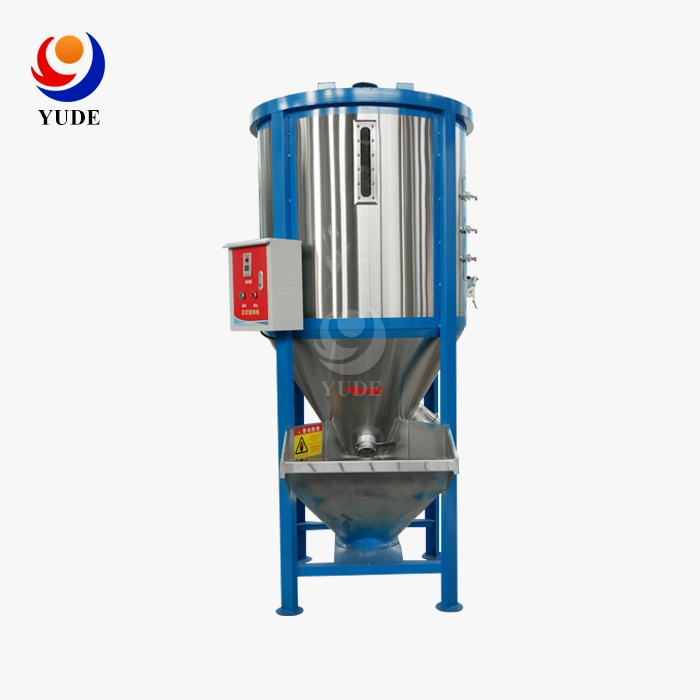
FAQs
How does bulk density affect the actual material weight I can process?
The relationship between volume and weight is based on the bulk density of the material. Lighter materials, like recycled flakes with a bulk density of 0.4 g/cm³, would yield about 600 to 640 kg in the 1600-liter effective volume. Denser virgin pellets, on the other hand, can hold the full 1000kg. To get accurate batch weights, you should always check the bulk density of the item you are using.
Can the mixer handle multiple material types in the same batch?
The machine mixes things evenly 98 percent of the time, so it can mix new resin, used resin, colour masterbatch, and additives all at the same time. As long as the materials have similar temperature needs during the drying cycle, the constant tumbling action makes sure that the mixture is evenly distributed throughout the batch, even if some of the parts have different densities.
What maintenance schedule preserves mixing and drying performance?
Checking and cleaning the inside surfaces once a week stops buildup that lowers the effective volume. Motor bearings and screw shaft systems stay mechanically efficient when they are oiled once a month. Heating parts and insulation are checked every three months to make sure they are still working properly. Under normal working conditions, equipment lasts longer than 10 years with yearly thorough service that includes alignment checks and replacement of wear parts.
Partner with a Trusted Vertical Plastic Mixer Manufacturer
Yude Plastic Machinery makes vertical plastic particle mixers with capacities ranging from 600kg to 10 tonnes. These are used by procurement workers who need reliable ways to handle materials. Our 1000kg vertical plastic particle mixer with drying function has been tested and shown to work well, with an effective volume of 1500–1600L, 98% mixing consistency, and results of less than 0.5% moisture content. We keep up-to-date production facilities and quality control systems that make sure all of our equipment works the same way across all of our products. Our expert team can make changes to meet the needs of specific uses. For example, they can change heating systems, make configurations that are resistant to wear, or make changes to meet North American industry standards. We understand the needs of foreign buyers and can help with all the paperwork because we have a lot of experience exporting to customers in Southeast Asia, Europe, and the Americas. Email our engineering team at sales@yudemachinery.com to talk about how you want to process materials and get detailed specifications that are made to fit your production needs. As an established 1000kg vertical plastic particle mixer with drying function supplier, we offer competitive pricing, reliable delivery schedules, and quick expert support for the life of the equipment.
References
- Richardson, T.A., & Morrison, K.L. (2019). Industrial Mixing Technology and Equipment Selection for Polymer Processing. Polymer Engineering Press.
- Chen, H.W. (2020). "Optimization of Vertical Mixing Systems for Thermoplastic Compounding Operations." Journal of Plastics Technology and Equipment, 45(3), 178-192.
- Williams, P.R., & Davidson, M.J. (2021). Moisture Control in Polymer Processing: Drying Systems and Process Integration. Materials Processing Institute.
- Kumar, S., & Zhang, L. (2018). "Comparative Analysis of Mixing Efficiency in Vertical versus Horizontal Polymer Blending Equipment." International Journal of Manufacturing Engineering, 52(7), 441-456.
- Thompson, R.E. (2022). Procurement Guidelines for Industrial Polymer Processing Machinery. Manufacturing Equipment Association.
- Anderson, J.K., & Liu, Y. (2020). "Energy Consumption Patterns in Industrial-Scale Plastic Material Preparation Systems." Applied Polymer Processing Research, 38(2), 267-283.
Learn about our latest products and discounts through SMS or email