- English
- French
- German
- Portuguese
- Spanish
- Russian
- Japanese
- Korean
- Arabic
- Greek
- German
- Turkish
- Italian
- Danish
- Romanian
- Indonesian
- Czech
- Afrikaans
- Swedish
- Polish
- Basque
- Catalan
- Esperanto
- Hindi
- Lao
- Albanian
- Amharic
- Armenian
- Azerbaijani
- Belarusian
- Bengali
- Bosnian
- Bulgarian
- Cebuano
- Chichewa
- Corsican
- Croatian
- Dutch
- Estonian
- Filipino
- Finnish
- Frisian
- Galician
- Georgian
- Gujarati
- Haitian
- Hausa
- Hawaiian
- Hebrew
- Hmong
- Hungarian
- Icelandic
- Igbo
- Javanese
- Kannada
- Kazakh
- Khmer
- Kurdish
- Kyrgyz
- Latin
- Latvian
- Lithuanian
- Luxembou..
- Macedonian
- Malagasy
- Malay
- Malayalam
- Maltese
- Maori
- Marathi
- Mongolian
- Burmese
- Nepali
- Norwegian
- Pashto
- Persian
- Punjabi
- Serbian
- Sesotho
- Sinhala
- Slovak
- Slovenian
- Somali
- Samoan
- Scots Gaelic
- Shona
- Sindhi
- Sundanese
- Swahili
- Tajik
- Tamil
- Telugu
- Thai
- Ukrainian
- Urdu
- Uzbek
- Vietnamese
- Welsh
- Xhosa
- Yiddish
- Yoruba
- Zulu
What plastic granule raw materials can the plastic granule mixer process?
Modern plastic granule mixers are versatile machines capable of processing an extensive array of thermoplastic resins, elastomers, masterbatches, and additives. These industrial blending systems effectively handle materials including polyethylene (PE), polypropylene (PP), polyvinyl chloride (PVC), acrylonitrile butadiene styrene (ABS), polyethylene terephthalate (PET), high-density polyethylene (HDPE), and rubber-based granules. Beyond virgin resins, they also accommodate recycled pellets, color concentrates, stabilizers, flame retardants, and biodegradable polymers, ensuring homogeneous dispersion across varying bulk densities and particle sizes.
Plastic Granule Mixers Working Principles
Mixing equipment designed for polymer processing employs distinct mechanical configurations tailored to specific production environments and material handling requirements. Vertical shaft agitators, horizontal tumble blenders, and pneumatic fluidizing mixers each utilize different physical principles to achieve uniform material dispersion.
Vertical Mixing Technology
Systems with vertical shafts use helical screw systems within cylindrical or conical vessels. As the screw turns, it raises the granules from the bottom of the chamber, creating a cyclonic fountain flow pattern with continuous recirculation of material. This upward-center, downward-peripheral flow pattern eliminates dead zones and achieves coefficient of variation below 5% in typical 5-15 minute cycles. Equipment is in accordance with industry standards, processing common thermoplastics such as PE, PP, ABS, and PVC with mixing uniformity ≥ 98%. Power configurations use three-phase asynchronous motors offering stable operation, equipped with overload and overheating protection devices to prevent mechanical failure during high-load startup conditions. The revolving screw enables lifting of grains from the bottom of the chamber, producing a cyclonic fountain flow pattern that constantly recirculates material. The flow from upward center to downward periphery area removes dead zone and the coefficient of variation is less than 5% for normal cycles of 5 to 15 minutes. The equipment meets industrial requirements, processes popular thermoplastics such as PE, PP, ABS and PVC, and the mixing uniformity may reach > 98%. The power configurations are based on three-phase asynchronous motors with steady operation and overload and overheating prevention mechanisms to protect against mechanical failure in high-load start-up circumstances.
Material Construction and Application Scenarios
The contact surfaces are Q235 carbon steel or 304 stainless steel, depending on the needs of the application. Stainless steel versions avoid cross-contamination in high-hygiene situations, such as medical device manufacture, with polished inside surfaces that inhibit particle adherence. Carbon steel is a cost efficient choice for common manufacturing applications. These plastic granule mixers are easily integrated into pre-process stages of plastic granulation, injection moulding, film blowing and extrusion production lines, increasing throughput efficiency and ultimate product quality by providing uniform material feed characteristics.
The main benefit of manufactured mixing systems is their ability to prevent segregation by bulk density. Natural separation of the lighter regrind material from the denser virgin pellets during hopper discharge creates local concentration changes in mechanical characteristics. Constant agitation keeps the material in suspension, supplying uniform material streams to the downstream plasticising machines.
Types of Plastic Granule Raw Materials Suitable for Mixing
Mixing equipment accommodates an extensive portfolio of polymer materials, each presenting unique handling characteristics that influence equipment selection and operational parameters.
Common Thermoplastic Resins
Polyethylene variations – low-density polyethylene (LDPE), linear low-density polyethylene (LLDPE) and high-density polyethylene (HDPE) – are the basic materials used in packaging film, container manufacture and pipe extrusion applications. Polypropylene (PP) is used in the automotive, textile fibre and rigid packaging businesses, whereas polyvinyl chloride (PVC) is the dominant polymer in the building profiles, medical tubing and electrical insulation markets. Acrylonitrile butadiene styrene (ABS) is an impact-resistant material that is crucial for housings for consumer electronics and appliance parts. Mixing systems efficiently combine these materials with colourants, UV stabilisers and processing aids to meet desired performance criteria.
Engineering Plastics and Specialty Polymers
Polyethylene terephthalate (PET) granules must be treated with care to minimise moisture absorption during mixing. This is especially true for bottle grade resin where even slight hydrolysis would affect clarity and tensile strength. Polycarbonate (PC) materials need to have stainless steel contact surfaces to prevent contamination of iron that might cause discolouration in clear applications such as optical lenses and safety glass. Polyamide (nylon) families are hygroscopic and require closed mixing environments or incorporated drying devices for dimensional stability in precision injection moulded gears and structural components.
Masterbatch and Additive Integration
Colour masterbatch concentrates typically consist of 40-60% pigment loadings dispersed in carrier resins and require thorough blending at 2-5% letdown ratios to achieve uniform chromatic distribution. Additive masterbatches containing flame retardants, antimicrobials, or nucleating agents present similar dispersion challenges that are compounded by density differentials and particle size variations. High-shear mixing action breaks up agglomerated additive particles while maintaining gentle handling that prevents pellet fracturing and dust generation. Additive masterbatches with flame retardants, antimicrobials or nucleating agents also exhibit comparable dispersion problems, which are compounded by differences in density and particle size. The high-shear mixing action breaks down agglomerated additive particles while gently treating them to minimise pellet breakage and dust production.
Biodegradable and Bio-Based Materials
The demand for sustainable packaging materials has increased the use of biodegradable polymers such as polylactic acid (PLA), polyhydroxyalkanoate (PHA), and starch-based compounds. These materials tend to have lower melt temperatures and mechanical sensitivities relative to commodity thermoplastics, requiring controlled mixing speeds to avoid thermal degradation while achieving the desired blend homogeneity. The addition of mineral fillers or natural fibre reinforcements to biodegradable polymers requires equipment capable of handling abrasive particulate without excessive wear. These materials often display lower melt temperatures and mechanical sensitivity than commercial thermoplastics which dictates careful mixing rates to avoid thermal deterioration while attaining blend uniformity. The equipment used for blending biodegradable polymers with mineral fillers or natural fibre reinforcements must be able to handle abrasive particles without undue wear.
Recycled and Regrind Materials
Post-consumer and post-industrial regrind materials include a greater particle size range than virgin pellets and may be contaminated with labels, adhesives or mixed polymer streams. To effectively combine these discrepancies, regrind is mixed with virgin resin in ratios of 10-30% in a plastic granule mixer to give acceptable mechanical characteristics and save raw material costs. Easy clean designs, and efficient discharge mechanisms, are essential to treat polluted streams without cross contamination between batch runs.
How to Select the Right Plastic Granule Mixer for Your Raw Materials?
Matching equipment capabilities to specific material characteristics and production requirements ensures optimal return on investment and operational reliability. Procurement professionals should evaluate several critical factors during supplier selection processes.
Material Property Analysis
Granule Size Distribution Uniform pellet sizes facilitate faster mixing than mixed particle populations. Moisture Sensitive Materials Nylon and PET are examples of moisture sensitive materials and require equipment with sealed chambers or built-in drying capability. Thermally Sensitive Polymers Thermally sensitive polymers such as PVC and certain elastomers require mixing cycles that limit the generation of mechanical heat through optimised agitation speeds and chamber geometries. Abrasive Fillers and Glass-Reinforced Compounds Abrasive fillers and glass-reinforced compounds require hardened contact surfaces or wear-resistant coatings to extend maintenance intervals. Materials which are sensitive to moisture, like nylon and PET, require a machine with sealed chambers or built-in drying. Thermally sensitive polymers such as PVC and certain elastomers require mixing cycles that minimise mechanical heat generation by optimising agitation speeds and chamber shapes. Hardened contact surfaces or wear-resistant coatings may be used for abrasive fillers and glass-reinforced compounds to lengthen maintenance intervals.
Capacity and Throughput Requirements
Small batch operations from 25-500 kg are ideal for research institutions, colour matching laboratories and speciality compounding activities that require frequent material changeovers. Typical injection moulding factories with many production cells are supplied with mid-range systems producing 600 kg to 2,000 kg each batch. Large installations with capacities above 5,000 kg are combined with continuous extrusion lines or centralised material handling systems that feed several downstream operations. This minimises bottlenecks and at the same time prevents excessive idle equipment capacity that might affect cost-effectiveness.
Energy Efficiency and Operating Economics
The power needed for the motor is a function of the chamber capacity and intensity of agitation and normally ranges from 2-15 kW for common vertical designs. High-performance units achieve the required homogeneity in 5 to 10 minutes, compared with 20 to 30 minutes for basic designs, thus impacting the production throughput via cycle time savings. Less mixing time means less energy used per kg processed and more batches for lean manufacturing concepts. Total cost of ownership, including energy consumption, maintenance needs and operating lifespan, might be a better evaluation of value than original equipment pricing alone.
Supplier Reputation and Service Infrastructure
Equipment manufacturers with a documented quality management system that is aligned with ISO 9001:2015 requirements exhibit organisational commitment to consistent manufacturing procedures. The CE marking indicates conformance with electrical safety rules and mechanical guarding needs to safeguard the operator. Comprehensive warranty coverage of important components such as drive systems, seals and control electronics decreases the economic risk of early failure. Availability of timely technical assistance (24/7 hotlines, regional service networks, remote diagnostic capabilities) reduces production losses when trying to solve operational problems or get spare parts.
Case Studies: Successful Handling of Diverse Plastic Granule Raw Materials
PET Bottle Production Optimization
A maker of beverage containers had problems with the quality of the blowmolded PET bottles, particularly regard to cloudiness and variable wall thickness. Investigation found poor mixing of resin batches with different inherent viscosity standards and recycled PET percentage. A vertical shaft plastic granule mixer with heated jacket weighing 1,200 kg was used to keep the chamber temperature at 60°C which provided total blending of virgin and recycled material and avoided hydrolysis due to moisture. The demonstrable quality improvements and material waste reductions justified the equipment expenditure. Improving the mixing uniformity from 85% to 99% lowered scrap rates by 12% and eliminated customer complaints on visual faults.
Biodegradable Packaging Material Development
A progressive packaging converter producing compostable film products based on PLA and PHA blends faced challenges in achieving consistent mechanical properties and avoiding early degradation during processing. Regular tumble mixing was insufficient to achieve uniform dispersion of heat stabilisers and chain extenders required for melt strength retention. Switching to a stainless steel vertical mixer with controlled mixing speeds prevented thermal stress to sensitive biopolymers while effectively mixing additives at low loadings of 0.5-2%. The increase in material uniformity enabled successful scale-up from pilot to commercial scale, with tensile strength variability reduced from ±18% to ±4% between production runs. Conventional tumble mixing did not provide the necessary dispersion of heat stabilisers and chain extenders needed to sustain melt strength. A vertical mixer made of stainless steel with regulated agitation rates eliminated thermal stress on temperature-sensitive biopolymers and ensured full blending of additives at 0.5–2% concentrations. This material consistency allowed effective scale-up from pilot to commercial production with tensile strength variation decreased from ±18% to ±4% between production batches.
Automotive Masterbatch Color Matching
An automotive tier-one supplier of interior trim components confronted the challenge of tight colour matching requirements with tolerances of ΔE < 0.5 against OEM authorised standards. Previous blending techniques using paddle blenders led to apparent streaking of the colour and several remoulding cycles to get acceptable sections. Investment in high intensity vertical mixing equipment lowered cycle time from 25 minutes to 8 minutes while enhancing colour consistency metrics. Measurements of chromatic variation demonstrated a decrease in standard deviation of 64% such that single pass manufacturing met specification criteria. The productivity benefits and avoided rework costs gave 14-month payback times on equipment investments.
Conclusion
To select the proper blending equipment you need to know the properties of the materials, the production needs and the performance of the equipment. Modern mixing systems can handle almost all thermoplastic resins, elastomers, masterbatches and additive compounds used in polymer processing activities. The vertical shaft topologies have advantages in space efficiency, consistency of mixing and consumption of energy over competing methods. The procurement selections should be made in favour of the suppliers with manufacturing quality systems, rapid service infrastructure and ability to customise for unique application requirements. Proper equipment specification coupled with disciplined maintenance methods enable constant material homogeneity, optimised production efficiency, and sustained product quality satisfying increasingly rigorous market expectations across automotive, packaging, consumer products, and industrial sectors.
Partner with Experienced Plastic Granule Mixer Suppliers for Your Production Needs
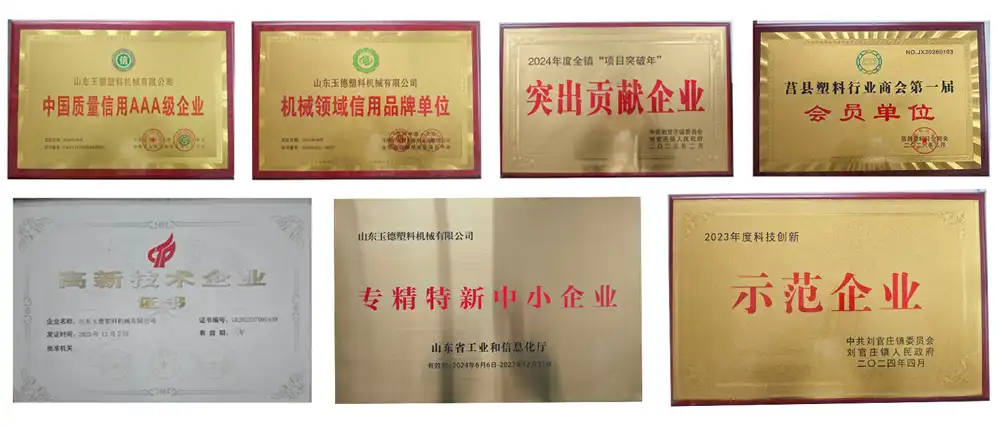
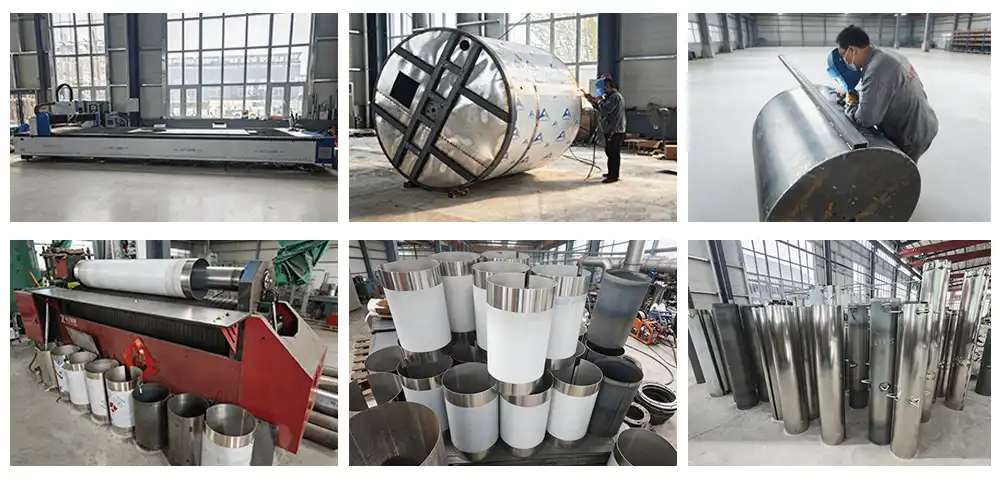
Yude Plastic Machinery specializes in manufacturing vertical plastic granule mixer engineered for demanding polymer processing applications. Our production range includes 600 kg to 10-ton capacity models alongside compact 300-500 kg units suitable for diverse operational scales. Each system features 304 stainless steel construction options, three-phase motor configurations with comprehensive protection systems, and achieves mixing uniformity exceeding 98% across all material types discussed throughout this guide.
Our technical team brings decades of polymer processing expertise, offering customized equipment modifications meeting specific material handling requirements or regional regulatory standards. With installations across 30+ countries and comprehensive after-sales support including 24-hour technical consultation, we ensure your mixing equipment delivers consistent performance throughout its operational lifespan. Contact our procurement specialists at sales@yudemachinery.com to discuss your material processing requirements and receive detailed equipment specifications tailored to your production environment.
FAQ
Can standard mixing equipment handle multiple material types in the same production environment?
Equipment constructed with stainless steel contact surfaces and designed for rapid cleaning accommodates sequential processing of different polymer families without cross-contamination. Proper cleaning protocols between material changes and documentation of procedures maintain traceability standards required in regulated industries.
What mixing duration is required for composite materials containing reinforcing fibers?
Fiber-reinforced compounds typically achieve adequate dispersion within 10-15 minutes using vertical shaft systems, though exact duration depends on fiber length, concentration, and base resin viscosity. Excessive mixing should be avoided to prevent fiber breakage that compromises mechanical properties.
How frequently should mixing equipment undergo maintenance inspection?
Daily visual checks, weekly lubrication, and quarterly comprehensive assessments represent industry-standard maintenance intervals. High-volume operations processing abrasive materials may require more frequent component inspection to identify wear patterns before performance degradation occurs.
References
1. Crawford, R.J. & Throne, J.L. (2002). Rotational Molding Technology. William Andrew Publishing.
2. Rauwendaal, C. (2014). Polymer Mixing: A Self-Study Guide. Hanser Publications.
3. Tadmor, Z. & Gogos, C.G. (2006). Principles of Polymer Processing. John Wiley & Sons.
4. White, J.L. & Kim, E.K. (2010). Twin Screw Extrusion: Technology and Principles. Hanser Gardner Publications.
5. Rosato, D.V. & Rosato, M.G. (2012). Plastics Engineered Product Design. Elsevier Science.
6. Osswald, T.A. & Hernández-Ortiz, J.P. (2006). Polymer Processing: Modeling and Simulation. Hanser Publications.
Learn about our latest products and discounts through SMS or email