- English
- French
- German
- Portuguese
- Spanish
- Russian
- Japanese
- Korean
- Arabic
- Greek
- German
- Turkish
- Italian
- Danish
- Romanian
- Indonesian
- Czech
- Afrikaans
- Swedish
- Polish
- Basque
- Catalan
- Esperanto
- Hindi
- Lao
- Albanian
- Amharic
- Armenian
- Azerbaijani
- Belarusian
- Bengali
- Bosnian
- Bulgarian
- Cebuano
- Chichewa
- Corsican
- Croatian
- Dutch
- Estonian
- Filipino
- Finnish
- Frisian
- Galician
- Georgian
- Gujarati
- Haitian
- Hausa
- Hawaiian
- Hebrew
- Hmong
- Hungarian
- Icelandic
- Igbo
- Javanese
- Kannada
- Kazakh
- Khmer
- Kurdish
- Kyrgyz
- Latin
- Latvian
- Lithuanian
- Luxembou..
- Macedonian
- Malagasy
- Malay
- Malayalam
- Maltese
- Maori
- Marathi
- Mongolian
- Burmese
- Nepali
- Norwegian
- Pashto
- Persian
- Punjabi
- Serbian
- Sesotho
- Sinhala
- Slovak
- Slovenian
- Somali
- Samoan
- Scots Gaelic
- Shona
- Sindhi
- Sundanese
- Swahili
- Tajik
- Tamil
- Telugu
- Thai
- Ukrainian
- Urdu
- Uzbek
- Vietnamese
- Welsh
- Xhosa
- Yiddish
- Yoruba
- Zulu
How to choose between a pot-type and a vertical plastic granule color mixer?
Choosing the right mixing equipment for your plastic manufacturing operation starts with understanding your specific production requirements and operational constraints. A pot-type plastic granule color mixer typically offers superior mixing uniformity and gentler material handling through its conical chamber design, making it ideal for smaller batches and color-sensitive applications. Vertical mixers, with their higher throughput capabilities and continuous spiral action, serve medium to large-scale operations where speed and volume matter most. Your decision should balance production scale, material characteristics, mixing precision demands, and budget considerations to ensure optimal return on investment and consistent product quality.
Core Types of Plastic Granule Color Mixers
The fundamental distinction between pot-type plastic granule color mixer and vertical plastic granule color mixers lies in their mechanical design and material handling approach. Both serve the critical function of blending base resin pellets with color masterbatch, regrind materials, and performance additives, yet they accomplish this through markedly different mechanisms that suit different production environments.
Working Principles and Design Architecture
A pot-type plastic granule color mixer has a conic stainless steel chamber for mixing materials by tumbling action and unique agitation patterns. The design is a fixed exterior vessel with spinning elements within. The revolving elements pull solids from the conical bottom and this causes a controlled cascade effect. This mechanism guarantees a complete dispersion of the pellets without any undue mechanical stress on them and hence preserves their structural integrity during the whole mixing cycle.
Vertical mixers use a central auger or screw conveyor to raise material from the cylindrical bottom to the top dispersion zone in a fountain-like circulation pattern. Materials are spread out in an umbrella structure and then fall down the drum walls to provide continuous 360 degree cyclical mixing. The vertical circulation method ensures quick homogenisation and can easily manage bigger batch quantities. However, the more violent movement of the material may cause somewhat higher temperatures during long mixing cycles.
Typical Industrial Applications
Pot-type mixers are often specified by manufacturing plants producing luxury vehicle interior parts such as dashboards and door panels from ABS or polycarbonate mixes in which color constancy is a premium. In certain applications, even a hint of color streaking can lead to rejection in demanding Tier 1 automotive supply chains, therefore mild but thorough mixing is very essential. The pot type chambers also create a controlled atmosphere which reduces the possibility of the creation of dust and cross contamination while changing between color batches.
Vertical mixers are the workhorses of blown film extrusion and high-volume pellet compounding operations where throughput needs outstrip the capabilities of small pot-type plastic granule color mixers. Vertical mixers are suitable for facilities that mix post-consumer recycled materials with virgin resins because they can handle materials with different bulk densities. The strong spiral motion perfectly mixes non-uniform light regrind flakes with homogeneous virgin pellets, so that the ensuing extrusion operations have steady melt flow indices.
Capacity and Energy Consumption Profiles
The other important factor is capacity specifications. The pot-type devices generally have a capacity between 50 kg and 500 kg per batch and are thus appropriate for applications where the color has to be changed often or if a number of SKUs are produced in modest amounts. Vertical mixers have a larger range , industrial types may mix 300 kg to 10 tonnes every cycle . This allows continuous manufacturing lines with little down time between batches .
These architectural variations result in patterns of energy use. Motors of 0.75 kW to 5 kW are typically used in pot-type mixers, consuming less power each cycle, but requiring more cycles to produce similar total output than vertical units. Vertical mixers have more powerful drive systems, often from 3 kW to 15 kW, depending on the capacity, but the increased throughput results in reduced energy usage per kilogram of blended material in high-volume cases. Procurement teams should consider the entire cost of ownership by analysing energy expenses to production quantities, rather than only considering equipment purchase price.
Key Criteria for Choosing Between Pot-Type and Vertical Mixers
Selecting the appropriate mixer technology requires systematic evaluation of several interdependent factors that collectively determine which equipment best serves your operational requirements and financial objectives.
Production Volume and Batch Flexibility
The daily throughput of your facility has a direct impact on the mixer architecture that will provide the best performance. Pot type mixers tend to be more inexpensive and operationally versatile for operations handling less than 2 tonnes of mixed material per day. The units provide quick batch changeovers, which are crucial for facilities that produce different color formulas or for a made-to-order business strategy. The small design is especially attractive to enterprises with limited floor space or those incorporating mixing equipment into existing production arrangements.
For production facilities with a daily throughput of greater than 3 tonnes, vertical mixers offer considerable efficiency benefits. Increased vessel capacities and more rapid mixing cycles save labour to handle materials and minimise production bottlenecks. The vertical mixer is also useful in continuous production situations, particularly if there is a requirement to feed material to a number of downstream extrusion lines concurrently, since it can provide a steady feed of material without the need for frequent interruptions for batch changes.
Material Compatibility and Mixing Precision Requirements
The many families of resins and types of additives provide distinct handling issues that impact the choice of pot-type plastic granule color mixer. Materials sensitive to mechanical stress or heat production such as engineering-grade polymers with small processing windows are better suited to pot-type mixers because the softer tumbling motion maintains pellet integrity and minimises frictional heat development. Pot-type designs also provide very tight control of color, which is important in applications such as medical device components or consumer electronics housings.
Vertical mixers are ideal for mixing materials of widely different densities or for mixing powdered additives into pelletised base resins. This intense vertical circulation pattern eliminates stratification and guarantees complete mixing of constituents which may otherwise stratify under less violent mixing conditions. Vertical mixing method generally results in more uniform additive distribution for plants using flame retardants, impact modifiers or heavy loadings of mineral fillers.
Operational Efficiency and Maintenance Considerations
Maintenance access and cleaning needs are important long-term operating considerations. The pot type plastic granule color mixers include hinged or detachable lid assemblies to offer full access to the mixing chamber and easy cleaning between color changes. This availability is especially convenient for operations that often transition between light and dark color batches, where the possibility of cross contamination requires equipment to be thoroughly sanitised. This is a basic mechanical design with less wear parts, therefore less maintenance expertise is needed and less need to keep a stock of spare parts.
Vertical mixers have a higher throughput but are more difficult to clean because of the height and the way the auger is configured. Procurement teams should look for models with features like quick-disconnect auger assembly or tool-free access panels to save downtime during normal maintenance. The kind of mixer also affects the noise levels. Pot-type plastic granule color mixers normally fall below 70 decibels but bigger vertical mixers might exceed 75-80 dB which may require extra acoustic control in plants with stringent occupational noise guidelines.
The control mechanisms used in current mixing equipment greatly affect efficiency of operation. More sophisticated variants have programmable logic controllers with recipe storing, automatic cycle time adjustment and connections to downstream gravimetric dosing systems. They eliminate operator dependence and improve batch-to-batch consistency, both of which are very important for facilities that are trying to get ISO certification or are servicing sectors that demand strict quality documentation.
Advantages and Limitations of Pot-Type and Vertical Mixers: An In-Depth Analysis
Both mixer technologies deliver proven performance in appropriate applications, yet each presents distinct advantages and operational limitations that procurement professionals must weigh against specific facility requirements.
Pot-Type Mixer Strengths and Constraints
The fundamental benefit of pot-type plastic granule color mixers is the mixing accuracy and material preservation. The conical chamber shape and the well-controlled agitation pattern provide the optimal circumstances for consistent color dispersion without the degradation of pellet quality. This mild approach is particularly useful in processing recycled content or materials that have a surface treatment that forceful mixing might damage. The small dimensions and relatively simple requirements for installation of the equipment lower initial installation costs and permit deployment in production situations with limited space.
The most serious limitation for pot-type systems is the limit of batch size. For example, facilities experiencing growing production volumes may have many smaller mixers or longer shifts to fulfil demand, and these situations will eventually favour the move to higher-capacity equipment. Cycle durations are sufficient for low throughput needs but cannot compete with the quick material processing that is achieved with vertical mixers. Production delays can occur during mixing cycles for operations needing quick material availability for continuous downstream processes, unless they have parallel mixing stations or large buffer inventories.
Vertical Mixer Performance Characteristics
Vertical mixers have high capacities that immediately result in lower labour costs per kilogram of mixed material. The continuous circulation pattern provides uniform mixing in shorter cycle times than equivalent-capacity pot-type machines, allowing for leaner inventory management and more responsive production scheduling. Many vertical designs additionally integrate heating elements or moisture removal capability, which can provide value to companies that handle hygroscopic polymers that require pre-drying prior to extrusion.
The trade-offs are the possible less uniform mixing when processing materials with significant density variances or when extremely small percentages of masterbatch are spread over huge volumes of base resin. In current vertical mixers the auger designs have been optimised so these problems are mostly minimised. Applications that require zero-tolerance color standards may still opt for the controlled environment of pot-type plastic granule color mixers. The more vertical the arrangement, the more difficult it is to clean, which might result in increased change-over times between production runs and demand more strict sanitation measures to avoid color contamination.
Practical Application Context
A medium-sized manufacturer of PVC compounds for pipe extrusion for the building market. It is produced daily in 3 main color formulations ( white, grey and black ) and achieves an output of 4 tonnes. An 800 kg capacity vertical mixer is used for this volume with mixing cycle times of 8-12 minutes and sufficient flow of material to allow continuous extrusion operation. The investment in one single vertical machine is more inexpensive than the operation of several small pot type mixers, saves the floor space required and simplifies operator training by centralising mixing activities.
On the other hand, if you’re a bespoke compounder supplying speciality markets, with regular small-batch orders, say, 50 to 200 kilogram lots and dozens of unique color requirements, the pot-type equipment offers you more operating flexibility. The flexibility to quickly swap over and access for thorough cleaning reduces the danger of cross contamination while keeping the plant competitive on lead times for unique orders. The reduced capital expenditure is also better aligned with the unpredictable revenue patterns typical of made-to-order business models.
Conclusion
Selecting between pot-type and vertical plastic granule color mixers hinges on matching equipment capabilities to your specific production profile, quality requirements, and operational constraints. Pot-type configurations deliver superior mixing precision and operational flexibility for facilities managing diverse, smaller-batch production scenarios. Vertical mixers provide the throughput and efficiency advantages necessary for high-volume operations where speed and capacity drive profitability. Successful procurement integrates technical specifications with practical considerations including maintenance accessibility, supplier support infrastructure, and total cost of ownership calculations. By systematically evaluating these factors against your operational requirements, you position your facility to achieve consistent product quality, optimal production efficiency, and long-term equipment reliability.
Get Expert Guidance on Selecting Your Ideal Mixing Solution
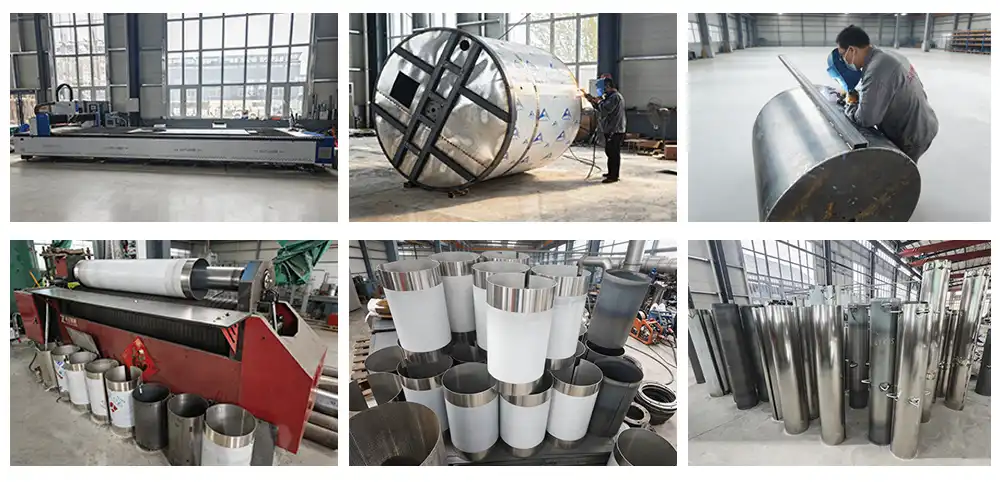
Yude Plastic Machinery stands ready to support your equipment selection process with over a decade of specialized experience serving plastic processing operations globally. As a professional pot-type plastic granule color mixer supplier and manufacturer in China, we offer an extensive product range spanning 300 kg compact units to 10-ton industrial vertical systems, all manufactured under strict quality control protocols and backed by comprehensive technical support. Our engineering team provides customized configuration recommendations tailored to your specific production requirements, material characteristics, and budget parameters. We maintain competitive wholesale pricing without compromising equipment quality, and our 7×24-hour after-sales service network ensures your operations receive prompt assistance whenever needed. Contact our technical specialists at sales@yudemachinery.com to discuss your mixing requirements and receive a detailed quotation reflecting our commitment to delivering exceptional value and reliable performance for your manufacturing operation.
FAQ
How often should pot-type mixers be cleaned between different color batches?
Cleaning frequency depends on color transition patterns and contamination tolerance. When switching from dark to light colors, thorough cleaning after each batch prevents visible contamination. Light-to-dark transitions may permit several batches before deep cleaning, though regular maintenance optimizes color consistency. Most operations implement complete chamber cleaning weekly regardless of color patterns to prevent resin degradation buildup.
Are vertical mixers compatible with all plastic resin families?
Vertical mixers handle most common thermoplastics including polyethylene, polypropylene, PVC, ABS, and polystyrene effectively. Materials with extremely low bulk density or unusual particle geometries may require auger design modifications. Consult with manufacturers regarding specialty engineering resins to confirm compatibility and optimize mixing parameters for specific material characteristics.
What safety features should I prioritize when purchasing mixing equipment?
Essential safety mechanisms include automatic lid interlocks that cut power when chambers open during operation, emergency stop controls easily accessible to operators, and overload protection preventing motor damage from material jams. Equipment should comply with relevant safety standards such as CE marking or equivalent regional certifications, confirming design adherence to established safety protocols.
References
1. Plastics Technology Magazine. (2022). "Material Handling Equipment Selection Guide for Processors." SPE Publications.
2. Society of Plastics Engineers. (2021). "Best Practices in Color Masterbatch Dispersion and Blending." Technical Paper Series, Volume 47.
3. Richardson, T. & Lokensgard, E. (2020). "Industrial Plastics: Theory and Applications." Cengage Learning, Sixth Edition.
4. Polymer Processing Institute. (2023). "Optimizing Mixing Operations in Thermoplastic Compounding." Research Report 2023-08.
5. European Plastics Machinery Association. (2022). "Quality Standards for Material Blending Equipment in Polymer Processing." Technical Guideline EUR-PM-2022.
6. American Society for Testing and Materials. (2021). "ASTM D6336: Standard Test Methods for Determining the Degree of Dispersion of Carbon Black." ASTM International Standards.
Learn about our latest products and discounts through SMS or email