- English
- French
- German
- Portuguese
- Spanish
- Russian
- Japanese
- Korean
- Arabic
- Greek
- German
- Turkish
- Italian
- Danish
- Romanian
- Indonesian
- Czech
- Afrikaans
- Swedish
- Polish
- Basque
- Catalan
- Esperanto
- Hindi
- Lao
- Albanian
- Amharic
- Armenian
- Azerbaijani
- Belarusian
- Bengali
- Bosnian
- Bulgarian
- Cebuano
- Chichewa
- Corsican
- Croatian
- Dutch
- Estonian
- Filipino
- Finnish
- Frisian
- Galician
- Georgian
- Gujarati
- Haitian
- Hausa
- Hawaiian
- Hebrew
- Hmong
- Hungarian
- Icelandic
- Igbo
- Javanese
- Kannada
- Kazakh
- Khmer
- Kurdish
- Kyrgyz
- Latin
- Latvian
- Lithuanian
- Luxembou..
- Macedonian
- Malagasy
- Malay
- Malayalam
- Maltese
- Maori
- Marathi
- Mongolian
- Burmese
- Nepali
- Norwegian
- Pashto
- Persian
- Punjabi
- Serbian
- Sesotho
- Sinhala
- Slovak
- Slovenian
- Somali
- Samoan
- Scots Gaelic
- Shona
- Sindhi
- Sundanese
- Swahili
- Tajik
- Tamil
- Telugu
- Thai
- Ukrainian
- Urdu
- Uzbek
- Vietnamese
- Welsh
- Xhosa
- Yiddish
- Yoruba
- Zulu
What are the advantages of a vertical plastic granule mixer?
Vertical plastic granule mixers provide exceptional mixing uniformity, space-efficient design, and energy savings compared to traditional horizontal blending systems. These machines achieve mixing homogeneity of ≥98% through gravity-assisted material flow and optimized screw configurations. Their compact vertical footprint reduces factory floor space requirements by up to 60%, while consuming 20-35% less power during operation. Built with Q235 carbon steel or 304 stainless steel, these mixers suit processing PE, PP, ABS, and PVC pellets across injection molding, extrusion, and film blowing production lines, ensuring consistent product quality and operational reliability.
Key Advantages of Vertical Plastic Granule Mixers
Superior Mixing Uniformity:
Properly designed vertical designs have a gravity aided circulation pattern that yields statistical consistency of more than 98%. Material trapped in corners or at shaft seals is no problem with vertical mixers as it can be with horizontal blenders. The material is in continual motion with vertical mixers. The helical screw shape pushes particles up, from the very bottom of the chamber, to avoid dead zones where unmixed material might build up. This thorough blending eliminates the colour aberrations and mechanical irregularities that might occur from localised concentrations of additives or masterbatches. In particular, the injection moulding processes benefit because an even melt consistency translates directly into lower scrap rates and tighter dimensional tolerances on completed items.
Space-Efficient Footprint:
Production facilities are always under pressure to maximise the productive floor area. Vertical mixers can help solve this challenge due to their inherently compact design that only requires the circular footprint of their chamber diameter. A 1,000kg capacity vertical unit will typically require 2-3 square meters of floor space, versus 4-5 square meters of floor space for an equivalent horizontal mixer when you factor in the drive motor and access for maintenance. This 50-60% space savings can be critical in congested production environments or when retrofitting additional capacity into existing facilities. The vertical orientation also lends itself to integration with overhead material handling systems, which allows direct gravity discharge into downstream equipment without the need for additional conveying steps. Vertical mixers get over this limitation with a small design that needs only the circular footprint of their chamber diameter. A vertical unit of 1,000kg capacity will usually take up 2-3 square meters of floor area compared to a similar horizontal mixer which will take up 4-5 square meters of floor area to allow for the drive motor and maintenance access. This 50-60% space reduction is crucial in tight manufacturing facilities or when adding capacity to existing structures. The vertical configuration also lends itself to a simple interface with overhead material handling systems, allowing for direct gravity discharge into downstream equipment without the requirement for extra conveying stages.
Reduced Energy Consumption:
Operational cost studies always revealed that vertical mixers need 25-35% less energy per mixing cycle than horizontal ones. This efficiency is achieved by making advantage of gravity in the flow of the material phase of the equipment in downward direction and thereby minimising the load on the motor for circulation. Then, the mixer is driven by a three-phase asynchronous motor with overload and overheating safety. The mixer works stably at an optimised speed (normally 200-400 RPM), which is a compromise between mixing speed and needless shear stress. The energy savings are substantial when applied to continuous production schedules, and factories running multiple batches a day should expect to achieve large utility cost reductions in their first year of operation.
Simplified Maintenance Access:
The design of the vertical mixer allows for easy maintenance operations to save production downtime. The top-mounted motor and drive unit is accessible without disassembly of material handling connections, enabling for frequent inspection of bearings and seals during shift changes. The inner chamber is made of Q235 carbon steel or polished 304 stainless steel. The surface of the chamber is smooth, with no horizontal ledges to deposit material residue. The design allows for quick cleanouts between material changes, which is important whether you are running multiple colours or converting from virgin to recycled content. Wear parts like screw flights or chamber linings can be replaced during planned maintenance periods instead of forced unplanned stoppages.
All these benefits combine to fulfil the operational needs procurement professionals have when they are considering capital equipment: assurance of product quality, production efficiency, total cost of ownership, and manufacturing flexibility. This blend of technical excellence and practical operational benefits goes a long way to explaining the acceptance of vertical mixing technology across a wide range of plastics processing segments.
Vertical Mixer vs Other Mixing Solutions: A Rational Choice Approach
Equipment selection requires objective comparison of alternative technologies against specific production requirements. Vertical mixers occupy a distinct position in the mixing equipment landscape, offering advantages that make them optimal for certain applications while horizontal or tumble blenders may suit others.
Performance Comparison with Horizontal Mixers
Horizontal paddle mixers and ribbon blenders combine thoroughly by moving material side-to-side using spinning pieces contained in a trough-shaped container. More effective with high viscosity materials and paste like formulas than vertical units. Vertical plastic granule mixers are shown to be more consistent in the case of free flowing plastic granules, the most common kind of material in thermoplastic processing. The layout of the cyclonic flow of the vertical chambers assures total turn-over of the whole batch whereas Horizontal mixers are liable to stratification of the heavier particles near the bottom of the trough.
Vertical configurations are certainly space efficient especially in buildings with more ceiling height than floor area. Energy consumption tests from industrial installations have consistently shown that vertical units use less kilowatt-hours per tonne processed. Horizontal mixers on the other hand may provide quicker discharge rates for some applications where rapid batch cycling is required.
Heated vs Non-Heated Configurations
Temperature control capability represents a specification branch point in vertical mixer selection. Standard ambient-temperature units suit the majority of dry blending applications where materials simply require physical homogenization. Heated vertical mixers incorporate jacketed chambers or integrated heating elements, enabling temperature-controlled processing for applications requiring thermal conditioning. PVC dry blend formulations benefit from gentle heating during mixing, improving plasticizer absorption and compound flowability. Masterbatch dilution processes sometimes employ heated mixing to reduce viscosity differences between concentrate pellets and base resin.
The thermal variants add complexity and cost—typically 30-40% price premium over standard units—while reducing maximum throughput due to longer cycle times incorporating heating phases. Procurement decisions should weigh whether thermal processing truly enhances product quality or whether ambient mixing followed by downstream heating in extruder feed zones achieves equivalent results at lower capital investment.
Capacity and Power Efficiency Metrics
Vertical mixing systems scale across a broad capacity range, from compact 300kg laboratory units to industrial silos exceeding 10,000kg. Power requirements scale roughly proportionally with capacity, though efficiency improves at larger scales due to more favorable surface-area-to-volume ratios. A 600kg vertical mixer typically operates with a 5-7 kW motor, consuming approximately 0.6-0.8 kWh per 600kg batch cycle. Scaling to a 2,000kg unit requires a 11-15 kW motor but reduces specific energy consumption to 0.5-0.6 kWh per ton processed.
Production scale flexibility represents an often-overlooked advantage of vertical mixing technology. Facilities can operate partial batches without significant efficiency penalties, supporting small-lot production or material trials without dedicating separate equipment. This adaptability proves valuable for contract manufacturers processing diverse formulations or operations transitioning between high-volume commodity products and specialty compounds.
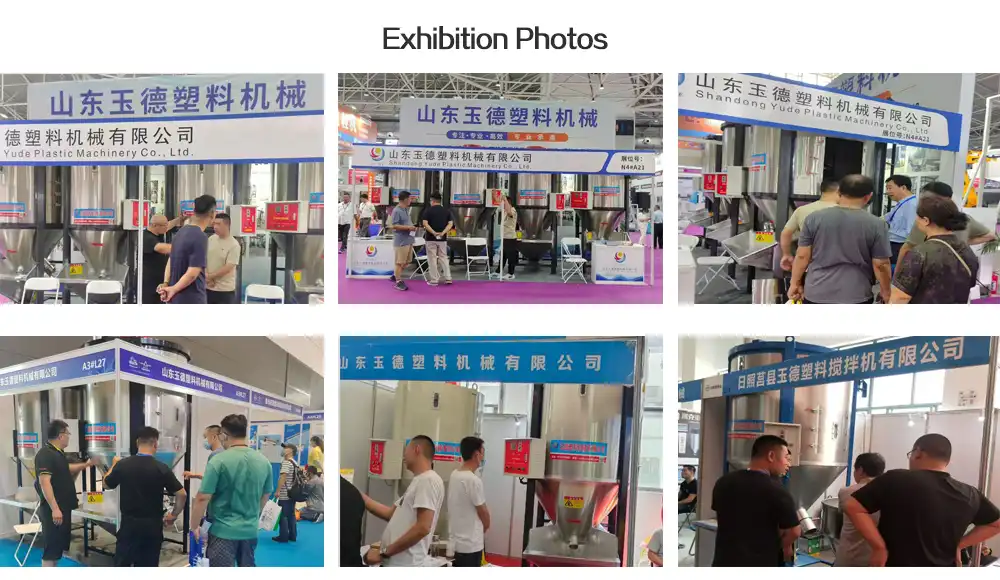
Procurement Insights: Selecting the Right Vertical Plastic Granule Mixer
Strategic equipment acquisition extends beyond comparing technical specifications to encompass supplier evaluation, total cost of ownership analysis, and service infrastructure assessment.
Capacity Alignment with Production Demands
Rightsizing equipment capacity requires analyzing production schedules, material changeover frequency, and buffer inventory strategies. Undersized mixers create bottlenecks that idle downstream injection molding or extrusion equipment, while oversized units increase capital costs and consume unnecessary floor space. Calculate mixing requirements by determining hourly material consumption rates of fed equipment, then factor in desired batch frequency. A facility operating four injection molding machines consuming 800kg/hour of blended material benefits from a 1,000-1,500kg vertical mixer completing cycles every 60-75 minutes, maintaining adequate buffer inventory without excessive work-in-process accumulation.
Consider future capacity expansion plans during initial equipment selection. Specifying a mixer with 30-40% excess capacity relative to current requirements accommodates production growth without premature replacement. Modular control systems and motor configurations allow certain vertical mixer platforms to accept capacity upgrades through chamber extensions or higher-output drive components.
Supplier Credibility and Support Infrastructure
Manufacturer evaluation should examine production capabilities, quality management systems, and after-sales service networks. Established suppliers maintain comprehensive quality inspection protocols covering incoming material verification, in-process dimensional checks, and finished equipment performance testing. ISO 9001:2015 certification provides baseline assurance of consistent manufacturing practices, though site audits or reference customer interviews offer deeper insights into actual production standards.
After-sales support infrastructure critically impacts long-term equipment reliability. Manufacturers offering 24-hour technical assistance, regional service technicians, and readily available spare parts for plastic granule mixers minimize unplanned downtime. Confirm that critical wear components—mixing screws, shaft bearings, and seals—maintain inventory at regional distribution centers rather than requiring extended lead times from overseas facilities. Warranty terms should cover both parts and labor for 12-18 months, with clearly defined response time commitments for service requests.
Total Cost of Ownership Considerations
Purchase price represents only one component of equipment lifecycle costs. Energy consumption over typical 10-15 year service lives accumulates to substantial operating expenses—making the efficiency advantages of quality vertical mixers financially significant beyond initial capital outlay. Maintenance requirements and parts replacement costs vary considerably across manufacturer and quality tiers. Premium units constructed with hardened alloy screws and precision bearings incur higher upfront costs but reduce annual maintenance expenses and extend intervals between major component replacements.
Installation and commissioning services provided by the manufacturer prevent startup difficulties and ensure equipment achieves specified performance from initial operation. Professional installation typically adds 8-12% to equipment cost but eliminates troubleshooting delays and validates warranty coverage. Training programs for operations and maintenance personnel reduce operator error and support proper preventive maintenance execution.
Conclusion
Vertical plastic granule mixers deliver measurable advantages across critical performance dimensions that directly impact manufacturing profitability. Their superior mixing uniformity exceeding 98% homogeneity ensures consistent product quality while eliminating defects caused by uneven additive distribution. The compact vertical footprint reduces facility space requirements by 50-60% compared to horizontal alternatives, supporting efficient plant layouts and future capacity expansion. Energy consumption reductions of 25-35% per mixing cycle accumulate to substantial operational savings across equipment service lives exceeding a decade.
Strategic procurement considers both technical capabilities and supplier support infrastructure when selecting mixing equipment. Manufacturers demonstrating robust quality management systems, responsive technical assistance, and readily available spare parts minimize total cost of ownership while maximizing uptime. Proper equipment sizing, systematic maintenance practices, and thorough operator training sustain performance at design specifications throughout years of demanding production schedules.
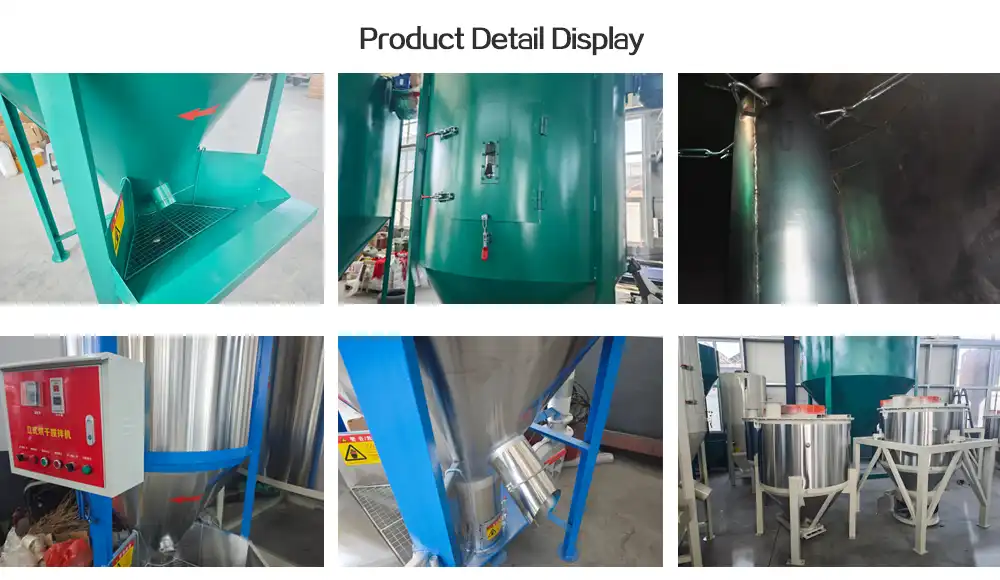
Partner with Yude Plastic Machinery for Superior Mixing Solutions
Achieving consistent material blending while maximizing production efficiency requires equipment engineered for reliability and backed by comprehensive support. Yude Plastic Machinery delivers vertical plastic granule mixer systems spanning 300kg to 10-ton capacities, constructed with precision-machined components and quality materials meeting rigorous manufacturing standards. Our vertical mixers achieve ≥98% mixing uniformity through optimized screw geometry and chamber design, processing PE, PP, ABS, and PVC granules across injection molding, extrusion, and film blowing applications.
Every mixer undergoes full-process quality inspection from raw material verification through finished equipment performance testing, ensuring reliable operation from initial startup. We provide 24-hour technical support, professional installation services, and maintain spare parts inventory for rapid response to service needs. Our engineering team offers customized solutions addressing unique production requirements, including stainless steel construction, multilingual control interfaces, and modifications meeting regional compliance standards. Contact our technical specialists at sales@yudemachinery.com to discuss your specific blending requirements and receive detailed specifications from a trusted plastic granule mixer manufacturer committed to your operational success.
FAQ
Can vertical mixers handle both virgin and recycled plastic granules?
Vertical mixing systems effectively blend virgin resins with recycled content, including materials with different particle sizes and bulk densities. The helical screw design lifts lighter regrind particles along with heavier virgin granules, preventing the segregation that commonly occurs in tumble blenders. Most industrial vertical mixers process recycled content ratios from 10% to 50% without performance degradation, though material cleanliness and moisture content affect mixing quality more than virgin-versus-recycled status.
How do vertical mixers improve product quality in injection molding?
Uniform material blending eliminates color streaking and ensures consistent distribution of additives throughout molded parts. When flame retardants, UV stabilizers, or impact modifiers concentrate unevenly, localized weak points compromise structural integrity and surface finish. Vertical mixers achieving 98%+ homogeneity deliver consistent melt properties to injection molding machines, reducing shot-to-shot variation and allowing tighter process control. This consistency directly translates to lower scrap rates and improved dimensional repeatability across production runs.
What customization options suit specific production requirements?
Manufacturers offer vertical mixers in various chamber materials—polished stainless steel for applications requiring pharmaceutical-grade cleanliness, or carbon steel with specialty coatings for abrasive formulations. Control system options range from basic timer-based operation to PLC-integrated automation with recipe management and batch tracking. Discharge configurations adapt to different material handling systems, including pneumatic valves, slide gates, or direct connection to vacuum loaders. Heated variants accommodate thermal processing requirements, while explosion-proof electrical specifications suit facilities processing combustible dusts.
References
1. Rauwendaal, Chris. Polymer Mixing: A Self-Study Guide. Hanser Publications, 2018.
2. Tadmor, Zehev and Costas G. Gogos. Principles of Polymer Processing, Second Edition. Wiley-Interscience, 2006.
3. White, James Lindsay and Kim Sang Kon. Twin Screw Extrusion: Technology and Principles. Hanser Publications, 2017.
4. Goodship, Vannessa. Practical Guide to Injection Moulding. Smithers Rapra Technology, 2004.
5. Michaeli, Walter. Plastics Processing: An Introduction. Hanser Gardner Publications, 2003.
6. Osswald, Tim A. and Ernesto Baur. Plastics Handbook: The Resource for Plastics Engineers, Fourth Edition. Hanser Publications, 2006.
Learn about our latest products and discounts through SMS or email