- English
- French
- German
- Portuguese
- Spanish
- Russian
- Japanese
- Korean
- Arabic
- Greek
- German
- Turkish
- Italian
- Danish
- Romanian
- Indonesian
- Czech
- Afrikaans
- Swedish
- Polish
- Basque
- Catalan
- Esperanto
- Hindi
- Lao
- Albanian
- Amharic
- Armenian
- Azerbaijani
- Belarusian
- Bengali
- Bosnian
- Bulgarian
- Cebuano
- Chichewa
- Corsican
- Croatian
- Dutch
- Estonian
- Filipino
- Finnish
- Frisian
- Galician
- Georgian
- Gujarati
- Haitian
- Hausa
- Hawaiian
- Hebrew
- Hmong
- Hungarian
- Icelandic
- Igbo
- Javanese
- Kannada
- Kazakh
- Khmer
- Kurdish
- Kyrgyz
- Latin
- Latvian
- Lithuanian
- Luxembou..
- Macedonian
- Malagasy
- Malay
- Malayalam
- Maltese
- Maori
- Marathi
- Mongolian
- Burmese
- Nepali
- Norwegian
- Pashto
- Persian
- Punjabi
- Serbian
- Sesotho
- Sinhala
- Slovak
- Slovenian
- Somali
- Samoan
- Scots Gaelic
- Shona
- Sindhi
- Sundanese
- Swahili
- Tajik
- Tamil
- Telugu
- Thai
- Ukrainian
- Urdu
- Uzbek
- Vietnamese
- Welsh
- Xhosa
- Yiddish
- Yoruba
- Zulu
What motor power does a 3 ton vertical plastic particle mixer require?
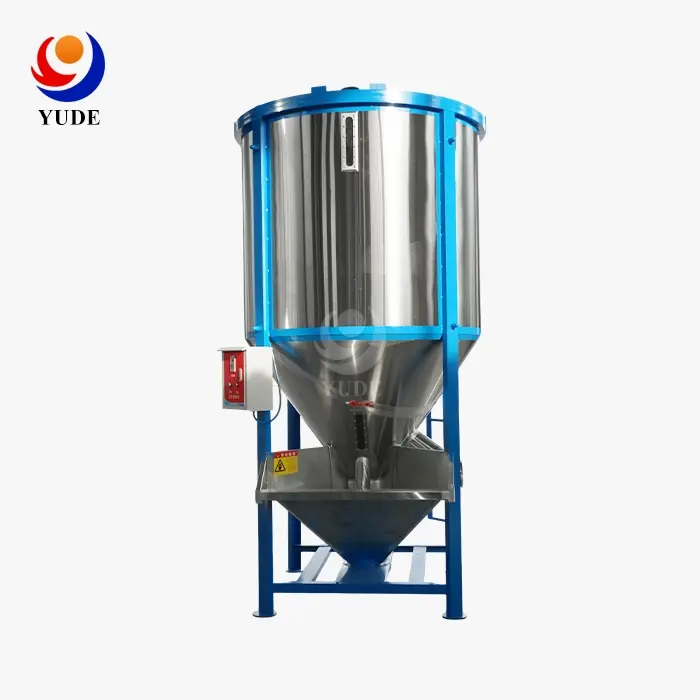
A 3 ton vertical plastic particle mixer typically requires a motor rated between 11 kW and 15 kW. This range accounts for the full 3,000 kg rated load capacity and the bulk density of standard thermoplastic granules (0.6–0.8 g/cm³). The vertical auger design lifts material from the hopper base to the top in a continuous circulatory pattern, demanding steady torque throughout the mixing cycle. At 380V/50Hz, an 11–15 kW motor delivers enough rotational force to achieve ≥98% mixing uniformity within 12–20 minutes per batch—without generating excessive heat or wasting energy.
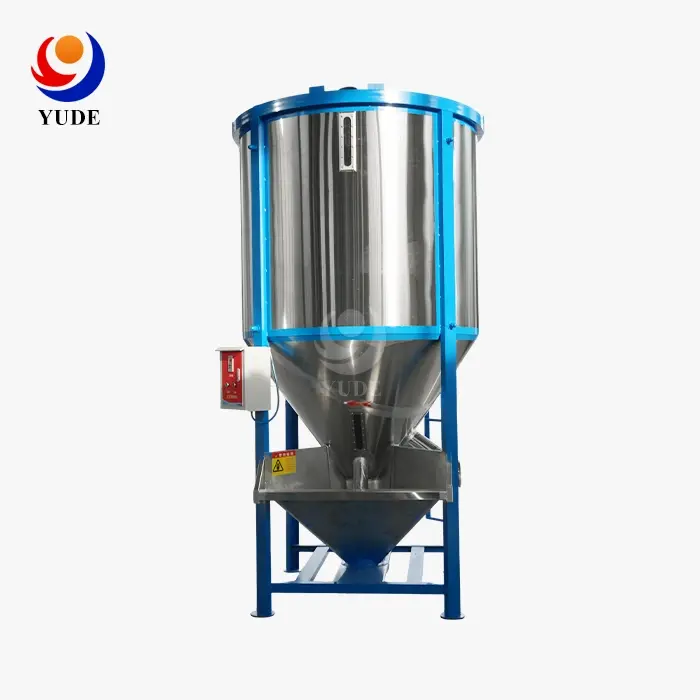
Understanding the Motor Power Requirement of a 3 Ton Vertical Plastic Particle Mixer
What "Motor Power" Means in This Context?
To spin the center screw, a drive unit converts electrical current into mechanical torque, which is measured in horsepower. To keep the batch constant to within ≥98%, the screw in the vertical silo mixer must continuously remove plastic pellets (up to 3,000 kg) from the bottom, distribute them evenly on top, and repeat the process. You may affect whether or not the equipment stalls, overheats, or draws too much current during peak load by selecting an appropriate power rating.
Key Factors That Influence Power Demand
There are a number of physical factors that affect how much motor power a 3-ton unit needs.
- Material bulk density: 0.7-0.8 g/cm³ is the typical density for PVC granules and 0.55-0.65 g/cm³ for PE pellets. A larger torque is required from the screw because to the increased mass per cubic metre caused by a higher density.
- Effective mixing volume: A motor with constant power throughout the mixing window is necessary for the screw to deliver the material a considerable vertical distance, since the effective volume ranges from 4,500 to 4,800 L and the dimensions of the drum are 2,200 mm in diameter and mm in height.
- Particle size and specific gravity: Higher instantaneous torque peaks are caused by particles that are coarser or denser, as they resist recirculation. This is why you may set the time of the single mixing to anywhere from twelve to twenty minutes. In order to reduce peak motor load, operators may simply increase the cycle time.
How the Vertical Mixing Principle Affects Torque?
This machine works on the principle of Archimedes screw. The substance rises up through a central tube, squirts out at the top and falls back along the drum wall. The flow of circulation is much softer than the friction-heavy action of the high-speed hot mixer. A 3-ton vertical machine needs just 11–15 kW which is a lot less than what a high-speed compounding mixer of the same capacity could require. This does not produce much heat during each batch cycle, so that materials such as LDPE or rigid PVC are not damaged by the heat.
Comparing Motor Power: Vertical vs. Other Plastic Mixer Designs
Vertical Auger Mixers vs. Horizontal Ribbon Blenders
A horizontal ribbon blender that works with 3,000 kg of plastic pellets usually needs 18–30 kW of power because the dual-ribbon agitator has to cut the material across the whole length of the tank. The vertical auger design focuses all the mechanical work along a single center line. This reduces the amount of power needed by 30–45% for the same batch weight. That difference directly leads to lower electricity costs per ton of mixed, which is very helpful for factories that work 24 hours a day.
The Role of Construction Material in Power Efficiency
The contact areas made of 201/304 stainless steel that are used on properly built 3 Ton vertical plastic particle mixer units are important for more than just keeping rust away. A mirror-polished inside makes the walls less frictional, which lets the screw move material more easily and lets the motor work closer to its rated efficiency point. Over time, rust gives carbon steel drums a rough surface, which increases drag and slowly raises the motor current draw. So, choosing construction made of stainless steel is an important long-term factor in keeping motor performance stable.
Energy Efficiency and Operating Costs
A single batch uses about 2.75–3.75 kWh at 11–15 kW and a 15-minute average cycle. For a plant that makes 20 batches every day, that's 55 to 75 kWh every day. This is compared to a high-speed mixer with the same volume that uses 22 kW, which is about 110 kWh per day in the same conditions. A properly sized vertical mixer can save more than 20,000 kWh of power over the course of a year of continuous use. This is a number that is important for both running budgets and sustainability reports.
How to Select the Right Motor Power for Your Vertical Plastic Particle Mixer?
Match Motor Capacity to Your Material Profile
When deciding on a motor's size, the most typical error is to ignore density in favour of volume. Make sure you know the bulk density of all the materials in your mix before choosing the motor power. At all times, use the 15 kW end of the range when dealing with high density materials, which are typically approximately 0.8g/cm3. With typical PE or PP pellets at 0.6 g/cm³, 11 kW could be plenty and will save energy in the long run.
Here are the core selection criteria engineers typically apply:
- Load factor: With some wiggle room for density variation, the motor should perform at 70-85% of its rated capacity under typical batch conditions.
- Duty cycle: A Premium Efficiency (IE3) motor is the way to go for nonstop output that lasts all day. Extended heat loads may be accommodated with a service factor of 1.15 or above.
- Gearbox pairing: Attached to the motor is a robust gearbox. Durable gear sets with hardened faces allow for machines to provide strong torque for extended periods of time. Be sure to research the manufacturer's service life ratings for gear before making a purchase.
Applying these criteria prevents two common failures: an underpowered motor that stalls under full load and an oversized motor that wastes energy and increases capital cost unnecessarily.
Avoid Over-Sizing and Under-Sizing
An undersized motor will draw too much current, will trip thermal protection relays and will deteriorate the winding insulation and greatly reduce the life of the motor. An enormous motor is running at a low load factor, operating at an inefficient part of its torque curve and costing more up front. The 11–15 kW window for a 3,000 kg batch mixer with an effective volume of 4,500–4,800 L is achieved through technical validation over bulk density ranges of 0.6–0.8 g/cm³ and there is little need to deviate from it unless there is a unique process reason to do so.
Maintenance and Safety Guidelines Related to Motor Power
Routine Inspection Protocols
Motor dependability over a 10-year service life depends on regular checks. Use an infrared thermometer to check the temperature of the motor terminals once a month. Readings that stay above 80°C in regular room conditions mean that there isn't enough air flow or that the bearings are wearing out. Check the current draw every three months against the label rating. A rising ampere trend often means mechanical drag before it fails.
Early Detection of Overload Conditions
Most of the time, overload shows up as strange vibrations, a high operating temperature, or unnecessary trips on the thermal overload relay. These are just early warning signs, not complete failures. Operators often report hearing strange noises in the first few minutes of a batch, when the screw bites into a full hopper. This is usually a sign that the material's bulk density has gone above and beyond what was intended, or that the motor oil needs to be changed.
Safety Measures and Operating Practices
These units should have an industrial push-button control panel with a motor protection circuit breaker that is 1.25 times the full-load ampere rating. Before they can open any inspection door or manhole, operators must follow the lockout/tagout procedures. Every 500 hours of operation, maintenance staff should check the oil level in the gearbox and the position of the link. Steps like these aren't just for show; they're what keep a big mixer running with less than two days of unplanned downtime a year.
Procurement Considerations: Buying a 3 Ton Vertical Plastic Particle Mixer with the Right Motor
Motor Power and Pricing Correlation
One of the obvious things that affects price in this group of tools is the motor specification. A unit with a 15 kW IE3 motor and a hardened-gear reducer will cost more than a simple 11 kW assembly. However, when the plant works multiple shifts every day, the higher-specification choice is often more cost-effective in the long run. During the technical review stage, ask each supplier for a motor data sheet and a rating of how long the gearbox should last.
Sourcing from a Qualified Manufacturer
When procurement teams work directly with a verified 3 Ton vertical plastic particle mixer manufacturer, they can get help with application engineering, factory acceptance testing, and records of quality inspections. Make sure the supplier can provide spare motor and gearbox assemblies. Big plants should always have at least one set of these important drive parts on hand. Ask about the response time for remote diagnostic support. For high-volume extrusion lines, a four-hour window for remote response is a good minimum.
After-Sales Support and Warranty
A dependable provider will guarantee their drive parts with a transparent warranty and will respond to significant problems within 24 hours. Verify whether the replacement parts are available locally or if they can be ordered with estimated arrival dates. Verify if the warranty includes rewinding the motor or just replacing it. You should be aware of this as it influences your maintenance budget.
Conclusion
A 3 Ton vertical plastic particle mixer works best with a motor rated between 11 kW and 15 kW, which is the same power range as the equipment's 4,500–4,800 L effective volume and the bulk density range of 0.6–0.8 g/cm³ for most thermoplastics. The vertical auger design uses little power and mixes evenly 98% of the time in 12 to 20 minutes per batch. If you choose the right motor power, pair it with a hardened-gear reducer, and stick to structured maintenance schedules, you can protect your investment and keep production going with little unplanned downtime.
FAQ
What is the standard motor power range for a 3-ton vertical plastic mixer?
The normal range is between 11 and 15 kW at 380V and 50Hz.
Does higher motor power always mean better mixing quality?
Not all the time. Uniform mixing of ≥98% is achieved by the shape of the screw and the cycle time, not by using more power. When you oversize the motor, you waste electricity and don't get a better blend consistency.
Can the motor be upgraded after purchase?
Most of the time, yes. Any standard gearbox plate can be used to place the motor. Before buying a new motor, though, make sure that the higher output is compatible with the gearbox torque rating by calling the maker.
How much electricity does a single batch consume?
At 11–15 kW and an average 15-minute cycle, a single 3-ton batch uses about 2.75–3.75 kWh, which is a lot less than horizontal designs of the same size.
What certifications should the motor carry?
Check for IE2 or IE3 ratings based on IEC 60034-30-1, CE marking for sales in Europe, or UL listing for sales in North America. These show that the motor meets well-known standards for safety and efficiency.
Connect with Yude Plastic Machinery for the Right Mixing Solution
More than 30 countries have bought vertical plastic particle mixers from Yude Plastic Machinery. We are a direct 3 Ton vertical plastic particle mixer supplier, and we offer motor configuration advice, factory acceptance testing, and an after-sales system that is open 7 days a week, 24 hours a day. You can look through our whole product catalog at https://yudemachinery.com/, or you can email your technical specs to sales@yudemachinery.com to get a personalized quote.
References
- Rauwendaal, C. Polymer Mixing: A Self-Study Guide. Hanser Publishers, 2004.
- Tadmor, Z., & Gogos, C. G. Principles of Polymer Processing. Wiley-Interscience, 2006.
- IEC 60034-30-1: Rotating Electrical Machines – Efficiency Classes of Line Operated AC Motors. International Electrotechnical Commission, 2014.
- Osswald, T. A., Turng, L.-S., & Gramann, P. J. Injection Molding Handbook. Hanser Gardner Publications, 2008.
- Plastics Technology: Equipment Buyers Guide – Mixing & Blending Equipment. Gardner Business Media, 2022.
- Harper, C. A. (Ed.). Handbook of Plastics Technologies. McGraw-Hill, 2006.
Learn about our latest products and discounts through SMS or email