- English
- French
- German
- Portuguese
- Spanish
- Russian
- Japanese
- Korean
- Arabic
- Greek
- German
- Turkish
- Italian
- Danish
- Romanian
- Indonesian
- Czech
- Afrikaans
- Swedish
- Polish
- Basque
- Catalan
- Esperanto
- Hindi
- Lao
- Albanian
- Amharic
- Armenian
- Azerbaijani
- Belarusian
- Bengali
- Bosnian
- Bulgarian
- Cebuano
- Chichewa
- Corsican
- Croatian
- Dutch
- Estonian
- Filipino
- Finnish
- Frisian
- Galician
- Georgian
- Gujarati
- Haitian
- Hausa
- Hawaiian
- Hebrew
- Hmong
- Hungarian
- Icelandic
- Igbo
- Javanese
- Kannada
- Kazakh
- Khmer
- Kurdish
- Kyrgyz
- Latin
- Latvian
- Lithuanian
- Luxembou..
- Macedonian
- Malagasy
- Malay
- Malayalam
- Maltese
- Maori
- Marathi
- Mongolian
- Burmese
- Nepali
- Norwegian
- Pashto
- Persian
- Punjabi
- Serbian
- Sesotho
- Sinhala
- Slovak
- Slovenian
- Somali
- Samoan
- Scots Gaelic
- Shona
- Sindhi
- Sundanese
- Swahili
- Tajik
- Tamil
- Telugu
- Thai
- Ukrainian
- Urdu
- Uzbek
- Vietnamese
- Welsh
- Xhosa
- Yiddish
- Yoruba
- Zulu
Is a stainless steel plastic mixer food grade?
If you work in food packaging, medical plastics, or high-end cosmetics manufacturing, this question is not just technical — it directly affects your compliance, your audits, and your customers' safety. The short answer is: yes, but only when the right material grade and design standards are met. A properly built stainless steel plastic particle mixer, constructed from certified SUS304 or SUS316 steel with mirror-polished internal surfaces, can fully meet FDA and GMP hygiene requirements. Not every stainless steel mixer qualifies. Material grade, surface finish, and sanitary design all determine whether a unit is genuinely food grade.
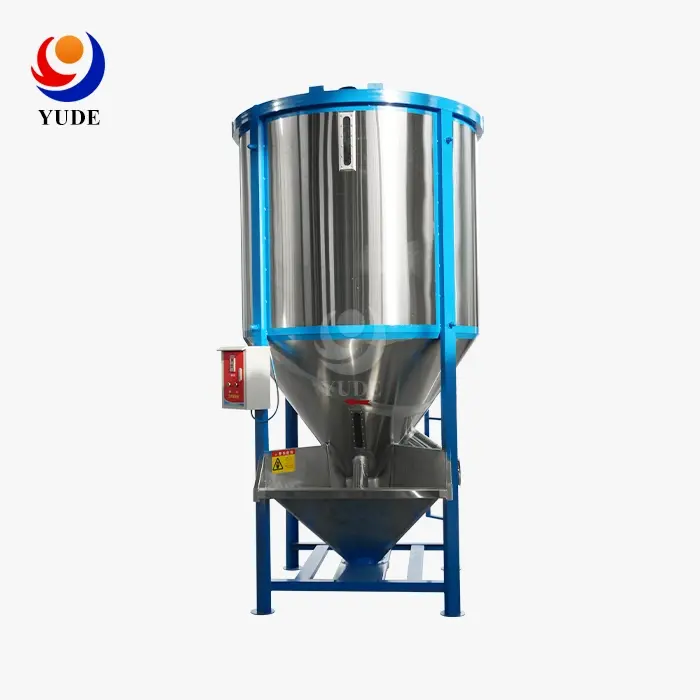
Food Grade Standards in Stainless Steel Plastic Mixers
What "Food Grade" Actually Means for Mixing Equipment
You can't just say "food grade" or "made of metal." All three sets of rules—the FDA's 21 CFR regulations, the EU's 1935/2004 regulation, and the NSF/ANSI standards—say what kinds of materials can be used, how they should be treated, and how they should be built for tools that touch materials linked to food. Chemicals that are used in food packaging lines must not leach heavy metals, must not have bacterial dead zones, and must have surfaces that can be washed many times.
SUS304 vs. SUS316: Which Grade Qualifies?
It is very hard to rust because it is made of 18% chromium and 8% nickel, which is what most plastic food packaging is made of. Adding 2–3% molybdenum to SUS316 makes it stronger against cleaning products that use chloride. SUS316 is a better choice for protection if you work in a damp place or with harsh CIP chemicals. If you handle both grades properly, they are food grade. However, the only way to be sure you aren't getting the lower-quality SUS201 alloy is to have a third party check it, for example with XRF spectrometry.
Common Myths About Food Grade Stainless Steel Mixers
A common myth is that any mixer that is shiny and silver is safe for food. Before the surface can look like anything, it needs a certified material report. Another mistake is that "food grade" only refers to things that are eaten or touched. The stainless steel plastic particle mixer comes into contact with the raw resin when making plastic pellets for food packaging. There, if there is any pollution, it makes its way into the final package. GMP auditors often mark equipment that doesn't have all the paperwork needed to track the materials it uses.
How Does a Stainless Steel Plastic Mixer Work?
The Core Working Principle
Plastic pellets, masterbatch, additives, or regrind are put into a stainless steel plastic particle mixer. The stuff is moved up to a spreading area at the top by a drill in the middle. From there, it falls evenly down the drum wall. This rolling action in three dimensions makes low-shear, even mixing that doesn't damage the pellet structure. This is very important when working with HDPE or PP, which are fragile food-grade resins.
Batch vs. Continuous Operation
Batch mixers only mix a set amount of material at a time. This is great for food packing lines that need to clean the chamber fully between runs and change SKUs often. When a process needs to use a lot of the same plastic, continuous models feed and release the material at the same time. Setting up a batch system with quick-release valves works best in places that package a lot of different colors or types of resin, like food and beauty products.
Design Features That Affect Hygiene Performance
The finish on the inside is one of the most important parts of cleaning. Once the surface is buffed to Ra ≤ 0.8 µm, there are no more pores where colorant or resin dust can get stuck. When you use dye penetrant testing on welded joints, you find and fill any tiny cracks that germs could get into. It's also important what kind of mixing shaft seal you have. There is a barrier of positive pressure made by mechanical or air-purge seals that keeps the lubricant from getting into the mixing chamber.
Benefits of Using Food Grade Stainless Steel Plastic Mixers in B2B Applications
Longer Service Life and Lower Replacement Costs
If you use mineral-filled plastics or standard cleaners on SUS304 stainless steel, it will wear down over time. It doesn't rust or corrode. A approved stainless steel mixing vessel can be used for 10 to 15 years before it needs to be repaired. Carbon steel or polymer-lined vessels, on the other hand, can't. The total cost of ownership goes down over the whole life of the tools.
This type of tool is most useful at work because it does the following:
- Corrosion resistance: The 18/8 chromium-nickel composition prevents rust even under daily washdown cycles, protecting resin purity and extending vessel life.
- Mixing uniformity ≥ 98%: The helical agitator geometry and 30–60 r/min shaft speed distribute additives evenly across the full batch, reducing lot-to-lot variation in finished packaging material.
- Overload, overheating, and phase failure protection: The three-phase asynchronous motor configuration shuts down automatically under fault conditions, protecting both the equipment and the clean-room environment.
Because of these benefits, fewer batches are turned down, cleaning takes less time, and the paperwork is clean and ready for checks. The people in charge of quality in food and medicine packing plants worry most about these three things.
Compliance Documentation That Supports GMP Audits
Certified food grade stainless steel plastic particle mixers come with papers that can be used to find them. There are mill certificates for the stainless steel, records of how rough the surface was measured, and weld inspection reports. Customers in the food and drug packaging businesses have to go through the IQ-OQ-PQ validation process before they can start using new equipment. This paper trail directly helps that process.
Comparing Stainless Steel Plastic Mixers: Food Grade vs. Non-Food Grade
Material Traceability: The First Dividing Line
Many mixers that aren't used for food are made of SUS201 or carbon steel that has been given a finish to make it look nice. The buyer can't tell the difference between them just by looking at them. Someone else needs to test the material and give them a report. It should be a handheld XRF report that checks for chromium and nickel levels. There is a real risk because SUS201 rusts in damp places and tiny bits of metal get into the glue.
Surface Finish Standards Separate Certified from Uncertified Units
For products that are safe for food, the Ra number inside must be between 0.6 and 0.8 µm. If the Ra value is more than 1.6 µm, industrial mixers create spaces for microbes to live that can't be cleaned normally. If the unit meets the standards for clean processing, the maker will send you a profilometer measurement report.
Long-Term Value vs. Upfront Price
Most of the time, non-food grade mixers cost 20–35% less when you buy them. A failed GMP check, on the other hand, can stop a production line and cost a lot more than the price difference. This can happen because of poor paperwork or a weak finish on the outside. When owners think about the risk of an audit, the time it takes to clean the equipment, and how easy it is to repair it, they always find that the investment pays for itself in two to three years.
Procurement Guidance: Buying the Right Food Grade Stainless Steel Plastic Mixer
Define Your Compliance Requirements Before You Specify
In the beginning, look at the rules that your stainless steel plastic particle mixer needs to follow. These could be the 21 CFR from the FDA, the food contact laws from the EU, or the GMP standards for medical packaging. How materials must be traced, how surfaces must be finished, and how tools must be checked are all different for each framework. By making these demands from the start, you can narrow down the suppliers to those who can really help with the audit.
Key Specifications to Confirm With Your Supplier
Before you buy, make sure you ask the makers you've chosen about the following:
- Material certification: Request mill test certificates and confirm SUS304 or SUS316 composition via XRF report.
- Surface roughness: Ask for profilometer records showing Ra ≤ 0.8 µm on all product-contact surfaces.
- CIP/SIP compatibility: Confirm that cleaning validation documentation is available for your specific cleaning protocol.
- IQ-OQ-PQ support: Ask whether the manufacturer provides installation qualification, operational qualification, and performance qualification documents as part of standard delivery.
To get proof that the material is what it says it is, ask for mill test certificates and use an XRF report to make sure it is really SUS304 or SUS316.
Ask for profilometer records that show Ra ≤ 0.8 µm on all places that touch the object.
Maintenance Practices That Preserve Food Grade Integrity
Once it's up and running, you should check the inside every six months to see if the rough resins have cut or cracked anything. If the manufacturer says to replace the shaft seals every 2,000 hours of use, that's when they need to be done. This will show that your QA team is still following the rules between checks if they keep an accurate profilometer reading on file.
Conclusion
A stainless steel plastic particle mixer can only be food grade if the safety standards for the material, the finish on the outside, the design for cleanliness, and the records that go with it are all met. The basic standards include being made of SUS304 or SUS316, having an internal polish of no more than 0.8 µm, having a shape with no dead angles, and being able to fully track the material used. All of these pieces of gear keep your product safe, help with GMP audits, and lower the overall cost of running a production line this way. Finding the right mixer isn't a quick way to save money; it's an investment in quality that will have effects on production that last for a long time.
FAQ
Is SUS304 stainless steel sufficient for food packaging plastic mixing?
The FDA and GMP say that SUS304 is safe to use in food-contact equipment as long as it has a mirror-polished internal finish (Ra ≤ 0.8 µm) and the design doesn't have any dead angles. When chloride-heavy CIP solutions are used in buildings, SUS316 makes them more resistant to chemicals.
How often should a food grade plastic pellet mixer be cleaned?
How often you clean will depend on what you're making. There should be a full CIP cycle between production lots when only one resin and color are used. Before each SKU change, places that change the types or colors of plastic have to clean up and check everything to make sure nothing gets dirty.
What documents should I request when purchasing a food grade mixer?
Find out what the stainless steel is made of with a mill certificate, a record of the surface roughness measurement (Ra value), a report on the weld inspection (dye penetrant test), a statement of FDA or GMP compatibility, and IQ-OQ-PQ validation papers if your facility needs equipment approval.
Can a stainless steel mixer handle glass-fiber reinforced plastics?
Wear and tear doesn't do much damage to SUS304, but having more than 30% glass fiber content speeds up wear inside the material. For high-GF uses, ask your supplier for mixers with tungsten carbide-coated agitators or blade tips that have been strengthened.
How do I verify that a mixer is genuinely SUS304 and not SUS201?
Ask the maker for an XRF report from a third party that says the nickel level is more than 8%. Because SUS201 only has 3.5 to 5.5% nickel, this test will not work on it. Manufacturers with a good name always include this paperwork.
Get a Certified Food Grade Mixer Quote From Yude Plastic Machinery
The plastic particle mixers that Yude Plastic Machinery makes are made of stainless steel that meets the standards for SUS304/316 pieces. There is full GMP paperwork for them, and the mixing is even at least 98% of the time. People in more than 30 countries trust our company to make stainless steel plastic particle mixers for cosmetics, medical plastics, and food packing. We offer IQ-OQ-PQ delivery, plant checks, and material approval. Kindly email our team at sales@yudemachinery.com or visit yudemachinery.com to get a price quote and go over your needs.
References
- U.S. Food and Drug Administration. Code of Federal Regulations, Title 21, Part 177: Indirect Food Additives — Polymers. FDA, 2023.
- European Commission. Regulation (EC) No. 1935/2004 on Materials and Articles Intended to Come Into Contact With Food. Official Journal of the European Union, 2004.
- NSF International. NSF/ANSI 51: Food Equipment Materials. NSF International, 2022.
- European Hygienic Engineering and Design Group (EHEDG). EHEDG Guideline Document 8: Hygienic Equipment Design Criteria. EHEDG, 2021.
- American Society of Mechanical Engineers. ASME BPE: Bioprocessing Equipment Standard. ASME, 2022.
- ISO. ISO 1940-1: Mechanical Vibration — Balance Quality Requirements for Rotors in a Constant (Rigid) State. International Organization for Standardization, 2003.
Learn about our latest products and discounts through SMS or email