- English
- French
- German
- Portuguese
- Spanish
- Russian
- Japanese
- Korean
- Arabic
- Greek
- German
- Turkish
- Italian
- Danish
- Romanian
- Indonesian
- Czech
- Afrikaans
- Swedish
- Polish
- Basque
- Catalan
- Esperanto
- Hindi
- Lao
- Albanian
- Amharic
- Armenian
- Azerbaijani
- Belarusian
- Bengali
- Bosnian
- Bulgarian
- Cebuano
- Chichewa
- Corsican
- Croatian
- Dutch
- Estonian
- Filipino
- Finnish
- Frisian
- Galician
- Georgian
- Gujarati
- Haitian
- Hausa
- Hawaiian
- Hebrew
- Hmong
- Hungarian
- Icelandic
- Igbo
- Javanese
- Kannada
- Kazakh
- Khmer
- Kurdish
- Kyrgyz
- Latin
- Latvian
- Lithuanian
- Luxembou..
- Macedonian
- Malagasy
- Malay
- Malayalam
- Maltese
- Maori
- Marathi
- Mongolian
- Burmese
- Nepali
- Norwegian
- Pashto
- Persian
- Punjabi
- Serbian
- Sesotho
- Sinhala
- Slovak
- Slovenian
- Somali
- Samoan
- Scots Gaelic
- Shona
- Sindhi
- Sundanese
- Swahili
- Tajik
- Tamil
- Telugu
- Thai
- Ukrainian
- Urdu
- Uzbek
- Vietnamese
- Welsh
- Xhosa
- Yiddish
- Yoruba
- Zulu
What is the rated loading capacity of 2000kg vertical plastic particle mixer with drying function?
One 2000kg vertical plastic particle mixer with drying function can contain 2 metric tons of plastic particles. The maximum batch material weight is this. This guideline implies that polymer granules like PE, PP, ABS, and PVC have standard bulk densities of 0.6-0.8 g/cm³. This capacity ensures the best mixing uniformity, more than 98%, while keeping motor loads safe and attaining the desired moisture of less than 0.5% after drying cycles.
Rated Loading Capacity of a 2000kg Vertical Plastic Particle Mixer
Knowing how much a 2000kg vertical plastic particle mixer with drying function can contain is crucial. This engineering phrase describes the limit that balances performance and safety while estimating industrial mixing equipment's loading capacity. The mixing chamber's practical volume—usually 3000–3200 liters for a 2-ton machine—and the materials being treated determine the capacity.
Why Material Characteristics Matter
When treated, plastic polymers behave differently. How effectively particles travel through the vertical spiral device depends on granule size. The maximum suggested weight may be simpler to maintain with 2–4 mm pellets, which move and pack more closely. Regrind with irregular shapes or larger grains may require less loads to prevent mixing chamber bridging or dead zones.
Moisture is also crucial. High-moisture recycled materials or freshly washed flakes in the mixer weigh heavier and dry slower. A built-in hot air system must have adequate airflow contact with particles to remove water vapor. It has 40–50kW heating elements that can reach 85°C. This touch is lost over 2000kg vertical plastic particle mixer with drying function, which can cause uneven drying and quality issues in subsequent procedures like injection molding or extrusion.
Process Requirements and Machine Design Integration
Mixing motor specs and rated capacity are linked. The motor for a 2-ton unit should be 15–18.5kW. This power grade allows the vertical spiral mechanism to move the entire load without straining the motor or consuming too much power. Q235 carbon steel and thermal shielding layers make the construction sturdy after repeated heating. This prevents energy-wasting heat loss.
Procurement engineers should realize that consistently exceeding 2000kg vertical plastic particle mixer with drying function creates mechanical stress on the drive system, unevenly mixes, and shortens equipment life. Hot air cannot escape via the sealed feeding port, but if the chamber is overfilled, the seal fails and wet air can exit before drying the material.
How Does a 2000kg Vertical Plastic Particle Mixer with Drying Function Work?
The working concept combines mechanical movement with controlled thermal energy manipulation. The material is always moving with this combination approach, unlike static dryers that employ heat.
The Vertical Circulation Mechanism
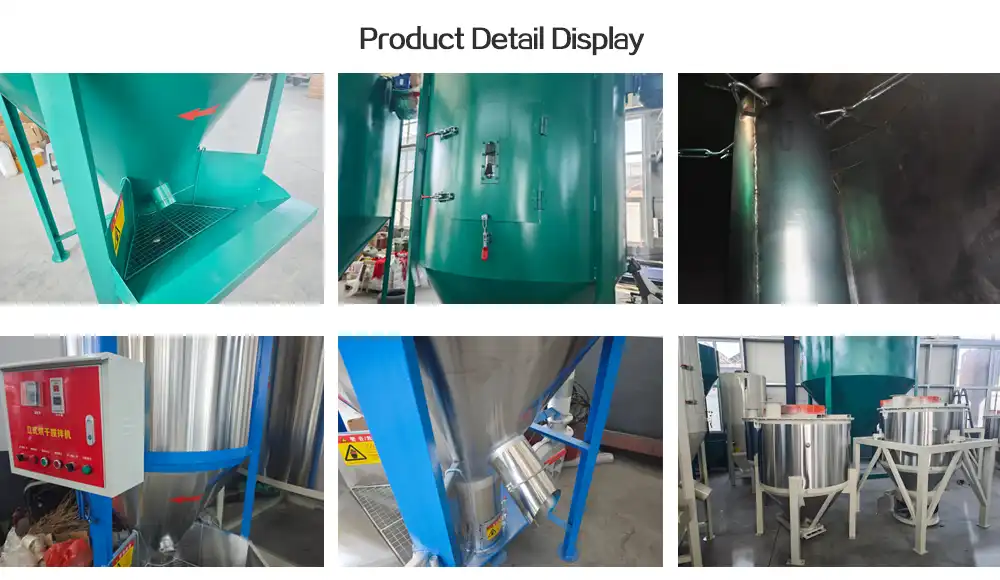
The covered barrel houses a thicker carbon steel spiral auger that rotates vertically in the center of the machine. The auger scoops up plastic from the bottom and propels it through the mixing area. When the particles reach the top, they fall outward and downward along the barrel walls, creating a stream-like movement. During the 25–40 minute processing cycle, this movement repeats to expose every particle to the mixing action and heated air.
Advantages of 2000kg vertical plastic particle mixer with drying function over horizontal ones. Gravity helps the material move, thus the machine works less to maintain flow. For firms with limited manufacturing capacity, the tiny size saves floor space. The vertical design prevents particle size and density separation, which can happen in horizontal drum mixers when heavy portions settle.
Integrated Drying System Operation
Carefully arranged input ports allow hot air to rise through the continually moving particle bed into the mixing area. Sets may be adjusted from ambient temperature to 85°C for precise temperature control. Electric heating tubes provide heat, while other designs use steam for applications that require greater temperatures or have steam infrastructure.
The sealed mechanism prevents dampness loss. Hot air gathers up water vapor on particle surfaces and escapes through regulated vent holes with screens that capture fine dust and release humid air. The barrel padding keeps the temperature steady and prevents contact burns when the machine is firing.
Monitor the process via control displays that display real-time temperature, motor power consumption, and cycle timers. Sensors assess material moisture in sophisticated models. Dryers automatically extend or shorten drying operations based on material conditions.
Key Procurement Considerations for 2000kg Vertical Plastic Particle Mixers with Drying Function
Supplier Credentials and Support Infrastructure
Equipment reliability and support depend on the manufacturer's reputation. Customer evaluations and reference sites show prior installations, so customers may trust established sellers. The guarantee should go beyond mechanical items. It should also cover power and heating systems and provide repair response times.
When tackling production challenges, technological assistance is crucial. Multilingual paperwork and 24/7 helplines demonstrate commitment to foreign clientele. Online diagnostics-enabled control systems can answer many practical problems without sending a person to the site, reducing downtime.
Customization and Scalability Options
Many uses suit standard designs, but manufacturing demands may need adjustments. For buildings with boilers, switching from electric to steam heating saves electricity and money. Stainless steel building improvements can aid with corrosive materials and food-contact hygiene. Control system improvements like PLCs log data for quality tracking and maintenance planning.
Concerns regarding scalability go beyond buying one unit. Suppliers who can provide several items with the same specs aid manufacturing plans. Ordering in bulk may save money and ensure that all of your equipment's additional parts operate together.
Total Cost of Ownership Analysis
Only the first payment is included in the pricing. Due to energy usage, maintenance, and replacement parts, equipment running costs climb over time. Over numerous shifts, a 2000kg vertical plastic particle mixer with drying function consuming 55–68.5kW of power (mixing motor and heating elements) uses a lot of electricity.
Maintenance affects production directly. Equipment that can be swiftly disassembled and cleaned between color or material grades reduces changeover times. Local wholesalers sell wear parts, thus manufacturing doesn't stop for long due to international shipment. Comprehensive operator training reduces user errors that might harm equipment or impair product quality.
Maximizing the Benefits of Your 2000kg Vertical Plastic Particle Mixer with Drying Function
Operational Best Practices for Consistent Results
Following the predicted 2000kg vertical plastic particle mixer with drying function capacity can prevent several issues. Overloading slows mixing since the motor must work harder to transfer heavier ingredients. Longer procedures cost more energy and don't improve uniformity. Even worse, overloading accelerates spiral auger and drive shaft wear, causing early failure.
Resin types have varied temperature settings. Nylon engineering polymers absorb water and perform better at elevated drying temperatures near 85°C. However, heat-sensitive materials like PVC need lower temperatures to avoid breaking down. Cycle times should be comprehensive and economical. Drying past the threshold of diminishing returns wastes energy without reducing moisture.
Regular maintenance preserves mixing quality and equipment health. To prevent hot air leaks, check the feeding port seal daily. Weekly bearing point lubrication keeps the motor operating smoothly and reduces friction energy loss. Monthly heating element inspections catch issues before they cease operating and production. Annual maintenance by experienced technicians addresses internal wear that operators can't see.
Energy Optimization and Troubleshooting
Comparing real energy usage to conventional numbers shows inefficiencies developing. Gradual increases in motor power demand may indicate material buildup on the spiral auger or worn bearings that need repair. The heating element needs more power to maintain the desired temperature, indicating that the insulation is failing and letting heat escape.
Unfinished drying after the whole cycle is a regular issue. The exhaust port is generally obstructed, preventing moisture-filled air from exiting. Uneven mixing causes color streaks in completed items, which may indicate worn spiral ends that can't raise the material. Bearings may be worn or out if they make unusual noise or shake during operation. This needs immediate investigation to avert a catastrophic collapse.
When issues are too huge for the corporation to handle, it hires experts. Service technicians can swiftly diagnose issues by jotting down symptoms, operating conditions, and recent repairs. True whether working remotely or in-person.
Conclusion
The 2000kg vertical plastic particle mixer with drying function may retain some material before drying. Because the equipment's power, material, and overall performance are balanced. When procurement managers and production engineers understand this criteria, they may purchase equipment that matches their working scale and prevent performance and safety issues. The integrated mixing and drying design works better than utilizing separate equipment since it consolidates stages, uses less floor space, and saves energy. Strategic buying criteria including seller support, customization possibilities, and overall ownership expenses provide long-term value.
Partner with Yude Plastic Machinery for Your Industrial Mixing Needs
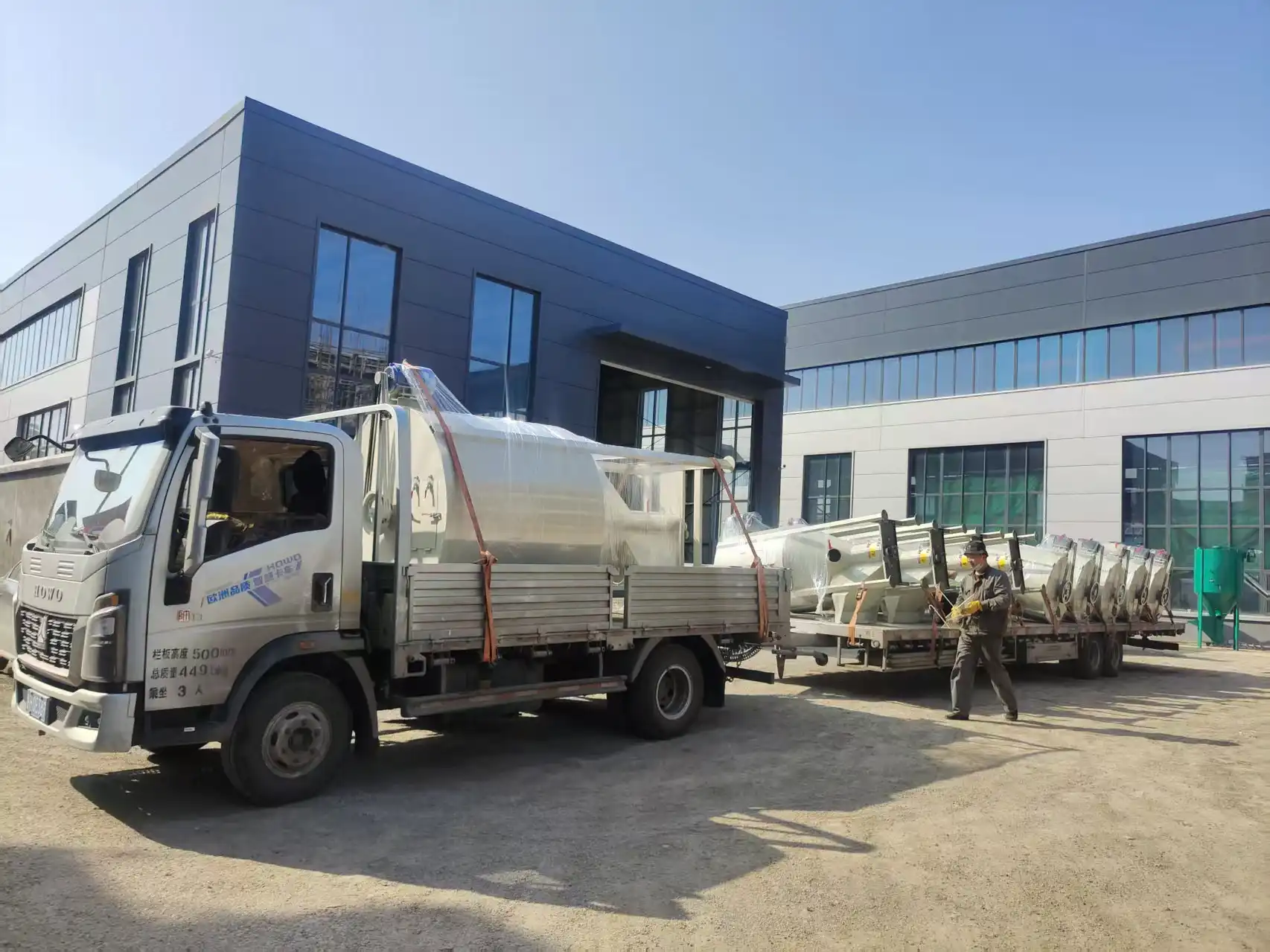
Shandong Yude Plastic Machinery Co., Ltd. builds 2000kg vertical plastic particle mixers with drying function for demanding industrial purposes. As a leading manufacturer and supplier, we can build items from 600 kg to 10 tons. Our equipment is dependable and customizable. We satisfy all technical criteria with our mixing solutions. It has tight quality control and a broad network of after-sales assistance. If you're growing or beginning a firm, our experts help make sure your equipment matches resin kinds, throughput demands, and building limits. Contact our specialists at sales@yudemachinery.com to discuss your needs and obtain complete quotations on this high-performance mixing solution at an affordable price.
FAQs
Can I temporarily exceed the 2000kg rated capacity during peak production periods?
Over 2000kg vertical plastic particle mixer with drying function capacity poses greater dangers than short-term productivity advantages. When current draw exceeds acceptable limits, motor overload safety devices may shut down the motor. Even if the machine stays operating, the spiral device can't transport heavy materials as effectively, resulting in uneven mixing. Hot air can't get through the thick particle bed, reducing drying efficiency. Repetitive overloading accelerates mechanical wear and voids warranties. Production planning should incorporate extra units or longer shifts to avoid equipment damage and product quality issues.
How does integrated drying affect total energy consumption compared to separate processes?
Combining mixing and drying uses 20–30% less energy than using them separately. Heat and particle movement generate synergy to remove dampness faster and reduce drying time. Heat from mixing motor friction makes up a modest portion of the thermal budget. The sealed barrel design retains heat longer than air-cooled hopper dryers. The true savings depend on material moisture, environment, and initial equipment performance.
What plastic materials work best with combined mixing and drying functions?
PE, PP, ABS, and PVC resins function well with integrated processing, making them ideal for most applications. Engineering plastics like nylon and polycarbonate operate better when dried immediately before extrusion or molding. This apparatus works best with wet, washed recyclable materials. To avoid breakdown over long-term heat exposure, materials that dry at 85°C may require specific settings or processing.
References
- Modern Plastics Handbook Editorial Board (2018). Industrial Mixing Technology for Polymer Processing. Manufacturing Engineering Press.
- Richardson, T. & Lokensgard, E. (2020). Industrial Plastics: Theory and Applications. Cengage Learning Technical Publications.
- Tadmor, Z. & Gogos, C.G. (2019). Principles of Polymer Processing Engineering. Wiley Professional Manufacturing Series.
- International Society of Plastics Engineers (2021). Design Guidelines for Plastic Particle Drying and Blending Systems. SPE Technical Standards Publication.
- Chen, M. & Wang, H. (2022). "Energy Efficiency Analysis of Integrated Mixing-Drying Systems in Polymer Processing." Journal of Manufacturing Process Engineering, Volume 47, Issue 3, pp. 245-260.
- Association of Plastics Manufacturing Equipment Suppliers (2023). Capacity Rating Standards for Vertical Mixing Equipment. APMES Industry Reference Manual, 8th Edition.
Learn about our latest products and discounts through SMS or email