- English
- French
- German
- Portuguese
- Spanish
- Russian
- Japanese
- Korean
- Arabic
- Greek
- German
- Turkish
- Italian
- Danish
- Romanian
- Indonesian
- Czech
- Afrikaans
- Swedish
- Polish
- Basque
- Catalan
- Esperanto
- Hindi
- Lao
- Albanian
- Amharic
- Armenian
- Azerbaijani
- Belarusian
- Bengali
- Bosnian
- Bulgarian
- Cebuano
- Chichewa
- Corsican
- Croatian
- Dutch
- Estonian
- Filipino
- Finnish
- Frisian
- Galician
- Georgian
- Gujarati
- Haitian
- Hausa
- Hawaiian
- Hebrew
- Hmong
- Hungarian
- Icelandic
- Igbo
- Javanese
- Kannada
- Kazakh
- Khmer
- Kurdish
- Kyrgyz
- Latin
- Latvian
- Lithuanian
- Luxembou..
- Macedonian
- Malagasy
- Malay
- Malayalam
- Maltese
- Maori
- Marathi
- Mongolian
- Burmese
- Nepali
- Norwegian
- Pashto
- Persian
- Punjabi
- Serbian
- Sesotho
- Sinhala
- Slovak
- Slovenian
- Somali
- Samoan
- Scots Gaelic
- Shona
- Sindhi
- Sundanese
- Swahili
- Tajik
- Tamil
- Telugu
- Thai
- Ukrainian
- Urdu
- Uzbek
- Vietnamese
- Welsh
- Xhosa
- Yiddish
- Yoruba
- Zulu
5 ton Vertical Plastic Particle Mixer With Drying Function Used To Prepare Uniformly Dried Plastic Granules
The 5 ton vertical plastic particle mixer with drying function is essential for procurement engineers and buying managers wishing to treat plastic before processing. This elegant machine solves two main manufacturing issues by blending colors and removing moisture. This vertical mixer combines about 98% evenly with 5,000 kg of material. In 35 to 50 minutes, it reliably prepares particles for injection molding, extrusion, and film blowing while reducing moisture to 0.5%.
5 Ton Vertical Plastic Particle Mixer with Drying Function
Plastic production nowadays demands equipment that combine raw ingredients and ensure the pieces are perfect while utilizing the least energy and floor area. The vertical plastic powder mixer with hot air cleaning solves these issues.
Core Components and Operational Principles
A 5-ton vertical plastic particle mixer with drying function's vertical circular upward circulation mechanism modifies how processors handle plastic pellets. This design moves material from the bottom discharge point to the 7500–8000-liter useable capacity using a thicker carbon steel spiral screw driven by a 37–45kW motor, unlike static drying silos or simple mixing barrels. As particles rise up the middle shaft, they descend in a fountain-like manner, turning the batch over and eliminating dead spots where material may stick or boil.
Drying is done simultaneously with 80–100kW heating tubes. Hot air flows through the mixing box through sealed pathways at any temperature between room temperature and 85℃. The Q235 carbon steel barrel is insulated to maintain temperature and decrease heat loss. This allows precise management of hygroscopic polymers including ABS, nylon, and PVC. The closed serving port prevents hot air from escaping, maintaining drying conditions throughout the cycle. Up to 40% less energy is utilized in recurrent mixing and drying.
Capacity Specifications and Technical Features
A 5-ton vertical plastic particle mixer with drying function is designed for OEM production's high-volume operations. This device can handle materials with bulk densities of 0.6-0.8g/cm³, typical for polymer pellets. The 5 ton capacity is ideal for medium-sized manufacturing lines that need to change batches often for color or material grade changes without using horizontal systems, which take up too much room.
Accurate temperature control affects product quality. The PID-controlled heating system maintains ±3℃ temperature throughout the batch. This prevents overheating, which can degrade polymer chains or yellow transparent materials. Operators can adjust heating rates based on resin moisture sensitivity. This lets the control interface save repeated drying profiles for future production runs.
Enhanced Efficiency for Plastic Processing Operations
Measureable production rises with simultaneous mixing and drying. The traditional method requires mixing color masterbatch or additives with different instruments and letting hopper dryers run for two to four hours. The vertical mixer combined the two activities into a 35–50 minute cycle, increasing material change by 60% and reducing the effort needed to carry materials between process steps.
Energy economy goes beyond runtimes. Heat goes into the particle bed instead of scorching the empty hopper walls when you heat and stir material simultaneously. Industrial customers believe these dryers consume 30 to 50% less energy per kilogram of dried plastic than typical dehumidifying dryers for semi-hygroscopic materials like polypropylene or polyethylene blends.
Comparing Vertical Plastic Color Mixers with and without Drying Functions
Before buying, consider how equipment configuration influences operational expenses and product outputs over time. When choosing between regular mixing containers and integrated drying models, consider process complexity, quality consistency, and ownership cost.
Process Efficiency and Quality Impacts
Standard vertical mixers without heat only combine colorants, additives, or recycled resin into fresh resin streams. Although they work effectively for keeping dry items in regulated conditions, they impede moisture management. Processors must carry mixed batches to drying equipment, which might contaminate or segregate ingredients and delay production.
5 ton vertical plastic particle mixer procedures are unnecessary with integrated drying. The mixer mixes and dries the material. It is supplied straight to downstream equipment at the proper temperature and moisture. Mixing materials with varied particle sizes or densities that might separate during air transport to outside dryers requires consistent mixing.
Quality improves greatest in injection casting. Melting plastic pellets causes surface defects, empty areas, and uneven portions. Lowering moisture to less than 0.5% before processing reduces reject rates in this combination approach. When auto part and medical device housing manufacturers transition from sequential to integrated mixing-drying, product quality increases by 15–25%.
Vertical Versus Horizontal Configurations
Drying horizontal mixers are usually employed for unique activities that need delicate mixing or big capacity above 20 tons. They are difficult to fit into buildings with typical bay sizes because to their 8–12-meter footprint. Vertical designs fit the same useable space into a 3–4-meter diameter. This frees up factory floor space for processing equipment or storage.
The installation complexity varies greatly. Vertical mixers need 10–12 meters of space above them, including discharge devices, while their base just needs a reinforced concrete pad that can take static loads. Horizontal systems require longer discharge holes and a more intricate drive train placement, which increases civil engineering installation costs.
Applications and Industry Use Cases of Vertical Plastic Particle Mixers
Color Masterbatch Production and Compounding
Masterbatch manufacturers must regulate moisture while mixing concentrated pigment pellets with carrier resins. High wetness can cause colors to clump or distribute unevenly. 5 ton vertical plastic particle mixer with drying function has a higher change rate than ribbon blenders, so colorant pellets are evenly distributed in the carrier resin matrix. Agglomeration from moisture can't occur when objects are dried simultaneously. Hygroscopic transporters like EVA and polyolefins need this.
A famous Midwest mixing factory upgraded from horizontal ribbon mixers to vertical integrated dryers. They reported a reduction in batch cycle time from 90 to 45 minutes and an 18% improvement in color constancy (∆E values). Due to increased uniformity, customer complaints regarding color streaking in injection-molded parts fell 67% over six months.
Pre-Molding Preparation for Injection and Extrusion
Injection molding methods utilizing engineering resins like ABS, polycarbonate, and nylon require moisture levels below 0.02% for critical purposes. Desiccant dryers can attain these low moisture levels, but drying the ingredients first in a vertical mixer reduces energy load and cycle time. Material is heated to 60–70°C and partially dried before entering the precision dryer. This speeds drying by 40–60%.
Particles entering the extruder throat at a stable temperature improve film extrusion lines. Cold pellets cause melt pool temperature variances, which affect the gauge throughout the film. According to flexible packaging manufacturers who employ multi-layer co-extrusion lines, preheating the granules to 70–75°C in the vertical mixer stabilizes the melt temperature and boosts thickness uniformity by 8–12%.
Handling Hygroscopic and Specialty Materials
Polyamides, polycarbonates, and polyester resins absorb water fast when left outside. When produced without drying, these materials hydrolyze when melted, reducing their molecular weight and mechanical strength. The closed mixing chamber with sealed serving ports prevents moisture re-absorption during material transfer, maintaining heating cycle dryness.
Speciality compounders working with glass-reinforced or mineral-filled polymers face abrasion. Q235 carbon steel can withstand filler wear. Tungsten carbide coatings are offered for more difficult usage with 40% or greater glass loading. Vertical spiral mixers produce less shear than high-intensity mixers. This maintains glass-reinforced material fiber length, which maintains structural part tensile strength.
Conclusion
Choosing the correct mixing and cooling tools influences product quality, cost, and durability. Mid-sized producers utilize the 5 ton vertical plastic particle mixer with drying function to reliably prepare particles with little floor space and energy. This tool setup streamlines two crucial pre-processing processes to enhance cycle times, quality consistency, and overall ownership costs. With technical expertise and precise criteria for assessing equipment, buying managers can simply purchase equipment that fulfills their demands and create long-term partnerships with manufacturers to help their production flourish.
FAQs
What cycle speeds can a 5-ton vertical mixer with drying achieve?
The material's initial wetness and desired dryness determine batch processing time, which is generally 35–50 minutes. Surface-wet materials (0.2–0.5%) reach the desired level faster than deep-dried hygroscopic resins. Cycle optimization can reduce times by 10–15% while maintaining quality by monitoring temperature and airflow.
Can drying temperatures be customized for different plastics?
The hot air system can adjust temperatures from room to 85℃, making it suitable for heat-sensitive products. PVC compounds and heat-sensitive resins require lower processing temperatures (50-60℃) and longer drying times. Thermally stable polyolefins dry faster and can withstand higher temperatures. Programmable controls save several temperature settings for rapid material switching.
What warranty and after-sales services are standard?
Manufacturers normally provide 12- to 18-month warranties for manufacturing defects and items that break under normal use. Full after-sales service includes technical hotlines, remote diagnostics, spare parts, and on-site assistance. Clear warranty conditions and service response commitments during purchase prevent disagreements and ensure production support.
Partner With Yude Plastic Machinery for Superior Mixing Solutions
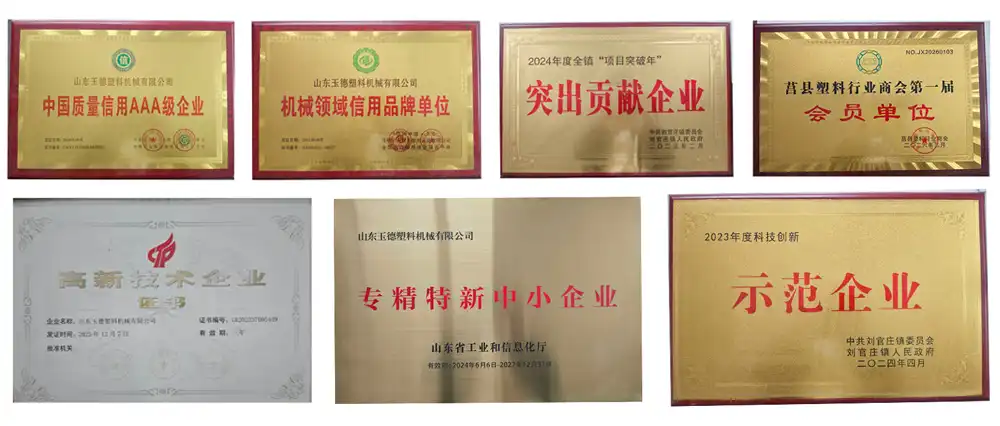
Yude Plastic Machinery provides the best 5 ton vertical plastic particle mixer with drying function for demanding production environments and can help you process plastic. Our mixing-drying systems are homogeneous, energy-efficient, and dependable. They include skilled support and fast after-sales service. To make our 5 ton vertical plastic particle mixer with drying function easier for your facility to operate, we may manufacture it to your specifications, collaborate with other firms, and aid with paperwork. Our experts at sales@yudemachinery.com can discuss your material handling issues, provide detailed specs, and provide customized rates depending on production numbers and quality demands. Purchase managers and engineering teams should see how our technologies increase process speed and product consistency, which can be measured.
References
- Rosato, D.V., & Rosato, M.G. (2012). Plastics Processing Data Handbook. Springer Science & Business Media.
- Tadmor, Z., & Gogos, C.G. (2013). Principles of Polymer Processing. John Wiley & Sons.
- Rauwendaal, C. (2014). Polymer Mixing: A Self-Study Guide. Hanser Publications.
- Throne, J.L. (2008). Understanding Thermoforming. Hanser Gardner Publications.
- Chanda, M., & Roy, S.K. (2006). Plastics Technology Handbook. CRC Press.
- Crawford, R.J., & Throne, J.L. (2002). Rotational Molding Technology. William Andrew Publishing.
Learn about our latest products and discounts through SMS or email