- English
- French
- German
- Portuguese
- Spanish
- Russian
- Japanese
- Korean
- Arabic
- Greek
- German
- Turkish
- Italian
- Danish
- Romanian
- Indonesian
- Czech
- Afrikaans
- Swedish
- Polish
- Basque
- Catalan
- Esperanto
- Hindi
- Lao
- Albanian
- Amharic
- Armenian
- Azerbaijani
- Belarusian
- Bengali
- Bosnian
- Bulgarian
- Cebuano
- Chichewa
- Corsican
- Croatian
- Dutch
- Estonian
- Filipino
- Finnish
- Frisian
- Galician
- Georgian
- Gujarati
- Haitian
- Hausa
- Hawaiian
- Hebrew
- Hmong
- Hungarian
- Icelandic
- Igbo
- Javanese
- Kannada
- Kazakh
- Khmer
- Kurdish
- Kyrgyz
- Latin
- Latvian
- Lithuanian
- Luxembou..
- Macedonian
- Malagasy
- Malay
- Malayalam
- Maltese
- Maori
- Marathi
- Mongolian
- Burmese
- Nepali
- Norwegian
- Pashto
- Persian
- Punjabi
- Serbian
- Sesotho
- Sinhala
- Slovak
- Slovenian
- Somali
- Samoan
- Scots Gaelic
- Shona
- Sindhi
- Sundanese
- Swahili
- Tajik
- Tamil
- Telugu
- Thai
- Ukrainian
- Urdu
- Uzbek
- Vietnamese
- Welsh
- Xhosa
- Yiddish
- Yoruba
- Zulu
Comparison between a Vertical Plastic Granule Mixer with Drying Function and an Ordinary Plastic Mixer
When selecting equipment for plastic processing, understanding the fundamental differences between a 1000kg vertical plastic particle mixer with drying function and an ordinary plastic mixer is crucial for procurement efficiency. The vertical mixer with integrated drying capability combines two essential production steps—blending and moisture removal—into a single, streamlined operation. This dual-function design eliminates the need for separate drying equipment, reducing both floor space requirements and operational complexity. Ordinary mixers, while effective for blending, lack moisture control features, requiring additional downstream drying processes that extend production cycles and increase energy consumption. This distinction directly impacts throughput, product quality, and overall manufacturing cost-effectiveness for industrial operations handling hygroscopic materials like ABS, PET, or PA6.
Vertical Plastic Granule Mixers with Drying Function vs Ordinary Plastic Mixers
Design Architecture and Operational Principles
The vertical plastic granulator mixer with drying function adopts a cylindrical silo structure, and a spiral screw is arranged within to form a unique fountain flow. Material is picked up from the bottom and dropped from the top to thoroughly disperse the additives and colourants throughout the batch. The integrated dryer includes an external heating chamber, which is temperature-controlled by a PID controller up to 200 °C. The material is continually agitated by the screw and hot air is blown through the plastic particle veil for effective thermal exchange. This design is a radical departure from typical horizontal ribbon blenders, which rely entirely on mechanical mixing and are unable to process thermally.
And in professional applications, construction materials are quite important; The containers are made of high grade SUS304 or SUS316 stainless steel with wall thickness of 3mm-5mm to avoid iron contamination and corrosion which is crucial for the processing of light coloured or transparent resins. The rated loading capacity of a 1000kg vertical plastic particle mixer with drying function equates to an effective volume of about 1500-1600L calculated on the basis of average plastic particle bulk densities of 0.6-0.8g/cm³. This volume is suitable for the medium to large-volume production runs typical of injection moulding and extrusion operations.
Integrated Moisture Control Technology
The drying function tackles one of the most perennial problems in plastics processing: moisture-related flaws. Hygroscopic polymers collect moisture from the atmosphere and then during subsequent moulding, hydrolyse to produce silver streaks, bubbles, and structural flaws. With conventional processing processes, you need different drying hoppers to treat materials under static circumstances, which leads to uneven moisture removal and temperature gradients within the batch. The vertical mixer keeps the product agitated at all times and gives maximum surface area exposed to hot air , hence increasing the evaporation rates . It also allows for consistent temperature over the full 1000kg .
Single mixing and drying time is 20-35 minutes depending on starting moisture content under typical operating circumstances. The moisture content after drying may reach ≤0.5%, which satisfies the severe criteria of engineering plastics processing. The uniformity of mixing is ≥98.0%, thus each discharge of one kilogram has the same concentration of additive and the same moisture content. This uniformity removes the batch-to-batch fluctuation that plagues quality control in high-volume production.
Advantages of 1000kg Vertical Plastic Particle Mixer with Drying Function over Ordinary Mixers
Performance Metrics and Efficiency Gains
The comparative research shows that there are considerable operational gains when comparing key performance measures. The integrated technique overcomes the bottleneck of individual processing stages and reduces the cycle durations for 1000kg batches from several hours to 30-45 minutes. Double layer insulation jackets reduce heat loss and are excellent for energy conservation and closed loop hot air circulation recovers thermal energy that would be lost in open systems. The contents are then transferred to special dryers after conventional mixers. This transfer involves handling stages that might lead to contamination and deterioration of materials.
The accuracy of temperature management has a direct impact on product quality. The heating system is managed by means of the PID algorithm in order to provide a tight thermal stability avoiding localised overheating leading to polymer breakdown or premature melting. “This precision becomes especially critical when processing temperature-sensitive resins with narrow processing windows. Standard mixing equipment does not have any temperature management capability, and therefore moisture control is left to downstream equipment that is not able to deal with the moisture contained inside the mixed batch.
Space and Capital Investment Considerations
The vertical design footprint consumes less than 50% of the floor area of horizontal mixers of comparable 1000kg capacity. This spatial efficiency is helpful in facilities where manufacturing floor real estate is at a premium cost. When selecting a vertical mixer with integrated dryer, an estimate of capital cost should consider the removal of separate drying equipment, ductwork and control systems. Although the purchase price of a combined solution might be more than an ordinary mixer, the entire system cost, including drying equipment, installation and integration, usually prefers the combined solution.
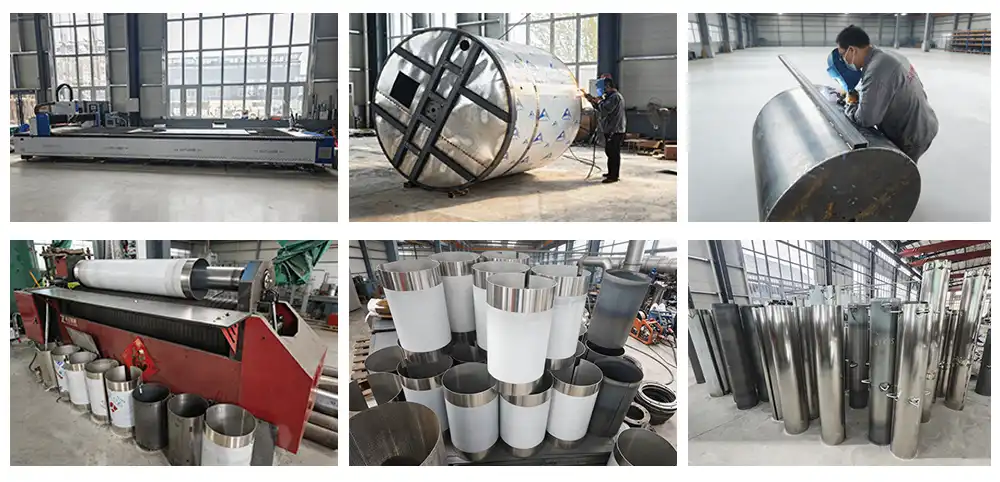
The maintenance requirements of the 1000kg vertical plastic particle mixer with drying function might be very different. Zero dead corner design The screw and the inner wall are polished with great accuracy to avoid accumulation of material which would cause contamination during colour changes. It takes 30-45 minutes of thorough cleaning between batches with compressed air and manual wipe-down vs hours to remove and clean horizontal ribbon blenders with several shaft supports and bearing housings. More production capacity over the life of the machine. Less downtime.
Quality Control and Product Consistency
The vertical screw gives a continuous kinetic suspension, avoiding segregation of the material during discharge, a constant problem with horizontal mixers where density variations cause the heavier particles to settle. This behaviour is especially troublesome when mixing components with large specific gravities, such as mineral-filled compounds or masterbatch dilutions. The fountain flow pattern allows the first kilogram of material released to be of the same composition as the last and no intermediary batch sampling and remixing is necessary.
As the consistency of moisture content in the whole batch has direct effect to the stability of the down stream processing. Under the assumption of constant material characteristics, injection moulding machines with automated material handling systems take from storage silos. Moisture content variations induce shot-to-shot weight variations, dimensional instability, and surface flaws, which raise scrap rates. The integrated drying function ensures that each pellet reaches the desired moisture content before discharge, giving process engineers the confidence in the material qualities to optimise production parameters.
Practical Considerations for Procurement and Usage
Technical Specification Requirements
Procurement engineers have to convert manufacturing needs into technical standards that vendors can meet accurately. Capacity estimations should be based on the correct bulk density data for the actual materials being handled, as volumetric capacity constraints may restrict real weight capacity for materials with densities beyond the normal range of 0.6-0.8g/cm3. Temperature requirements vary with the polymer; for instance, technical plastics frequently demand drying temperatures in the 150-180°C range, whereas commodity resins such as polyethylene and polypropylene need temperatures of 80-100°C.
Electrical parameters subject to change by location and voltage and frequency confirmation required. Most North American facilities utilise three-phase 480V/60Hz electricity, whereas European operations employ 400V/50Hz setups. Motor size affects energy consumption and operational expenses . Typical installations require 15-25kW for the screw drive motor and 30-50kW for heating elements in 1000kg capacity units . Control system preferences—ranging from basic manual controls to highly automated PLC systems with touchscreen interfaces—affect purchasing price and operating flexibility.
Installation and Commissioning Considerations
Vertical mixer installations require suitable ceiling height as 1000kg capacity machines are generally 3.5-4.5 metres in height which includes the top mounted motor and gearbox assembly. The structural floor loading must be able to withstand the whole weight of the equipment, maximum material load, and dynamic forces generated during operation. Facilities with inadequate floor support may need to be reinforced before installation, adding to the expense and complexity of the project schedule.
Utility connections for the 1000kg vertical plastic particle mixer with drying function include electrical power and also compressed air for pneumatic discharge valves and dust collecting devices for powder handling applications. Proper elevation is necessary for gravity feed into moulding machine hoppers, and discharge height issues effect integration with downstream equipment. Commissioning processes should also involve operational training for production workers, guidance for maintenance people on routine servicing, and documenting of baseline performance criteria for future troubleshooting reference.
Maintenance Protocols and Lifecycle Management
Regular preventive maintenance programs improve the dependability and service life of equipment. Check bearing lubrication, drive belt tension, heating element continuity and temperature sensor calibration during routine inspections every 500 operational hours. Annual maintenance normally involves replacing the gearbox oil, checking the insulation resistance of the motor windings and a thorough cleaning of the heating chambers to eliminate accumulated dust and particles. If you have thorough service records, you can see wear trends and forecast component replacement before it causes unnecessary downtime.
Common troubleshooting cases are uneven heating due to obstructed air circulation channels, mixing inconsistencies due to worn screw flights and material discharge issues due to build-up on the inner surfaces. To solve these concerns, equipment manufacturers provide very useful technical assistance. Experienced experts can frequently detect problems remotely through the examination of operating parameters before deploying service workers. Developing ties with local service providers experienced with the specific equipment type helps to resolve urgent issues more quickly.
Conclusion
Selecting between a vertical plastic granule mixer with drying function and an ordinary plastic mixer requires careful evaluation of production requirements, material characteristics, and operational priorities. The integrated approach delivers substantial advantages in processing efficiency, product quality consistency, and operational cost reduction for facilities handling hygroscopic materials in medium-to-large batch sizes. Ordinary mixers remain viable for applications where moisture control occurs effectively through separate equipment or where material properties don't demand integrated thermal processing. Procurement decisions benefit from comprehensive analysis of total system costs, quality improvement potential, and alignment with long-term production strategies.
Partner with Yude Plastic Machinery for Advanced Mixing Solutions
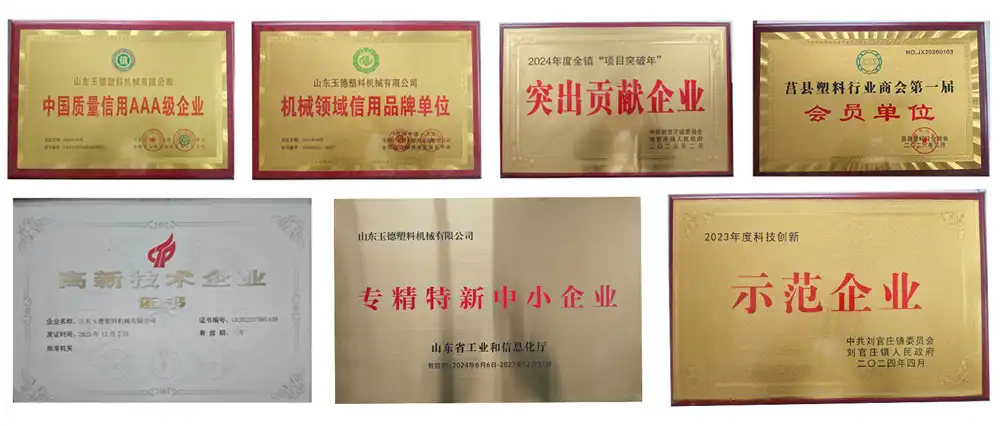
Shandong Yude Plastic Machinery Co., Ltd. specializes in manufacturing vertical plastic mixing equipment designed for demanding industrial applications. Our 1000kg vertical plastic particle mixer with drying function supplier credentials include extensive experience serving injection molding operations, extrusion facilities, and recycling plants across North America, Europe, and Southeast Asia. The equipment achieves mixing uniformity of ≥98% with drying cycles of 20-35 minutes, delivering moisture content below 0.5% under normal working conditions. Our 7×24-hour technical support team assists with equipment selection, customization for specific materials, and integration into existing production workflows. Contact our procurement specialists at sales@yudemachinery.com to discuss your material processing requirements and receive detailed technical specifications tailored to your application.
FAQ
What materials benefit most from vertical mixers with drying functions?
Hygroscopic engineering plastics such as ABS, polycarbonate, polyamides (PA6, PA66), and PET derive maximum benefit from integrated mixing and drying. These materials absorb atmospheric moisture that causes processing defects if not removed before molding. Recycled plastic flakes with surface moisture, masterbatch formulations requiring precise dispersion, and specialty compounds with moisture-sensitive additives also achieve superior results with this equipment type.
How does batch size influence equipment selection?
The 1000kg capacity suits medium-to-large production operations where batch sizes justify the capital investment and physical footprint. Smaller facilities processing 300-500kg batches should consider appropriately sized equipment, as oversized units operating at partial capacity experience inefficient energy utilization and extended cycle times. Production volume projections over the equipment's 10-15 year service life should guide capacity decisions rather than current requirements alone.
What distinguishes premium suppliers from commodity equipment providers?
Leading manufacturers demonstrate through certifications like CE and ATEX compliance, provide comprehensive technical documentation including material specifications and performance validation data, and maintain responsive after-sales support infrastructure. Equipment construction quality—particularly welding standards, surface finish, and component selection—directly impacts reliability and maintenance requirements. Buyers should request customer references from similar applications and conduct site visits to existing installations when evaluating suppliers.
References
1. Tadmor, Z., & Gogos, C. G. (2013). Principles of Polymer Processing. John Wiley & Sons, Hoboken, New Jersey.
2. Rauwendaal, C. (2014). Polymer Mixing: A Self-Study Guide. Hanser Publications, Munich, Germany.
3. Throne, J. L. (1996). Technology of Thermoforming. Hanser Gardner Publications, Cincinnati, Ohio.
4. Crawford, R. J., & Throne, J. L. (2002). Rotational Molding Technology. William Andrew Publishing, Norwich, New York.
5. Rosato, D. V., & Rosato, M. G. (2012). Plastics Engineered Product Design. Elsevier Science, Oxford, United Kingdom.
6. Goodship, V. (2007). Management, Recycling and Reuse of Waste Composites. Woodhead Publishing, Cambridge, United Kingdom.
Learn about our latest products and discounts through SMS or email