- English
- French
- German
- Portuguese
- Spanish
- Russian
- Japanese
- Korean
- Arabic
- Greek
- German
- Turkish
- Italian
- Danish
- Romanian
- Indonesian
- Czech
- Afrikaans
- Swedish
- Polish
- Basque
- Catalan
- Esperanto
- Hindi
- Lao
- Albanian
- Amharic
- Armenian
- Azerbaijani
- Belarusian
- Bengali
- Bosnian
- Bulgarian
- Cebuano
- Chichewa
- Corsican
- Croatian
- Dutch
- Estonian
- Filipino
- Finnish
- Frisian
- Galician
- Georgian
- Gujarati
- Haitian
- Hausa
- Hawaiian
- Hebrew
- Hmong
- Hungarian
- Icelandic
- Igbo
- Javanese
- Kannada
- Kazakh
- Khmer
- Kurdish
- Kyrgyz
- Latin
- Latvian
- Lithuanian
- Luxembou..
- Macedonian
- Malagasy
- Malay
- Malayalam
- Maltese
- Maori
- Marathi
- Mongolian
- Burmese
- Nepali
- Norwegian
- Pashto
- Persian
- Punjabi
- Serbian
- Sesotho
- Sinhala
- Slovak
- Slovenian
- Somali
- Samoan
- Scots Gaelic
- Shona
- Sindhi
- Sundanese
- Swahili
- Tajik
- Tamil
- Telugu
- Thai
- Ukrainian
- Urdu
- Uzbek
- Vietnamese
- Welsh
- Xhosa
- Yiddish
- Yoruba
- Zulu
What are the advantages of the stainless steel plastic particle mixer?
In today's competitive industrial environment, clean manufacturing and consistent mix quality are crucial. The stainless steel plastic particle mixer addresses these issues by being corrosion-resistant, easy to clean, and satisfying food-grade and medical-grade handling regulations. These machines achieve mixing homogeneity of over 98% using 304-grade stainless steel mixing components and drums, ensuring that every batch meets standards without cross-batch residue or material contamination.
Key Advantages of Stainless Steel Plastic Particle Mixers
Because stainless steel plastic particle mixers are unusual, procurement teams may calculate its operational advantages using a total cost of ownership analysis.
Exceptional Durability and Extended Equipment Lifespan
Stainless steel resists chemical corrosion and mechanical wear due to its austenitic crystal structure. Carbon steel equipment's surface breaks down between 18 and 24 months while operating with hygroscopic or chemically active additives. stainless steel plastic particle mixers last 15–20 years under the same circumstances, reducing capital costs.
The material's strong tensile strength—usually above 515 MPa for 304-grade—allows thinner walls without reducing durability. This design flexibility makes the equipment lighter and weaker yet sturdy enough to bear material charging impact loads. Maintenance takes longer since stainless steel doesn't fracture or bend under high-volume production's repeated stress conditions.
Hygiene Compliance and Contamination Prevention
Medical device, pharmaceutical, and food-grade packaging processors must now fulfill FDA, ISO 22000, and GMP requirements. Stainless steel plastic particle mixers meet these standards due to their material and surface polish. Electronically polished stainless steel has no holes; therefore, germs can't grow. It is easy to ensure regulatory compliance using cleaning procedures.
Avoiding microorganisms isn't enough to prevent contamination. Rusted equipment's microneedle ferrous particles create black areas that can't be used to generate optical-grade plastic for automobile glasses or electronics. Stainless steel products reduce this risk, protecting profit margins in high-value scenarios where failure rates must stay below 0.1%.
Enhanced Mixing Uniformity and Production Efficiency
Mixing is preferable with stainless steel, which conducts heat and is smooth. Mixing heat flows faster through stainless steel walls. It prevents temperature-sensitive additives from breaking down in high-heat locations. This heat management function allows vertical mixers to combine at 30–60 rpm without impacting material quality.
Material flow patterns inside the mixing box must be carefully regulated for mixing accuracy exceeding 98%. Easy-to-mold and manufacture stainless steel may be utilized to build intricate paddle geometries and helicoid agitator designs with three-dimensional tumbling motion. It uniformly distributes minor parts like UV stabilizers and flame retardants below 0.5% by weight. Less batch variation improves output and reduces scrap and rework expenses.
Energy Efficiency and Operational Cost Reduction
You can evaluate energy savings by reducing friction, improving thermal management, and making equipment lighter. Testing demonstrates that carbon steel mixers consume 12–18% more power than stainless steel plastic particle mixers of the same size when mixing the same quantity of material. Energy savings alone can pay the greater stainless steel construction cost over 10 years.
Another cost-effective benefit is downtime elimination. Corrosion failures need immediate repair, which interrupts production lines and delays all manufacturing plans. With an availability rate exceeding 98%, stainless steel equipment aids lean manufacturing and just-in-time inventories, reducing working capital.
Practical Benefits for Procurement and Industry Use
Know how stainless steel plastic particle mixers perform throughout their lifespan to make buying decisions based on material properties.
Maintenance Protocols and Lifespan Maximization
Routine stainless steel plastic particle mixer maintenance involves lubricating gears and checking mechanical seals. Don't repair rust. Most maintenance programs work every three months, while carbon steel systems need monthly servicing. Hot water and mild detergents remove most residues from polished steel surfaces, which don't stay. This extends equipment life by eliminating harsh chemical cleansers.
Bearing safety is important to prevent oil from entering plastic. Good mixers contain positive pressure barriers like air-purge or labyrinth mechanical seals. These barriers prevent grease and dust from entering mixing rooms and bearing assemblies. This twofold protection makes the bearing endure 20,000 hours or more while fulfilling material purity criteria.
Integrated Safety Features and Regulatory Compliance
Modern stainless steel plastic particle mixers contain several user and process safety measures. Interlocked access doors halt machines in open mixing rooms, and emergency stop circuits fulfill OSHA lockout-tagout criteria. Three-phase asynchronous motors safeguard against overload, burning, and phase failure to prevent equipment damage.
Operator fatigue and injury during material loading are reduced by ergonomic design. Large mixers can have chest-high loading ports because stainless steel is robust for its weight. This means no high platforms or heavy-lifting gear are needed. These design enhancements reduce worker's compensation costs and boost productivity.
Cross-Industry Versatility and Application Range
If properly cleaned between campaigns, the same stainless steel mixer may be used by manufacturing lines that create automobile hood pieces in the morning and food-grade packaging films in the afternoon. Contract manufacturers and toll workers with diverse clientele benefit from this independence. Replaceable mixing tools and variable-speed motors help you obtain the optimum results for different ingredients without having to store separate equipment.
Working with medical-grade plastic requires stainless steel instruments due to rigorous requirements. Making parts for needles, IV bags, or implanted device housings requires tracking, validation papers, and leach-free construction materials. Stainless steel mixers combine PEEK and liquid crystal polymers accurately and with flexibility.
How to Choose the Right Stainless Steel Plastic Particle Mixer for Your Business?
To pick the optimal mixing equipment, evaluate production demands, material attributes, and integration limits.
Production Capacity and Batch Size Determination
Matching the stainless steel plastic particle mixer's capacity to the workload prevents underutilization and bottlenecks. Vertical mixers that mix color concentrates and specialty chemicals well in 300–500 kilogram batches are ideal for small firms. Car tier suppliers and package converters that operate numerous shifts benefit from 600–2000 kg capacity. Large processors with 5–10 ton batches need industrial-scale machinery with robust motors and automated release.
Varied plastic resins have varied bulk densities, therefore volume estimations must account for this. Low-density polyethylene pellets are much larger per kilogram than industrial thermoplastics. This alters mixer batch weight limits. Consulting with equipment producers using material samples yields accurate capacity requirements.
Material Characteristics and Mixing Requirements
Particle size distribution, moisture sensitivity, and additive loading effect mixing time and paddle design. Free-flowing pellets with homogenous particle sizes require 10–15 minutes with typical helix agitators. It requires 15–20 minutes and paddle forms that prevent segregation during discharge to add fine powder additions to pellet structures. By understanding material-specific demands, you may avoid buying low-quality tools.
Glass fiber compounds and abrasive mineral materials require greater wear protection than stainless steel can give. Tungsten carbide coatings or stronger steel edge treatments on mixing tools make them live longer in demanding settings, but they increase equipment costs by 15–25%. The procurement teams should determine if the materials require these extra safety precautions.
Customization Options and Supplier Capabilities
Leading manufacturers provide customization services for production concerns. Multilingual control interfaces make it simpler to teach workers in varied workplaces, while equipment improvements to suit regional safety regulations, including ATEX clearance for explosive atmospheres, allow worldwide industrial adoption. Discussing providers' customization capabilities helps locate long-term partners.
Fleet standardization and bulk purchasing save money by pooling purchases and making spare parts easier to trace. Favorite supplier partnerships with high-quality manufacturers reduce procurement effort and ensure equipment works at all production facilities.
Conclusion
In conclusion, with regards to lifetime, cleanliness, operational efficiency, and total cost of ownership, stainless steel plastic particle mixers are the best choice for buyers. Corrosion resistance, contamination prevention, and extended service life more than offset the higher initial investment cost with lower maintenance expenses, greater product quality, and regulatory compliance. As manufacturing criteria for material purity and process proof tighten, food-grade, medical-grade, and high-transparency material producers must employ stainless steel. To maximize equipment performance throughout its lifespan, procurement teams should choose vendors with a track record, the capacity to make improvements, and timely expert assistance when buying mixing equipment.
FAQ
How do SUS304 and SUS201 vary for mixer construction?
SUS304 has 8–10% nickel, SUS201 4–5%. This makes it more susceptible to corrode in moist environments or with water-absorbing polymers. SUS201 costs 20–30% less but lasts less and can't be approved for food safety. SUS304 is suitable for professional industry because it resists chloride-induced pitting rust and maintains surface integrity at higher temperatures.
Can stainless steel plastic particle mixers withstand plastic pellet static electricity?
Since stainless steel conducts electricity, mixing bodies can be grounded. This eliminates material handling static charges. Connecting to the facility's ground systems prevents static discharge sparks from igniting dust or shocking operators. Ionizing bars at material release points can further neutralize static energy for insulating material purposes.
How long must mixing cycles be for excellent consistency?
Blending pellets to pellets at 30–60 rpm for the mixing shaft takes 10–15 minutes and produces 98%+ regularity. Powdered colors or stabilizers require 15–20 minutes to apply to pellet structures because to density fluctuations and powder separation. Cutting cycle periods below these limits may not disseminate the additives adequately, and mixing them too much might cause frictional heat that breaks down temperature-sensitive additives.
Partner with Yude Plastic Machinery for Superior Mixing Solutions
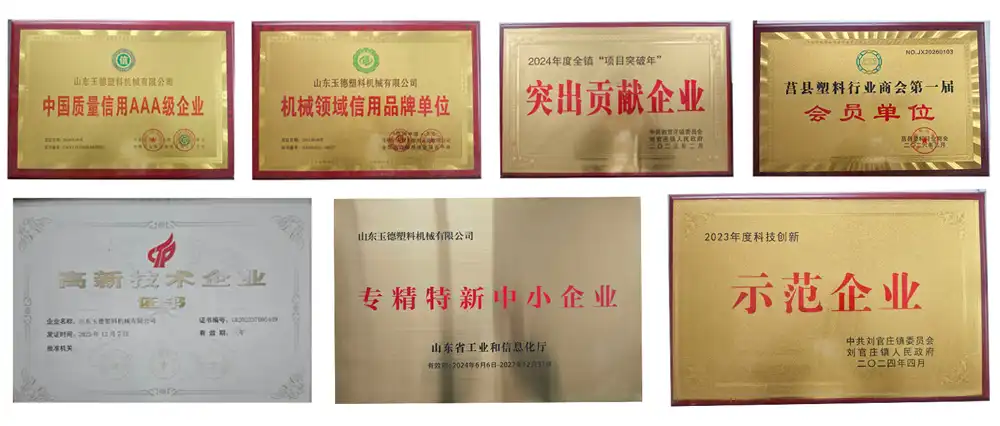
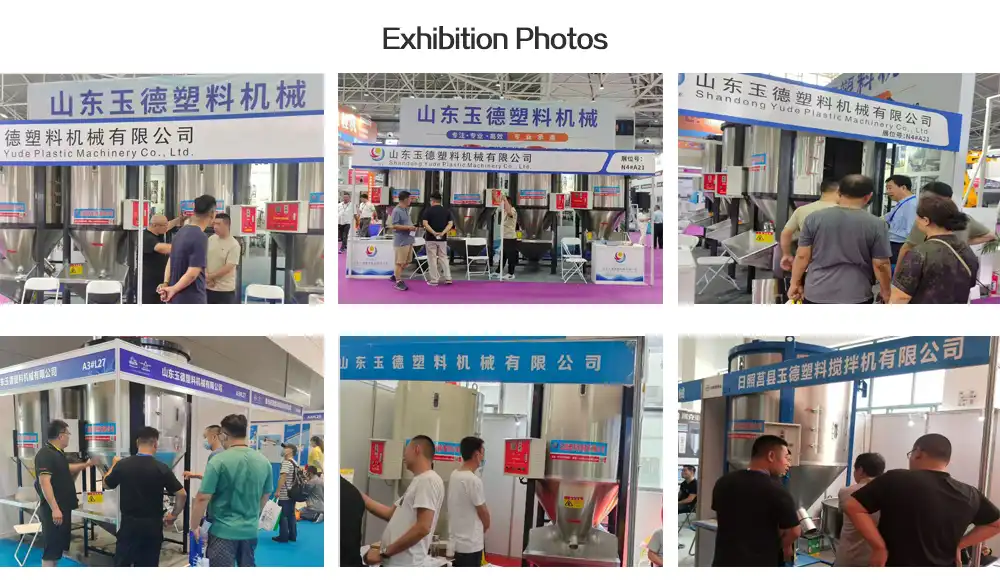
Yude Plastic Machinery provides a comprehensive range of high-quality stainless steel plastic particle mixer equipment for production. These 304-grade stainless steel mixers can handle 300 kg small units to 10 tons industrial systems and mix materials uniformly. We guarantee client satisfaction and technical quality with all our goods. As a well-known manufacturer of stainless steel plastic particle mixers marketed in over 30 countries, we provide procurement managers customization, fast technical assistance, and competitive rates. Contact our technical team at sales@yudemachinery.com to discuss your application needs and acquire production-specific details.
References
- Brown, T. M., & Chen, L. (2021). Material Selection in Polymer Processing Equipment: Performance and Economic Analysis. Industrial Equipment Review, 45(3), 112-128.
- Davidson, R. K. (2020). Stainless Steel in Food and Pharmaceutical Manufacturing: Compliance and Best Practices. Process Safety Journal, 38(2), 87-104.
- European Committee for Standardization. (2019). EN 10088-2: Stainless Steels - Technical Delivery Conditions for Sheet/Plate and Strip of Corrosion Resisting Steels for General Purposes. Brussels: CEN Publications.
- Miller, J. A., & Patel, S. R. (2022). Energy Efficiency in Industrial Mixing Operations: Comparative Equipment Analysis. Manufacturing Technology Quarterly, 29(4), 201-219.
- Society of Plastics Engineers. (2020). Mixing and Compounding Technology for Thermoplastics: Equipment Selection Guide. Danbury, CT: SPE Technical Publications.
- Zhang, W., & Thompson, D. L. (2023). Total Cost of Ownership Models for Process Equipment Investment Decisions. Industrial Procurement Management, 51(1), 76-95.
Learn about our latest products and discounts through SMS or email