- English
- French
- German
- Portuguese
- Spanish
- Russian
- Japanese
- Korean
- Arabic
- Greek
- German
- Turkish
- Italian
- Danish
- Romanian
- Indonesian
- Czech
- Afrikaans
- Swedish
- Polish
- Basque
- Catalan
- Esperanto
- Hindi
- Lao
- Albanian
- Amharic
- Armenian
- Azerbaijani
- Belarusian
- Bengali
- Bosnian
- Bulgarian
- Cebuano
- Chichewa
- Corsican
- Croatian
- Dutch
- Estonian
- Filipino
- Finnish
- Frisian
- Galician
- Georgian
- Gujarati
- Haitian
- Hausa
- Hawaiian
- Hebrew
- Hmong
- Hungarian
- Icelandic
- Igbo
- Javanese
- Kannada
- Kazakh
- Khmer
- Kurdish
- Kyrgyz
- Latin
- Latvian
- Lithuanian
- Luxembou..
- Macedonian
- Malagasy
- Malay
- Malayalam
- Maltese
- Maori
- Marathi
- Mongolian
- Burmese
- Nepali
- Norwegian
- Pashto
- Persian
- Punjabi
- Serbian
- Sesotho
- Sinhala
- Slovak
- Slovenian
- Somali
- Samoan
- Scots Gaelic
- Shona
- Sindhi
- Sundanese
- Swahili
- Tajik
- Tamil
- Telugu
- Thai
- Ukrainian
- Urdu
- Uzbek
- Vietnamese
- Welsh
- Xhosa
- Yiddish
- Yoruba
- Zulu
What is the process of plastic pellets?
To make plastic pellets, raw polymer materials are turned into regular, powdered forms that can be used in manufacturing. The first step in the process is to carefully measure out the base resins, masterbatches, fillers, and regrind materials that will be used. A high-quality plastic industrial mixer makes sure that the colors and performance are always the same. After being mixed, the materials are melted in an extruder, pushed through dies, turned into pellets by cutting mechanisms, cooled in water or air, screened to get rid of particles that are too big, and finally packaged. Each step has a direct effect on the pellet's shape, the melt flow index, and its mechanical qualities, all of which are important for the injection molding and extrusion processes that follow.
Understanding the Plastic Pellet Production Process
Definition and Industrial Applications
Plastic pellets are used as standard raw materials by factories all over the world. These round or cylindrical pellets, which are usually 2–5 mm in diameter, make it easier to handle and measure materials in automatic production lines. Because pellets move better than powder plastics, many industries, from companies that make parts for cars to companies that make consumer electronics, depend on them. The standard format cuts down on waste, makes it easier to keep track of goods, and lets injection molding tools and extruders do exact dosing.
Different types of polymers can be used in pelletized products, such as polyethylene (PE), polypropylene (PP), polyvinyl chloride (PVC), acrylonitrile butadiene styrene (ABS), and industrial grades like polyamide 6 (PA6). During pelletization, material sellers often add flame retardants, colorants, and glass fiber reinforcement to make products that are specifically made for a given use.
Raw Material Preparation and Mixing Stage
The standard profile of the final pellet depends on how the raw materials are prepared. The choice of base resin determines the basic mechanical qualities, while additives change things like how resistant the material is to contact, how stable it is at high temperatures, and how smooth the surface is. Masterbatches add exact amounts of color without needing a lot of plastic that has already been colored. When used correctly, regrind products made from production waste can help reach environmental goals.
The mixing step is a very important part of checking the quality. Mixing materials in high-quality plastic industrial mixer makes sure that additives are spread out evenly at the microscopic level. When you don't mix something well, concentration gradients appear as flaws in the way it looks, weak spots in the structure, or changes in how the melt behaves during processing. High-tech vertical mixers use spiral screw designs to create three-dimensional flow patterns for materials, with CV values below 3% and cycle times of 20 to 90 minutes.
Melting and Extrusion Operations
After being mixed evenly, the mixture is sent to extruder systems, where controlled heating turns solid bits into a thick melt. Twin-screw extruders are the most common type of pelletizer because they are better at mixing and have self-wiping screw shapes that keep materials from breaking down. As you move from the feed throat to the die, the temperature zones along the barrel gradually rise. The accuracy is usually kept within ±2°C to avoid thermal breakdown or partial melting.
Molten polymer is pushed through multi-hole die plates by extrusion pressure, which makes long strands. Die design has a direct effect on how similar the strands are and how consistent the pellets' sizes are. Cooled by water, the die faces keep the material flow steady at the opening exits by stopping them from solidifying too quickly.
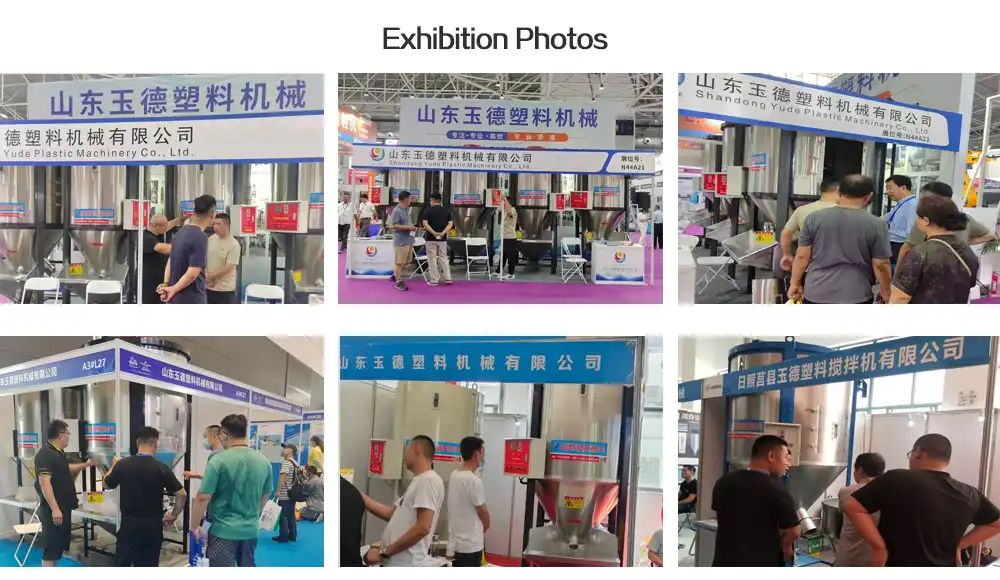
Types of High-Quality Plastic Industrial Mixers and Their Working Principles
Batch Versus Continuous Mixing Systems
Batch mixing systems work with discrete amounts of materials, so they can be used for small production numbers and recipe changes that happen often. Vertical batch mixers are the most common type of mixer for plastic pellets because they have a small size, mix ingredients evenly, and are easy to clean between runs. The loading process starts at entry holes on top, and ends at conical bottom parts with discharge gates that let all the material go.
Continuous mixing systems work directly with extrusion lines, taking in a steady flow of material and sending out regular amounts of finished products. Loss-in-weight feeder arrays measure each part and send it into a continuous mixer, where the mixing strength and residence time keep the uniformity of the blend. These designs work well for high-volume processes that only make a few formulation types.
Common Mixer Designs and Mechanisms
Ribbon mixers use spiral ribbon agitators that are wound around center shafts to move materials in both directions. The outer ribbon moves things in one direction, and the inner ribbon moves things the opposite way. This creates thorough mixing in the horizontal valleys. These designs work well with powders and grains that don't stick together, but they might not work so well with materials that stick together.
Paddle mixers have paddle blades that are fixed on separate paddles and spin and fold materials. Different flow patterns can be made by changing the angle of the paddles. Sigma blade mixers have overlapping blades that rotate at different speeds inside figure-eight troughs. This gives them a powerful mixing action for thick pastes and doughs, as well as other uses besides making plastic pellets.
Centrifugal forces created by high-speed dispersers make powder beds more fluid, which speeds up mixing in small containers. Through mechanical friction and contact, turbo mixers achieve homogeneity in 4 to 8 minutes. However, the rapid energy input creates heat, which may mean that materials that are sensitive to temperature need cooling systems.
Material Selection for Mixer Construction
Contact surface materials strike a mix between long-lasting, chemical-resistant, and anti-contamination. Food-grade and medicinal uses mostly use stainless steel types SUS304 and SUS316 because they don't rust and are easy to clean. Interiors that are mirror-polished and have surface roughness (Ra) values below 0.6 μm make it less likely for leftovers to stick when the color changes.
When used in general manufacturing settings, carbon steel building is cheaper. Yude Plastic Machinery's high-quality plastic industrial mixer are made of thicker Q235 carbon steel that has been coated to prevent rust. They work well and don't cost a lot of money. When working with abrasive materials that contain mineral fillers or glass support, treating mixing elements to make them less likely to wear out increases their useful life.
Ultra-high molecular weight polyethylene (UHMW), polytetrafluoroethylene (PTFE), or polypropylene linings may be used in certain situations to keep products clean from metal touch. Although they aren't as strong or good at transferring heat as metal mixers, these plastic-lined mixers are good for niche markets that need total purity.
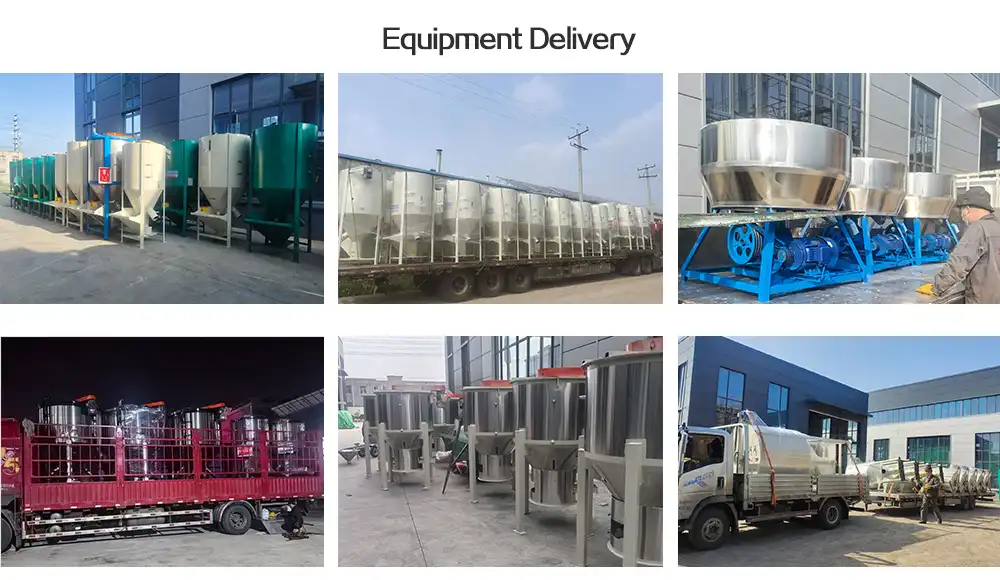
Procurement Considerations for High-Quality Plastic Industrial Mixers
Supplier Reliability and Certification
The long-term viability of equipment providers affects the supply of spare parts, the ability to get expert help, and the fulfillment of warranties. Established producers that have been in business for decades show that they can stay in the market and have built up a lot of tech knowledge. Yude Plastic Machinery serves thousands of customers in the United States and other countries, which shows that it is still accepted in the market and can do its job.
Quality management badges are objective proof that the industrial process is being controlled. ISO 9001 certification makes sure that written processes are used to control production, and industry-specific standards take into account the needs of particular applications. Suppliers who work with controlled industries usually have stricter quality systems than suppliers who only work with cost-sensitive markets.
Custom Solutions and OEM Capabilities
Standard equipment designs work well for many uses, but changes are often needed for specific output needs. Customizing capacity works with limited building room or output volume goals. Yude Plastic Machinery has vertical mixers with capacities ranging from 300 kg to 10,000 kg. For specific uses, unique sizes are also available.
Specifications for the material touch surface may say that types of carbon steel need to be upgraded to stainless steel or that special coatings need to be applied. Heating coats with PID temperature control make it possible to process mixtures that need to be heated to make sure that the additives are properly mixed. When working with small powders, dust extraction devices keep the work area clean.
The amount of automation should match the technology that is already in place. Standalone operation works well for places that don't have centralized control systems, while advanced PLC integration lets equipment upstream and downstream work together. The ability to handle recipes saves mixing conditions for many mixtures, making sure that handling is the same between shifts.
Balancing Price and Quality
People on a tight budget are tempted by high-quality plastic industrial mixers, but it quickly costs a lot because it needs a lot of repairs, breaks down often, and doesn't mix well, which lowers the quality of the product. The higher starting cost of premium mixers is justified by their longer service lives, better mixing results, and fewer operating interruptions.
Case studies from big companies that process plastics show that investing in good tools pays off. When a Southeast Asian seller of car parts replaced old ribbon mixers with vertical units, mixing cycle times went down by 35% and blend uniformity went up from CV 7% to CV 2.5%. Even though production efficiency went up, energy use went down by 22%. Within 18 months, the equipment paid for itself through lower energy costs, less waste from making mistakes, and no longer needing extra hours to meet production plans.
When figuring out the total cost of ownership, you should include the prices of energy, labor for upkeep, spare parts, and downtime over the expected life of the equipment. Discount rates on future costs have a big effect on net present value analysis. However, even with careful expectations, quality equipment that works well for a long time is usually still preferred. Instead of just looking at the purchase price, procurement workers do their companies more good by looking at the total cost of ownership.
Conclusion
To make plastic pellets, you need to be very exact at many steps of the process. Mixing the materials is one of the most important factors that determines the quality. Industrial-grade vertical mixers provide the even mixing that is needed for consistent pellet properties, which helps improve the efficiency of downstream processes and the performance of the end product. When choosing equipment, you have to think about its technical skills, daily costs, the dependability of the provider, and the long-term support infrastructure. Knowing the different kinds of mixers, how to manage them, and what to look for when buying one helps you make smart choices that keep quality high while also cutting costs.
FAQ
How does equipment handle abrasive materials like glass fiber reinforced compounds?
Industrial mixers made for tough jobs have upgrades that make them less likely to wear out, which keeps important parts from breaking down too soon. When ceramic coats or tungsten carbide surface treatments are put on mixing elements and tank walls, they last three to five times longer than steel that hasn't been treated. When specifying tools, the type of material chosen should take into account the filler types and concentrations that are common in formulas. This will make sure that there are enough longevity margins.
What mixing cycle duration achieves adequate homogeneity?
Cycle time needs depend on the mass density of the material, how the particles are distributed, and how complicated the recipe is. Vertical batch mixers can usually make free-flowing materials with similar particle sizes 98–99% homogeneous in 10 to 15 minutes. High-speed turbo systems may be able to cut this time down to 4 to 8 minutes by using a lot of mechanical work. Formulations that are hard to work with might need longer rounds or changes to the tools if they have a wide range of particle sizes or materials that stick together.
How do operators prevent cross-contamination during color changes?
Dead-zone-free bowl shapes get rid of the spaces where leftover material builds up between batches. Taking off the mixing paddles without using any tools makes it easier to clean them by hand when switching between materials that don't mix. Particles don't stick to smooth internal finishes with Ra values below 0.8 μm. Air-purge methods that use compressed air get rid of loose residue in about 15 minutes. By dedicating certain tools to shades that are similar, color family grouping lowers the risk of contamination even more and makes the switching process easier.
Partner with a Trusted High-Quality Plastic Industrial Mixer Manufacturer
Choosing the right mixing tools affects how well your products are made, how consistent they are, and how much it costs you in the long run. Yude Plastic Machinery makes vertical mixers that can work in harsh industrial settings and keep the exact same consistency of the blend by combining strong engineering with a full support system. Our industrial-grade equipment has a mixing uniformity of more than 98%, a range of customizable sizes from 300 kg to 10 tons, and building standards that guarantee decades of reliable service in facilities that are always running.
Excellent manufacturing backed by full quality control systems makes sure that every high-quality plastic industrial mixer meets strict requirements before it is shipped. We can quickly change things to fit your specific needs, whether they're for special material touch surfaces, non-standard capacities, or built-in automation. This way, you can be sure that the equipment fits perfectly with your production process. The technical support system is available seven days a week, twenty-four hours a day, so you can get help right away if you have a question. Additionally, the domestic and foreign service networks allow for quick on-site response for important problems.
Get in touch with our team at sales@yudemachinery.com to talk about your unique mixing needs. Our engineering experts will help you make buying choices that give you a clear return on your investment by suggesting the best designs based on your material properties, production volumes, and facility limitations.
References
1. Crawford, R.J., & Throne, J.L. (2002). Rotational Molding Technology. William Andrew Publishing.
2. Rauwendaal, C. (2014). Polymer Extrusion (5th Edition). Hanser Publications.
3. Tadmor, Z., & Gogos, C.G. (2006). Principles of Polymer Processing (2nd Edition). John Wiley & Sons.
4. Rosato, D.V., & Rosato, M.G. (2012). Plastics Engineered Product Design. Elsevier Advanced Technology.
5. White, J.L., & Kim, E.K. (2010). Twin Screw Extrusion: Technology and Principles. Hanser Publishers.
6. Harnby, N., Edwards, M.F., & Nienow, A.W. (1992). Mixing in the Process Industries (2nd Edition). Butterworth-Heinemann.
Learn about our latest products and discounts through SMS or email