- English
- French
- German
- Portuguese
- Spanish
- Russian
- Japanese
- Korean
- Arabic
- Greek
- German
- Turkish
- Italian
- Danish
- Romanian
- Indonesian
- Czech
- Afrikaans
- Swedish
- Polish
- Basque
- Catalan
- Esperanto
- Hindi
- Lao
- Albanian
- Amharic
- Armenian
- Azerbaijani
- Belarusian
- Bengali
- Bosnian
- Bulgarian
- Cebuano
- Chichewa
- Corsican
- Croatian
- Dutch
- Estonian
- Filipino
- Finnish
- Frisian
- Galician
- Georgian
- Gujarati
- Haitian
- Hausa
- Hawaiian
- Hebrew
- Hmong
- Hungarian
- Icelandic
- Igbo
- Javanese
- Kannada
- Kazakh
- Khmer
- Kurdish
- Kyrgyz
- Latin
- Latvian
- Lithuanian
- Luxembou..
- Macedonian
- Malagasy
- Malay
- Malayalam
- Maltese
- Maori
- Marathi
- Mongolian
- Burmese
- Nepali
- Norwegian
- Pashto
- Persian
- Punjabi
- Serbian
- Sesotho
- Sinhala
- Slovak
- Slovenian
- Somali
- Samoan
- Scots Gaelic
- Shona
- Sindhi
- Sundanese
- Swahili
- Tajik
- Tamil
- Telugu
- Thai
- Ukrainian
- Urdu
- Uzbek
- Vietnamese
- Welsh
- Xhosa
- Yiddish
- Yoruba
- Zulu
Differences Between Manual and Automatic Plastic Color Mixers
When looking for tools for handling plastic, it's important to know the difference between manual and automatic plastic color mixers so that you can get the best quality and most efficient production. Before shaping, extruding, or film blowing, a plastic material color mixer is the first and most important step to make sure that the colors are evenly spread throughout polymer pellets. Loading, timing, and emptying are all done by hand with manual mixers, which are easy to use and require less capital. Automatic systems have customizable controls, motorized release mechanisms, and often connect to dosing equipment further upstream, which makes them more efficient and consistent. Choosing the right type depends on how much is being made, how often the colors need to be changed, the supply of workers, and the long-term cost of running the business.
Understanding Manual and Automatic Plastic Color Mixers
Plastic material color mixers are very important in polymer processing because they mix base resins with color masterbatches, fillers, and regrind materials to make them uniform. If you don't mix things properly, the finished goods will have streaks, different colors, and mechanical problems that will make customers reject them and lose materials. Both human and robotic mixers do this by mechanically mixing things together, but they work in very different ways.
What Defines a Manual Plastic Color Mixer?
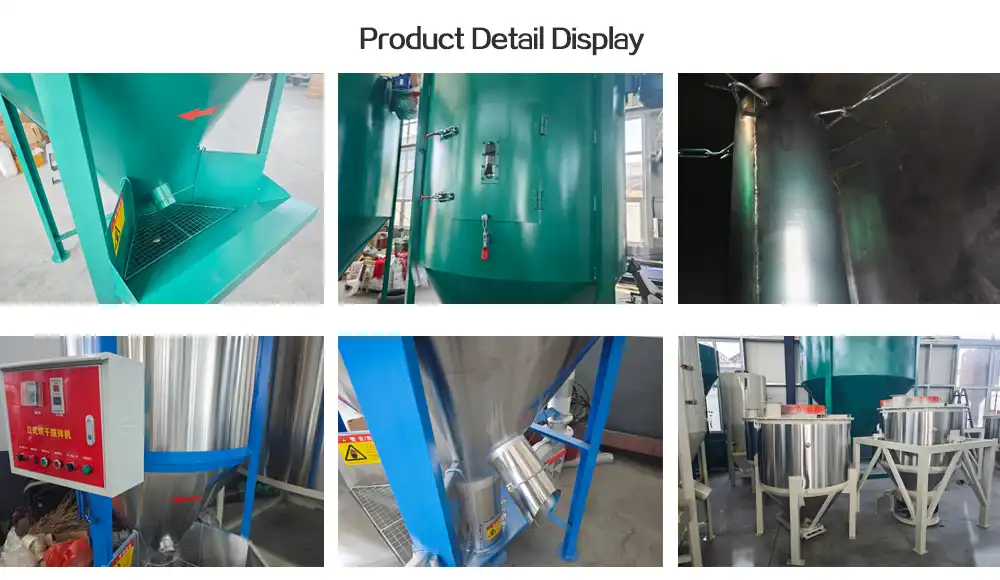
A upright conical or cylindrical mixing bowl made of Q235 carbon steel or 304 stainless steel is common in manual mixers. Operators put raw materials in through a top hatch by hand, set an automatic timer or watch how long the mixing takes, and then open a discharge valve or tube by hand to empty the mixed batch into storage containers. A single-phase or three-phase motor range from 0.75kW to 3kW powers a center screw auger or paddle system in these machines. Manual mixers are good for small-scale operations, R&D labs, or places where batch sizes change often and production runs stay below 500 kg per cycle because they are easy to use.
Core Characteristics of Automatic Plastic Color Mixers
The built-in control systems in automatic mixers' electric control boxes make them more useful. Without any help from a user, these units control mixing cycles, check the load on the motor, and connect gas or electric discharge valves. More advanced models can store recipes in a way that can be programmed, which makes moving between color formulas quick and easy. Industrial-grade motors ranging from 3kW to 15kW power automatic mixers, which can handle up to 10 tons of material per run. As the material moves up the screw and down the room walls like a waterfall, the vertical spiral rising circulation structure makes sure that the motion keeps happening until the mixing is uniform to within 99%. This arrangement keeps colors from clumping together in dead zones where friction heat is too high.
Key Differences Between Manual and Automatic Plastic Color Mixers
When procurement engineers compare human and automatic mixing options, they have to think about how they work, how efficient they are at making things, and how much they will cost. Each group covers a different type of manufacturing situation. Knowing these differences helps keep equipment capabilities and output needs from not matching up, which can be very expensive.
Operational Mechanism and Workflow
With a manual plastic material color mixer, you have to be involved in every step of the process. Workers have to measure and pour raw pellets and masterbatch into the mixing chamber. They also have to start the motor by hand, use a basic timer or clock to keep track of time, and open the discharge gates by hand to move the mixed material. Variability is introduced by this process because the attention of the operator has a direct effect on the uniformity of the batch. Automatic mixers have programmable logic controls that follow set mixing routines, so these human touchpoints are not needed. Sensors check the amount of material present, start mixing cycles, and set off automatic discharge sequences. This cuts down on mistakes made by people and frees up workers to do more important things like quality control and process improvement.
Efficiency and Production Throughput
Automatic and human methods mix things very differently and take very different amounts of time to turn around a batch. Depending on the type of material and how careful the user is, manual mixer processes usually take 30 to 60 minutes to finish. Cleaning and refilling have to be done by hand, which adds to the downtime between runs. Automatic mixers cut cycle times down to 20 to 40 minutes by using faster augers and automatic discharge. Programmable timers make sure that processing stays the same even when shifts change or operators gain or lose experience. Over the course of an eight-hour workday, an automatic system can handle three to five more batches than a human system. This means that high-volume producers can get a lot more done.
Cost Analysis and Financial Considerations
Manual mixers are better for getting started because they require less money up front. The cheapest models range from $2,000 to $6,000, based on their size and the materials they are made of. Automatic mixers have more complex control systems, safety interlocks, and strong drive components, so they cost more up front, between $8,000 and $30,000. Maintenance costs for manual units stay low because they don't have as many computer parts that need to be fixed. However, both types have similar plans for replacing seals and lubricating bearings. The amount of energy used is slightly different, with automatic systems using a little more because of the technology in the control cabinet. However, the difference is small compared to the time and money saved on work. Facilities that pay $20 an hour for workers can get their money back in 18 to 36 months by cutting down on labor costs and increasing output.
Advantages and Limitations of Manual vs Automatic Plastic Color Mixers
By looking at the pros and cons of each type of mixer, buying managers can choose equipment that fits the needs of the business and the company's long-term production goals. Neither group is always the best fit; the best fit depends on the situation.
Benefits and Constraints of Manual Mixers
Manual mixers work best in situations where freedom and capital protection are important. The simple design of these machines means that workers don't need much training, and when problems do happen, they're easy to fix. Facilities that make small amounts of unique colors can quickly switch formulas without having to re-program their control systems, which is helpful. Maintenance workers who know basic technical skills can fix manual mixers without having to know a lot about electronics. But manual methods have limits on batch size—usually around 500 kg at most—and color consistency depends a lot on how well the operator follows the rules. Long-term physical material handling also raises the chance of ergonomic strain and injuries at work.
Strengths and Weaknesses of Automatic Mixers
Automatic mixers provide unmatched accuracy and the ability to grow, which is necessary for high-volume processes. Mixing uniformity always goes above 99%, which makes sure that consumer goods, car parts, and wrapping films meet strict color requirements. Programmable controls can handle complicated recipes with many masterbatches and additions, and the ability to log data helps businesses that need to be able to prove their products' origin. Fully automated material handling environments are made up of automatic systems that work well with gravimetric feeds and central conveying networks. The main problems are the higher original cost and the complexity of running the business. Electrical and PLC troubleshooting skills are needed by maintenance teams, and updating software or recalibration of sensors require expert knowledge above and beyond basic mechanical repair.
How to Choose the Right Plastic Color Mixer for Your Business?
Before choosing between manual and automatic mixing tools, you need to carefully think about how much production you need now and how much you will need in the future. To get the best return on investment, procurement choices should take into account technical requirements, budgetary limitations, and the skills of the workforce.
Assessing Production Scale and Complexity
Manual plastic material color mixers are usually enough for manufacturers who process less than 1,000 kg of colored pellets every day and don't have to deal with color changes very often. On the other hand, automatic systems are helpful for businesses that use multiple injection molding tools at the same time or that make high-gloss car parts that need to match colors exactly. Check to see if your facility works in three shifts continuously or just occasionally with one shift. Automation makes more sense when the facility is always being used.
Budget, Maintenance, and Energy Efficiency
Instead of just looking at the purchase price, make estimates for the total cost of ownership over the next five to seven years. Costs of work, expected downtime, supply of spare parts, and energy use should all be taken into account. Automatic mixers from reputable brands, like Yude Plastic Machinery, have safety features that stop the motor from burning and overloading. These features keep the mixers from breaking down completely, which saves money on repairs in the long run. When both human and automatic units are well-designed, they use about the same amount of energy. However, automatic systems use less energy per kilogram because their turn times are faster.
Maintenance, Troubleshooting, and Support for Plastic Color Mixers
Equipment uptime and production efficiency are directly affected by proactive repair plans and the ability to quickly fix problems. There are specific ways to take care of the mechanical and electrical parts of both human and robotic mixers.
Routine Maintenance Practices
Lubricating the bearings is the most important upkeep job for both types of mixers. Every 1,000 hours of use, put on high-temperature grease to stop seizure and early wear. Check oil seals once a month for leaks that let grease get into treated materials and turn them black or make them defective. Once a week, use the right liquids or abrasive pads to clean out the mixing chambers and get rid of the masterbatch dust that builds up in the screw flights and chamber corners. Mirror-finish innards make cleaning stainless steel units easier and keep materials from getting stuck during multicolor production runs.
Common Issues and Practical Solutions
When workers overload tanks beyond their stated capacity or mix pellet sizes that don't mix, material often clumps in manual mixers. Fix this by carefully following volume rates and screening regrind ahead of time to make sure particles are all the same size. Sensor faults can happen in automatic systems when level monitors don't identify the presence of a material, which can cause error codes and stop production. Check that the sensors are lined up correctly and clean any optical screens that are cloudy with dust. Overload trips in motors usually mean that bearings are worn out or that the material is too dense. Load limits should be re-calibrated or mechanical parts should be checked for damage.
Conclusion
To tell the difference between manual and automatic plastic material color mixers, you need to look at how the business works, how much it produces, your budget, and the quality standards you have. Small businesses that want to keep things simple and save money on equipment should use manual systems. Automatic mixers, on the other hand, provide the accuracy, speed, and labor efficiency needed for high-volume manufacturing that needs to be competitive. For both types of equipment to keep working well over its lifetime, it needs to be maintained properly and have a strong relationship with its suppliers. Procurement managers make sure that investments in equipment that make factories more competitive and improve product quality are made by making sure that the mixers they choose are in line with strategic output goals and total cost of ownership calculations.
FAQ
Can manual mixers achieve the same color consistency as automatic units?
If you have skilled workers and control the mixing times, a manual mixer can get as close to 95–98% uniformity. Because they use preset cycle controls and optimum auger speeds that get rid of human variability, automatic systems always offer consistency above 99%. Automatic mixers provide the accuracy needed for uses like car interior parts or clear packaging films where color differences lead to rejection.
What capacity should I select based on my injection molding throughput?
Choose a mixer's size that gives you 20% more space than the hourly input demand. If your shaping tools can handle 400 kg per hour, you should choose a mixer that can handle at least 500 kg at a time. This buffer handles changes in material density and stops overflowing, which lowers the quality of mixing.
How do I prevent material degradation during mixing?
When there is too much friction and heat is created, or when materials stay stuck in dead zones, degradation happens. Choose mixers with polished stainless steel innards that have few hang-up points, and make sure that the screw-to-chamber wall gaps are within the manufacturer's acceptable range. Keep a close eye on the mixing times, because motion that lasts longer than needed raises the risk of degradation.
Partner with Yude Plastic Machinery for Superior Color Mixing Solutions
Yude Plastic Machinery makes vertical plastic material color mixers with sizes from 300 kg to 10 tons. These mixers are designed to mix materials evenly, with 99% accuracy or better, for tough jobs in injection molding, film blowing, and extrusion. Our machines are made of strong Q235 carbon steel or easy-to-clean 304 stainless steel. They have electric control cabinets that protect against overload and drive systems that are powered by industrial motors ranging from 0.75kW to 15kW. As a reliable provider of plastic material color mixers to more than 30 countries in Southeast Asia, Europe, and South America, we offer customizable language interfaces and changes that meet the standards of each industry. Get in touch with our expert team at sales@yudemachinery.com to talk about your unique production needs and get personalized equipment suggestions backed by full after-sales support and quick access to spare parts.
References
1. Johnson, M. Industrial Polymer Processing Equipment: Design and Application Standards. Manufacturing Technology Press, 2021.
2. Chen, L., and Patel, R. "Optimization of Color Masterbatch Dispersion in Thermoplastic Resins." Journal of Applied Polymer Science, vol. 138, no. 12, 2022, pp. 3421-3435.
3. European Plastics Machinery Association. Technical Guidelines for Vertical Mixing Systems in Polymer Processing. EPMA Publication Series, 2020.
4. Williams, T. "Cost-Benefit Analysis of Automated vs Manual Material Handling in Injection Molding Facilities." Plastics Engineering, vol. 77, no. 4, 2021, pp. 28-34.
5. International Organization for Standardization. ISO 18064:2019 - Plastics Mixing Equipment Performance Requirements. ISO Standards Catalog, 2019.
6. Kumar, S. Machinery Maintenance Protocols for Polymer Processing Facilities. Industrial Engineering Publications, 2023.
Learn about our latest products and discounts through SMS or email