- English
- French
- German
- Portuguese
- Spanish
- Russian
- Japanese
- Korean
- Arabic
- Greek
- German
- Turkish
- Italian
- Danish
- Romanian
- Indonesian
- Czech
- Afrikaans
- Swedish
- Polish
- Basque
- Catalan
- Esperanto
- Hindi
- Lao
- Albanian
- Amharic
- Armenian
- Azerbaijani
- Belarusian
- Bengali
- Bosnian
- Bulgarian
- Cebuano
- Chichewa
- Corsican
- Croatian
- Dutch
- Estonian
- Filipino
- Finnish
- Frisian
- Galician
- Georgian
- Gujarati
- Haitian
- Hausa
- Hawaiian
- Hebrew
- Hmong
- Hungarian
- Icelandic
- Igbo
- Javanese
- Kannada
- Kazakh
- Khmer
- Kurdish
- Kyrgyz
- Latin
- Latvian
- Lithuanian
- Luxembou..
- Macedonian
- Malagasy
- Malay
- Malayalam
- Maltese
- Maori
- Marathi
- Mongolian
- Burmese
- Nepali
- Norwegian
- Pashto
- Persian
- Punjabi
- Serbian
- Sesotho
- Sinhala
- Slovak
- Slovenian
- Somali
- Samoan
- Scots Gaelic
- Shona
- Sindhi
- Sundanese
- Swahili
- Tajik
- Tamil
- Telugu
- Thai
- Ukrainian
- Urdu
- Uzbek
- Vietnamese
- Welsh
- Xhosa
- Yiddish
- Yoruba
- Zulu
What is the cost of plastic material mixer machine?
To figure out how much you need to spend on a plastic material mixer, you must first realize that prices are not a single number, but a range that is affected by many things. Depending on its size, shape, and level of technical difficulty, industrial-grade mixing tools can cost anywhere from $2,000 to $50,000. Vertical mixers for small-scale businesses that can hold up to 300 kg may start at around $2,000. High-volume models that can hold up to or more than 10,000 kg and have advanced technology can cost $45,000 or more. This big difference is due to changes in motor power, building materials, mixing technology, and where the manufacturer fits in global supply lines. To make smart buying choices, people should not only look at the price tag, but also the total cost of ownership, which includes things like how much energy the item uses, how often it needs to be serviced, and how long it is expected to last.
Understanding the Cost Components of Plastic Material Mixer Machines
To see how much industrial mixing equipment costs, you have to break down what goes into the final quote. The main investment depends on a lot of technical and business factors that are all connected and need to be carefully considered by buying teams.
Machine Configuration and Structural Design
The basic structure of mixing tools has a big effect on how much it costs. Vertical mixers have a cylindrical cylinder that makes the best flow patterns for materials by moving in a helical pattern, which makes sure that there are no dead spots and that everything is mixed evenly. This engineering method gets rid of problems with color differences and material layering that happen on production lines. When made from SUS304 or SUS316 stainless steel to meet food-grade or pharmaceutical standards, the tapering shape calls for precise production and high-quality welds. Horizontal designs offer different mixing dynamics that work well for both powders and pastes, but they need strong paddle assemblies and strengthened drive systems, which make the manufacturing process more difficult and expensive.
Capacity and Motor Power Specifications
Plastic material mixer investments in tools are directly related to the amount of work that needs to be done. The base model for small production shops is a 300 kg vertical unit with a 4kW motor that takes up 1200 x 800 x 1800 mm of space and mixes things in 8 to 15 minutes. To make a model that can hold 1000 kg, you need an 11kW motor and bigger measurements (1800 x 1200 x 2500 mm), and the mixing time needs to be increased to 15 to 25 minutes. A 10,000-kg machine on an industrial scale needs a 55kW motor, 3500x2200x4500mm of floor room, and 30 to 50 minutes of cycle time. As the capacity level goes up, the structural parts, bearings, and engine assemblies get stronger to handle the extra weight. This has a direct effect on the cost of production and the price of the product on the market.
Beyond Purchase Price: Hidden Cost Elements
Smart buying is more than just paying the bill. The cost of installation depends on how ready the building is. For example, installing an anti-vibration mounting system, a stronger foundation, or changes to the electrical system to handle motor loads can add 10 to 15 percent to the initial investment. International buyers have to think about more logistics issues. For example, ocean freight for a 3000 kg mixer can run anywhere from $800 to $1,500, based on the port of arrival. Also, import taxes and customs fees are different in each country. Maintenance plans should include replacing the oil in the gears every 2,500 hours of use, following the rules for inspecting the bearings, and possibly fixing up the blades for rough materials. Major parts usually come with a warranty that lasts between 12 and 24 months, but long-term operating security is affected by extended service agreements and the availability of extra parts, which should be taken into account when calculating the total cost.
Types of Plastic Material Mixers and Their Price Ranges
Different mixing methods are used for different types of production, and their prices show how complex their engineering is and how many uses they can have. Knowing about these groups helps match the choice of tools with both practical needs and budgetary limits.
Vertical Versus Horizontal Mixer Economics
Vertical mixers are the most popular way to mix granules and pellets because they take up little space and use little energy. Compared to horizontal paddle systems, the fountain-style mixing action uses less motor power, which means less energy use, which is very important for businesses that work multiple shifts. Vertical units range in price from $2,500 for simple 300kg models to $38,000 for systems that can hold 10,000 kg and have advanced timer control and overload safety. Horizontal mixers cost more than other types, starting at $4,500 for a similar capacity. This is because their paddle sections provide higher shear forces needed for painting applications and dispersing liquid pigments. The extra mechanical complexity and higher structure requirements are worth the 30–40% price increase, especially for people who work with PVC compounds or filled plastics that need to be mixed aggressively.
High-Speed Versus Standard Mixing Equipment
Plastic material mixer that run at normal RPMs can handle most general mixing needs at base prices. High-speed heater/cooler combo units are a special type that costs 50–70% more than other units in the same group. These systems use friction to heat PVC resin powder with stabilizers and fillers to about 120°C, which turns it into a gel. The material is then instantly moved to built-in cooling rooms where the temperature drops to 40°C. This heat treatment stops caking and gets dry mixes ready for twin-screw extrusion, which is important for making PVC pipes and profiles. A normal 500 kg vertical mixer might cost $4,200, but the same high-speed thermal processing unit could cost $7,500 to $9,000. This is because it has temperature control equipment, special heating elements, and automatic group transfer mechanisms that make it more useful for certain tasks.
Batch Versus Continuous Mixing Systems
Most mid-market mixers are batch mixers, which are flexible for job shops that work with different formulas and changeovers often. An expensive $6,800 600-kg batch unit can handle a wide range of material combinations and is easy to clean between runs. Continuous mixing systems aren't used very often in general fabrication, but they're great for high-volume, single-product processes. Entry-level setups start at about $15,000. These systems have feed hoppers, metering controls, and inline transportation that get rid of batch cycle delays but limit the number of ways that the mixture can be made. Choosing between batch and continuous affects more than just the initial investment. It also changes how efficiently work is distributed, how much labor is used, and how material is managed.
How to Choose the Right Plastic Material Mixer Within Your Budget?
To find the right balance between technical needs and budgetary limits, you need an organized review process that puts production goals first while still taking capital limits into account. To find the best value offers, procurement teams have to deal with competing objectives.
Defining Production Capacity Requirements
Accurately predicting flow stops both under-investment, which leads to bottlenecks, and over-specification, which loses money. Figure out how much material you use each hour during peak production times, making sure to include a 20% capacity spare to account for differences in bulk density between new pellets and lighter regrind materials. A plant that processes 400 kg per hour over an 8-hour shift needs between 600 and 800 kg of mixing capacity to keep the feed going without stopping work. The bulk density of a material has a big effect on its real volume. For example, polyethylene pellets with a density of 0.65 take up different space than expanded polystyrene beads. To avoid making mistakes, capacity planning should be based on volume instead of weight.
Evaluating Energy Efficiency and Operating Economics
Plastic material mixer motor power directly translates to electricity costs that add up over the life of the tools. At $0.12 per kWh, a 7.5kW motor that runs for 6 hours a day uses about $1,970 a year in electricity. Even though they cost more at first, energy-efficient motors can cut use by 15 to 20 percent, and the extra money saved on utilities will cover the cost of the motor within 18 to 24 months. In addition to motor economy, you should also try to get the most out of the mixing time. Mixing for more than 15 minutes rarely makes the mixture more homogeneous; instead, it wastes energy and can cause problems with static electricity in materials like PET or styrofoam. Cutting down on the length of mixing cycles and making them more efficient not only saves power but also boosts output, making tools more productive without spending more money.
Supplier Reliability and After-Sales Infrastructure
Longevity of equipment depends a lot on maker support systems that last after the sale. Certifications like ISO quality management standards and CE machinery directives show that safety engineering and structured production controls are in place. Manufacturers who have been around for a while and have full customer file management systems keep track of equipment serial numbers, maintenance histories, and service records. This makes sure that parts will work with the equipment and that expert help will be available throughout its life. Downtime risks are kept to a minimum by domestic makers who offer 7-days a week customer service and 24-hour on-site service. Lost production can cost thousands of dollars. International buyers should check with local service companies that can respond quickly without sending expensive technicians overseas. This will protect operating consistency in production settings that need to keep working on time.
Conclusion
When deciding what to buy as an investment, mixing equipment needs a full study that goes beyond just comparing prices at first and includes the total cost of ownership over the expected service life. The range of systems, from entry-level ones that cost $2,500 to high-capacity industrial units that cost $45,000, is based on real differences in capacity, building quality, and engineering complexity that meet different production needs. Smart procurement looks at both short-term budget limits and long-term operational economics. It does this by looking at things like energy efficiency, ease of upkeep, and the infrastructure for supporting suppliers that keep production and profits high. If buyers know about the different types of mixers, how they are priced, and how to strategically source goods, they can get the best deal and avoid "false economies" that trade reliability for small savings. If you buy the right equipment, it will become a production tool that gives you a competitive edge and steady performance for as long as it is used.
FAQ
What is the typical price range for industrial plastic mixing equipment?
Prices for industrial mixing tools range from $2,000 to $50,000, based on how much it can mix and how it is set up. Small vertical mixers that can handle 300–500 kg cost between $2,500 and $4,200. Units that can handle 1000–3000 kg cost between $12,000 and $22,000, and systems that can handle 10,000 kg cost between $38,000 and $45,000. Because they are more complicated mechanically, horizontal mixers cost 30 to 40 percent more than similar vertical units.
How do energy-efficient features affect equipment cost?
Motors that use less energy cost about 8 to 12 percent more to buy at first, but they use 15-20 percent less power. At normal industry rates of use, the efficiency premium is paid back in 18 to 24 months by lower energy bills. Over the course of their 10-year service life, efficient motors can save between $4,000 and $8,000 in running costs, based on their size and how much they are used. This makes them financially beneficial, even though they cost more up front.
What warranty and service coverage should be expected?
Standard guarantees cover most of the major parts for 12 to 24 months. This includes motors, gears, and structural parts. Reputable makers offer expert help seven days a week, 24 hours a day, and can respond to home installations 24 hours a day. International buyers should check with local service partners to avoid having to pay a lot for sending technicians abroad. Usually, an extended guarantee adds 5 to 8 percent to the price of the item, but it protects against unexpected repair costs for the first two to five years of use.
Partner With a Trusted Plastic Material Mixer Manufacturer
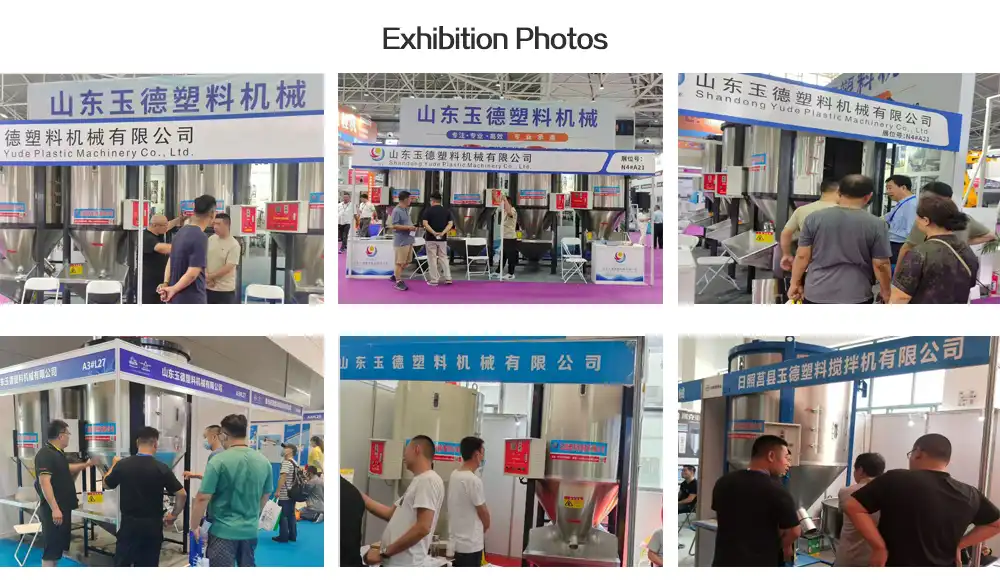
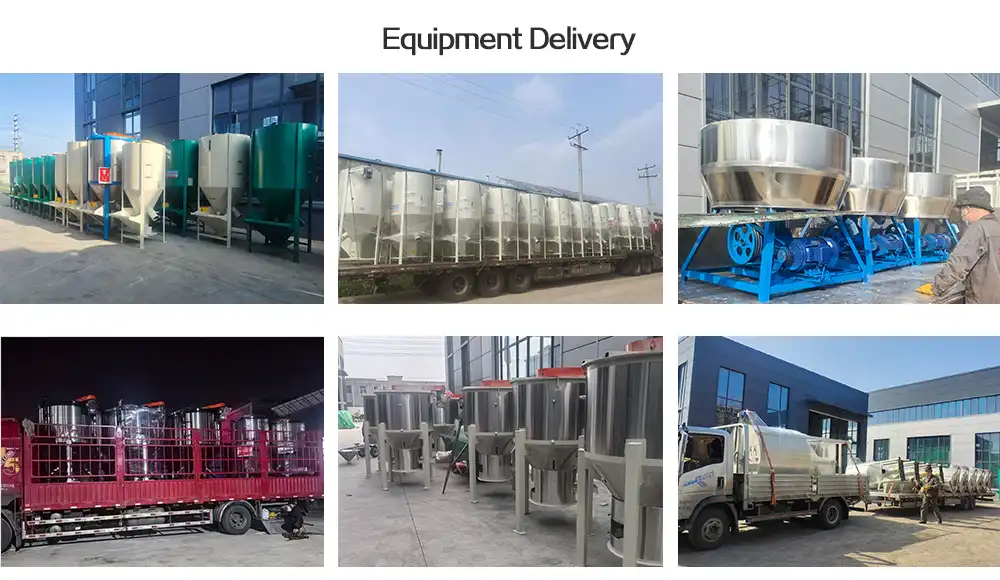
Through precision-engineered vertical mixing solutions, Yude Plastic Machinery is ready to turn your material mixing problems into competitive benefits. Our wide range of capacities, from 300 kg to 10,000 kg, means that we can handle activities of all sizes. Our SUS304 stainless steel construction and circular chamber designs get rid of the dead zones that plague less reliable equipment. We know that purchasing choices have to balance technical performance with budget constraints. That's why our team gives you personalized quotes that are based on your exact production needs instead of standard prices. Talk to our purchasing experts at sales@yudemachinery.com about your capacity needs, the properties of the materials you're using, and your working limitations. We'll come up with solutions that work best for your specific needs. We protect your investment for as long as it works by offering full after-sales support, which includes installation instructions, upkeep schedules, and extra parts. Find out why makers in more than 30 countries choose Yude Plastic Machinery as their top seller of plastic material mixers.
References
1. Chen, W. (2021). Industrial Mixing Technology for Polymer Processing: Engineering Principles and Cost Analysis. Manufacturing Engineering Press.
2. Rodriguez, M. & Thompson, K. (2022). Total Cost of Ownership Models for Processing Equipment Procurement. Journal of Industrial Procurement Management, 18(3), 145-167.
3. Global Plastics Machinery Research Institute. (2023). Market Analysis Report: Mixing Equipment Pricing Trends 2020-2023. Industry Intelligence Division.
4. Nakamura, H. (2020). Energy Efficiency Standards in Mixing Equipment: Performance Metrics and Economic Impact. International Journal of Manufacturing Technology, 15(2), 89-104.
5. European Committee for Standardization. (2022). Safety Requirements for Plastic Processing Machinery: Compliance Cost Implications. Technical Standards Publication.
6. Williams, D. & Patterson, S. (2023). Preventive Maintenance Protocols for Industrial Mixing Systems. Maintenance Engineering Quarterly, 29(1), 56-73.
Learn about our latest products and discounts through SMS or email