- English
- French
- German
- Portuguese
- Spanish
- Russian
- Japanese
- Korean
- Arabic
- Greek
- German
- Turkish
- Italian
- Danish
- Romanian
- Indonesian
- Czech
- Afrikaans
- Swedish
- Polish
- Basque
- Catalan
- Esperanto
- Hindi
- Lao
- Albanian
- Amharic
- Armenian
- Azerbaijani
- Belarusian
- Bengali
- Bosnian
- Bulgarian
- Cebuano
- Chichewa
- Corsican
- Croatian
- Dutch
- Estonian
- Filipino
- Finnish
- Frisian
- Galician
- Georgian
- Gujarati
- Haitian
- Hausa
- Hawaiian
- Hebrew
- Hmong
- Hungarian
- Icelandic
- Igbo
- Javanese
- Kannada
- Kazakh
- Khmer
- Kurdish
- Kyrgyz
- Latin
- Latvian
- Lithuanian
- Luxembou..
- Macedonian
- Malagasy
- Malay
- Malayalam
- Maltese
- Maori
- Marathi
- Mongolian
- Burmese
- Nepali
- Norwegian
- Pashto
- Persian
- Punjabi
- Serbian
- Sesotho
- Sinhala
- Slovak
- Slovenian
- Somali
- Samoan
- Scots Gaelic
- Shona
- Sindhi
- Sundanese
- Swahili
- Tajik
- Tamil
- Telugu
- Thai
- Ukrainian
- Urdu
- Uzbek
- Vietnamese
- Welsh
- Xhosa
- Yiddish
- Yoruba
- Zulu
Best Plastic Material Mixers For Small Manufacturing Businesses
Choosing the right plastic material mixer can take your small manufacturing business from not being regular to being very accurate. A good mixing machine makes sure that colors are spread out evenly, that materials don't get separated, that production waste is cut down, and that operating costs stay low. Modern vertical mixers with cylindrical chambers make the best flow patterns for materials, making sure that there are no dead spots that affect the quality of the batch. Small makers benefit from steady feed quality because it stops color changes and ingredient separation, which are important when they have to compete with bigger factories that can handle more errors.
Understanding Plastic Material Mixers for Small Manufacturing
How Plastic Material Mixers Work?
Plastic material mixers use motorized stirring to mix new pellets, color masterbatches, regrind materials, and chemicals into batches that are all the same. Depending on how the unit is set up, the core mechanism is either a vertical screw lifting or a horizontal paddle rolling. A center auger in vertical units pulls material from the bottom, making a flow pattern that looks like a fountain. This flow with the help of gravity makes sure that particles keep going through the mixing zone until they are evenly spread out.
Key Advantages for Small-Scale Operations
When properly defined plastic material mixer is used, it directly solves the problems that small producers face. When equipment gets rid of the uncertainties that come with human handling, batch-to-batch consistency is possible. When production levels don't warrant three-shift operation, energy saving is very important. This is why low-power vertical designs are economically appealing. Small facilities usually have limited floor space, and compact shapes make the best use of that space. Quick-change features let products be switched out quickly without having to go through a lot of cleaning steps.
Being able to handle different batch sizes guards against the costs of keeping supplies. Instead of keeping separate machines for different order amounts, mixers of the right size can handle everything from small runs to full orders. This practical flexibility helps the business grow without needing to reinvest cash right away.
Types of Mixers Available
Batch mixers are most common in small industry settings because they are easy to use and allow for flexible production. Each cycle, these units handle discrete amounts ranging from 300 kg to 10,000 kg, which is common for custom compounders and contract makers. Continuous mixers work well in places with a lot of one product, but their complexity is usually not worth it in small, varied businesses.
In the pellet blending business, single-shaft vertical mixers are the standard. They work reliably and don't need much upkeep. When powders or liquid additives need to be mixed or spread out, twin-shaft horizontal designs provide higher shear. Some types of heated mixers can blend and dry at the same time, so you don't have to do two separate drying steps when working with resins that are sensitive to wetness, like nylon or PET.
Criteria for Choosing the Best Plastic Material Mixer
Evaluating Your Production Requirements
To figure out the right batch size, you need to be honest about how much flow you actually need, not just how much ability you'd like to have. A facility that processes 2,000 kg of material every day in four batches needs at least 500 kg of capacity, plus an extra 20% for differences in material density. The properties of the resin have a big impact on the choice of equipment. For example, free-flowing pellets mix easily in simple vertical units, but fibrous additives or flake regrind need more complex stirring designs.
The mixing cycle time has a direct effect on the schedule for output. Just-in-time manufacturing ideas work well with fast-cycling equipment (8–15 minutes), but longer cycles need careful group staging to keep the molding machine from running out of materials. Analyzing how much energy a machine uses can show you how much it really costs to run. Using the right size motor and gear reduction systems can save you money over the many years that the machine lasts.
Core Performance Metrics
Capacity numbers need to be checked against the bulk mass of the material you are using. Specifications usually say that polyethylene has a density of 0.65 g/cm³, but polycarbonate pellets or foamed regrind have very different bulk properties. Specifications for mixing uniformity should promise 95% homogeneity or better within given cycle times. This can be checked using normal color dispersion testing.
Plastic material mixer operational safety measures keep both workers and output going. Entanglement accidents can be avoided with interlock devices that turn off the power immediately when access doors open. Overload safety circuits keep motors safe when material is accidentally overfilled or mechanically bound. Grounding features stop static electricity from building up, which can cause materials to stick together and operators to get shocked in low-humidity areas.
Technology Comparison Considerations
Vertical mixers are great at mixing pellets together while using little energy and needing little upkeep. Their flow patterns are very regular, and they don't require a lot of technical complexity. The higher costs of buying and maintaining horizontal mixers are worth it when a lot of different materials need to be mixed together or liquid additives need to be added, which vertical units can't do.
Models with heating combine mixing and removing wetness, which cuts down on steps but makes the process take longer and use more energy. This unified method works well for businesses with limited floor space or that work with naturally wet materials that need to be used right away after drying. When different drying equipment is already in place, non-heated units get the most work done for the least amount of money.
Top Plastic Material Mixers for Small Manufacturing Businesses in 2024
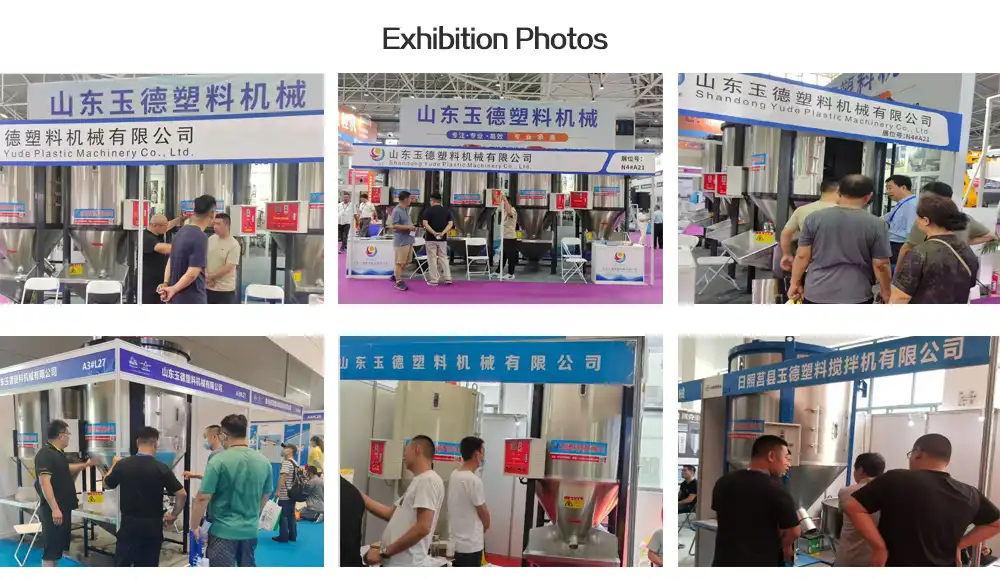
Yude Plastic Machinery Vertical Blenders
Yude Plastic Machinery has designed a wide range of capacities to meet the needs of a wide range of small industrial situations. The circular chamber shape makes the best flow patterns for the materials, ensuring full mixing with no dead spots. Consistent feed quality gets rid of color differences and problems with material separation in production lines.
Comprehensive Capacity Range:
| Model | Capacity | Motor Power | Mixing Time | Dimensions (L×W×H) |
|---|---|---|---|---|
| YD-300 | 300kg | 4kW | 8-15 min | 1200×800×1800mm |
| YD-500 | 500kg | 5.5kW | 10-18 min | 1400×900×2000mm |
| YD-600 | 600kg | 7.5kW | 12-20 min | 1500×1000×2200mm |
| YD-1000 | 1000kg | 11kW | 15-25 min | 1800×1200×2500mm |
| YD-3000 | 3000kg | 22kW | 20-35 min | 2500×1500×3200mm |
| YD-5000 | 5000kg | 37kW | 25-40 min | 3000×1800×3800mm |
| YD-10000 | 10,000kg | 55kW | 30-50 min | 3500×2200×4500mm |
The YD-300 and YD-500 types of plastic material mixers are good for new businesses and specialty compounders that need to change their products often. The YD-600 to YD-1000 models in the middle price range can meet the daily output needs of most small manufacturers. Large-capacity YD-3000 to YD-10000 versions help area compounders and toll processors handle a lot of orders for many clients.
Performance and Customer Feedback
Small businesses say they are much more productive now that they use automatic mixing systems instead of blending by hand. After adding a 500 kg vertical mixer, a Tennessee injection molder cut color streaking flaws by 87%. This meant that they didn't have to deal with expensive scrap and customer rejects. The time it took to process went from 45 minutes of human tumble-blending to 12 minutes of automatic cycles. This freed up workers to do more useful work.
Comparing how much energy a business uses shows that it can save money on costs. Vertical versions use 40–60% less power than similar horizontal units, which saves the utility company money over thousands of batch runs every year. The simpler mechanical design cuts down on maintenance tasks. Most facilities report 98%+ uptime when they follow the suggested lubrication plans.
Maintenance and Troubleshooting for Plastic Material Mixers
Essential Maintenance Routines
To avoid downtime, you must strictly follow the maintenance times set by the maker. The most important service is changing the gearbox oil. The first change after 100 hours of use gets rid of break-in contamination, and then every 2,500 hours after that. Every 1,000 hours, motor bearings need to be greased with high-temperature grease. This needs to be done more often in dusty places where regrind processing takes place.
Protocols for daily plastic material mixer inspections find problems as they arise before they become catastrophic. Visual checks for oil leaks at shaft seals keep batches from getting contaminated and show when seals need to be replaced before they get worn out. By listening for strange vibrations or noises coming from bearings, early action can be taken before a bearing seizure harms parts that move. Checking for proper grounding connections stops static buildup that leads to material sticking together and uneven mixing.
Common Issues and Solutions
Overheating usually happens because there isn't enough air flow around motor housings or because the temperature inside buildings that aren't climate-controlled is too high. Most temperature problems can be fixed by adding extra cooling fans or moving equipment away from machines that make heat. Inconsistent mixing results are often caused by incorrect loading. Over-filling causes missing circulation, while under-filling prevents enough material contact.
Material layering after the cycle is over is a sign of problems with over-mixing or static electricity. Density-based separation can be stopped by lowering the cycle time below what the maker suggests (often 15 minutes is enough). Adding grounding bands or liquid anti-static agents gets rid of the electrical forces that separate materials that are not the same. If there is too much vibration, it needs to be fixed right away. This could be because of an uneven fitting, uneven loads, or worn bearings.
Warranty and Spare Parts Sourcing
Reputable manufacturers offer full warranties that cover all important parts for 12 to 24 months after installation. It's important to know what the guarantee doesn't cover. For example, normal wear and tear items like belts and seals are usually not covered, but premature gearbox or motor breakdowns are. Setting up a stockpile of spare parts for parts that wear out quickly cuts down on downtime during scheduled repair windows.
When you work with sellers who keep a lot of parts in stock, you can get them quickly if something goes wrong. International companies that already have distribution networks in North America can send new parts within days instead of the weeks that are usually needed for direct shipping from abroad. The availability of technical help during the setup and troubleshooting stages has a big effect on how well new equipment fits into current production processes.
Conclusion
To choose the best blending tools, you have to weigh technical specs against the facts of running a small manufacturing business. Plastic material mixers of the vertical variety have been shown to be reliable, use little energy, and be easy to maintain, all of which are important for growing businesses that are limited on resources. When choosing capacity, it's important to think about both current output and plans for near-term growth, without spending too much on capabilities that aren't needed. Partnering with well-known manufacturers that offer full expert support and quick access to parts saves long-term equipment investments and lowers the risk of production interruptions.
FAQ
What mixer capacity matches my production volume?
Find out how much glue you use every day and divide that number by the number of batches you want to make. Then, add 20% to account for changes in material density. A plant that works three shifts a day and processes 1,500 kg needs a minimum capacity of 500 kg. When you undersize, you have to do too many batch cycles, which limits your production options. When you oversize, you waste cash and floor space.
Can vertical mixers handle glass-filled materials?
Standard stainless steel structure wears out quickly when sharp glass fibers are present in concentrations above 30%. You can ask for extra changes that will make it last longer, like tungsten carbide coatings on the blades or high-chromium metal tank covers. These improvements make the equipment last longer, from months to years, when working with strengthened materials. This protects the investment in the equipment.
How do I prevent material stratification issues?
Overmixing or static electricity can cause separation based on density. Cycle times should only be as long as the maker says they should be. Longer mixing doesn't improve regularity and can even cause segregation. When working with materials that are prone to static electricity, like polystyrene, use grounding devices and anti-static chemicals. When you ground your tools properly, you get rid of the electric forces that separate particles.
Partner with Yude Plastic Machinery for Your Blending Solutions
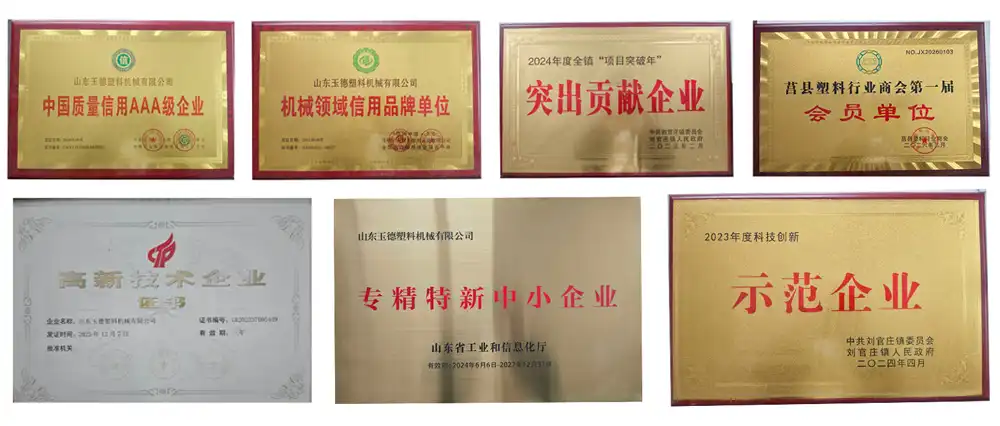
Yude Plastic Machinery offers tried-and-true vertical mixing technology that is perfect for small industrial needs. Our engineering team gives you application-specific advice to make sure that the equipment you choose meets all of your working needs, from the properties of the material to the time constraints of the production schedule. We've been helping plastic producers in more than 30 countries for more than 10 years, so we know the problems that small plants have and come up with solutions that work.
As an experienced manufacturer of plastic material mixers, we keep a large stock of spare parts and offer expert help 24 hours a day, seven days a week. This way, we can quickly answer any questions that come up. Our low prices come from the fact that we can make a lot of them without lowering the quality standards needed for precision mixing. Email our technical sales team at sales@yudemachinery.com to discuss your specific requirements and receive detailed equipment recommendations with transparent pricing. We look forward to supporting your production success with reliable, cost-effective blending equipment backed by comprehensive service commitment.
References
1. Plastics Technology Handbook, Fourth Edition, Manas Chanda, 2017, CRC Press
2. Mixing and Compounding of Polymers: Theory and Practice, Second Edition, Ica Manas-Zloczower and Zehev Tadmor, 2009, Hanser Publications
3. Processing of Thermoplastic Polymers, edited by Emo Chiellini, 2000, Springer Netherlands
4. Handbook of Plastics Technologies, edited by Michael J. Hosen, 2006, McGraw-Hill Professional
5. Industrial Mixing Technology: Chemical and Biological Applications, Akihisa Kurata, 2015, John Wiley & Sons
6. Polymer Processing: Principles and Design, Donald G. Baird and Dimitris I. Collias, 1998, Butterworth-Heinemann
Learn about our latest products and discounts through SMS or email