- English
- French
- German
- Portuguese
- Spanish
- Russian
- Japanese
- Korean
- Arabic
- Greek
- German
- Turkish
- Italian
- Danish
- Romanian
- Indonesian
- Czech
- Afrikaans
- Swedish
- Polish
- Basque
- Catalan
- Esperanto
- Hindi
- Lao
- Albanian
- Amharic
- Armenian
- Azerbaijani
- Belarusian
- Bengali
- Bosnian
- Bulgarian
- Cebuano
- Chichewa
- Corsican
- Croatian
- Dutch
- Estonian
- Filipino
- Finnish
- Frisian
- Galician
- Georgian
- Gujarati
- Haitian
- Hausa
- Hawaiian
- Hebrew
- Hmong
- Hungarian
- Icelandic
- Igbo
- Javanese
- Kannada
- Kazakh
- Khmer
- Kurdish
- Kyrgyz
- Latin
- Latvian
- Lithuanian
- Luxembou..
- Macedonian
- Malagasy
- Malay
- Malayalam
- Maltese
- Maori
- Marathi
- Mongolian
- Burmese
- Nepali
- Norwegian
- Pashto
- Persian
- Punjabi
- Serbian
- Sesotho
- Sinhala
- Slovak
- Slovenian
- Somali
- Samoan
- Scots Gaelic
- Shona
- Sindhi
- Sundanese
- Swahili
- Tajik
- Tamil
- Telugu
- Thai
- Ukrainian
- Urdu
- Uzbek
- Vietnamese
- Welsh
- Xhosa
- Yiddish
- Yoruba
- Zulu
How to choose a plastic color mixer for injection molding?
Choosing the right plastic material color mixer is a very important part of making sure your injection molding operations go well. The best mixer should have mixing accuracy of more than 99%, be able to handle production needs ranging from 300 kg to 10 tons, and work with your current process without any problems. When looking at your choices, give the most weight to equipment that has tried-and-true vertical spiral lifting structures, strong control systems, and materials that are made to meet your cleaning and multi-color switching needs.
Understanding the Role and Types of Plastic Color Mixers in Injection Molding
Plastic material color mixers are specialized tools that are used to mix colorants and polymer resins evenly during injection molding. They work by thoroughly mixing dyes into the plastic, which makes sure that the color stays the same from one production batch to the next. Most of the time, the mixing device is set up either vertically or horizontally, depending on the needs of the operation.
Vertical Spiral Lifting Mixers
A center screw device in a vertical mixer moves material from the bottom chamber up in a pattern that looks like a fountain. This arrangement makes cyclical mixing in all 360 degrees, which gets uniformity of more than 99%. The vertical design takes up very little floor space, which makes it perfect for places that don't have a lot of room. These mixers are great at mixing masterbatches with base pellets, which keeps the materials from separating while they are being stored and moved to the bin of the molding machine.
Horizontal Paddle Mixers
Heavy-duty paddles or ribbon blades are used in horizontal mixers to make high-torque mixing action. This set-up works especially well for mixing powders and pellets or materials with a high viscosity. Although it takes up more floor room, the horizontal design makes it easy to clean and maintain. Industries that work with PVC formulas or that add a lot of different ingredients often choose horizontal mixers because they mix things well.
Static versus Dynamic Mixing Systems
Static mixers are good for continuous extrusion uses because they passively blend materials as they move through fixed geometric elements. In batch processes, mechanical stirring parts in dynamic mixers actively mix the materials. When it comes to injection casting, where exact color matching is key to product quality, dynamic systems give you more control over the mixing time and strength.
Knowing these differences helps makers and purchasing agents choose the right mixing type for their needs, which increases productivity and quality. You can choose between static and dynamic, vertical and horizontal setups based on the type of resin, colorant, output volume, and layout of your building.
Key Criteria to Consider When Choosing a Plastic Color Mixer
To pick the best plastic material color mixer, you need to think about your injection molding process needs, such as the amount of plastic you need to make and whether the resin will work with the mixer. The equipment needs to be able to handle your normal batch amounts well as well as rare bigger orders.
Production Capacity and Batch Size
Figure out how much material you use every hour and choose a mixer's size that gives you 20% more than your peak demand. Most mixers are one of two sizes: small-batch 300 kg units are good for custom color runs, and industrial 10-ton systems are used for high-volume production lines. When equipment is too small, it causes problems, and when machines are too big, they waste energy and floor room. To find the right mixing size, you should figure out how much material you need to move by using the machine's hopper capacity and shaping cycle time.
Mixing Uniformity and Color Consistency
Achieving uniformity above 99% makes sure that the color masterbatch mixes evenly with the base plastic. This keeps molded parts from showing any obvious streaks or color differences. It is especially important to keep this level of consistency when making high-gloss car parts or clear packages where color mistakes can be seen right away. Digital timers and preset mixing processes in equipment keep results consistent across work shifts.
Material Construction and Durability
Materials used to build mixers have a direct effect on how long they last and how often they need to be serviced. Q235 carbon steel is a durable material that doesn't cost much and doesn't change color often. It's a great choice for businesses that want to save money. The structure of stainless steel 304 makes it easy to clean between color runs, stops cross-contamination, and stops corrosion from chemical additions. Even though it costs more at first, operations that need to change colors often or work with acidic materials should choose stainless steel.
Comparing Popular Plastic Color Mixers for Injection Molding
This part gives you a thorough look at several popular plastic material color mixing technologies so you can choose the right tools for the job. Knowing how different types of mixers work and what their pros and cons are helps you make smart purchasing choices.
Vertical versus Horizontal Configurations
Vertical mixers mix materials evenly and take up very little room on the floor—usually only two to three square meters, not counting the space needed for entry. The vertical spiral lifting mechanism gently tumbles the material, which keeps it from getting damaged. This makes these units perfect for pellets that are easily broken or materials that don't like mechanical stress. Horizontal mixers make it easier to clean and check, which cuts down on downtime during color changes. The paddle shape in horizontal units creates stronger shear forces, which are helpful when adding powdered ingredients or spreading out colors that are very concentrated.
Capacity Range and Scalability
Small businesses can use 300-500 kg mixers to make custom color batches quickly and cheaply without having to spend a lot of money on materials. Mid-range 1 to 3 ton mixers are used by injection molding facilities that have multiple tools running at the same time. They have enough ability to keep the material supply going nonstop. Large factories that process common plastics use 5–10 ton systems that work with automatic material handling systems to cut down on the amount of work that needs to be done by hand.
Drive Systems and Energy Efficiency
Industrial motors with power ranges from 0.75kW for small mixers to 15kW for big units. These motors provide reliable power and don't need much upkeep. Cycloidal pin gear reducers provide steady power output while making less than 70dB of noise, which makes the workplace safer. Designs that use less energy lower working costs, which is especially important for businesses that run mixers nonstop during production shifts.
Procurement teams choose the right mixer setup by weighing the pros and cons of installation room, running costs, and mixing accuracy. The best way to choose equipment is to weigh these factors against your unique output needs.
Procurement Insights: How to Buy the Best Plastic Color Mixer
When making a buying choice, it's important to look at the supplier's trustworthiness, their after-sales support, and the terms of their warranties. Reliability risks are lower when you work with well-known makers who keep up thorough quality control systems.
Supplier Evaluation and Credibility
Find out about the output skills, certifications, and reputation of possible providers in the market. Consistent equipment quality comes from well-known companies that run modern factories with regular processes from part cutting to final assembly. To check the claims about how well the equipment works, get references from current customers who work in similar fields. Suppliers who have exported before know the rules and paperwork that are needed to meet international standards. This makes it easier to clear customs and follow local laws.
Customization and Technical Support
Talk to possible sellers about your unique operational needs to find out if they can be customized. Manufacturers who give multilingual control interfaces, voltage setup choices, and material standard changes show that they can adapt to the needs of a wide range of customers. Technical help that responds quickly while you're choosing tools makes sure that the mixer's size, material construction, and other features are exactly what you need for your production.
Pricing Structure and Lead Times
Ask for thorough quotes that include the cost of the equipment, shipping, help with fitting, and the availability of spare parts. Long-term worth can be found by looking at the total costs of ownership, which go beyond the original purchase price. Make sure you understand the lead times and shipping plans for making so that equipment installation can work with production planning. Suppliers who keep popular models or flexible parts in stock usually have faster shipping times than those who build units from scratch.
After-Sales Service and Warranty
Check the warranty's covering length, the parts that are covered, and the claim process. Full guarantees that cover motors, drive systems, and structural parts for 12 to 24 months show that the company that makes the equipment is confident in its quality. Check to see if there is after-sales support through local service partners or expert help from afar. Suppliers who give operator training, installation instructions, and upkeep support paperwork make it easier for tools to work together and last a long time.
Real-life examples of buying show how choosing the right provider strategically and being clear about what you need can lower risk and improve the return on your investment. If you take the time to carefully look over sellers and equipment specs, you can avoid making mistakes that cost a lot of money and be happy with your plastic material color mixer purchase.
Conclusion
Choosing the right plastic material color mixing tools has a big impact on the quality, speed, and profitability of injection molding. These vertical spiral lifting mixers, which can be made of lasting carbon steel or easy-to-clean stainless steel and offer 99% regularity, are reliable for both small custom runs and large-scale production. When choosing machinery, make sure it meets your working needs by looking at things like capacity needs, material compatibility, control features, and the reliability of the provider. Structured repair procedures and operator training help equipment last longer and keep color quality uniform enough to meet the high standards of the market.
FAQ
Can vertical mixers handle both powders and granules effectively?
The best performance is achieved with grains and pellets, which is what vertical mixers are designed to do. When you use vertical units with fine powders, the different particle sizes can cause them to agglomerate or settle at the bottom of the cylinder. Horizontal ribbon mixers or high-speed turbo blenders made for powder dispersion work better for businesses that mix powder colorants with pellet resins.
How do I calculate the appropriate mixer capacity for my operation?
The values for mixer capacities are based on the material having a bulk density of about 0.65, which is normal for polyethylene pellets. Find out how much material you use each hour by using cycle times and part weights for injection casting. Choose a mixer's capacity that gives you 20% more throughput than the peak hourly throughput to handle production spikes and keep bottlenecks to a minimum. To get the same weight capacity, operations that handle lightweight regrind with a lower bulk density need bigger mixer tanks.
What maintenance schedule prevents bearing failure?
High-temperature grease should be put on the mixing gears every 1,000 hours of normal use. In dusty places where regrind is processed, bearing seals should be checked once a month to make sure dust doesn't get in and cause premature wear. To protect the integrity of the bearing, replace shaft seals that are leaking oil or getting hard right away. By keeping the seals and grease in good shape, you can avoid expensive bearing seizures that need a lot of time to fix.
Partner with Yude Plastic Machinery for Superior Color Mixing Solutions
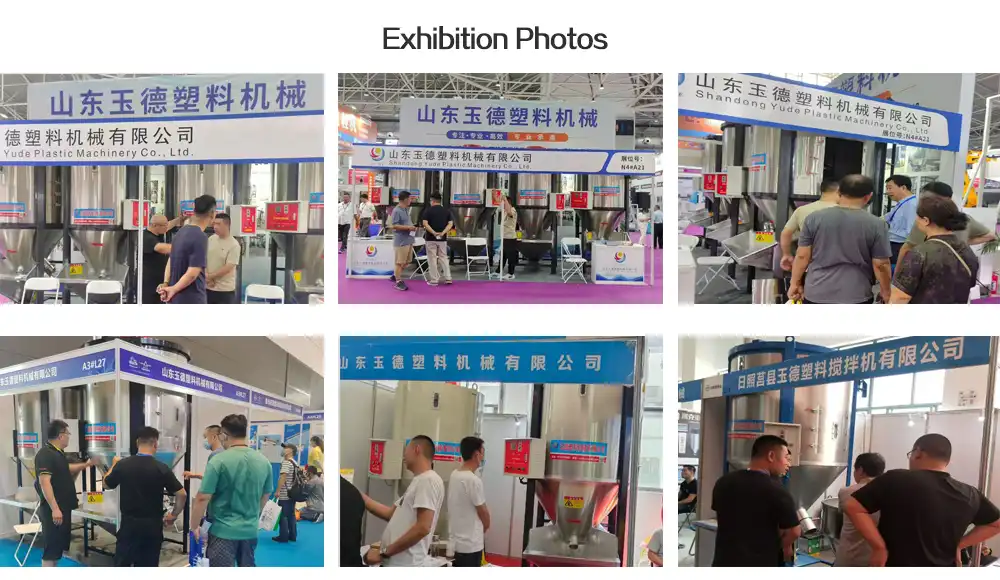
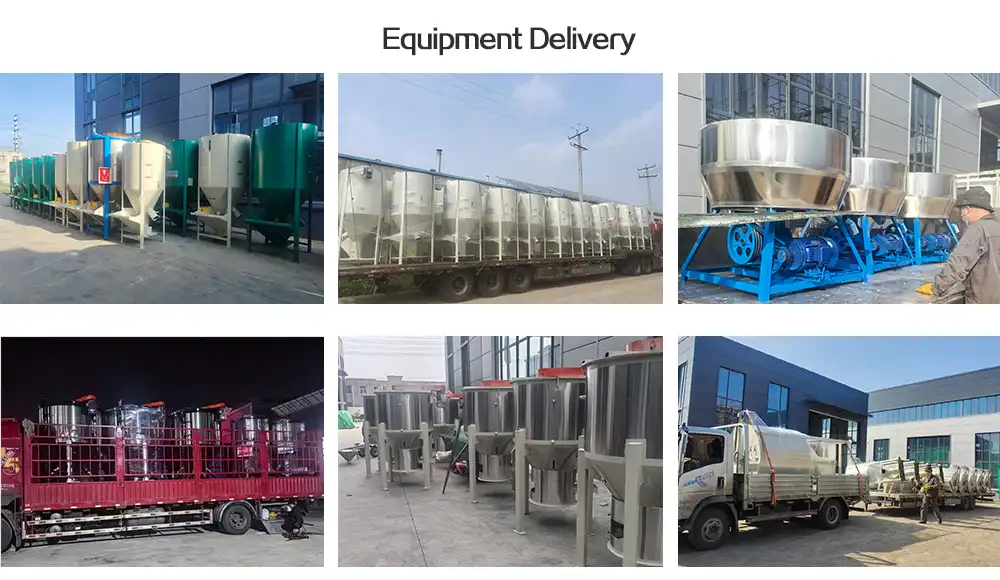
Yude Plastic Machinery has vertical mixers that are made to be precise, long-lasting, and efficient so they can meet your injection molding color mixing needs. Our product range has sizes from 300 kg to 10 tons, and the mixing consistency is better than 99%. It can be used for masterbatch blending, multi-color particle mixing, and incorporating regrind. As a well-known company that makes plastic material color mixers, we offer a range of customization choices, such as building them out of Q235 carbon steel or 304 stainless steel, making the control tools available in multiple languages, and making changes to the equipment that meet international standards. Our thorough quality control system and after-sales help available 7 days a week, 24 hours a day make sure that our equipment works well and that technical questions are answered quickly. Email our team at sales@yudemachinery.com to talk about your unique application needs and get a quote on tools that will help you mix colors more efficiently.
References
1. Society of Plastics Engineers (2023). "Color Masterbatch Dispersion in Thermoplastic Processing," SPE Technical Papers Series, Volume 69.
2. Richardson, T. & Lokensgard, E. (2022). Industrial Plastics: Theory and Applications, 7th Edition. Cengage Learning.
3. Plastics Technology Magazine (2024). "Equipment Selection Guide: Batch Mixing Systems for Injection Molding," January Issue, pp. 45-52.
4. Tadmor, Z. & Gogos, C.G. (2021). Principles of Polymer Processing, 3rd Edition. John Wiley & Sons.
5. International Journal of Polymer Processing (2023). "Mixing Efficiency Analysis in Vertical Spiral Mixers for Color Masterbatch Applications," Volume 38, Issue 3, pp. 267-279.
6. Rauwendaal, C. (2022). Polymer Mixing: A Self-Study Guide. Hanser Publications.
Learn about our latest products and discounts through SMS or email