- English
- French
- German
- Portuguese
- Spanish
- Russian
- Japanese
- Korean
- Arabic
- Greek
- German
- Turkish
- Italian
- Danish
- Romanian
- Indonesian
- Czech
- Afrikaans
- Swedish
- Polish
- Basque
- Catalan
- Esperanto
- Hindi
- Lao
- Albanian
- Amharic
- Armenian
- Azerbaijani
- Belarusian
- Bengali
- Bosnian
- Bulgarian
- Cebuano
- Chichewa
- Corsican
- Croatian
- Dutch
- Estonian
- Filipino
- Finnish
- Frisian
- Galician
- Georgian
- Gujarati
- Haitian
- Hausa
- Hawaiian
- Hebrew
- Hmong
- Hungarian
- Icelandic
- Igbo
- Javanese
- Kannada
- Kazakh
- Khmer
- Kurdish
- Kyrgyz
- Latin
- Latvian
- Lithuanian
- Luxembou..
- Macedonian
- Malagasy
- Malay
- Malayalam
- Maltese
- Maori
- Marathi
- Mongolian
- Burmese
- Nepali
- Norwegian
- Pashto
- Persian
- Punjabi
- Serbian
- Sesotho
- Sinhala
- Slovak
- Slovenian
- Somali
- Samoan
- Scots Gaelic
- Shona
- Sindhi
- Sundanese
- Swahili
- Tajik
- Tamil
- Telugu
- Thai
- Ukrainian
- Urdu
- Uzbek
- Vietnamese
- Welsh
- Xhosa
- Yiddish
- Yoruba
- Zulu
What is the batch mixing time of 300kg plastic particle mixer?
When looking at equipment for processing plastic, knowing how long a batch takes to mix has a direct effect on how you schedule your work and figure out your throughput. A 300kg vertical plastic particle mixer https://www.yudemachinery.com/vertical-plastic-particle-mixer-with-only-stirring-function/300kg-vertical-plastic-particle-mixerusually needs between 8 and 15 minutes per cycle to mix a batch of material. This depends on the material's particle size, density, and the specific mixing needs. This amount of time lets the vertical spiral mechanism reach levels of consistency higher than 98%, which makes sure that the whole batch has the same colour distribution and additive dispersion. This machine can be used in a variety of production situations because operators can change the cycle length based on whether they are mixing simple colour masterbatches with new resin or multiple additions with recycled materials.
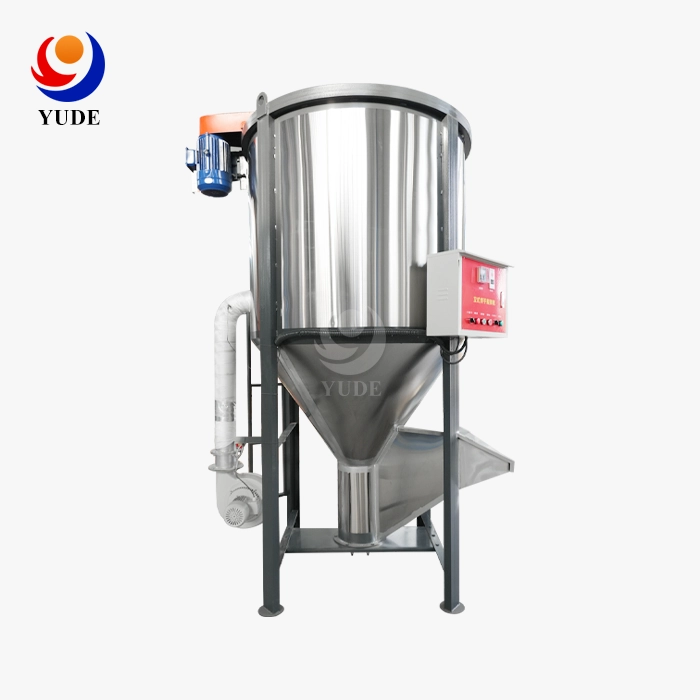
Batch Mixing Time in Vertical Plastic Mixers
Batch mixing time is the amount of time needed to make sure that all of the parts are evenly distributed during a single working run. This measure directly relates to production capacity and labour efficiency for procurement engineers who are looking at tools. A shorter mixing cycle that doesn't hurt quality means more products per day and better use of equipment further down the line, like extruders or injection moulding machines.
Technical Specifications Influencing Mixing Duration
Cycle economy is largely determined by the design architecture of vertical mixing systems. A 300kg vertical plastic particle mixer works with a vertical spiral screw that moves particles from the bottom of the hopper to the top, making a pattern that looks like a fountain. This way of ongoing circulation is very different from systems that use tumbling or paddles. The motor's power, which is usually between 3kW and 4kW for this size class, gives it enough force to keep the speed of spinning steady between 250 and 300 RPM without melting heat-sensitive masterbatches or resins like PVC.
The shape of the blade is also very important. Lifting speed and particle path are controlled by the helical screw pitch and flight angle. Well-designed mixers move materials quickly and gently so that pellets don't break apart, which can introduce fines that cause problems later on in the process. The machine's total capacity of about 500 litres allows for an efficient mixing volume above 80%, which can handle the 300kg vertical plastic particle mixer when working with normal plastic pellets that have bulk densities of 0.6 to 0.8 g/cm³.
How Vertical Mixing Mechanism Achieves Rapid Homogeneity
Vertical spiral upward circulation moves particles in three dimensions, which speeds up mixing compared to single-plane motion. As the screw turns, the materials are lifted in the middle and spread out in a radial pattern at the top. They then fall back down along the walls of the hopper. With this gravity-assisted return flow, natural randomisation happens, which breaks up the stratification that happens a lot with horizontal paddle mixers.
The efficiency is improved by the particle airflow behaviour inside the mixing box. The empty space above the screw lets lighter particles and flakes float for a short time before settling down, which helps them interact with heavy parts. This effect is very helpful when mixing new pellets with old regrind flakes or adding low-density ingredients like anti-static agents. This leads to more than 98% mixing regularity within the normal 8–15 minute window. This meets strict quality standards for car and electronics uses where colour consistency can't change between production runs.
Key Factors Affecting the Batch Mixing Time of Plastic Particle Mixers
How quickly a batch becomes homogeneous enough is affected by both the qualities of the materials and the choices for the operations. By knowing about these factors, operators can tailor cycles to the needs of each production run instead of depending on fixed timer settings that might not mix complex mixtures well enough or waste energy mixing simple blends too much.
Material Characteristics That Impact Cycle Duration
The way particles are mixed is greatly affected by their size distribution. When fine powders and standard pellets are mixed, they need longer cycles because the difference in density makes them more likely to separate. When mixing PE pellets and calcium carbonate powder for pipe extrusion, the lighter powder tends to float to the top unless the mixture is stirred for a long enough time to let gravity and circulation spread it out. On the other hand, homogeneity happens more quickly when pellets of similar size and density are mixed, like when natural ABS is mixed with pre-colored ABS masterbatch.
The amount of moisture adds another variable. Materials that absorb water, like Nylon (PA), can clump if they are stored wrong before they are mixed. These lumps don't want to break apart, so cycles need to be longer or pre-drying steps need to be done first. When certain plastics, like polystyrene, build up static electricity, particles can stick to the walls of the hopper. This keeps them from moving around and causes concentration differences in certain areas that make the 300kg vertical plastic particle mixer take longer to reach uniformity.
Operational Parameters and Equipment Design Variables
The ability to change the mixing speed lets you tailor the results to the sensitivity of the material. Slower speeds are better for heat-sensitive compounds because they keep the temperature rise from friction to a minimum, even if it means the cycle time is longer by a few minutes. Strong common resins, on the other hand, can handle higher speeds that shorten batch times and boost daily output. Temperature control is very important when adding heat-activated ingredients or when the weather changes with the seasons.
Performance varies between manufacturers because of changes made to specific pieces of equipment. When compared to simple screw designs, advanced blade geometry with optimised pitch angles and flight widths can cut mixing time by 20 to 30 percent. Safety features built in, like overload protection and limit switches on inspection doors, stop mistakes that could harm tools or lower the quality of the batch. Modern units have smooth stainless steel touch surfaces (SUS201 or SUS304 grades) that make it easy to clean quickly when switching materials. This cuts down on the time that isn't being used between runs and improves the general efficiency of production.
Best Practices and Maintenance Tips to Optimize Batch Mixing Time
To keep up performance, you need to pay attention to operational discipline and routine preventative maintenance. If you don't load your equipment correctly or keep up with your maintenance plans, even well-designed equipment will work less well.
Operating Guidelines for Consistent Cycle Performance
When load balancing is done right, mechanical stress is avoided and mixing behaviour is expected. If you fill the hopper more than its 300kg vertical plastic particle mixer capacity, the motor has to work against too much resistance, which could set off overload protection and make the cycle time longer. Under-filling below 200 kg, on the other hand, lowers circulation efficiency because the screw steps aren't fully engaged because there isn't enough material volume. The best mix between mechanical efficiency and material moving dynamics is to keep batch weights between 250 and 300 kg.
Cycle start-up sequence changes how well the initial mixing works. Adding all of the blend's parts at once at the start gives better results than adding materials one at a time during the cycle. When workers add the colour masterbatch after the base resin has been moving around for a few minutes, they have to restart the circulation pattern to get the final consistency. This makes the mixing time twice as long as it should be. This waste can be avoided by putting all the materials in the right order before starting the mixing.
Maintenance Checklist and How to Fix Common Problems
Regularly checking the mixing screw for wear stops it from losing its effectiveness over time. Over time, the spiral flights get rounder around the edges, which makes them less effective at lifting and makes it take longer to get circulation. When working with glass-fiber reinforced plastics, facilities should check the condition of screws every three months instead of once a year because they wear out faster. Keeping the original performance standards is possible by coats that don't wear down or changing the screw when the flight thickness drops by 15%.
Motor health tracking finds problems as they start to happen, before they become so bad that they stop production for good. Listening for strange bearing noise, checking for too much shaking, and making sure the amp draw stays the same while the machine is running can help find mechanical problems early. Every 500 hours of use, belt drive systems need to have their tension checked to make sure that slippage doesn't happen and lower the actual screw speed below the supposed RPM, which makes the mixing time longer without the user realising it.
Cleaning methods have a direct effect on the quality of the batches and the life of the tools. Material left over from earlier batches can contaminate the new batch and harden on surfaces, creating friction spots that slow down the mixing process. It takes about 20 minutes to use compressed air to get rid of the bulky material and then wipe down the stainless steel surfaces with approved chemicals. This keeps the surfaces clean between production runs and keeps the flow patterns smooth.
Ready to Optimize Your Plastic Processing Operations?
Yude Plastic Machinery has made vertical mixed equipment for plastic processing plants in thirty different countries. This equipment works reliably in tough production settings. Our 300kg vertical plastic particle mixer has constant cycle times of 8 to 12 minutes and keeps more than 98% of the materials mixed together evenly. Infection-free operation is guaranteed by the stainless steel construction, and the compact vertical form takes up about 40% less floor room than horizontal options. Our engineering team can customise your order by adding multilingual control interfaces and making changes that meet local electrical standards. This makes it easy to integrate with your current production lines. As a well-known maker and seller, we keep a large stock of spare parts and offer expert support for as long as your equipment is in use. Get in touch with our purchasing experts at sales@yudemachinery.com to talk about your specific mixing needs and get detailed specifications that are made to fit your production volume and material handling needs.
Conclusion
With a batch mixing time of 8 to 15 minutes, 300kg vertical plastic particle mixers are a good choice for tasks that need to mix PE, PP, ABS, PVC, and other similar materials consistently. The vertical spiral circulation mechanism quickly evens out the material and uses less energy than horizontal configurations. This makes these systems perfect for getting materials ready for injection moulding, feeding extrusions, and film blowing. Actual cycle length is affected by material properties, operational factors, and the quality of the equipment design, so it's important to do a lot of research before buying. Compared to other designs, vertical mixer technology is much better for facilities that want quick changeovers, minimal floor space use, and easy upkeep.
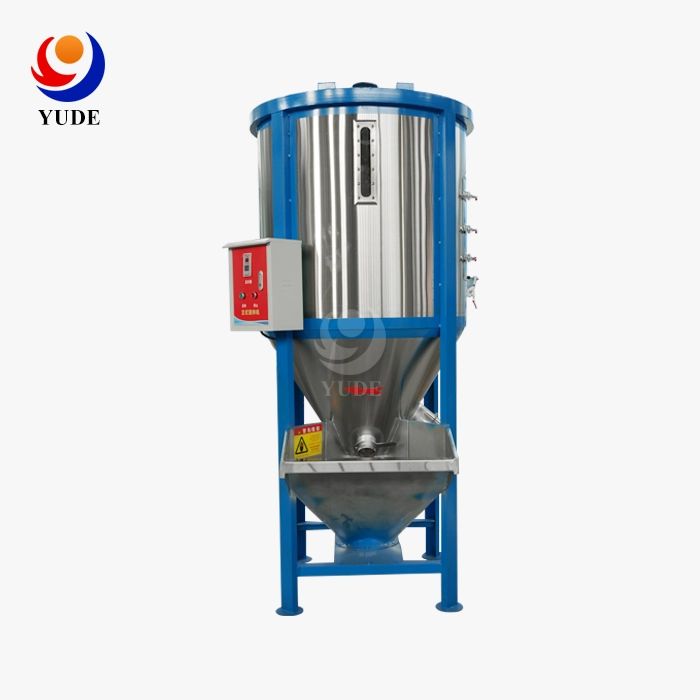
FAQ
What materials can a 300kg vertical mixer handle effectively?
These 300kg vertical plastic particle mixers can handle thermoplastic pieces like polyethylene, polypropylene, ABS, and PVC, along with the colour masterbatches and chemicals that go with them. The machinery works best with materials that have a bulk density of 0.6 to 0.8 g/cm³. It works well to mix fresh pellets with regrind flakes as long as the amount of regrind stays below 40% to keep the circulation working well. Wear-resistant screw coatings are needed for highly abrasive compounds with mineral fillers or glass fibres to keep working well over time.
How does mixing time affect overall production capacity?
Cutting the time for batch mixing from 15 minutes to 10 minutes improves daily output by about 33% when the equipment is running all the time. A factory with two 8-hour shifts can make 64 batches per day at 15-minute cycles instead of 96 batches per day at 10-minute cycles, which is an extra 9,600 kg per day. This estimate is based on the idea that the equipment further downstream can handle the extra material flow without blocking it.
Can I adjust mixing time for different material combinations?
Modern mixers with timers let you set the run to any length between 5 and 20 minutes. It only takes 8–10 minutes to make a simple colour mix of similar materials uniform, but 12–15 minutes may be needed for complicated formulas with a lot of different additives or a lot of regrind. The shortest amount of time needed for each recipe is found by running test batches and taking samples at regular intervals.
References
- Crawford, R.J., and Throne, J.L., Rotational Molding Technology, William Andrew Publishing, 2017.
- Tadmor, Z., and Gogos, C.G., Principles of Polymer Processing, John Wiley & Sons, 2013.
- Rauwendaal, C., Polymer Mixing: A Self-Study Guide, Hanser Publications, 2018.
- Manas-Zloczower, I., Mixing and Compounding of Polymers: Theory and Practice, Hanser Publishers, 2009.
- White, J.L., and Kim, E.K., Twin Screw Extrusion: Technology and Principles, Hanser Publications, 2010.
- Ottino, J.M., and Khakhar, D.V., "Mixing and Segregation of Granular Materials," Annual Review of Fluid Mechanics, Volume 32, 2000.
Learn about our latest products and discounts through SMS or email