- English
- French
- German
- Portuguese
- Spanish
- Russian
- Japanese
- Korean
- Arabic
- Greek
- German
- Turkish
- Italian
- Danish
- Romanian
- Indonesian
- Czech
- Afrikaans
- Swedish
- Polish
- Basque
- Catalan
- Esperanto
- Hindi
- Lao
- Albanian
- Amharic
- Armenian
- Azerbaijani
- Belarusian
- Bengali
- Bosnian
- Bulgarian
- Cebuano
- Chichewa
- Corsican
- Croatian
- Dutch
- Estonian
- Filipino
- Finnish
- Frisian
- Galician
- Georgian
- Gujarati
- Haitian
- Hausa
- Hawaiian
- Hebrew
- Hmong
- Hungarian
- Icelandic
- Igbo
- Javanese
- Kannada
- Kazakh
- Khmer
- Kurdish
- Kyrgyz
- Latin
- Latvian
- Lithuanian
- Luxembou..
- Macedonian
- Malagasy
- Malay
- Malayalam
- Maltese
- Maori
- Marathi
- Mongolian
- Burmese
- Nepali
- Norwegian
- Pashto
- Persian
- Punjabi
- Serbian
- Sesotho
- Sinhala
- Slovak
- Slovenian
- Somali
- Samoan
- Scots Gaelic
- Shona
- Sindhi
- Sundanese
- Swahili
- Tajik
- Tamil
- Telugu
- Thai
- Ukrainian
- Urdu
- Uzbek
- Vietnamese
- Welsh
- Xhosa
- Yiddish
- Yoruba
- Zulu
What is the barrel of plastic particle powder screw feeder made of?
The barrel of a plastic particle powder screw feederhttps://www.yudemachinery.com/plastic-particle-feeder/plastic-particle-powder-screw-feeder is usually made of 304, 316, or 316L stainless steel, or of carbon steel with a protective coating. Some designs add hardened steel, ceramic, or replaceable polymer liners where abrasive fillers such as calcium carbonate wear the wall. Flexible models use reinforced polymer or PTFE-based tubes. I choose the material by weighing corrosion risk, wear, cleaning needs, and budget. This guide explains each option, shows how barrel design affects dosing, and helps you write a clear specification before you request a quotation.
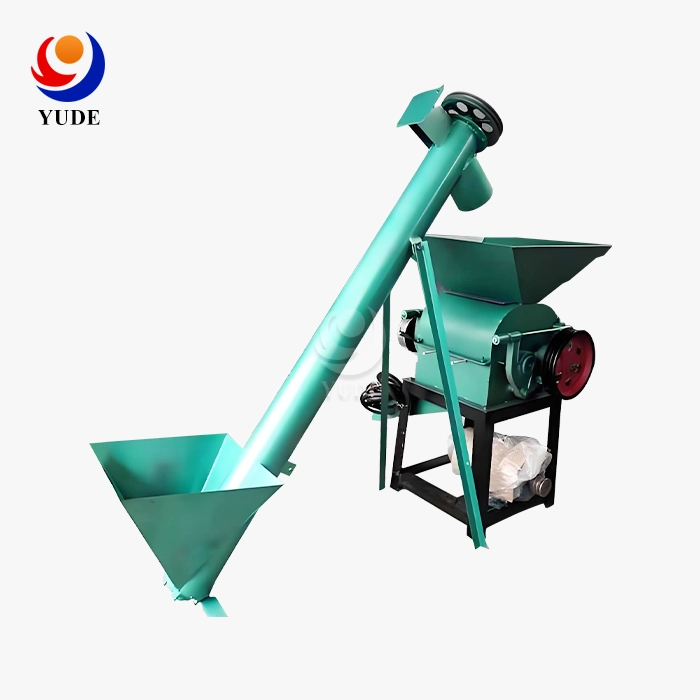
Barrel Materials Used in a Plastic Particle Powder Screw Feeder
Most buyers ask about steel grade first, so I start there. The right choice depends on moisture, abrasion, and how often you clean.
Stainless Steel Grades 304, 316, and 316L
Stainless steel is the most common choice for a plastic particle powder screw feeder when hygiene, cleaning, or moisture exposure matters. Grade 304 contains roughly 18% chromium and 8% nickel. These elements form a protective oxide film that resists rust in dry and mildly humid environments. Grade 316 adds about 2–3% molybdenum, which improves resistance to chlorides and some chemical additives. Grade 316L limits carbon to 0.03% for better weld performance, according to ASM International's stainless steel references. A smooth stainless bore also releases powder more easily, which helps during color changes. The trade-off is cost, so I recommend stainless where contamination or corrosion would cost more than the price difference.
Carbon Steel and Coated Barrels
Carbon steel offers a lower-cost barrel for dry, non-corrosive materials. Q235 is a common structural grade under China's GB/T 700 standard, with a minimum yield strength of 235 MPa in thinner sections. It gives a rigid wall that is easy to machine. On a plastic particle powder screw feeder that runs dry pellets, a coated carbon steel barrel keeps the first cost down. Plain carbon steel rusts when moisture reaches it, so a coating matters, especially in humid regions such as the U.S. Gulf Coast. An anti-stick inner coating also reduces residue on the wall. Carbon steel suits plants that run dry material inside controlled buildings.
Hardened Steel, Ceramic, and Polymer Liners
Mineral fillers wear metal surfaces. Calcium carbonate, glass fiber, and some flame retardants scrape the screw flights and barrel wall, which widens the gap between them over time. Plants that run these compounds often choose hardened tool steel, ceramic or carbide coatings, or a replaceable liner. With a liner, you replace only the liner instead of the whole barrel. Reinforced polymer and PTFE-based tubes appear in flexible screw conveyors, where routing freedom matters more than structural strength. The ASM Handbook on wear explains that abrasion depends on particle hardness, particle size, and contact pressure. For that reason, I ask for the filler type and particle size before I suggest a liner.
How Barrel Design Shapes Dosing in a Plastic Particle Powder Screw Feeder
Material is only half of the answer. Shape, clearance, and sealing decide how the barrel behaves after months of running.
Tube, Trough, and Modular Barrel Designs
A rigid cylindrical tube in a plastic particle powder screw feeder encloses the material and keeps screw clearances tight, which helps with fine powders and dust control. An open U-shaped trough gives easy visual inspection and quick cleaning, though it releases more dust. Modular barrels are split into removable sections with cleanout ports, inspection windows, and quick-release clamps. Operators can then reach the screw without a long teardown. Flexible conveying tubes bend around obstacles and suit layouts with limited floor space. I usually suggest modular tubes for plants that change formulas often, because every minute saved during changeover returns to production time. Pick the shape based on how often you clean and how fine your powder is.
Clearance, Wear, and Mass Flow
Feed rate in a plastic particle powder screw feeder follows a simple relationship. Mass flow equals the volume displaced per screw revolution, times the fill ratio, times bulk density, times screw speed. Barrel bore and screw clearance set the displaced volume. When abrasive fillers widen that gap, material slips backward, the fill ratio drops, and output falls at the same rate. On a PVC pipeline, that drift can show up as wall thickness variation. Powders can also compact or change bulk density in the hopper, so the formula gives a starting estimate and a trial with your real material gives the final answer. Loss-in-weight control corrects density changes by adjusting screw speed in real time.
Sealing, Dust Control, and Cleanout Access
Fine powder escapes through weak joints, so the shaft seal, gaskets, and enclosed inlet matter as much as the barrel metal. A dust-tight design protects bearings, keeps the shop floor cleaner, and limits color cross-contamination between machines. Dust also raises a safety question. In the United States, NFPA 652 requires facilities that handle combustible dust to complete a dust hazard analysis, and some plastic powders qualify. I advise buyers to confirm local compliance rules before they finalize a design. Cleanout ports and smooth internal welds reduce dead zones where powder packs and ages. Those dead zones are a common reason a feeder delivers uneven output after a few weeks.
Matching the Barrel to Your Plastic Processing Application
No single barrel suits every plant. These three scenarios show how the choice changes with the process.
Extrusion and Calcium Carbonate–Filled PVC Lines
A plastic particle powder screw feeder on a rigid PVC pipe or profile line doses resin powder, calcium carbonate, stabilizer, and color. Steady feed is the goal, since uneven dosing can change wall thickness and raise scrap. Calcium carbonate wears screws and barrels over months, so I look at hardened or lined barrels and at a spare-part plan for the screw and shaft seal. Continuous duty also calls for stable low-speed torque and a drive that holds speed under load. If the line already uses loss-in-weight control, the barrel must keep its clearance. The controller can correct for density changes, but it cannot correct for a worn, leaking tube.
Injection Molding and Masterbatch Dosing
Injection molding and film blowing use small feed rates and frequent color or additive changes. Compact barrels with quick-release clamps and polished stainless bores let operators clean between jobs in less time. Masterbatch pellets work well with a solid-flight screw and a tight barrel, while pigment powder needs an open spiral and agitation. Accuracy at low speed matters here, because a small error on a color additive changes the shade. I suggest running a sample of your actual pigment or additive before a purchase. Flow behavior differs sharply between titanium dioxide, carbon black, and organic pigments.
Fine Powders, Bridging, and Moisture
Bridging happens when powder locks into an arch above the screw and leaves the feeder running empty. Jenike's research on hopper flow in the 1960s showed that hopper angle, outlet size, and the powder's cohesive strength decide whether an arch forms. Barrel inlet geometry, smooth walls, and an agitator or flexible hopper wall all help prevent it. Moisture raises cohesion, so hygroscopic powders such as wood flour need sealed barrels and dry storage. I treat bridging as a design problem that the equipment should address, not a fault of the operator.
Comparing Plastic Particle Powder Screw Feeder Barrels and Writing a Specification
Once you know the options, the next step is to compare them fairly and put your needs in writing.
Stainless Steel vs. Carbon Steel vs. Flexible Tubes
No single material wins in every case. Stainless steel offers corrosion resistance and easy cleaning at a higher price. Carbon steel is economical and rigid for dry materials, provided a coating protects it. Flexible tubes simplify routing and installation, but they give less structural strength and may wear faster with abrasive fillers. Single-screw designs work well with free-flowing material, while twin-screw designs handle cohesive powder better. Volumetric feeders cost less and stay simple, while gravimetric feeders track mass more closely once calibrated. Match each choice to your material, your cleaning routine, and the cost of a stoppage.
What to Put in a Quotation Request
A precise request for a plastic particle powder screw feeder gets a precise quote. List the material name and grade, particle size, bulk density, moisture, flowability, abrasiveness, and process temperature. Then state the target feed rate range, barrel diameter and length, screw dimensions, speed range, inlet and outlet connections, and installation angle. Ask the supplier to name the steel grade, surface finish, coating, liner, weld standard, and seal type. Request capacity data, drawings, a spare-parts list, and a factory trial with your sample. I also ask suppliers to state the delivery schedule and testing steps in writing, so quotations compare on equal terms.
Common Selection Mistakes
Three mistakes appear often. Buyers pick the cheapest material and later face rust or fast wear. They use a granule feeder for cohesive powder, which leads to pulsing flow or a blocked inlet. They accept catalog capacity figures without testing at minimum and maximum feed rates. Others overlook cleanout access, dead zones, and changeover time. A better approach is to send representative samples, request a trial, review long-term operating conditions, and compare total cost of ownership, including screw replacement and downtime. One day of line stoppage can cost more than the price gap between two barrel materials.
Yude Plastic Machinery's Vertical Mixer and Its Q235 Barrel
Shandong Yude Plastic Machinery Co., Ltd. is a plastic mixer manufacturer, so I want to be clear about what our equipment does.
Structure and Core Parameters
Our vertical single-screw mixer blends pellets before they reach the next process. It is a mixer, not a dosing feeder. It uses a single-screw high-efficiency mixing structure that keeps material circulating smoothly, and its vertical design suits PE, PP, ABS, and PVC pellets. Mixing uniformity reaches at least 98%, the stirring shaft runs at 30 to 60 r/min, and the effective volume can be customized by model. Our range covers vertical mixers from 600 kg to 10 tons, small mixers of 300 to 500 kg, stainless steel mixers, and vertical color mixers.
Q235 Carbon Steel Barrel with Anti-Stick Coating
The barrel of our vertical mixer is made of Q235 carbon steel, and the inner wall carries an anti-stick coating that limits pellet residue and speeds up color changes. The screw blades are wear-resistant to extend equipment life. A three-phase asynchronous motor, with power matched to the tonnage, drives a heavy-duty gear reducer for stable running. This answers the title question for our own equipment: coated carbon steel suits dry pellet blending. For applications that need stainless steel, we also build stainless steel mixers. If your process calls for a different material, send us the requirement and we will review it.
Where the Mixer Fits in Your Production Line
The mixer suits pre-processes such as plastic granulation, injection molding, and film blowing, and it handles pellet color mixing and modification. It works with production lines of different capacities, so small and large plants can each choose a suitable size. We export to more than 30 countries and regions, and we offer customized multilingual operation interfaces and equipment modification to local industry standards. Our 7×24-hour after-sales system, backed by local service partners overseas, supports installations abroad. Buyers who use a plastic particle powder screw feeder downstream can send us their layout and material details, and we will suggest a mixer size that matches their batch rhythm.
Conclusion
The barrel of a plastic particle powder screw feeder is usually stainless steel in grades 304, 316, or 316L, or coated carbon steel. Hardened steel, ceramic, or replaceable liners are added when abrasive fillers such as calcium carbonate wear the wall. Stainless steel favors corrosion resistance and cleaning, while carbon steel keeps costs down for dry materials. Barrel construction, clearance, sealing, and cleanout access decide how steady the feed rate stays over time, and trials with real material confirm the result. Each application places different demands on the wall, from PVC extrusion to masterbatch dosing and fine powders. A written specification that names the grade, finish, coating, and liner makes supplier comparison fair. Yude's vertical pellet mixer uses a Q235 carbon steel barrel with an anti-stick inner coating for dry blending.
FAQ
What is the best barrel material for a plastic particle powder screw feeder?
No single material fits every job. I recommend 304 or 316L stainless steel for moisture, hygiene, or frequent color changes, and coated carbon steel for dry, non-corrosive pellets. Abrasive fillers call for hardened steel or a replaceable liner.
Does every feeder need a stainless steel barrel?
No. Carbon steel with a protective coating works well for dry granules in a controlled building. Stainless steel pays back where rust, washdown, or contamination would create costly problems.
How do I size the feed rate for my material?
Multiply displacement per revolution by fill ratio, bulk density, and screw speed. Then confirm the result with a trial using your actual powder, because bridging and compaction change the real output.
Can one feeder handle both pellets and powder?
It can, but not at its best. Pellets suit a solid-flight screw with tight clearance, and cohesive powder suits an open spiral. Interchangeable screw and tube sets on the same drive handle both more efficiently.
Talk to Yude Plastic Machinery About Your Plastic Particle Powder Screw Feeder Needs
Yude Plastic Machinery welcomes your questions. Whether you are comparing a plastic particle powder screw feeder supplier or planning the pellet mixing stage before it, send your material type, particle size, target capacity, and line layout to sales@yudemachinery.com. Our engineers will review your process and recommend a suitable configuration, with multilingual interfaces and customization available. Visit yudemachinery.com for the full mixer range.
References
1. Powders and Bulk Solids: Behavior, Characterization, Storage and Flow (Schulze), Springer, 2021
2. Storage and Flow of Solids, Bulletin 123 (Jenike), University of Utah Engineering Experiment Station, 1964
3. ASM Handbook, Volume 18: Friction, Lubrication, and Wear Technology, ASM International, 1992
4. Stainless Steels, ASM Specialty Handbook (Davis), ASM International, 1994
5. Perry's Chemical Engineers' Handbook, 9th Edition, McGraw-Hill, 2019
6. Handbook of Fillers, 4th Edition (Wypych), ChemTec Publishing, 2016
Learn about our latest products and discounts through SMS or email