- English
- French
- German
- Portuguese
- Spanish
- Russian
- Japanese
- Korean
- Arabic
- Greek
- German
- Turkish
- Italian
- Danish
- Romanian
- Indonesian
- Czech
- Afrikaans
- Swedish
- Polish
- Basque
- Catalan
- Esperanto
- Hindi
- Lao
- Albanian
- Amharic
- Armenian
- Azerbaijani
- Belarusian
- Bengali
- Bosnian
- Bulgarian
- Cebuano
- Chichewa
- Corsican
- Croatian
- Dutch
- Estonian
- Filipino
- Finnish
- Frisian
- Galician
- Georgian
- Gujarati
- Haitian
- Hausa
- Hawaiian
- Hebrew
- Hmong
- Hungarian
- Icelandic
- Igbo
- Javanese
- Kannada
- Kazakh
- Khmer
- Kurdish
- Kyrgyz
- Latin
- Latvian
- Lithuanian
- Luxembou..
- Macedonian
- Malagasy
- Malay
- Malayalam
- Maltese
- Maori
- Marathi
- Mongolian
- Burmese
- Nepali
- Norwegian
- Pashto
- Persian
- Punjabi
- Serbian
- Sesotho
- Sinhala
- Slovak
- Slovenian
- Somali
- Samoan
- Scots Gaelic
- Shona
- Sindhi
- Sundanese
- Swahili
- Tajik
- Tamil
- Telugu
- Thai
- Ukrainian
- Urdu
- Uzbek
- Vietnamese
- Welsh
- Xhosa
- Yiddish
- Yoruba
- Zulu
What is a spiral mixer?
When buying experts look at plastic processing equipment; they often come across different types of mixers that are hard to tell apart. Out of these, the single spiral plastic particle mixer stands out because it is upright and consistently mixes the particles the same way. This machine has a cylinder-shaped chamber with a single spiral auger inside it. The auger lifts plastic pellets from the bottom to the top, where they fall in a fountain-like pattern. This constant flow makes mixing more even than 98% of the time, which makes it perfect for mixing new resins with color masterbatches, additives, or recovered material. The gentle tumbling action stops pellets from breaking and dust from forming, which are two common issues with high-shear horizontal mixers. This makes sure that your injection molding or extrusion processes always get material that is uniform and free of defects.
Understanding Spiral Mixers: Definition and Core Features
What Makes a Spiral Mixer Different from Other Blending Systems?
A single spiral plastic particle mixer is different because it has a vertical tube that is either shaped like a cone or a cylinder and holds an Archimedes screw in the middle. Instead of using violent horizontal shearing like twin-shaft paddle mixers do, the spiral design uses both gravity flow and mechanical lifting. As the spinning auger moves material up the barrel wall, it spreads it out at the top before gravity pulls the pieces back down. This makes a cyclonic circulation pattern that naturally separates stacked layers and spreads out parts evenly. Spiral mixers take up less floor space than horizontal ribbon blenders, which is very helpful in factories that don't have a lot of room for production. They are also easier to load and empty because they have hatches on top.
Key Structural Components That Drive Performance
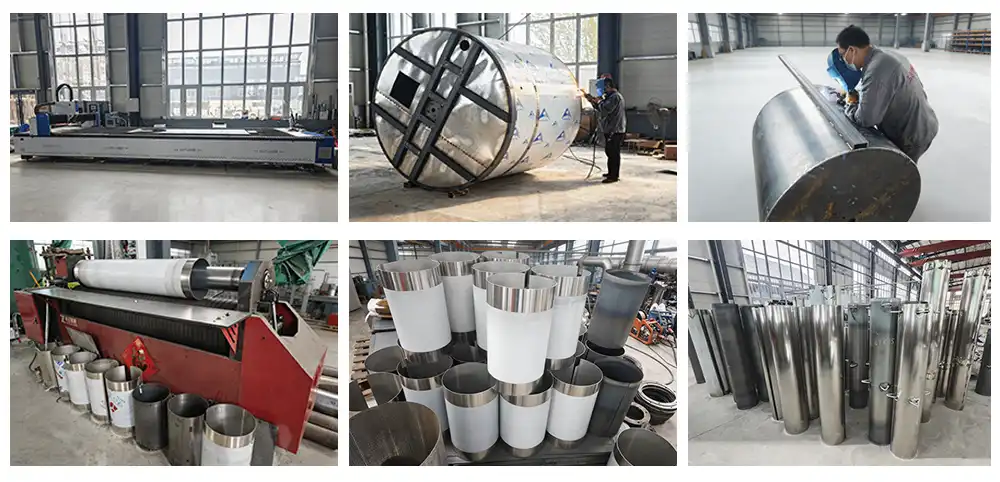
The screw blade is the most important part of any single spiral plastic particle mixer. It is usually made of stainless steel or carbon steel that has been coated to make it less likely to break down. Yude Plastic Machinery makes its barrels out of Q235 carbon steel and coats the inside with anti-stick treatments that keep materials from sticking during long periods of use. The stirring shaft spins at a speed of 30 to 60 turns per minute, which is meant to be modest so that output and energy economy are both good. A three-phase asynchronous motor and a heavy-duty gear reducer work together below the barrel to provide stable power that can handle batches of up to 10 tons. At the end of the shaft, dust-seals or mechanical seals separate the bearing assembly from the mixing room. This design feature keeps fine powder from getting into the bearings and increases their life by several years.
Why Mixing Uniformity Matters in Plastic Processing?
Achieving mixing consistency of 98% or more has a direct effect on the quality of production further down the line. In injection molding, masterbatch distribution that isn't uniform shows up as color streaks on seats for cars or housings for gadgets, which requires expensive rework. In pipe extrusion, uneven stabilizer distribution lowers the burst pressure ratings, which could lead to not following the rules and having to return the product. The constant vertical movement of the spiral mixer gets rid of dead zones, which are areas where particles don't move or interact with each other. This makes sure that the additives cover every pellet evenly. This dependability means better process control, less waste, and a better image for the brand among OEMs that want supply chains with no defects.
How Do Single Spiral Plastic Particle Mixers Work and What Are Their Applications?
Operating Mechanics: From Bottom Lift to Top Dispersion
When the screw blade touches material at the cylindrical base of the barrel, the operating cycle starts. Helical flights act as slanted planes that lift pellets along a circular path as the auger turns. When particles reach the upper dispersion zone, centrifugal force and motion push them outward, where they can fall easily along the inner wall that is smooth. This flow effect keeps happening, and each turn flips the particles around and makes them more likely to touch each other. The low-shear setting keeps the consistency of the pellets, which is very important when working with brittle materials like ABS or glass-fiber-reinforced compounds. Depending on the density of the material and the percentage of the additives, mixing can take anywhere from 15 to 25 minutes. This gives production schedulers a way to predict when each run will be ready.
Diverse Industrial Applications Across Polymer Sectors
Spiral mixers can be used in a number of different B2B situations, each with its own specific technical needs:
Masterbatch Blending for Injection Molders: Single spiral plastic particle mixers are used by automotive tier-one providers to mix polypropylene (PP) pellets with 1-3 percent color masterbatch so that internal trim panels look the same. The gentle mixing stops the building of electrostatic charge that can clump pigment concentrates, which happens a lot when working with clear or transparent grades.
Recycling and Regrind Management: HDPE flakes made from recovered materials have a rough shape and less bulk density than pellets made from fresh materials. Spiral mixers even out these differences and feed extruders with a stable melt flow index. This keeps pipe wall thickness errors within ±0.1 millimeters during production runs that last several hours.
PVC Pipe and Profile Extrusion: Large models can handle mixtures of PVC glue, calcium carbonate fillers, heat stabilizers, and lubricants for PVC Pipe and Profile Extrusion. The mixer's ability to handle high-friction materials without producing too much heat keeps thermally sensitive additives from breaking down, which keeps the end product's ability to withstand impact and weather.
These examples show how the single spiral plastic particle mixer structure makes it possible for materials to move smoothly, helping with pre-processes like plastic grinding, injection molding, and film blowing on production lines with different capacities.
Comparing Single Spiral Mixers to Other Plastic Particle Mixers
Single Spiral vs. Twin Spiral: When Simplicity Wins
Twin spiral mixers use screws that spin counterclockwise and cross each other, making the cutting action stronger. This speeds up the mixing of thick pastes or doughs, but it adds extra work for plastic pellets that don't stick together. Single spiral designs need less upkeep because they only have one drive unit that needs to be oiled and inspected. They also use about 20% less energy per kilogram of mixed material. When procurement managers look at the total cost of ownership, the single-spiral design gives them the best return on investment (ROI) when handling normal engineering resins. They should save the twin-spiral systems for more complex tasks involving sticky or cohesive compounds.
Single Spiral vs. Paddle Mixers: Handling Bulk Density Variations
The single spiral plastic particle mixer works best with a vertical spiral structure, while horizontal paddle mixers work best for quick batch cycles but have trouble with materials that have big changes in bulk density, like new pellets mixed with low-density regrind flakes. Because paddles can push lighter ingredients to the top, mixing times need to be longer to make up for it. The vertical spiral structure uses gravity to move particles around the whole volume all the time, which automatically stops stratification. This natural benefit cuts the time needed to mix by up to 30% in recycling uses, which means that more can be done without having to buy new equipment.
Cost-Effectiveness and Return on Investment
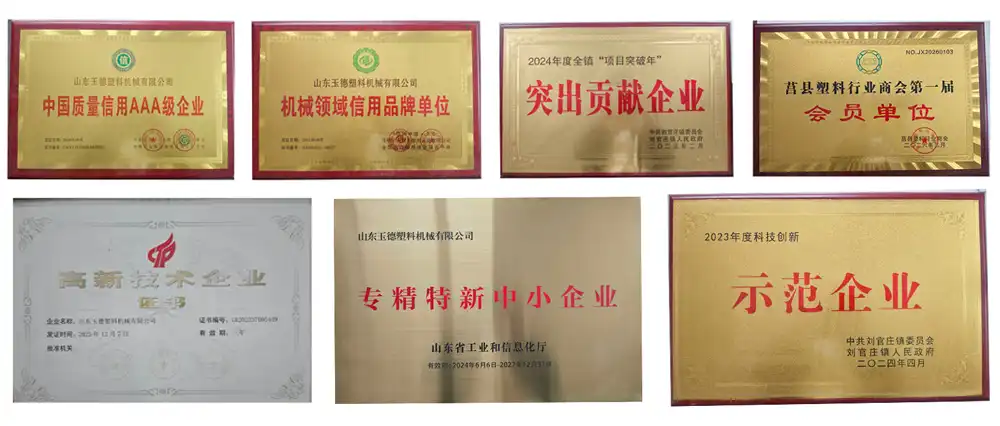
Prices for single spiral mixers on the market range from $8,000 for 300-kilogram models to $35,000 for 10-ton industrial units. The prices depend on the type of material used and the automation features. The price of one ton of mixed material drops below fifty cents when spread out over five years. This is a small amount of the cost of buying scrap from bad mixing. This value is increased by economies of scale at Yude Plastic Machinery, which uses batch production to give low prices without lowering the quality of the build. The company has a global presence in more than 30 countries in Southeast Asia, the Middle East, and South America. This makes it easy to get spare parts and localized expert help, which further protects your business's ability to keep running.
Conclusion
When purchasing engineers want to mix polymers in a way that is regular, easy to use, and low-cost; the single spiral plastic particle mixer has been shown to work well. Its vertical screw design gets better uniformity than horizontal options while taking up very little floor room, which means it can be used in any-sized facility. These mixers work well in a wide range of situations, from masterbatch blending to recycling. They have three-phase motors that use little energy and a design that doesn't wear down easily. Quality control, fast R&D iteration, and global after-sales support are all things that Yude Plastic Machinery does to make itself a reliable partner for North American buyers looking for long-lasting, legal equipment. You can get a mixer that improves product quality, cuts down on waste, and makes you more competitive by making sure that technical specs match production needs and using the knowledge of your provider.
Partner with a Trusted Single Spiral Plastic Particle Mixer Supplier
Yude Plastic Machinery is ready to help your plastic processing processes by making strong, uniform mixing equipment that fits your needs. Our vertical plastic mixers range from 300 kg to 10 tons and are made of Q235 carbon steel. They have anti-stick finishes and can be made in any amount to fit your production needs. We have a history of helping thousands of customers in the United States and other countries. Our dedication to quality control, quick expert support, and full after-sales service guarantees that your investment will be worth it in the long run. Get in touch with our team at sales@yudemachinery.com to talk about your material mixing problems and get a full quote. Yude's flexible production and global logistics network make buying easy, whether you need changes to meet compliance standards, interfaces that work with multiple languages, or fast shipping to North America. Find out how working with an experienced single spiral plastic particle mixer supplier can help you make your products more consistent and run your business more efficiently.
FAQ
How does the mixer prevent bearing failure from powder infiltration?
At the shaft end of high-quality designs, there are separated bearing assemblies with mechanical seals or air-purge systems that create a physical barrier between the mixing room and the oiled parts. Fine powders can't get into the bearing race because of this separation. This keeps the bearings from prematurely seizing up and extends the time between services.
What mixing duration is required for a 1-ton batch?
Standard granule-to-granule mixing takes 15 minutes to make the mixture equal. When small chemical powders that need to stick to surfaces are added, cycles are extended to 20–25 minutes to make sure that the powders are spread evenly across all pellet surfaces.
Can spiral mixers also dry plastic materials?
Many types can be used as both dryers and mixers because they have heating parts and exhaust fans built in. As the screw pulls the material, hot air flows through it, removing surface wetness while mixing it. This saves time for processors who work in places with a lot of humidity.
How should operators clean the mixer during color changeovers?
The equipment has side servicing windows and a clean-out door at the screw base. The smooth inside can be cleaned with an air gun or water, and turning the screw counterclockwise gets rid of tough waste, keeping production runs from becoming contaminated with each other.
References
1. Crawford, R. J., & Throne, J. L. (2002). Rotational Molding Technology. William Andrew Publishing.
2. Tadmor, Z., & Gogos, C. G. (2006). Principles of Polymer Processing (2nd ed.). John Wiley & Sons.
3. Rauwendaal, C. (2014). Polymer Mixing: A Self-Study Guide. Hanser Publications.
4. Harnby, N., Edwards, M. F., & Nienow, A. W. (1992). Mixing in the Process Industries (2nd ed.). Butterworth-Heinemann.
5. White, J. L., & Kim, E. K. (2010). Twin Screw Extrusion: Technology and Principles. Hanser Gardner Publications.
6. Paul, E. L., Atiemo-Obeng, V. A., & Kresta, S. M. (2004). Handbook of Industrial Mixing: Science and Practice. Wiley-Interscience.
Learn about our latest products and discounts through SMS or email