- English
- French
- German
- Portuguese
- Spanish
- Russian
- Japanese
- Korean
- Arabic
- Greek
- German
- Turkish
- Italian
- Danish
- Romanian
- Indonesian
- Czech
- Afrikaans
- Swedish
- Polish
- Basque
- Catalan
- Esperanto
- Hindi
- Lao
- Albanian
- Amharic
- Armenian
- Azerbaijani
- Belarusian
- Bengali
- Bosnian
- Bulgarian
- Cebuano
- Chichewa
- Corsican
- Croatian
- Dutch
- Estonian
- Filipino
- Finnish
- Frisian
- Galician
- Georgian
- Gujarati
- Haitian
- Hausa
- Hawaiian
- Hebrew
- Hmong
- Hungarian
- Icelandic
- Igbo
- Javanese
- Kannada
- Kazakh
- Khmer
- Kurdish
- Kyrgyz
- Latin
- Latvian
- Lithuanian
- Luxembou..
- Macedonian
- Malagasy
- Malay
- Malayalam
- Maltese
- Maori
- Marathi
- Mongolian
- Burmese
- Nepali
- Norwegian
- Pashto
- Persian
- Punjabi
- Serbian
- Sesotho
- Sinhala
- Slovak
- Slovenian
- Somali
- Samoan
- Scots Gaelic
- Shona
- Sindhi
- Sundanese
- Swahili
- Tajik
- Tamil
- Telugu
- Thai
- Ukrainian
- Urdu
- Uzbek
- Vietnamese
- Welsh
- Xhosa
- Yiddish
- Yoruba
- Zulu
How do Industrial Plastic Agitators Work?
Industrial vertical shaft granule agitator plastic mixers move fluids around in mixing tanks by sending rotational energy through motor-driven rods. Impellers, also called blades, are fixed on vertical shafts and spin at controlled speeds. This creates circulation patterns that lift materials from the bottom of the container and spread them out evenly throughout it. These mixing devices are designed to work in acidic conditions where metal parts would not last. Because of this, they are essential in chemical processing, pharmaceutical manufacturing, and blending plastic pellets.
How Does an Industrial Plastic Agitator Work?
Industrial Vertical shaft granule agitator plastic mixers made with polymer-based parts is very important in many manufacturing fields where keeping chemicals safe and preventing contamination are very important. This specialized plastic agitator uses both mechanical engineering and material science to make sure that blending works well even when the process conditions are tough.
Fundamental Operating Principles
Vertical shaft granule agitator plastic mixers work by turning the power from an electric engine into controlled rotating motion. A three-phase asynchronous motor is linked to a reduction gearbox, which slows the motor down while boosting power. This set-up lets the shaft spin at speeds usually between 30 and 80 revolutions per minute, which is just the right speed for moving pellets around without causing too much shear force, which could damage delicate materials.
The vertical shaft goes into the mixing room, where blades or screws that are carefully made for that job work with the product. Whenever the shaft turns, materials close to the blade's surface are lifted off the room floor and moved to higher areas. Then, gravity pulls these higher materials back down along the room walls, creating a continuous flow pattern that mixes everything well, like a fountain.
Essential Components and Material Integration
Modern vertical mixing systems are made up of several parts that work together as a whole. The motor, coupling mechanism, and reduction gears that make up the drive system were all chosen based on the viscosity and volume needs of the application. The mixing box can be made of either Q235 carbon steel, which is cheaper, or 304 stainless steel, which is better at resisting corrosion and meeting cleanliness standards.
The shape of the blades is very important for how well they mix. Angled surfaces in high-efficiency designs make it easier for materials to move while reducing dead zones where they could get stuck. The thicker blade design makes it last longer in rough working conditions like those that come up when working with glass-filled resins or mineral-loaded compounds. At the bottom of the room, the shaft goes through protected bearings. Dust seals keep granules from getting in, which would cause the bearings to wear out too quickly or stop working.
Key Design Principles of Plastic Agitators for Industrial Use
To make a vertical shaft granule agitator plastic mixer that works well, you have to balance a lot of technical factors and take into account the unique features of plastic agitators. These design factors have a direct effect on how long equipment lasts, how well it mixes, and how safe it is to use.
Material Selection and Chemical Compatibility
When used in acidic conditions, polymer parts are clearly better than metal ones. At temperatures up to 100°C, polypropylene is very resistant to acids, alkalis, and organic solvents. This means it can be used in tanks for chemical processing. The temperature range is increased to 140°C by PVDF (polyvinylidene fluoride), which also makes it stronger for tough uses. With these materials, you don't have to worry about electrochemical breakdown, galvanic reactions, or metal ions getting into sensitive medicinal formulas and contaminating them.
When material specifications are made, extra care is taken with the contact areas inside mixing tanks. Surfaces that are smooth and have a roughness number below 0.8 micrometers keep product from building up and make it easier to clean thoroughly between batches. This is especially important when working with light-colored pellets, since even small amounts of contamination can make final goods look bad.
Blade Geometry and Flow Dynamics
A lot of study in industrial fluid dynamics has been done on the link between the shape of the blades and how well they mix. The blade pitch angle changes the vertical motion component that materials experience. Steeper angles increase pulling force but may also use more power. The width of the blade affects how much material it moves with each turn. Wider blades can move more material, but they need drive systems that can handle more power.
Now, computational fluid dynamics modeling helps make the best use of these geometric factors. Engineers can model flow patterns in suggested designs to find dead spots or circulation paths that don't work well before the designs are made. This method has led to the creation of high-efficiency blade shapes that can mix materials evenly 98% of the time or more in shorter cycle times.
Shaft Engineering and Vibration Control
The part of the vertical shaft granule agitator plastic mixer that is physically stressed the most is the vertical shaft. When you get the right size, you take into account both the bending moments caused by uneven material distribution and the rotational loads that come from mixing resistance. Dynamic balancing processes make sure that the spinning masses stay centered on the shaft axis. This stops vibrations that would speed up bearing wear or weaken the structure.
Bottom bearing units need strong seals to keep granules out. Dual-lip seals and labyrinth shapes work together to make multiple shields that stop particles from getting in. Greasing the bearings on a regular basis—usually every 40 to 100 hours of operation—keeps them lubricated and flushes out any contaminants that get past the outer seals. Monitoring vibration levels during operation lets you know early on when bearings are wearing out, so you can plan repair before a major failure happens.
Comparison of Plastic Agitators with Metal Agitators
Chemical resistance is the main benefit that makes vertical shaft granule agitator plastic mixers popular. Stainless steel surfaces can get pitting, stress corrosion cracking, or just dissolve in places where acidic catalyst solutions, chlorine solvents, or harsh cleaning agents are used. In spite of these chemical attacks, polymer parts stay the same size and shape, and their surfaces stay intact for long periods of time.
Corrosion Resistance and Service Life
This resistance to corrosion directly leads to longer periods between upkeep and less use of extra parts. Facilities say that properly kept polymer agitators can work for more than 10 years in harsh chemical environments, while steel units in the same situations need to be replaced every 3 to 5 years. The edge in lifetime costs grows when you consider the shorter downtime needed for replacing parts.
Economic Analysis and Total Cost of Ownership
The cost to buy a polymer mixing system is usually 15 to 25 percent less than the cost of buying a stainless steel unit with the same capacity. The difference in price is due to lower material costs and easier production methods for polymer parts. When comparing properly sized units, there isn't much difference between technologies in how much energy they use during operation. Motor power needs increase with mixing volume and material viscosity rather than agitator building material.
Maintenance costs are lower for polymer equipment because it needs fewer new parts and is easier to service. Since there is no corrosion, there is no need for safe coatings or cathodic protection devices. Less aggressive chemicals and faster touch times are needed for cleaning, which cuts down on the cost of consumables and production slowdown. When procurement professionals figure out the total cost of ownership over five years, polymer agitators often show savings of 20–30% compared to metal alternatives.
Conclusion
As material science progresses and process needs get stricter, industrial mixing technology keeps changing. Plastic agitators have become the best choice for many situations where chemical protection, contamination avoidance, and cost-effectiveness are important factors in choosing tools. Procurement pros can choose systems that regularly meet performance goals over long service lives by understanding operational principles, design parameters, and maintenance requirements.
The vertical axial-flow configuration is a great example of design optimization because it combines efficient patterns of material flow with easy maintenance access and a small footprint. When you choose the right provider, you can take advantage of their manufacturing knowledge and quick support services that go beyond just delivering the equipment. As markets change around the world, global supply lines have to adapt too. Building relationships with strong suppliers helps businesses meet current needs and take advantage of future growth possibilities.
Partner with a Trusted Plastic Agitator Manufacturer
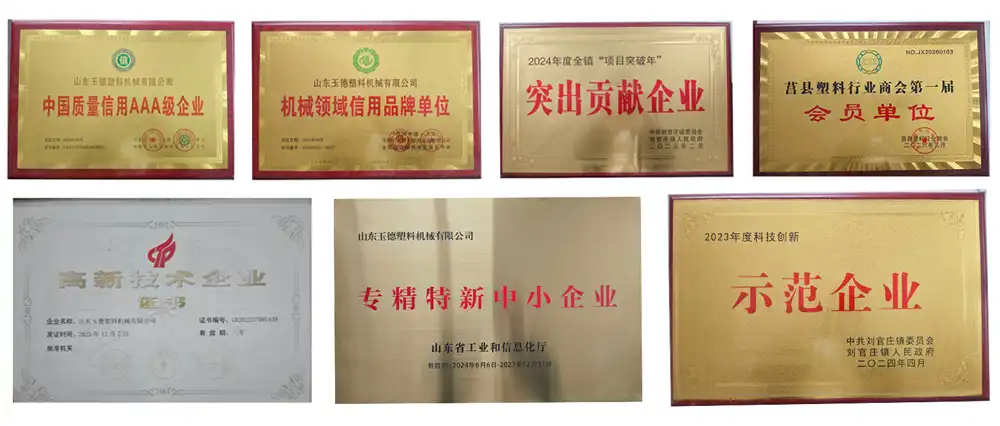
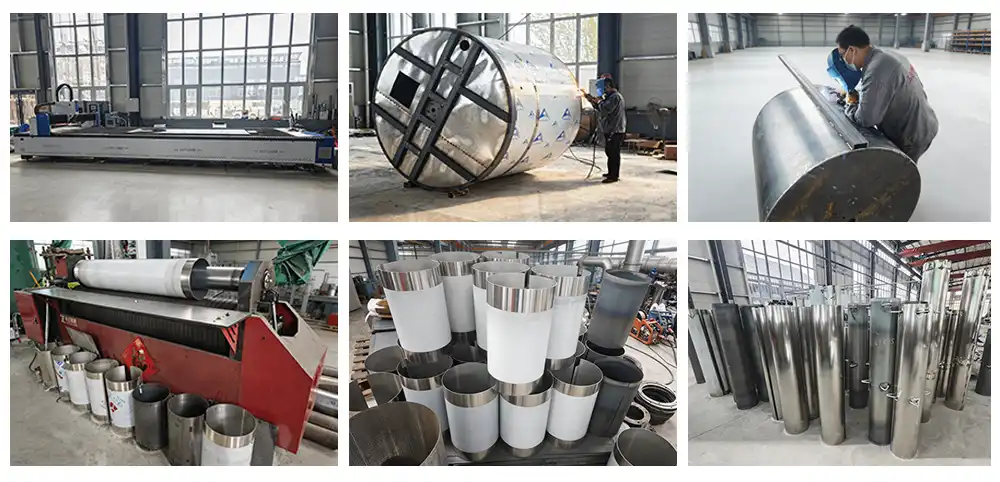
Yude Plastic Machinery has made a name for itself as a reliable maker that serves procurement workers around the world who need reliable vertical mixing solutions. Our engineering team has a lot of experience with a wide range of applications, including processing plastics, mixing chemicals, and making medicines. They can turn different needs into equipment specs that work best for each situation. Our full production system makes sure that quality control is always in place, from cutting out parts to checking the final assembly.
To talk about your unique mixing needs, please email our expert sales team at sales@yudemachinery.com. We give you specific advice on how to choose the right tools, customization choices that fit the needs of your process, competitive quotes, and clear pricing structures. Our vertical shaft granule agitator plastic mixer supplier can do more than just deliver equipment. They can also help with installation, train operators, and provide quick after-sales service to make sure that your mixing activities continue to perform at a high level.
FAQ
Can plastic agitators handle abrasive materials?
When blades are made with thicker materials and the equipment is running at the right rotating speeds, polymer mixing parts can handle fairly rough materials. Glass-filled resins and mineral-loaded materials do speed up blade wear compared to empty polymers, so they need to be checked more often and replaced earlier. For places that work with very rough materials, they should look into stronger blades or ceramic-reinforced polymer alloys, which last longer and are better at resisting chemicals.
What temperature limitations apply to polymer agitators?
Standard plastic construction can handle continuous use up to 100°C, and short trips to 120°C are okay for starting up or cleaning processes. The choice of PVDF material increases the operating range to 140°C constant duty. For uses that need higher temperatures, you need to use different materials or add cooling features that keep the parts' temperatures within their stated limits. Most uses for mixing plastic pellets happen at room temperature, which is well within the range of temperatures that polymers can handle.
What is the difference in mixing time between patterns that are vertical and horizontal?
Because the circulation patterns are better, vertical axial-flow setups usually reach the goal of consistency 20–30% faster than similar horizontal designs. Vertically rotating a screw or blade makes a fountain effect that moves a lot of material quickly without using complicated paddle shapes. For most pellet blending jobs, the actual mixing time is between 3 and 8 minutes, but this varies on the size of the batch, the qualities of the material, and the level of uniformity that is needed.
References
1. Harnby, N., Edwards, M.F., and Nienow, A.W. (2000). Mixing in the Process Industries, 2nd Edition. Butterworth-Heinemann Publishers.
2. Paul, E.L., Atiemo-Obeng, V.A., and Kresta, S.M. (2004). Handbook of Industrial Mixing: Science and Practice. John Wiley & Sons, Inc.
3. Oldshue, J.Y. (1983). Fluid Mixing Technology. McGraw-Hill Chemical Engineering Series.
4. Ottino, J.M. and Khakhar, D.V. (2000). Mixing and Segregation of Granular Materials. Annual Review of Fluid Mechanics, Vol. 32, pp. 55-91.
5. Cullen, P.J. (2009). Food Mixing: Principles and Applications. Wiley-Blackwell Publishing.
6. Tadmor, Z. and Gogos, C.G. (2006). Principles of Polymer Processing, 2nd Edition. John Wiley & Sons, Inc.
Learn about our latest products and discounts through SMS or email