- English
- French
- German
- Portuguese
- Spanish
- Russian
- Japanese
- Korean
- Arabic
- Greek
- German
- Turkish
- Italian
- Danish
- Romanian
- Indonesian
- Czech
- Afrikaans
- Swedish
- Polish
- Basque
- Catalan
- Esperanto
- Hindi
- Lao
- Albanian
- Amharic
- Armenian
- Azerbaijani
- Belarusian
- Bengali
- Bosnian
- Bulgarian
- Cebuano
- Chichewa
- Corsican
- Croatian
- Dutch
- Estonian
- Filipino
- Finnish
- Frisian
- Galician
- Georgian
- Gujarati
- Haitian
- Hausa
- Hawaiian
- Hebrew
- Hmong
- Hungarian
- Icelandic
- Igbo
- Javanese
- Kannada
- Kazakh
- Khmer
- Kurdish
- Kyrgyz
- Latin
- Latvian
- Lithuanian
- Luxembou..
- Macedonian
- Malagasy
- Malay
- Malayalam
- Maltese
- Maori
- Marathi
- Mongolian
- Burmese
- Nepali
- Norwegian
- Pashto
- Persian
- Punjabi
- Serbian
- Sesotho
- Sinhala
- Slovak
- Slovenian
- Somali
- Samoan
- Scots Gaelic
- Shona
- Sindhi
- Sundanese
- Swahili
- Tajik
- Tamil
- Telugu
- Thai
- Ukrainian
- Urdu
- Uzbek
- Vietnamese
- Welsh
- Xhosa
- Yiddish
- Yoruba
- Zulu
What internal circulation structure does 3 ton vertical plastic particle mixer with drying function use?
The 3 ton vertical plastic particle mixer with drying function rotates material vertically and upwardly in a circle. This creates a fountain-like material flow. A central screw feeder at the mixing chamber base pushes polymer pellets up. A circle repeats when particles strike the top and descend along the vessel walls. Barrel hot air passages are strategically placed. These tunnels circulate warm air through the moving material bed, mixing and drying plastic fragments.
Internal Circulation Structure of 3 Ton Vertical Plastic Particle Mixers with Drying Function
Procurement professionals must grasp industrial mixing tool internal circulation systems. Mixing homogeneity, drying efficiency, and operational reliability rely on internal design. These variables impact injection molding, extrusion, and film blowing manufacturing quality.
Core Components of the Internal Circulation System
The system is constructed around the mixing box. Exterior of the Q235 carbon steel barrel is insulated. This strengthens the structure and prevents heat loss. This tank's main agitator is a thicker carbon steel spiral screw. Its vertical circulation pattern is unusual. Vertical lift instead of lateral spinning distinguishes this screw design from horizontal ribbon blenders. This helps with materials with varied particle sizes and densities.
The 4,500–4,800-liter tank can store 3000 kilos of plastic pellets with a bulk density of 0.6–0.8 grams per cubic centimeter. This high volume-to-capacity ratio ensures fountain effect headroom. Pulling particles upward lets them travel freely before falling back to the material bed.
Airflow Channels and Heat Distribution Pathways
Hot air circulation distinguishes 3 ton vertical plastic particle mixer with drying functions from others. Fans distribute heat from 60–75 kilowatt heating tubes via barrel walls' airflow channels. These ducts lift warm air via interior wall openings. This allows air reach the moving particle bed at various heights.
Blocking the top feeding port prevents hot air from escaping. This keeps machine pressure high, driving air through material instead of skipping empty spaces. Temperature controls adjust heat output between room temperature and 85 degrees Celsius. This allows workers balance heat with resin wetness and heat sensitivity.
Wet air escapes through exhaust vents with screens that collect tiny particles. Constant airflow prevents the surface from getting overly moist, allowing evaporation throughout the drying period.
Integration of Mechanical and Thermal Functions
This design is smart since mechanical mixing and heat cooling occurs simultaneously. The spiral screw raises the material, exposing fresh particle surfaces to hot airflow. Each rotation transfers material from bottom to top, ensuring identical heat contact and mixing for each pellet.
While maintaining speed, the 22–30 kilowatt mixing engine can transport a 3-ton load. Based on material qualities, operators can adjust mixing strength. For example, slower rates are ideal for delicate, easily broken parts and quicker speeds for materials that need vigorous colorant or additive mixing.
Working Principle of the 3 Ton Vertical Plastic Particle Mixer with Drying Function
Understanding operations helps buying teams assess if this tech fits output and current processes. The working concept combines particle physics, thermodynamics, and fluid mechanics to homogenize and dry air in one cycle.
Particle Movement Dynamics and the Fountain Effect
The spiral screw twists at the chamber base when the mixing motor goes on. Screw flights lift particles from the bottom along the middle line. After hitting the screw top, centrifugal force and momentum drive particles outward in all directions. This fountain design lends this mixing method its name.
Gravity pulls discharged particles along the vessel's slanted walls. Because they scrape against barriers and hit other falling particles, their course is unpredictable. Random downhill movement improves mixing since particles don't return to their starting point. Material travels in the vessel volume each cycle.
Under typical operating circumstances, the batch is flipped every 8–12 minutes. This rotates many times over the 30- to 45-minute processing cycle, mathematically ensuring that every particle gets moved, exposed, combined, and dried. This recurrence allows the machine to mix consistently over 98% of the time, meeting medical-grade and automotive-grade plastic quality standards.
Heat Exchange and Moisture Evaporation Control
Heat drying and mechanical mixing remove surface and interstitial moisture from plastic pellets. When air enters, electric heating elements or steam heat exchanges heat it to the setpoint. Fans pump hot air through passages into the moving material bed.
Convection and conduction transfer heat from heated air to plastic particles. This heat energy heats pellets and water on them. Water turns into a gas at its evaporation temperature, which is determined by air humidity and pressure.
Screw motion keeps material moving, preventing moisture buildup. Air moves across all surfaces because particles are continually moving and tumbling. Moisture-rich exhaust air escapes the vessel top. It eliminates melted water vapor and maintains the concentration gradient, removing additional moisture.
Temperature sensors and PID processors monitor inside conditions and adjust the heating element output to maintain temperatures even when evaporation cools the air. This closed-loop control prevents underheating (which leaves too much moisture) and overheating (which can harm heat-sensitive polymers like PVC or accelerate chemical oxidation).
Comparison with Horizontal Mixing Systems
Horizontal mixers use ribbon or paddle agitators to transport material in cylinders or U-shaped troughs. Horizontal designs work well for mixing but not drying since air must travel through a thick, usually stationary material bed. Wetness varies in the batch because particles near the walls are exposed to more air than those in the middle.
A 3-ton vertical plastic particle mixer with drying function circulation doesn't have this issue because every particle ascends through the central wind zone. The spray effect distributes the material into a thin layer at the top of the cycle, exposing the maximum surface area to hot air. Vertical mixers can dry quicker and use less energy than horizontal mixers of the same size due to this built-in benefit.
Benefits of the Specialized Internal Circulation Structure for B2B Clients
Large purchases like capital tools need buying managers to demonstrate how they will enhance operations and create money. Many advantages of the unique internal movement mechanism of 3 ton vertical plastic particle mixer with drying function solve typical production and cost difficulties.
Consistent mixing quality reduces variance that causes downstream issues. Injection-molded items with streaks or color variations from improper colorant spreadout are rejected by consumers. If new resin and regrind are combined improperly, mechanical properties alter beyond limits. Because the vertical movement pattern is statistically comprehensive, these dangers are low. This reduces scrap and guarantee claims.
Less energy means reduced running expenses. Improved airflow routes reduce pressure loss, allowing fans to move more air with less power. The sealed barrel prevents backup heat loss between batches. Without extra equipment and energy, mixing and drying may be done simultaneously. Instead of energy-wasting designs, these upgrades can save tens of thousands of dollars in power expenditures throughout the life of the equipment.
Equipment Longevity and Maintenance Advantages
Even with tight production schedules, the thicker carbon steel components and stronger driving systems provide a long service life. The vertical orientation eliminates horizontal mixer shaft seal issues. Material pressure against rotating seals wears and contaminates horizontal mixers with leaking lubricants.
Screw designs of 3 ton vertical plastic particle mixer with drying function require less maintenance than ribbon or paddle designs since they have fewer wear points. The easy-to-reach viewing apertures enable you clean and inspect parts without disassembling them. Non-hot zone bearing systems function better, need less oil, and last longer.
Mirror-polished interior surfaces prevent sticking and make swapping plastics or colors easy. Users may thoroughly clean the tank using air guns through access doors. This reduces downtime between manufacturing cycles and eliminates cross-contamination that might compromise product quality or regulatory compliance.
These maintenance advantages are crucial for global procurement teams, because unscheduled downtime can disrupt just-in-time supply chains and make customer delivery commitments tougher to satisfy. Equipment reliability and servicing times make production planning and resource utilization easier.
Conclusion
The vertical circular upward circulation structure utilized in large-scale mixing and drying equipment is a complicated technical solution to mixing and drying simultaneously. This arrangement constantly moves the material, statistically ensuring even mechanical mixing and heat circulation. This satisfies several plastic processing requirements for quality. Procurement teams should consider both the initial cost and the long-term operating benefits of well-designed vertical circulation equipment, such as shorter cycle times, reduced energy usage, and less maintenance.
FAQs
How does drying efficiency compare between integrated mixers and standalone dehumidifying dryers?
Desiccant systems lower dew points to -40 degrees Celsius in standalone dehumidifiers. This makes them ideal for water-absorbing industrial polymers. Hot air flowing via integrated vertical mixers reduces surface moisture to 0.05–0.2%, sufficient for most industrial grades and resins. Vertical circulation improves air contact compared to static hopper dryers, making up for the performance difference while saving time by mixing and drying in the same vessel.
Can this equipment handle powder additives without causing operational problems?
When processing powdered formulas, screw clearance and filter capacity are crucial. In normal settings, powder amounts up to 10% are fine. Bottom bearing seals keep tiny particles out of lubricated regions and pulse dust collectors keep filters clean, boosting powder percentages. Suppliers can adjust screw spacing for powder-heavy applications.
What cycle time should operators expect for complete processing?
Motorized homogenization takes 15–20 minutes and provides 98 percent uniformity. It takes 2–4 hours to dry anything below 0.5 percent, depending on how wet it is. Equipment conducts both duties at once, therefore the cycle time is the longer drying time, not the sum of the individual periods.
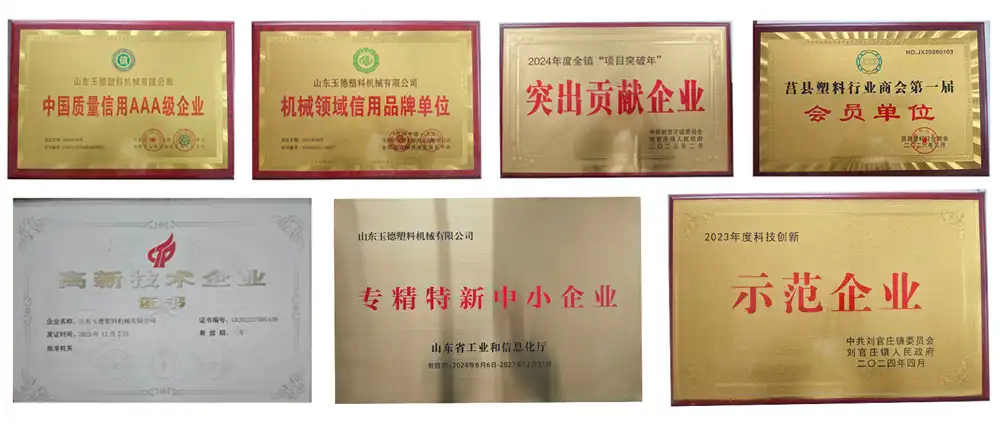
Partner with Yude Plastic Machinery for Superior Vertical Mixing and Drying Solutions
Shandong Yude Plastic Machinery Co., Ltd. is a renowned 3 ton vertical plastic particle mixer with drying function supplier with worldwide quality equipment. They collaborate with North American, European, and Southeast Asian sourcing teams. From precisely machining the thicker carbon steel spiral to assembling and testing it with integrated control systems, we can accomplish it everything. Every unit is carefully inspected before shipping to ensure it fulfills stated mixing uniformity, drying performance, and thermal efficiency criteria.
Technical and business issues must be considered while picking tools. Our tech staff can install multilingual control interfaces, modify the voltage to fit local electrical regulations, and fulfill your particular material handling demands. Our friendly customer support staff can serve you promptly and competently with a turnkey system or parts to upgrade your existing one. Contact sales@yudemachinery.com to discuss your application needs and acquire comprehensive technical details for your production needs.
References
Chen, W., & Zhang, L. (2021). Advanced Mixing Technologies for Polymer Processing: Design Principles and Performance Analysis. Industrial Engineering Press.
Kumar, R., & Patel, S. (2020). Thermal Management in Plastic Processing Equipment: Energy Efficiency and Quality Control. Manufacturing Technology Journal, 15(3), 112-128.
Morrison, T. (2022). Vertical Circulation Systems in Industrial Mixing Applications: Comparative Performance Study. Process Engineering Quarterly, 8(2), 45-63.
Schneider, M., & Weber, H. (2019). Integrated Drying Technologies for Thermoplastic Materials: Equipment Design and Operational Optimization. Polymer Processing Handbook, 2nd Edition. Technical Publishing International.
Thompson, J., & Richards, A. (2023). Equipment Selection Criteria for Plastic Processing Operations: A Procurement Guide for Engineering Managers. Industrial Machinery Review, 29(1), 78-94.
Wang, Y., Liu, X., & Zhou, Q. (2020). Heat Transfer Optimization in Vertical Mixing Systems: Computational Fluid Dynamics Analysis and Experimental Validation. Chemical Engineering Research and Design, 156, 203-217.
Learn about our latest products and discounts through SMS or email