- English
- French
- German
- Portuguese
- Spanish
- Russian
- Japanese
- Korean
- Arabic
- Greek
- German
- Turkish
- Italian
- Danish
- Romanian
- Indonesian
- Czech
- Afrikaans
- Swedish
- Polish
- Basque
- Catalan
- Esperanto
- Hindi
- Lao
- Albanian
- Amharic
- Armenian
- Azerbaijani
- Belarusian
- Bengali
- Bosnian
- Bulgarian
- Cebuano
- Chichewa
- Corsican
- Croatian
- Dutch
- Estonian
- Filipino
- Finnish
- Frisian
- Galician
- Georgian
- Gujarati
- Haitian
- Hausa
- Hawaiian
- Hebrew
- Hmong
- Hungarian
- Icelandic
- Igbo
- Javanese
- Kannada
- Kazakh
- Khmer
- Kurdish
- Kyrgyz
- Latin
- Latvian
- Lithuanian
- Luxembou..
- Macedonian
- Malagasy
- Malay
- Malayalam
- Maltese
- Maori
- Marathi
- Mongolian
- Burmese
- Nepali
- Norwegian
- Pashto
- Persian
- Punjabi
- Serbian
- Sesotho
- Sinhala
- Slovak
- Slovenian
- Somali
- Samoan
- Scots Gaelic
- Shona
- Sindhi
- Sundanese
- Swahili
- Tajik
- Tamil
- Telugu
- Thai
- Ukrainian
- Urdu
- Uzbek
- Vietnamese
- Welsh
- Xhosa
- Yiddish
- Yoruba
- Zulu
Vertical Shaft Granule Agitator Plastic Mixer Application Instructions
You need to know how to set up and operate a vertical shaft granule agitator plastic mixer in order to use one. This piece of machinery is specially designed to mix plastic bits like PE, PP, ABS, and PVC by moving them through a vertical shaft that forms a fountain-like flow. The stirrer uses spiral, ribbon, or paddle impellers to lift stuff from the bottom of the chamber. This makes sure that the color masterbatches, additives, and regrinds are spread out completely. This method solves important production problems like color streaking and materials with different properties by reliably mixing at ≥98% uniformity. For injection molding, extrusion, and grinding lines, the quality of the products and how efficiently they work are directly affected by how well they are installed, calibrated, and run.
Understanding Vertical Shaft Granule Agitator Plastic Mixers
Working Principle and Core Components
A constant recycling system makes vertical shaft granule agitator plastic mixers work. A three-phase asynchronous motor drives the vertical shaft through a reducer. It spins at the best speeds, which are 30 to 80 r/min for axial-flow designs and 200 to 400 RPM for screw-type designs. This rotation makes the material run up, making a cyclone design that makes sure the mixture is spread out evenly in the mixing room. The stirrer blades, which come in spiral, ribbon, or paddle shapes, are made from thicker, more durable materials so they can handle rough pellets without breaking down.
The mixing box is usually made of 304 or 316 stainless steel, and the inside is cleaned so that the surface is rough (Ra ≤ 0.8 μm). This smooth finish stops materials from sticking together and stops infection between batches. Full-bottom release valves let the tank be emptied completely with residue levels below 0.2%, which cuts down on material loss. Capacity ranges from 100 kg classroom units to 5,000 kg industrial batch systems, so they can be used for a wide range of production sizes.
Operational Advantages Over Horizontal Mixers
When compared to horizontal paddle or ribbon mixers, vertical shaft granule agitator plastic mixers have specific advantages. Their upright position takes up a lot less floor room, which is very helpful in factories that don't have a lot of space for production. The downward flow that is helped by gravity needs fewer horsepower per ton of material, which means that less energy is used. It's also easier to move materials because the vertical release points are in line with equipment further down the line, like hoppers and extruders.
The way mixing works in vertical and horizontal systems is very different. Lateral rolling is what horizontal mixers do, and it can make dead zones where heavy regrinds settle. Vertical agitators get rid of these blind spots by continuously moving and spreading the material outward in a circle. Within 5 to 15 minutes, the coefficient of variation drops below 5%. This quick uniformity cuts down on cycle times and boosts output.
Application Across Plastic Processing Industries
Plastic compounding plants use vertical shaft granule agitator plastic mixers to mix new plastics with color masterbatches. This makes sure that the colors of consumer electronics, car parts, and packaging materials are always the same. These mixers are used upstream in injection molding to mix new pellets with used industrial waste, which makes sure that the mechanical properties of made parts are all the same. Large-capacity vertical mixers are used as bin systems in extrusion plants that make pipes, profiles, and sheets. They keep the temperature and consistency of the materials even during continuous runs.
Vertical agitators are especially helpful for recycling centers that deal with mixed post-industrial streams. The machine can handle differences in bulk density between dense new pellets and lighter, less regular regrinds without having to stratify. This feature keeps recycled goods from having weak spots and keeps their structure integrity.
Benefits and Advantages of Vertical Shaft Granule Agitators
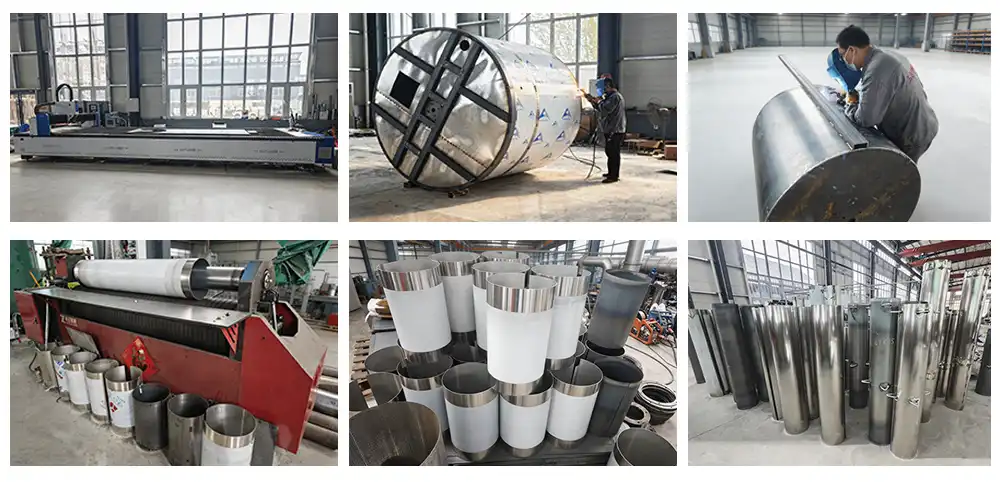
Yude Plastic Machinery makes vertical axial-flow plastic pellet mixers with high-efficiency blade designs that get around common production problems. The few weak spots in the mixing and smooth material movement patterns make sure that the additives are spread out evenly in the batch. This even distribution is especially helpful when adding useful ingredients like UV protectors, anti-static agents, or fillers, whose performance can vary if they are not spread out evenly.
Here are the core operational advantages:
- Superior Mixing Uniformity: Achieving ≥98% homogeneity makes sure that each batch is the same, which lowers the number of scraps and quality claims from customers further down the line.
- Energy Efficiency: Low-speed, high-torque drives use less electricity than high-speed horizontal mixers, which saves money in the long run.
- Material Versatility: It works with medium and low viscosity pellets made of a wide range of materials, from common resins like polyethylene to industrial plastics like polycarbonate and polyamide.
- Reduced Maintenance: Thicker, more durable blades made from Q235 carbon steel or 304 stainless steel mean that they don't need to be serviced as often, and simple mechanical designs mean that parts don't break as often.
These benefits have a direct effect on the costs of production. Operating costs go down when less energy is used, and material waste from off-spec batches goes down when mixing is more regular. The longer maintenance intervals keep production plans and shipping promises on track by reducing unplanned downtime.
A vertical shaft granule agitator plastic mixer also gives you a lot of options for customizing. For recipes that are sensitive to temperature, procurement engineers can ask for heating jackets, dust extraction systems for powder additives, or ATEX-certified motors for dangerous areas. Integrating PLC controls makes it possible to automatically keep track of batches and handle recipes, which helps meet the quality traceability needs of controlled industries.
Choosing the Right Vertical Shaft Granule Agitator Plastic Mixer
Capacity and Speed Considerations
To choose the right mixing capacity, you need to look at the amount of output, the regularity of batches, and your extra store needs. Small businesses that make 500 to 2,000 kg per day usually ask for 300 to 500 kg mixers, which allow for 4 to 8 runs per shift. Medium-sized plants that process 5,000 to 10,000 kg per day can use 1,000 to 2,000 kg units, while big, ongoing operations may need silo mixers that can handle 5,000 kg or more and keep mixing the material all the time.
The speed of the mixing rod changes both the cycle time and the shear stress on the pellets. Lower speeds (30–80 r/min) work best for materials that are easily broken because they keep the pellets together while getting the right level of consistency. Higher speeds (200–400 RPM) speed up mixing for strong materials, but they need to be closely watched to make sure that dust doesn't form from pellets breaking apart.
Material Compatibility Assessment
The mass densities, particle sizes, and flow properties of different plastic resins are not all the same. Polyethylene pellets usually have a lower bulk density (0.50–0.55 g/cm³) than PVC pellets (0.55–0.65 g/cm³), which changes how they mix. The design of the agitator blades needs to take these differences into account. For example, spiral impellers work best with pellets that don't stick together, while ribbon designs work better with materials that do.
The stickiness of the material also affects the choice of tools. At room temperature, some additions and masterbatches soften and stick to the walls of the box. This problem can be solved by choosing interiors made of mirror-polished stainless steel and heating jackets that can be added as an option. This will keep the mixing performance uniform across all formulas.
Supplier Credibility and Service Infrastructure
Doing a lot of research is needed to form relationships with trustworthy makers. Purchasing managers should look at how much a company can make, if it has quality certifications, and how long it has been in business serving similar industries. Operational maturity is shown by manufacturers who run standard production sites with detailed quality management systems.
Long-term ownership costs are greatly affected by the framework for after-sales service. Suppliers that give expert support 24 hours a day, seven days a week, quick access to spare parts, and field service networks help keep downtime to a minimum when problems happen. International buyers should check to see if there are local service partnerships or direct service options in their areas. This will make sure that they can get help quickly, no matter how far away they are.
Conclusion
Vertical shaft granule agitator plastic mixers improve mixing consistency, save energy, and give you more operating freedom, which are all important factors in the plastic production industry. Knowing how they work, what benefits they have in the workplace, and what standards are needed for a certain purpose helps you choose the right equipment. To be successful at procurement, you need to look at things like capacity needs, material fit, and the reliability of the provider, as well as the total costs of ownership that go beyond the initial purchase price. Working with skilled makers that offer strong after-sales support is the best way to guarantee long-term production stability and operating reliability.
Partner with Yude Plastic Machinery for Superior Mixing Solutions
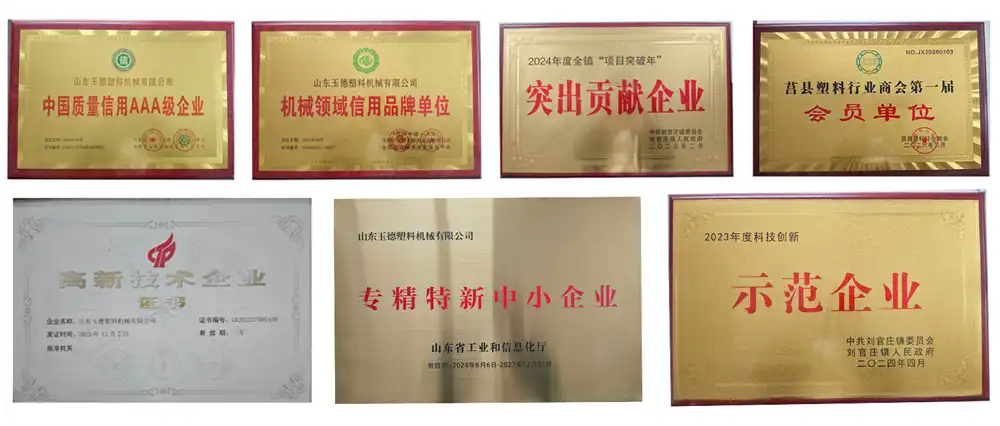
With its tried-and-true vertical shaft granule agitator plastic mixer technology, Yude Plastic Machinery is ready to meet your needs for mixing plastic pellets. Our full line of products has sizes ranging from 300 kg to 10 tons. They are made with precision-machined parts and high-quality materials to ensure they work well. Scaled production gives us reasonable prices, and responsive customization lets us make sure that the equipment we send you is perfect for your materials and production numbers. Our world after-sales network and technical help available 24/7 give you peace of mind throughout the life of your equipment. You can email our team at sales@yudemachinery.com to talk about your needs and get specifics from a reliable vertical shaft granule agitator plastic mixer maker that wants your business to succeed.
FAQ
What maintenance intervals preserve optimal mixer performance?
Preventive maintenance starts with weekly checks to see how worn out the blades are and how the bearings are doing. The performance standards are kept up by lubricating the reducer's parts once a month and doing full calibrations every three months. Intervals depend on how busy the operation is—for example, ongoing three-shift operations may need service more often than single-shift batch processing. Keeping detailed service logs lets you do predictive maintenance, which finds trends of wear before they cause problems that stop production.
Can vertical shaft mixers handle mixed plastic granule types effectively?
Vertical agitators are great at mixing different kinds of materials that have different particle sizes and mass densities. When dense fresh pellets and lighter regrinds are mixed in horizontal mixers, they can cause stratification. The constant upward movement stops this from happening. For difficult mixtures, mixing times may be a little longer, but the finished uniformity always meets production standards.
How do energy savings compare with horizontal mixer alternatives?
When compared to horizontal paddle mixers, vertical shaft granule agitator plastic mixers usually use 15–30% less energy per ton of material they mix. The downward flow, which is helped by gravity, uses less power, and the optimized blade shapes lower mechanical resistance as much as possible. Over longer periods of time, these savings more than make up for the higher starting costs of the equipment by lowering energy costs.
References
1. Rosato, Dominick V., and Marlene G. Rosato. Plastics Processing Data Handbook. 2nd ed. Chapman & Hall, 1997.
2. Tadmor, Zehev, and Costas G. Gogos. Principles of Polymer Processing. 2nd ed. John Wiley & Sons, 2006.
3. Rauwendaal, Chris. Polymer Mixing: A Self-Study Guide. Hanser Publications, 1998.
4. Carley, James F., and Robert S. Mallouk. "Simplified Flow Theory Application to Mixing." Industrial & Engineering Chemistry 50, no. 7 (1958): 1001-1004.
5. Manas-Zloczower, Ica. Mixing and Compounding of Polymers: Theory and Practice. 2nd ed. Hanser Publications, 2009.
6. Crawford, R. J., and Martin P. Kearns. Practical Guide to Rotational Moulding. 2nd ed. Smithers Rapra Technology, 2012.
Learn about our latest products and discounts through SMS or email