- English
- French
- German
- Portuguese
- Spanish
- Russian
- Japanese
- Korean
- Arabic
- Greek
- German
- Turkish
- Italian
- Danish
- Romanian
- Indonesian
- Czech
- Afrikaans
- Swedish
- Polish
- Basque
- Catalan
- Esperanto
- Hindi
- Lao
- Albanian
- Amharic
- Armenian
- Azerbaijani
- Belarusian
- Bengali
- Bosnian
- Bulgarian
- Cebuano
- Chichewa
- Corsican
- Croatian
- Dutch
- Estonian
- Filipino
- Finnish
- Frisian
- Galician
- Georgian
- Gujarati
- Haitian
- Hausa
- Hawaiian
- Hebrew
- Hmong
- Hungarian
- Icelandic
- Igbo
- Javanese
- Kannada
- Kazakh
- Khmer
- Kurdish
- Kyrgyz
- Latin
- Latvian
- Lithuanian
- Luxembou..
- Macedonian
- Malagasy
- Malay
- Malayalam
- Maltese
- Maori
- Marathi
- Mongolian
- Burmese
- Nepali
- Norwegian
- Pashto
- Persian
- Punjabi
- Serbian
- Sesotho
- Sinhala
- Slovak
- Slovenian
- Somali
- Samoan
- Scots Gaelic
- Shona
- Sindhi
- Sundanese
- Swahili
- Tajik
- Tamil
- Telugu
- Thai
- Ukrainian
- Urdu
- Uzbek
- Vietnamese
- Welsh
- Xhosa
- Yiddish
- Yoruba
- Zulu
Characteristics of High Speed Mixer for PVC Compounding
High-speed mixers made for mixing PVC are an important investment for modern businesses that work with polymers. By mixing high-speed mechanical friction with exact thermal control, these specialized machines make dry mixes of PVC resins, stabilizers, plasticizers, and fillers that are all the same. A PVC plastic particle mixer works at speeds of 600 to 900 RPM, creating autogenous heat that raises the material temperature to 115°C to 125°C. This makes sure that the additives are evenly distributed and the plasticizer is absorbed into the PVC's porous structure. This technical ability gets rid of common flaws like "fish eyes" and stops material from crossing in extruder feed systems, which directly raises productivity by 15–20% further down the line.
Understanding High Speed Mixers for PVC Compounding
For industrial polymer processes, you need tools that can deal with polyvinyl chloride formulas' unique chemical complexity and sensitivity to heat. These problems can be solved by high speed heating and cooling mixing units, which are designed in ways that go far beyond those used in regular blending equipment.
What Defines a High Speed PVC Mixer?
Modern PVC plastic particle mixers use two stages of processing: first, a hot mixer conditions the mix with friction-generated heat, and then, right after, a cooling mixer lowers the temperature to 40°C to 45°C. This stops re-agglomeration and thermal breakdown and makes the mass density much higher. The vertical cylindrical shape and optimized spiral mixing structure make sure that the mixture is spread evenly throughout the whole batch, which is very important when working with mixtures that have 50–100 phr calcium carbonate or other heavy fillers.
Key Construction Materials and Engineering
To get regular product quality, you need to pay attention to a number of performance factors that can be measured. Values of the coefficient of variation (CV) less than 5% show that trace chemicals at amounts as low as 0.5% are properly dispersed. This level of accuracy has a direct effect on the speed of subsequent steps and the properties of the finished product in a wide range of situations, from making blown film to making wire insulation.
Thermal Management Systems
Professional-grade PVC plastic particle mixer is different from regular ones because it transfers heat more efficiently. The cooling mixer uses water tanks with a lot of surface area and internal baffle guiding systems that make the heat transfer coefficient as high as possible. This engineering lets the temperature drop quickly, from 120°C to 40°C in 10 to 12 minutes. This keeps the production cycle running smoothly. Temperature control uses PID systems and Variable Frequency Drives (VFD) to handle the start-up torque spikes that happen with high-viscosity PVC blends. This keeps motor parts safe and ensures consistent batch quality.
Advantages of Using High Speed Mixers in PVC Plastic Particle Processing
When procurement engineers look at mixing technology, they need to see clear practical benefits that can be measured in terms of return on investment (ROI). High-speed mixing systems offer many performance benefits that directly address problems in the business.
Superior Homogenization and Product Quality
Getting mixing consistency of ≥98% gets rid of the differences between batches that cause problems with quality control. When processing, high shear forces completely cover calcium carbonate particles with stearic acid and lubricants. This is very important for rigid PVC pipe and profile extrusion uses where the structure's stability cannot be compromised. This thorough mixing keeps screw wear down the line from happening in extruders below and creates regular melt flow properties.
Energy Efficiency and Cost Reduction
Using friction-generated heat instead of external heating parts cuts energy use by 20 to 30 percent compared to the old way of doing things. The equipment raises batches from room temperature to 120°C in just 6–8 minutes, which cuts down on cycle time while keeping temperature control tight. This practical efficiency adds up over thousands of production runs every year, saving you a lot of money and making you more competitive in markets where prices are important.
Flexibility Across Formulation Types
Modern PVC plastic particle mixer can handle a wide range of materials, from rigid U-PVC for pressure tanks to soft PVC for wire insulation and complex SPC flooring compounds with stone powder ratios of up to 300–400 phr. Manufacturers can serve multiple product lines with a single capital investment because they can handle formulas ranging from low-viscosity plasticized compounds to heavy, abrasive density mixes with high torque performance.
Enhanced Process Control and Repeatability
Modern control systems of PVC plastic particle mixer with touchscreens and the ability to store recipes get rid of the need for user variation. Once the best mixing conditions are found for a certain recipe, the system makes sure that all future runs have the same exact conditions. When you're providing OEM customers who have strict requirements for new materials and do regular quality checks, this repeatability is very helpful.
How to Choose the Right PVC Plastic Particle Mixer for Your Business Needs?
The factors you use for selection must fit with your production strategy, the facilities you already have, and your plans for long-term growth. In order to make a good choice, you need to carefully compare technical specs to operational needs.
Production Volume and Capacity Planning
Vertical plastic mixers come in a range of sizes, from 300 kg to 500 kg for small businesses to 600 kg to 10 tons for companies that make a lot of plastic. You can figure out how much output you need per hour by looking at the mixing cycle time, the material discharge, and the cleaning times. Dual-mixer setups, in which one unit works while the other cools, help production lines run continuously by getting rid of bottlenecks and making the best use of the equipment.
Motor Power and Drive System Specifications
The speed of the motor is directly related to how well the equipment can handle high-fill formulas and quickly raise the temperature. Heavy-duty systems that work with SPC flooring or highly-filled profiles may need 90–132kW drives, while systems that work with normal PVC materials usually need 37–75kW motors. The drive system needs to provide enough start-up power to beat the initial resistance of the material without overheating during long mixing cycles.
Shaft Seal Technology and Maintenance Requirements
The quality of the shaft seal decides how well the PVC plastic particle mixer works and how much it costs to maintain over its lifetime. Look for designs with strengthened seals and air-purge systems that stop fine powder from moving into bearings, which is a common way for standard mixers to break. Good makers do 48-hour vacuum or dry-run tests to make sure there is no powder leaking, and buyers should ask for proof of these inspection results.
Supplier Certification and Support Infrastructure
Working with qualified makers makes sure that safety standards like ISO and CE are met, especially when it comes to lid-locking mechanisms that stop the machine from working when the lid is open. Check out the supplier's expert help, such as whether they offer multilingual literature, online troubleshooting, and access to replacement parts. Companies that sell to customers in other countries should show that they know how to change their tools to meet the electricity and industry standards in those countries.
Conclusion
To choose the best high-speed mixer for PVC mixing, you have to weigh the technical specs against the needs of the business and its long-term goals. Modern vertical mixing systems with improved spiral structures achieve mixing consistency of ≥98%, which gets rid of quality problems and boosts output further down the line. When friction-based heating, precise cooling, and advanced materials engineering are used together, they make tools that can work with a wide range of mixtures, from hard pipe compounds to complex SPC flooring blends. When procurement pros work with makers that offer tried-and-true technology, a full support network, and the ability to customize products to meet specific production needs, they gain a competitive edge.
Partner with Yude Plastic Machinery for Premium Compounding Solutions
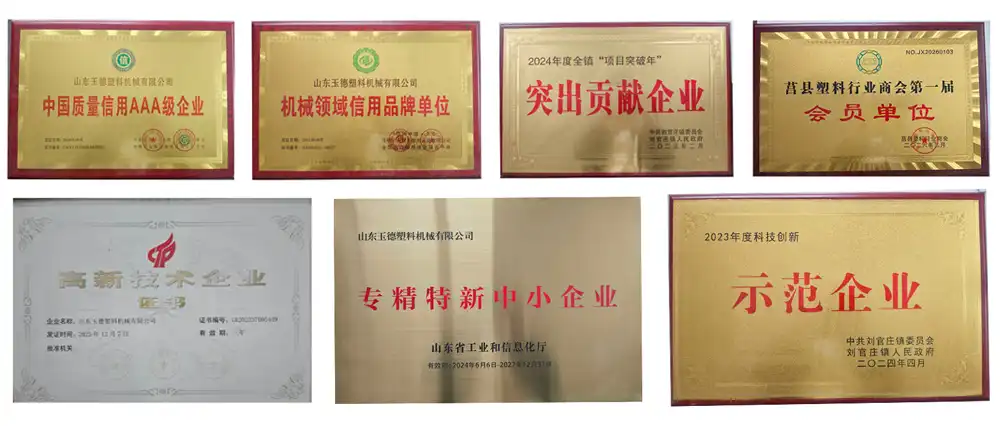
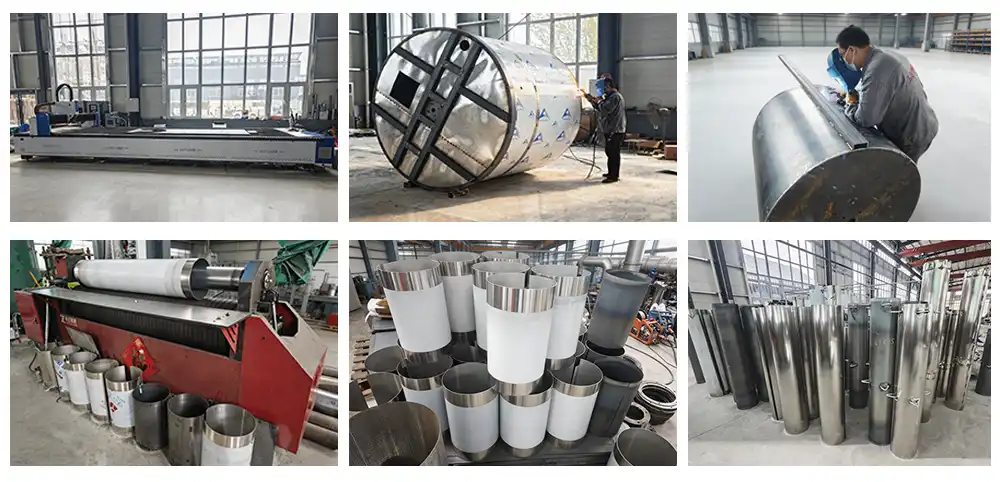
Yude Plastic Machinery has vertical mixers that are designed to be precise, long-lasting, and efficient so they can meet your PVC working needs. We have a wide range of equipment, from small 300 kg systems to large 10 ton units. All of it is made under strict quality control rules to make sure it always works well. As a well-known PVC plastic particle mixers manufacturer, we offer machines with tungsten carbide-coated blades, mirror-polished vessel innards, and stronger shaft seals that keep powder from leaking. Our expert team offers customization services, such as making changes to equipment to meet local electrical standards and adding control systems that can be used in more than one language. People from more than 30 countries trust us because we offer reasonable prices, fast shipping through scalable production, and full after-sales support with service available 7 days a week, 24 hours a day. Get in touch with our team at sales@yudemachinery.com to talk about your unique compounding problems and get full technical specs that are tailored to your production goals.
FAQ
What capacity PVC mixer do I need for my production line?
The capacity you choose will depend on your hourly output goals and the length of the mixing cycle. A 500-kg mixer that runs in 8-minute cycles can produce about 3,750 kg per hour if it is used continuously. Find your high demand times and add 20% to your buffer capacity to account for changes in composition that need longer mixing times. Larger size units cut down on the number of batches and the work needed to move the materials between them, which is good for businesses with more than one shift.
How does mixing speed affect PVC compound quality?
The rate of heat production and shear force are directly related to the speed of the blade. For most PVC formulas, speeds between 600 and 900 RPM are best because they generate enough friction heat while keeping temperature rise under control. Overly fast speeds can damage heat-sensitive stabilizers, and too slow speeds don't let additives like impact enhancers and processing aids spread out completely, which leads to inconsistent product performance.
What maintenance schedule should I follow?
Every day, the seal is checked to make sure it works right and for any strange noises or vibrations. Cleaning once a week keeps materials from getting contaminated between recipe changes. Once a month, the blades are checked for wear that needs to be fixed before it affects the quality of the mixing. Dynamic balance tests every three months and full teardowns once a year keep things reliable over time. Manufacturers usually include thorough care guides that spell out when to lubricate, how much torque to use, and how often to repair parts.
References
1. Summers, J. W. (2020). PVC Processing Technology and Materials Science. Industrial Polymer Engineering Publications.
2. Wypych, G. (2019). PVC Degradation and Stabilization (4th Edition). ChemTec Publishing.
3. Mathews, G., & Thompson, R. (2021). Handbook of Mixing Technology for Polymer Processing. Society of Plastics Engineers Technical Papers.
4. Chen, L., & Rodriguez, M. (2023). Energy Efficiency in Polymer Compounding Operations. Journal of Applied Polymer Science, 140(12), 53456-53468.
5. International Organization for Standardization. (2022). ISO 15252: Plastics — Mixing Equipment — Specifications and Test Methods. ISO Standards Catalog.
6. Zhang, H., Kumar, S., & Williams, P. (2024). Advanced Control Systems for High-Speed Mixing Applications in PVC Manufacturing. Polymer Engineering & Science, 64(3), 892-905.
Learn about our latest products and discounts through SMS or email