- English
- French
- German
- Portuguese
- Spanish
- Russian
- Japanese
- Korean
- Arabic
- Greek
- German
- Turkish
- Italian
- Danish
- Romanian
- Indonesian
- Czech
- Afrikaans
- Swedish
- Polish
- Basque
- Catalan
- Esperanto
- Hindi
- Lao
- Albanian
- Amharic
- Armenian
- Azerbaijani
- Belarusian
- Bengali
- Bosnian
- Bulgarian
- Cebuano
- Chichewa
- Corsican
- Croatian
- Dutch
- Estonian
- Filipino
- Finnish
- Frisian
- Galician
- Georgian
- Gujarati
- Haitian
- Hausa
- Hawaiian
- Hebrew
- Hmong
- Hungarian
- Icelandic
- Igbo
- Javanese
- Kannada
- Kazakh
- Khmer
- Kurdish
- Kyrgyz
- Latin
- Latvian
- Lithuanian
- Luxembou..
- Macedonian
- Malagasy
- Malay
- Malayalam
- Maltese
- Maori
- Marathi
- Mongolian
- Burmese
- Nepali
- Norwegian
- Pashto
- Persian
- Punjabi
- Serbian
- Sesotho
- Sinhala
- Slovak
- Slovenian
- Somali
- Samoan
- Scots Gaelic
- Shona
- Sindhi
- Sundanese
- Swahili
- Tajik
- Tamil
- Telugu
- Thai
- Ukrainian
- Urdu
- Uzbek
- Vietnamese
- Welsh
- Xhosa
- Yiddish
- Yoruba
- Zulu
Vertical Mixing Dryer vs. Separate Mixer and Dryer: Which Saves More Energy?
If you manage procurement for a plastic processing facility, you have likely faced this question: should you invest in a vertical mixing dryer that handles both tasks in one unit, or stick with separate machines for mixing and drying? The answer directly affects your electricity bill, floor space, and batch output. Based on equipment data and real production feedback, vertical mixers for plastic granules https://www.yudemachinery.com/plastic-mixer/vertical-mixers-for-plastic-granuleswith integrated drying functions consistently show 15–25% lower energy consumption per batch compared to running two standalone machines in sequence. This article breaks down exactly why, and helps you decide which setup fits your operation.
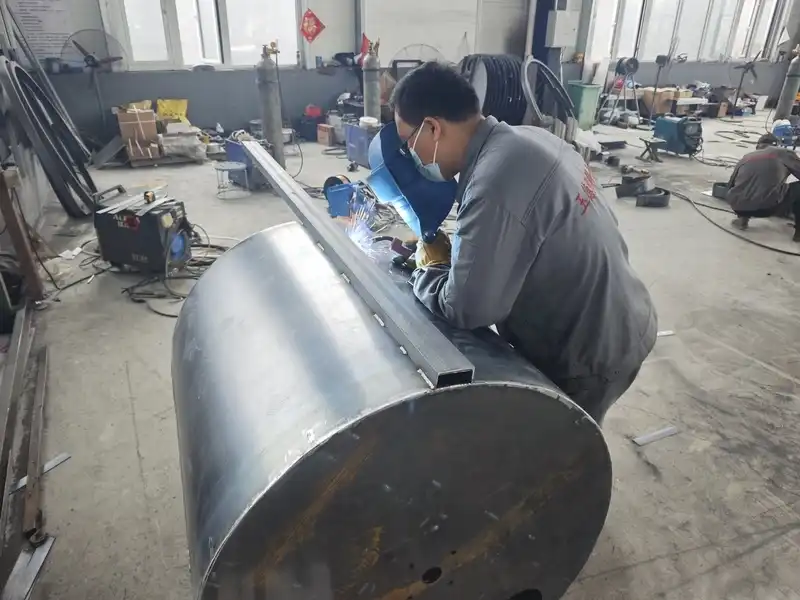
Understanding Vertical Mixing Dryer and Separate Mixer & Dryer Systems
How a Vertical Mixing Dryer Works?
A vertical mixing dryer consists of a single cylindrical vessel that houses both the heating system and the helical screw agitator. Continuously, hot air or a jacket removes surface moisture as the screw retrieves and repositions pellets from the bottom. This implies that in a single cycle, there is a singular control panel, heat source, and motor.
How Separate Systems Operate?
The plastic pellets are processed in an independent system that employs a specialised vertical mixers for plastic granules or horizontal mixer, which may take a vertical or horizontal orientation. After that, they go to a distinct dryer, either a hopper dryer or a dehumidifier. There is a unique engine, heating supply, and power on mechanism for every piece of machinery. It is particularly critical in humid production conditions to have a way for heat to escape and moisture to be reabsorbed, and the process of transferring between units does just that.
Capacity Ranges and Typical Applications
Vertical mixing dryers are available with batch capacities ranging from 300 kg to 5,000 kg. For medium-sized lines, such as those for granulation, film extrusion, or injection moulding, they are ideal. Large mixing facilities often use separate systems for processing materials that need specific drying conditions and have a throughput of more than 10 tonnes per shift. Finding out where your capabilities are lacking is the first step in ensuring that your tools are suitable for your actual production profile.
Energy Efficiency Analysis: Vertical Mixing Dryer vs. Separate Systems
Measuring Energy Consumption Per Batch
The energy consumption of machinery used to make plastics is measured in kilowatt-hours per kilogram (kWh/kg). According to data gathered from injection moulding factories in the Middle East and Southeast Asia, combined vertical mixing dryers use 0.04 to 0.06 kWh/kg of energy per kilogram of material, whereas individual mixer-plus-dryer sets use 0.07 to 0.09 kWh/kg of energy per kilogram of material. Having three shifts that work five or six days a week makes the difference build up fast.
Why Integration Reduces Heat Loss?
When pellets move from a mixer to an outside dryer, the temperature of the material's surface drops. This means that the dryer has to use more energy to warm up the batch. During the cycle of a vertical mixers for plastic granules, heat is applied and kept up the whole time. There is no loss of transfer, no wait time, and no second warm-up process. The main reason integrated units are better at energy metrics is this single-cycle thermal efficiency.
When Separate Systems Still Make Sense?
When materials need very different processing conditions, like when PET resin needs a desiccant dryer running at 160°C and a parallel batch of ABS only needs light pre-heating at 80°C, having two separate systems is very helpful. It is not possible to run those two materials through the same integrated unit. Separate systems also let one dryer serve more than one mixer, which can help large compounding plants make better use of their assets.
Operational and Maintenance Factors Influencing Energy Savings
Best Practices for Vertical Mixing Dryer Performance
The energy benefit of combined units is kept safe by good servicing habits. These are the main things that production teams do to make sure that performance stays stable:
- Load sequence: If you want a uniform coating and less time spent re-mixing, which means less energy used throughout the cycle, add the base pellets first, then the masterbatch or additives.
- Capacity limit: Never fill a batch to more than 90% of its rated capacity, since doing so will cause the screws to become unbalanced and the cycle time to increase.
- Routine checks: To prevent mechanical drag from increasing motor load, check the alignment of the screws, oil level in the gearbox and safety interlocks every 500 hours of operation.
These tips can help stop hidden energy waste that becomes obvious over time when worn bearings or screws that aren't lined up right cause the motor to draw more current than it's supposed to.
Managing Separate Systems to Reduce Idle Energy Draw
When workers keep the mixer and dryer separate when switching batches, for example, a lot of energy is wasted. Drying 20 to 30 minutes after the mixer begins a batch and controlling when it switches off with timers allows 8 to 12 percent of the total energy consumed during an 8-hour shift to be recovered. More user attention is required for this coordination, but it is possible with simple, programmable controllers.
Supplier Support and Spare Parts Availability
Downtime for equipment is a hidden source of energy costs. A machine that isn't being used while it waits for a new gearbox seal still has a cost for the batch that was stopped. The energy efficiency return on investment (ROI) of any system you choose is directly protected by choosing suppliers with a history of having spare parts available and quick technical support.
Choosing the Right System: Decision Criteria for B2B Procurement
Key Evaluation Metrics
When purchasing plastic pellet mixing and drying equipment, teams should look at three measurable factors: the operational cost per kilogram processed, the uniformity of the blending (the industry standard is ≥98% for color and additive mixing), and the rate of equipment availability (the goal is to have less than three unplanned downtime days per year). These numbers have a direct effect on how much it costs to make something and how good it is.
Market Options and Price-Performance Considerations
Shini, Motan-Colortronic, and local providers in China and Southeast Asia are just a few of the companies that make this kind of equipment. Price-to-performance rates are not all the same. Integrated vertical mixing dryers from well-known Chinese brands usually have 20–35% lower capital costs than similar European models, while still meeting the same standards for motor safety and mixing regularity. Before agreeing to a provider, it's important to check their dynamic balance testing records and mixing uniformity test results.
Where Yude Plastic Machinery Fits?
Shandong Yude Plastic Machinery Co., Ltd. makes vertical equipment for processing plastic pellets that can be used with PE, PP, ABS, and PVC. Their machines are made from either Q235 carbon steel or 304 stainless steel, and they have three-phase asynchronous motors and safety devices that stop them from overheating or overloading. It can mix things evenly up to 98% of the time, and it can handle batches of 300 kg to 10 tons. These specs cover what you need to buy for most medium-sized injection molding, film blowing, and extrusion jobs.
Future Trends in Energy-Efficient Plastic Granule Mixing and Drying
Smart Controls and IoT Integration
More and more, new plastic mixing equipment, including vertical mixers for plastic granules, has PLC-based controls that can monitor energy use in real time. Some makers now have remote diagnostics that can find problems with motor power draw before they break down. If buying managers want to see a return on investment (ROI) in 12 to 18 months, these features can speed up the process by cutting down on wasted energy and upkeep costs.
Regulatory Pressure and Sustainability Goals
In the EU, rules about saving energy are getting stricter, and in Southeast Asian export markets, rules about protecting the environment are getting stricter as well. Manufacturers can avoid compliance costs further down the line by using equipment that meets IEC motor efficiency standards (IE3 or higher) and has regional certifications. Integrated vertical mixing dryers are usually easier to confirm because their energy profile is simpler, making it easier to record and check.
ROI Through Reduced Operational Complexity
Not only does having fewer tools save energy, but it also saves money on operators, repair contracts, and floor space. For medium-sized factories that want to have one person manage multiple machines, a vertical mixing dryer's ease of use directly reduces labor costs, which often contributes just as much to ROI as the energy savings themselves.
FAQ
Can a vertical mixing dryer handle hygroscopic materials like Nylon or PET?
Yes. Models with a heated jacket or hot air flow can dry hygroscopic resins ahead of time while they are being mixed. But it can't dry things as well as a dedicated desiccant dryer, so batch sizes should be cut by 15–20% and cycle times should be lengthened to get rid of enough moisture for these materials.
How long does a typical mixing-drying cycle take?
A vertical mixing dryer needs 15 to 25 minutes for each batch of standard PE or PP pellets to go through a cycle of mixing and drying. When you add up the time it takes for the dryer to heat up and the time it takes to move the materials, separate systems usually need 20 to 40 minutes.
What mixing uniformity should I expect?
It is standard in the industry for vertical models that mix color masterbatch with new plastic to have a regularity of at least 98%. Tracer tests with 1% colored beads taken from the top, middle, and bottom discharges show that this standard is correct.
How do I reduce cross-contamination during color changes?
Between batches, blow air into the hollow screw shaft to clean it. Polished stainless steel interior surfaces (Ra<0.8µm) and removable discharge ports make cleaning easier and lower the amount of color carry-over to a safe level.
Connect With Yude Plastic Machinery for a Customized Solution
More than 30 countries have used Yude Plastic Machinery to help thousands of factories that work with plastic. Their team can provide equipment specifications, energy consumption data, and customized configurations to match your production needs, whether you need a 500 kg integrated unit for a single injection molding line or a 5-ton vertical mixer for plastic granules manufacturer-scale output. Call or email the sales team at sales@yudemachinery.com or go to https://yudemachinery.com/ to get a price.
References
- Rosato, D. V., & Rosato, M. G. Injection Molding Handbook. Springer, 2000.
- Harper, C. A. Handbook of Plastics Technologies. McGraw-Hill, 2006.
- Osswald, T. A., Turng, L.-S., & Gramann, P. Injection Molding Handbook. Hanser, 2008.
- Throne, J. L. Technology of Thermoforming. Hanser, 1996.
- Gachter, R., & Muller, H. Plastics Additives Handbook. Hanser, 1993.
- International Energy Agency. Energy Efficiency in Industry: Equipment and Processes. IEA Publications, 2021.
Learn about our latest products and discounts through SMS or email