- English
- French
- German
- Portuguese
- Spanish
- Russian
- Japanese
- Korean
- Arabic
- Greek
- German
- Turkish
- Italian
- Danish
- Romanian
- Indonesian
- Czech
- Afrikaans
- Swedish
- Polish
- Basque
- Catalan
- Esperanto
- Hindi
- Lao
- Albanian
- Amharic
- Armenian
- Azerbaijani
- Belarusian
- Bengali
- Bosnian
- Bulgarian
- Cebuano
- Chichewa
- Corsican
- Croatian
- Dutch
- Estonian
- Filipino
- Finnish
- Frisian
- Galician
- Georgian
- Gujarati
- Haitian
- Hausa
- Hawaiian
- Hebrew
- Hmong
- Hungarian
- Icelandic
- Igbo
- Javanese
- Kannada
- Kazakh
- Khmer
- Kurdish
- Kyrgyz
- Latin
- Latvian
- Lithuanian
- Luxembou..
- Macedonian
- Malagasy
- Malay
- Malayalam
- Maltese
- Maori
- Marathi
- Mongolian
- Burmese
- Nepali
- Norwegian
- Pashto
- Persian
- Punjabi
- Serbian
- Sesotho
- Sinhala
- Slovak
- Slovenian
- Somali
- Samoan
- Scots Gaelic
- Shona
- Sindhi
- Sundanese
- Swahili
- Tajik
- Tamil
- Telugu
- Thai
- Ukrainian
- Urdu
- Uzbek
- Vietnamese
- Welsh
- Xhosa
- Yiddish
- Yoruba
- Zulu
Types of Mixers Used for PS and Plastics
The main types of mixers used for PS and plastics are horizontal paddle, ribbon and plowshare mixers, vertical mixers and high-speed or hot-and-cool systems. A PS plastic mixer https://www.yudemachinery.com/plastic-mixer/ps-plastic-mixerblends polystyrene pellets with color masterbatch, additives or regrind, so that each batch feeds an extruder or injection machine with a consistent formula. Large batches are better for horizontal designs, whereas vertical designs save floor space and are good for blending of pellets. This guide was created to help buyers compare each type, avoid common mistakes and match equipment to their material and output. I also cover the Yude vertical mixer for PS pellets.
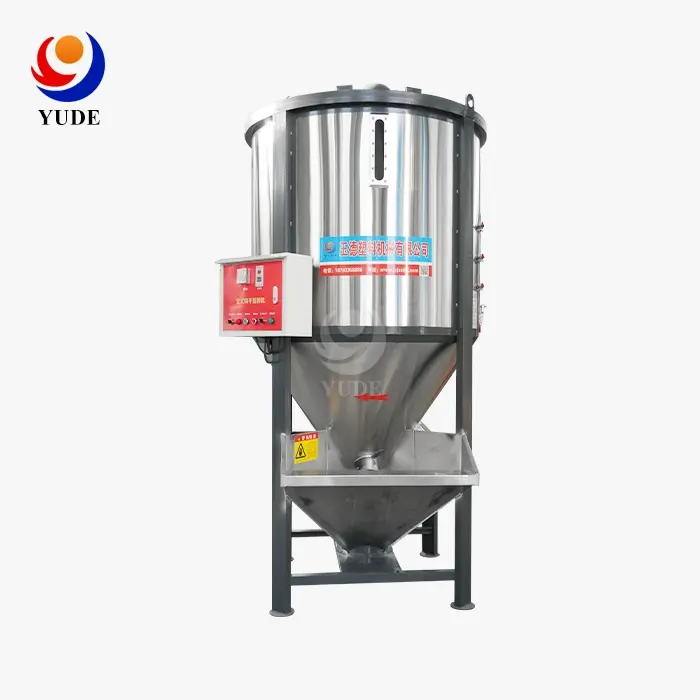
What Is a PS Plastic Mixer and How Does It Work?
PS plastic mixer Suitable for small tools, daily bench work, can be placed on the desk or support box. It offers a containment which protects the user from dangerous fumes during chemical mixing or small experiments.
Core Function of Polystyrene Blending
The setup, a small box on a lab bench, has a screen, fan and exhaust chamber to keep the face moving at a steady speed. When the operator is checking the quality of things or working with small instruments this system blows dirty air away from the operator. This particular configuration usually won’t fit tall machines or gas tanks because of the limited internal height.
Key Components Inside the Machine
A vent plenum, sash, enclosure and fan work together to remove hazardous vapors, the system is based on a vent plenum, sash, enclosure and fan working together to remove hazardous vapors. The panes of the windows could be pushed up and down or sideways to control the air. These machines also often have the ability to contain spills and to supply utilities such as water, electricity or compressed air according to the particular job requirements.
Why PS Needs Careful Handling
It takes work to make a small enclosure safe for the person at the sash, and the room’s air flow and pipe strength all figure in performance. Face speed should be set between 80 to 120 feet per minute for proper containment. Always carry out a risk assessment and have written instructions available before using chemicals to prevent damage to the shells or injury to the operator.
Main Types of Mixers Used for PS and Plastics
Choosing the right PS plastic mixer depends on whether you need a benchtop unit for small tools or a floor-level unit for large reactors.
Horizontal Paddle, Ribbon, and Ploughshare Mixers
Big, heavy tools can be accommodated inside the enclosure if you place the equipment on the floor instead of on a bench. This setup is used by small scale scientists to process test reactors and pharmaceutical work. These floor standing units have more internal space for tall condensing sets but can occupy more space in the lab environment.
Vertical Mixers for Pellets and Masterbatch
A hood that looks like a bench is good for everyday work with small instruments and samples. The equipment needs to be small enough to sit on a table but these units are easier to fit in labs of limited money or room. These smaller benches cannot hold things that are too heavy or have too many chemicals in them.
High-Speed, Low-Speed, and Hot-and-Cool Systems
Walk in a door lets people or large tools come and go . Different window placement changes airflow through the room. Forget the labels for sizes or flows, run the standard performance tests to see how the system handles heat and air. Make sure the setup is right for the size and safety of the specific chemicals you are using.
How to Compare and Choose a PS Plastic Mixer
A desk-based PS plastic mixer is smaller and costs less to buy, but you must allow enough room for the sash, your hands, and the generated heat.
Compare Design, Speed, and Heat
Face speed should be set to 80 to 120 feet per minute, and for every cubic foot of air let out, make-up air needs to be added. Labs use a lot more electricity per square foot than office buildings to heat and cool this air. Your HVAC tech can help you pick the right exit fan if they know the resistance of the whole system.
Match Working Volume to Your Output
Floor units are typically 2350 mm tall and 850 mm deep, with widths of 1200, 1500, or 1800 mm. You should find out the height of your tools first to see if they stand on the floor or fit on a bench. If you have tall sets of glasses or big machines, you will need the larger floor-mounted enclosure to avoid working strangely around the gear.
Judge Suppliers and Total Cost
A low price does not always include controls, installation, commissioning, or staff training. When you compare quotes, make a list of what each seller does and does not offer to judge the total value. You should also check for packaging methods that keep the units safe during long-distance shipping and look for proof from ISO, CE, and SEFA.
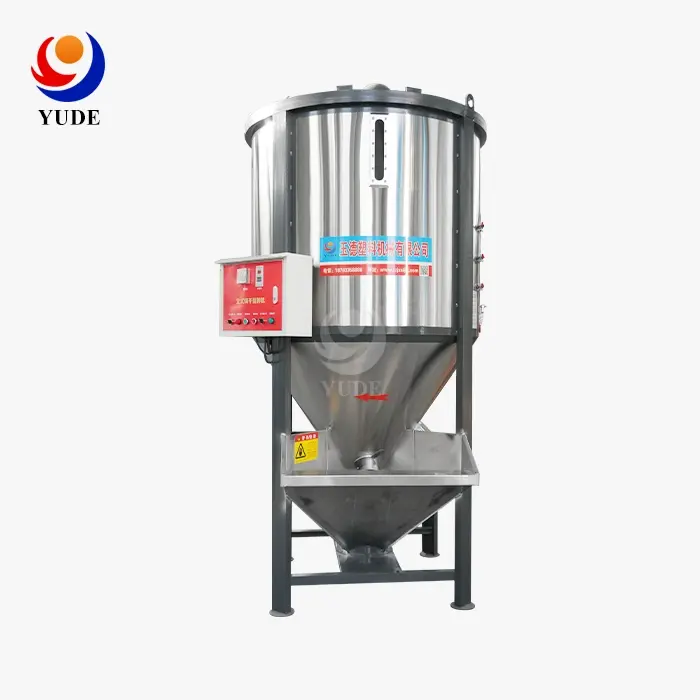
Yude Vertical Mixer Designed for PS Pellets
The PS plastic mixer is constructed with a full steel frame at least 1 mm thick to keep it steady. A laser is used to cut the steel so the edges are smooth, and the pieces are shaped and put together with precision.
Spiral Structure Matched to Pellet Behavior
The cap is finished with at least 70 μm of epoxy electrostatic powder, which doesn't rust or scratch easily and is simple to clean. The sash is made of strong glass that doesn't break into sharp pieces if it fails. Inside, the lining uses materials that kill germs or won't rust when acid and alkali spills happen.
Core Advantages for PS Production
- Uniformity of 98% or higher: Face speed and airflow formulas are designed to follow the room's balance and user habits, ensuring that containment remains consistent throughout the work area.
- Wear-resistant construction: The outside steel frame and inner lining are selected to handle strange chemicals and high heat loads, extending the service life of the equipment in labs where titrations and distillations are common.
Where This Mixer Is Used
These machines are used in labs that make medicines, biological products, and GMP goods. They are essential for handling strong poisons like formaldehyde and are standard for pharmaceutical and chemical research. The engineering team checks each site's needs to ensure that all labs follow the same safety rules for titrations and distillations.
PS Plastic Mixer Applications, Troubleshooting, and Maintenance
Using a PS plastic mixer requires coordinating with fire safety, electricity, water, and HVAC teams to ensure all utilities are connected correctly.
Applications Across the Plastics Industry
In research and quality check settings, these units handle titrations, distillations, and work with strong poisons. Large-scale scale-up projects use floor-based units for robots and analytical tools that need a lot of room. Scientists use different sets for reactors and unique materials to ensure everything is the same everywhere in the production line.
Troubleshooting Common Problems
Buyers often get it wrong when they only look at the outside size or think of airflow as a single number. Airflow needs to be measured for each room, hood, and window to ensure the lining and surfaces won't rust while chemicals work. If the sash sticks, it changes how much air can run through, so you must track cycle times and alarm tests to notice changes.
Maintenance, Safety, and Spare Parts
You should clean the hood often and check that sensors, fans, and alarms can handle chemicals. Make sure the sash moves and stays in place using a counterweight method that lets you change it with one hand. Emergency paperwork, such as risk assessments and ANSI/ASHRAE 110 tracer gas methods, should be kept on hand to ensure the plan to clean up chemicals follows state codes.
Conclusion
Choosing a PS plastic mixer involves balancing the cost of running the business with the required working space and technological compatibility. Benchtop hoods work well for regular jobs and small tools, while floor-level units are best for tall or heavy equipment. Safety depends on how the face moves, where the sashes are placed, and how well the HVAC system is maintained. Always prioritize the right type of hood for the specific job over the lowest purchase price to ensure a safer and more productive laboratory environment.
FAQ
What size mixer do I need?
Check your equipment load and tools first. Floor-standing units are 2350 mm tall and come in widths of 1200, 1500, or 1800 mm to accommodate tall or heavy reactors.
Can one mixer handle PE, PVC, or ABS pellets?
Yes, as long as you confirm the material options and chemicals are compatible with the steel, epoxy, or polypropylene lining used in the PS plastic mixer.
How do I control static when mixing PS?
You should use a grounded enclosure and ensure that all utilities, including air and electricity, are properly installed and checked by a safety officer.
Does a PS plastic mixer need heating?
It depends on the heat load of your process. Some systems are built to handle high heat environments and strange chemical reactions that occur during distillation.
What should I send to get a quote?
Send the height and weight of your equipment, a list of chemicals, heat loads, airflow needs, and your shipping plan to the manufacturer.
Contact Yude Plastic Machinery for a PS Plastic Mixer Quote
If you need a PS plastic mixer for pharmaceutical, chemical, or GMP lab work, contact our team to discuss logos, unique shapes, and RAL colors. You can send your list of shipping requirements to sales@yudemachinery.com. We provide ISO, CE, and SEFA approved units with standard export packing to more than 30 countries. Visit yudemachinery.com for more information on our engineering support and multilingual interfaces.
References
- Handbook of Industrial Mixing: Science and Practice, 2004
- Modern Styrenics Polymers: Polystyrenes and Styrenic Copolymers, 2003
- Materials Science of Polymers for Engineers, 2012
- Perry's Chemical Engineers' Handbook, 2018
- Mixing in the Process Industries, 1992
- Injection Molding Handbook, 2000
Learn about our latest products and discounts through SMS or email