- English
- French
- German
- Portuguese
- Spanish
- Russian
- Japanese
- Korean
- Arabic
- Greek
- German
- Turkish
- Italian
- Danish
- Romanian
- Indonesian
- Czech
- Afrikaans
- Swedish
- Polish
- Basque
- Catalan
- Esperanto
- Hindi
- Lao
- Albanian
- Amharic
- Armenian
- Azerbaijani
- Belarusian
- Bengali
- Bosnian
- Bulgarian
- Cebuano
- Chichewa
- Corsican
- Croatian
- Dutch
- Estonian
- Filipino
- Finnish
- Frisian
- Galician
- Georgian
- Gujarati
- Haitian
- Hausa
- Hawaiian
- Hebrew
- Hmong
- Hungarian
- Icelandic
- Igbo
- Javanese
- Kannada
- Kazakh
- Khmer
- Kurdish
- Kyrgyz
- Latin
- Latvian
- Lithuanian
- Luxembou..
- Macedonian
- Malagasy
- Malay
- Malayalam
- Maltese
- Maori
- Marathi
- Mongolian
- Burmese
- Nepali
- Norwegian
- Pashto
- Persian
- Punjabi
- Serbian
- Sesotho
- Sinhala
- Slovak
- Slovenian
- Somali
- Samoan
- Scots Gaelic
- Shona
- Sindhi
- Sundanese
- Swahili
- Tajik
- Tamil
- Telugu
- Thai
- Ukrainian
- Urdu
- Uzbek
- Vietnamese
- Welsh
- Xhosa
- Yiddish
- Yoruba
- Zulu
Stainless Steel Vertical Mini Mixer Machine VS Stainless Steel Plastic Particle Mixer
Purchasing engineers and sourcing managers normally only encounter two types of plastic processing mixing equipment: tiny stainless steel vertical mini mixer machines for precision small-batch work and bigger plastic particle mixers for higher-volume output. Although both are stainless steel, they serve distinct purposes. The stainless steel vertical mini mixer machine is ideal for lab work, R&D, and specialized production runs with batch sizes from 5 kg to 300 kg. To minimize cross-contamination and switch duties quickly, its tiny size, mirror-polished 304 stainless steel interior, and smooth spinning movement make it essential. Industrial mixing uses plastic particle mixers. They handle more and feature agitation devices that operate with production.
Two Mixer Types: Stainless Steel Vertical Mini Mixer Machine vs Stainless Steel Plastic Particle Mixer
Core Design and Construction Materials
How these mixers are built distinguishes them. stainless steel vertical mini mixer machines feature cylindrical or circular chambers. A slow-moving spiral screw in the chamber rotates 30–60 times per minute. From the room floor, plastic pellets, masterbatch, or additives softly flow down polished stainless steel walls. This design uses gravity to move materials. The drum, screw, and lid are composed of 304 or 316 grade stainless steel, with a finished interior. The surface roughness value is Ra ≤ 0.8 μm. This mirror-polished surface prevents sticking and simplifies cleaning between manufacturing cycles.
However, plastic powder mixers use horizontal drums or ribbon-blade systems with varying speeds. The tanks can carry 300 kilogram batch loads and store over 500 liters. Their build prioritizes volume above compactness. Some industrial versions mix cost and performance with carbon steel tanks with stainless steel contact points. Many food and pharmaceutical applications still employ stainless steel.
Capacity Ranges and Operational Scale
Different capacities affect tool selection. In its 80-500-liter capacity, the stainless steel vertical mini mixer machine can carry 50–300 kg. This size is ideal for technical centers testing new formulas, injection molding operations that change colors often, and specialized manufactures creating small volumes of high-value chemicals. The equipment is modest—often less than one square meter—making it convenient to utilize in small spaces or multipurpose work areas.
In industrial environments with daily throughput, larger plastic particle mixers may handle several tons every shift. These systems use automatic material transport infrastructure to take bulk resin packages and feed them to extruders or moulding equipment to coordinate production. Their design lets them combine hard-to-blend formulas for longer while maintaining output quality throughout large quantities.
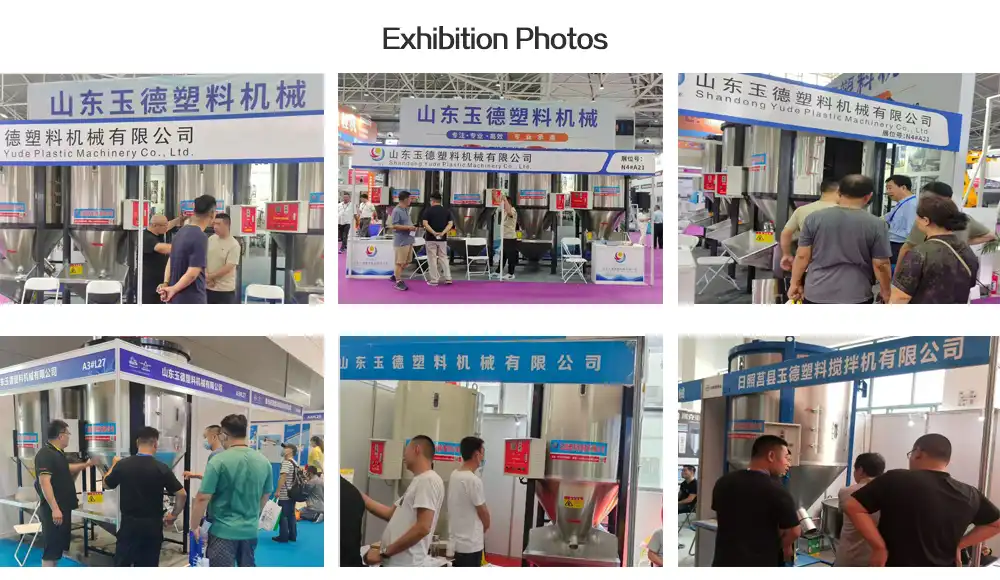
Performance and Operational Efficiency Comparison
Mixing Quality and Uniformity Standards
Homogeneous mixes are the most significant factor in assessing mixing equipment. Colorant dispersion and additive distribution coefficients of variation showed that the stainless steel vertical mini mixer machine combines materials more uniformly than 98% of the time. The low-shear tumble system prevents pellets from breaking down, dusting, or heating during 10- to 30-minute mixing rounds. This delicate movement is especially beneficial when working with temperature-sensitive chemicals, recycled material whose melt flow qualities fluctuate, or stronger compounds containing glass fibers that must be distributed uniformly without breaking.
Although technically different, industrial plastic particle shakers achieve similar regularity. Rough mixing in high-speed ribbon blenders or paddle mixers reduces cycle times for large batches, but it can heat soft materials or cause friction. These performance discrepancies might prompt procurement teams to consider if their materials can tolerate higher-energy mixing or need vertical designs' gentler approach.
Energy Consumption and Operational Costs
Power demands affect working economics throughout tool lifecycles. stainless steel vertical mini mixer machines employ 0.75–3 kW three-phase asynchronous motors since they work slowly and in smaller batches. reduced power demands ensure reduced energy expenditures per kilogram of mixed material. This helps locations that make several adjustments daily or have high electricity prices. Motor systems have overload, burning, and phase-loss safety to prevent downtime.
Because they handle more particles, larger particle mixers consume more energy. Average motor rates start at 5 kW and rise. The industrial cost-per-kilogram metric improves, while energy costs remain higher. Part maintenance frequency and lifespan impact total expenses. stainless steel vertical mini mixer machines feature fewer moving parts and less wear, but high-volume equipment may need more bearing replacements, seal cleaning, and drive system maintenance.
Safety, Hygiene, and Environmental Considerations
Material Safety and Contamination Prevention
Stainless steel construction satisfies several safety and regulatory requirements. When working with food-contact polymers or medical-grade chemicals, 304-grade stainless steel won't corrode and leak. The material's non-porous surface prevents germ growth. This helps validate pharmaceutical production procedures that follow FDA or EU GMP requirements. stainless steel vertical mini mixer machines' mirror-polished interiors don't leave residue after cleaning. This prevents cross-contamination between product formulas, which is crucial for contract manufacturers with multiple clients or brands that handle several goods.
Both types of mixers can have safety interlocks that prevent the lid from opening while operating, emergency stop controls, and guarding around pinch points or moving parts. Vertical designs reduce human exposure dangers due to top-loading and gravity-assisted release devices that reduce material movement.
Environmental Impact and Sustainability
Equipment sustainability goes beyond energy efficiency. It involves recycling and reducing process waste. Recycling stainless steel fosters a circular economy and preserves its value when equipment is no longer needed. Quality equipment that mixes materials equally reduces manufacturing runs that don't meet standards and waste, directly enhancing raw material consumption. stainless steel vertical mini mixer machines are ideal for R&D. Improving recipes throughout development prevents costly mistakes and waste.
Another natural concern is noise pollution. Most stainless steel vertical mini mixer machines operate at modest speeds and produce less than 70 dB. This makes workplaces safer and decreases facility noise reduction compared to high-speed industrial mixers.
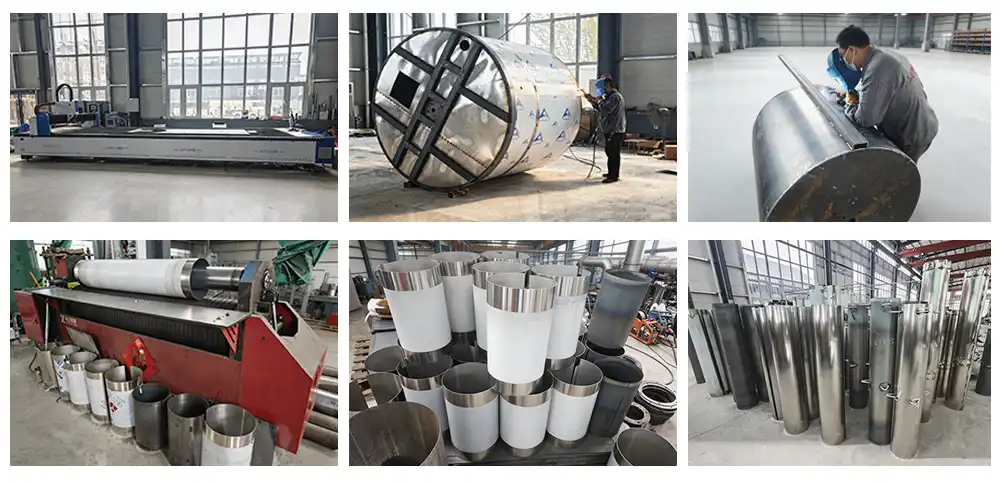
Procurement Guide: Choosing the Right Mixer for Your Business Needs
Matching Equipment to Production Requirements
Choosing the correct tools starts with an honest assessment of operational issues. stainless steel vertical mini mixer machines are ideal for lab testing, sampling, and specialized chemical production in quantities under 300 kg without the capital expenses and floor space of industrial equipment. It may be cleaned fast and modified multiple times a day, sharing a resource across product lines or client projects.
Larger plastic particle grinders are needed in factories that work hard, don't alter formulae, and stick to production goals. Equipment costs less since the initial financial investment is distributed over several units. Automatic material movement and process control systems become cost-effective at this manufacturing level.
Evaluating Supplier Capabilities
Technical support infrastructure, customization, and after-sales service networks should be examined when picking a supplier in addition to equipment specs. Yude Plastic Machinery showcases these talents by giving multilingual control interfaces, modifying equipment to local safety or electrical regulations, and providing documented quality control processes for international procurement.
Replacement component availability, technical support time, and field service in your operating location all affect production costs and consistency over time. Suppliers providing 24-hour technical assistance and regional service relationships decrease equipment failure and user training downtime.
Conclusion
In conclusion, your business's production capacity, batch frequency, and material handling needs will determine whether you use vertical small mixers or larger plastic particle mixing systems. For lab work, frequent changeovers, or small-batch bespoke manufacturing, the stainless steel vertical mini mixer machine offers the maximum freedom, contamination prevention, and efficiency. It satisfies demands that large-scale equipment can't because to its tiny size, smooth mixing action, and rapid cleaning. Procurement professionals should consider the total cost of ownership, including the initial purchase price, energy use, maintenance, and operational flexibility of vertical mini mixers in various manufacturing situations.
FAQs
What batch sizes can vertical mini mixers effectively handle?
How large a batch can stainless steel vertical mini mixer machines handle? Vertical small mixers can do 5 kg to 300 kilogram batches in 80 to 500 liters, depending on the kind. The device operates best at 70–90% capacity. This allows correct material movement during mixing cycles. This capacity range is unsuitable for larger industrial mixers. It works for lab research, test production, and small-batch specialized manufacturing.
Are these mixers suitable for food-grade and pharmaceutical applications?
Are these devices suitable for medical and culinary tasks? 304 stainless steel and mirror-polished interior fulfill food and pharmaceutical chemical hygiene requirements. The surface lacks pores, so bacteria can't thrive. Keeps materials clean between runs. Compliance with rules is shown by material approvals and surface finish requirements in equipment documentation.
How do energy costs compare between mixer types?
What is the energy cost of each mixer? Vertical small mixers require 0.75 kW to 3 kW, much less than giant particle mixers, which use 5 kW or more. The cost-per-kilogram depends on batch size and throughput, although raw energy prices favor smaller equipment. Vertical mixers may consume less energy than larger machines that aren't being operated properly in businesses that create numerous tiny batches daily.
Partner with Yude Plastic Machinery for Your Mixing Equipment Needs
Yude Plastic Machinery can advise you on tool purchases. They have decades of manufacturing experience and comprehensive customer service. We can customise stainless steel vertical mini mixer machines to meet your production demands, including machine size, control system, and local certification criteria. Our engineers recommend the ideal equipment setup based on your materials, throughput objectives, and facility constraints. Contact one of our specialists at sales@yudemachinery.com to discuss your application, acquire technical details, or schedule a demonstration. We stock items for fast delivery and provide fast after-sales service to support our setups and your production.
References
- Richardson, P. (2019). Mixing Technology in Polymer Processing: Principles and Applications. Industrial Press.
- Chen, M., & Zhang, L. (2021). "Comparative Analysis of Mixing Equipment for Plastic Compounding Operations." Journal of Polymer Engineering, 41(3), 245-260.
- Thompson, R. (2020). Stainless Steel in Food and Pharmaceutical Manufacturing: Material Selection and Hygiene Standards. Academic Publishers.
- Wilson, K., & Patel, S. (2022). "Energy Efficiency Optimization in Small-Scale Plastic Processing Equipment." Industrial Equipment Review, 18(2), 112-127.
- Martinez, A. (2021). Procurement Strategies for Process Equipment: Total Cost of Ownership Analysis. Manufacturing Press.
- Liu, H., Wang, J., & Zhao, Y. (2020). "Material Contamination Prevention in Multi-Product Plastic Manufacturing Facilities." Polymer Processing Technology, 35(4), 189-203.
Learn about our latest products and discounts through SMS or email