- English
- French
- German
- Portuguese
- Spanish
- Russian
- Japanese
- Korean
- Arabic
- Greek
- German
- Turkish
- Italian
- Danish
- Romanian
- Indonesian
- Czech
- Afrikaans
- Swedish
- Polish
- Basque
- Catalan
- Esperanto
- Hindi
- Lao
- Albanian
- Amharic
- Armenian
- Azerbaijani
- Belarusian
- Bengali
- Bosnian
- Bulgarian
- Cebuano
- Chichewa
- Corsican
- Croatian
- Dutch
- Estonian
- Filipino
- Finnish
- Frisian
- Galician
- Georgian
- Gujarati
- Haitian
- Hausa
- Hawaiian
- Hebrew
- Hmong
- Hungarian
- Icelandic
- Igbo
- Javanese
- Kannada
- Kazakh
- Khmer
- Kurdish
- Kyrgyz
- Latin
- Latvian
- Lithuanian
- Luxembou..
- Macedonian
- Malagasy
- Malay
- Malayalam
- Maltese
- Maori
- Marathi
- Mongolian
- Burmese
- Nepali
- Norwegian
- Pashto
- Persian
- Punjabi
- Serbian
- Sesotho
- Sinhala
- Slovak
- Slovenian
- Somali
- Samoan
- Scots Gaelic
- Shona
- Sindhi
- Sundanese
- Swahili
- Tajik
- Tamil
- Telugu
- Thai
- Ukrainian
- Urdu
- Uzbek
- Vietnamese
- Welsh
- Xhosa
- Yiddish
- Yoruba
- Zulu
Why is 3 ton vertical plastic particle mixer with drying function widely used in plastic raw material pretreatment?
The 3 ton vertical plastic particle mixer with drying function is extensively used in pretreatment operations because it blends materials uniformly and removes moisture, which directly affects downstream processing quality. By combining various functions into one tiny item, manufacturers may utilize fewer tools. Since they handle less, they save time and money. This machine solves the most frequent injection molding, extrusion, and film blowing issues by mixing consistently over 98% of the time and reducing moisture to less than 0.5%.
Introduction to 3 Ton Vertical Plastic Particle Mixer with Drying Function
Modern plastic manufacturing requires fast, high-quality machinery that can handle large volumes of material. Vertical plastic particle mixers with drying systems have altered pretreatment operations in production plants. The 3 ton vertical plastic particle mixer with drying function optimally balances batch size with operating freedom. This attracts medium-to-large enterprises.
Vertical spiraling upward movement mechanism transfers materials fountain-like from bottom to top in this machine. This ensures that all particles experience heat and mixing. The machine can process several polymers, including PE, PP, ABS, and PVC, with bulk densities ranging from 0.6 to 0.8 g/cm³. The equipment can process 3,000 kilogram batches in 30–45 minutes. Its usable capacity is 4,500–4,800 liters.
This method is increasingly used by recovered material, color masterbatches, and moisture-sensitive resin sectors. Recycling operations benefit from mixing old flakes with fresh pellets and removing cleaning water. Compounding facilities enjoy how precise temperature control prevents chemical breakdown after drying.
Industry research shows that locations that integrate mixing and drying operations save 25–35% on energy. The average 40% floor area saved is significant for space-constrained companies. As the world's plastic output approaches 400 million metric tons, effective preparation technologies are needed to keep costs low and quality good.
Advantages of Using a 3 Ton Vertical Plastic Particle Mixer with Drying Function
Mixing and drying technology improves quality, cost, and the environment. Procurement engineers often uncover several advantages in tool purchasing.
Improvements in material quality affect downstream processes immediately.
When plastic pellets enter extruders or injection molding machines with less than 0.5% moisture and evenly dispersed additives, faults diminish dramatically. Silver streaks, splay markings, and bubbles are rare. These are created by remaining dampness generating steam. Polymer melt acts more consistently when dampness doesn't modify viscosity, making molded products more uniform in size.
Drying performs better than passive storage for hygroscopic or mildly hygroscopic materials. Engineering polymers like Nylon may need specific dehumidifying blowers to remove deep moisture down to -40°C, whereas commodity resins can use the 3 ton vertical plastic particle mixer with drying function for surface moisture (0.05% to 0.2%). This makes it a fantastic pre-dryer that reduces the load on downstream equipment or eliminates the need for additional drying.
Cost Reduction Through Process Consolidation
There are several ways financial benefits accumulate. Eliminating mixing and drying instruments reduces capital expenses by 30–45% compared to buying separate systems. Operating expenses decrease because one motor and heating portion uses less electricity than two. Because mixing and chilling proceed simultaneously, batch cycle times are reduced. It boosts production without additional work.
Maintenance also decreases. The requirement for spare parts and specialist training is reduced because facilities only need to maintain one piece of equipment. Durable thickened carbon steel parts extend service life. Many devices last 8–10 years without substantial maintenance.
It becomes easier to obey environmental laws. Consolidated equipment creates fewer emissions, uses less cooling water (if heating with steam), and takes up less space, making the facility more efficient. Many regions currently regulate industrial equipment energy efficiency. Modern 3 ton vertical plastic particle mixers with drying functions generally exceed these restrictions to avoid regulatory fines.
These characteristics make the machine useful in plastic granulation, injection molding prep, and film blowing preparation, where uniformity and wetness are crucial to product success.
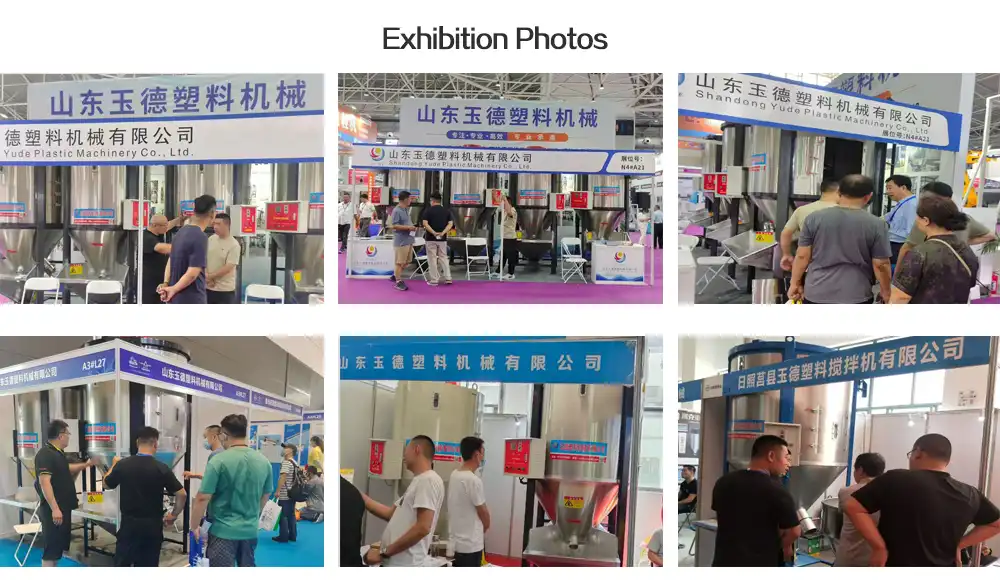
Comparison and Decision-Making: Vertical vs Horizontal Mixers and Other Options
You must understand how various equipment meets company goals to pick the correct mixing and drying choice. Both vertical and horizontal shapes are beneficial. Business decisions often hinge on the 3 ton vertical plastic particle mixer with drying function capacity range.
Vertical mixers are ideal for handling fragile items and drying them uniformly. The upward spiral motion wears particles slower than horizontal drums, which tumble. Vertical units, which include entry area, take up 15 to 20 square meters, making them ideal for small spaces. Most height demands are 4–5 meters, therefore ceiling clearance is the most significant space consideration.
Horizontal mixers mix faster and are excellent for non-cleaning settings. Their smaller design works well in height-restricted structures but requires more floor space. Vertical and horizontal units have distinct maintenance access. You must approach bearing groups and internal ribbon elements from the side for horizontal units.
Comparing mixers with and without cleaning features simplifies ROI. Equipment that can't dry costs 20–30% less initially, but manufactures must buy separate dryers or face greater failure rates due to poor moisture management. Due to waste reduction and energy savings, integrated drying pays for itself in 12–18 months for output exceeding 50 tons per month.
Batch regularity vs. maintaining time are crucial when deciding capacity. 24-hour operations benefit from multiple 3 ton vertical plastic particle mixers with drying function over one 8-ton mixer. Smaller quantities allow for faster recipe changes and less mixer time. However, companies with limited SKUs may create larger pieces to save processing costs per kilogram.
Brand image matters in B2B buying. Famous brands provide performance statistics, warranties, and expert support. Equipment malfunctions immediately impact production schedules, making these crucial. Suppliers with export experience know how to comply with international requirements. Multilingual platforms and regional safety or electrical code adjustments are available.
Procurement Guide for Purchasing a 3 Ton Vertical Plastic Particle Mixer with Drying
Strategically choosing industrial mixing equipment requires more than simply pricing quotations from providers. Long-term success depends on identifying providers with a track record and complete support.
Suppliers with checkable client installations, clear technical papers, and simple production techniques demonstrate their reliability. Asking to see the facility in person or via video displays manufacturing quality control. ISO 9001 certifications demonstrate planned quality management, and CE marks on export-destined equipment indicate worldwide safety requirements.
Prices for 3 ton vertical plastic particle mixers with drying function range from $15,000 to $35,000. The pricing depends on the material, control system complexity, and customization. For pharmaceutical-grade clean or corrosive usage, stainless steel structure is expensive yet required. Standard Q235 carbon steel with shielding layers is cheap and suitable for most plastic industrial operations.
Lead times vary from 4 to 12 weeks depending on design complexity and manufacturer order volume. Standard configurations ship faster, but explosion-proof motors, steam heaters, and specific discharge valves slow manufacturing. Clear delivery terms (FOB, CIF, DAP) assist clarify shipping responsibility and insurance during international transit.
Customization adapts to manufacturing demands. Common changes are:
- Control System Upgrades: SCADA systems can remotely track and manage recipes by combining PLCs with plant automation networks.
- Material Contact Surfaces: Upgrade to SUS304 or SUS316 stainless steel to prevent contamination of white or clear plastic output, where even little metal pieces might appear as defects.
- Heating Options: Steam heating reduces power usage in boiler-equipped facilities. Electric heating is easier to install and controls temperature more precisely.
- Discharge Configurations: Pneumatic butterfly valves release faster than manual slide gates, making batch switching faster in production scenarios with many items.
After-sales service quality influences equipment value after sale. Avoid costly production disruptions by checking the warranty term (12–24 months is typical), spare parts availability, and professional assistance response time. Manufacturers who stock parts in large areas or have regional service relationships show they care about customers. Having explicit contact information like email, phone, and videoconferencing before buying products ensures you can obtain support throughout their lifespan.
Effective procurement practices include asking for performance assurances for uniform mixing and quick drying, backed by third-party testing or customer-provided materials. Payment agreements like 30% down and 70% upon commissioning protect buyers and sellers. Benefits will be focused on equipment performance, not delivery.
Conclusion
With its integrated design, the 3 ton vertical plastic particle mixer with drying function mixes uniformly and eliminates moisture in one pass, solving major preparation concerns. Its vertical spiral form ensures particles are constantly heated evenly, mixing them evenly and reducing moisture to less than 0.5%. These performance qualities reduce casting and extrusion errors. Businesses that handle recycling materials, moisture-sensitive polymers, or accurate color matching can benefit from it. Machines that combine mixing and drying into one compact machine save energy, need less floor space, and make material handling easier, improving production speed and quality.
FAQ
How does the drying efficiency compare to a dehumidifying dryer?
Industrial polymers that absorb water benefit from dehumidifying dryers' desiccant technology, which lowers dew points to -40°C. The hot air drying 3 ton vertical plastic particle mixer with drying function removes surface moisture to 0.05-0.2%, making it suitable for PE, PP, and PVC resins. This pre-dryer works well for fabrics like nylon that need more moisture removed, making the dehumidifying equipment down the line less busy.
Can this machine handle powder additives without clogging?
When screw spacing are correct, the equipment handles powder additions well. Better bottom bearing seals and pulse dust collection attachments prevent filter clogging and bearing contamination in mixes over 10% powder. Set up your system appropriately, and it will perform dependably even when increasing quantities are tough.
What is the estimated cycle time for mixing versus drying 3 tons of material?
Homogenization normally takes 15–20 minutes of continual mixing. Drying might take two to four hours, depending on how wet the material was. In simultaneous operations, the batch time is the longer drying time, not the sum of both. This reduces cycle time compared to sequential processing.
Partner with Yude Plastic Machinery for Your Pretreatment Solution
Yude Plastic Machinery has made specialized items for over 10 years. We built our 3 ton vertical plastic particle mixer with drying function for demanding plastic prep. Our technology helps injection molders, extruders, and compounders maintain wetness and mix materials uniformly in over 30 nations. Since we specialize in vertical mixing solutions from 600 kg to 10 tons, we control every step of production, from machining parts to testing the final assembly, to ensure quality. Our global service network provides 24/7 technical support. It provides multilingual platforms and regional customization options. Talk to our staff at sales@yudemachinery.com about how our 3 ton vertical plastic particle mixer with drying function technology can help you manufacture more items quicker, or virtually tour our facilities to observe our quality control. We'll provide detailed specs, speed guarantees, and processing-specific advice.
References
- Harper, C. A. (2006). Handbook of Plastic Processes. Hoboken: John Wiley & Sons.
- Rauwendaal, C. (2014). Polymer Mixing: A Self-Study Guide. Munich: Hanser Publications.
- Tadmor, Z., & Gogos, C. G. (2013). Principles of Polymer Processing (2nd ed.). Hoboken: John Wiley & Sons.
- Michaeli, W., Greif, H., Kaufmann, H., & Vossebürger, F. J. (1995). Technology of Plastics and Polymers Processing Machines. Munich: Hanser Publications.
- Chung, C. I. (2010). Extrusion of Polymers: Theory and Practice (2nd ed.). Munich: Hanser Publications.
- Goodship, V. (2004). Practical Guide to Injection Moulding. Shrewsbury: Rapra Technology Limited.
Learn about our latest products and discounts through SMS or email