- English
- French
- German
- Portuguese
- Spanish
- Russian
- Japanese
- Korean
- Arabic
- Greek
- German
- Turkish
- Italian
- Danish
- Romanian
- Indonesian
- Czech
- Afrikaans
- Swedish
- Polish
- Basque
- Catalan
- Esperanto
- Hindi
- Lao
- Albanian
- Amharic
- Armenian
- Azerbaijani
- Belarusian
- Bengali
- Bosnian
- Bulgarian
- Cebuano
- Chichewa
- Corsican
- Croatian
- Dutch
- Estonian
- Filipino
- Finnish
- Frisian
- Galician
- Georgian
- Gujarati
- Haitian
- Hausa
- Hawaiian
- Hebrew
- Hmong
- Hungarian
- Icelandic
- Igbo
- Javanese
- Kannada
- Kazakh
- Khmer
- Kurdish
- Kyrgyz
- Latin
- Latvian
- Lithuanian
- Luxembou..
- Macedonian
- Malagasy
- Malay
- Malayalam
- Maltese
- Maori
- Marathi
- Mongolian
- Burmese
- Nepali
- Norwegian
- Pashto
- Persian
- Punjabi
- Serbian
- Sesotho
- Sinhala
- Slovak
- Slovenian
- Somali
- Samoan
- Scots Gaelic
- Shona
- Sindhi
- Sundanese
- Swahili
- Tajik
- Tamil
- Telugu
- Thai
- Ukrainian
- Urdu
- Uzbek
- Vietnamese
- Welsh
- Xhosa
- Yiddish
- Yoruba
- Zulu
Plastic Recycling Machine Buyers Guide
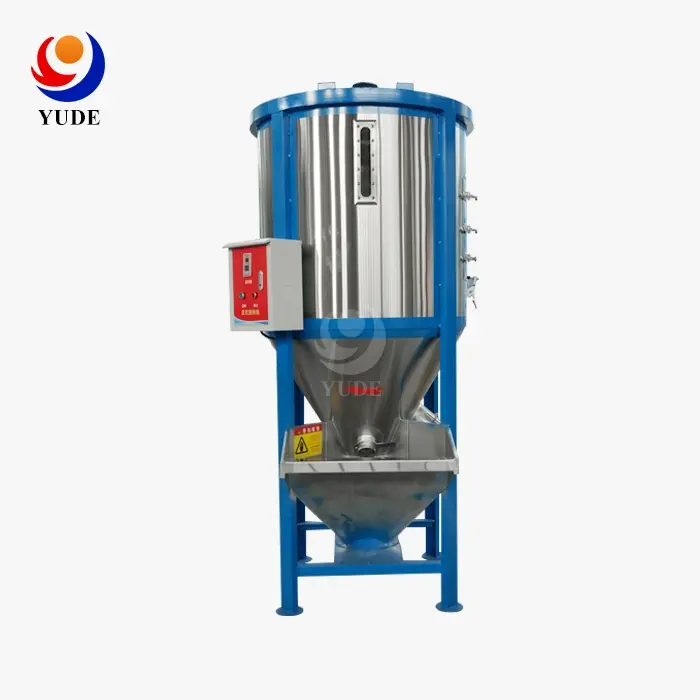
A plastic recycling machine buyers guide should start with one question: what does your material need before it reaches the extruder or molding press? For many plants, the answer is blending and moisture control in a single step. A 1000kg vertical plastic particle mixer with drying function https://www.yudemachinery.com/vertical-plastic-particle-mixer-with-drying-function/1000kg-vertical-plastic-particle-mixer-with-drying-functionblends pellets, regrind, and additives while heating the batch to remove surface moisture. Yude Plastic Machinery rates its unit at 1000kg per batch with mixing uniformity of 98 percent or higher. This guide explains how I judge capacity, performance, materials, suppliers, and installation, so you can compare quotes with confidence.
Why a 1000kg Vertical Plastic Particle Mixer with Drying Function Matters in Plastic Recycling
Moisture, Mixing, and Fewer Transfers
After being recovered, plastic rarely looks brand new. The U.S. The EPA found that only 8.7% of the 35.7 million tons of plastics that were thrown away in cities were recovered. The surface of washed flakes and regrind is often wet, and scrap is made when the color or additives aren't spread out evenly. A 1000kg vertical plastic particle mixer with drying function allows me to move less material between more machines. There will be less spillage and contamination, and separate machines will take up less floor space. That's important when more than one extruder or mold gets food from the same batch.
Rated Capacity vs. Working Capacity
Based on the fact that plastic particles have a bulk density of between 0.6 and 0.8 g/cm³, the 1000kg number is the most weight that can be loaded. It can hold about 1500 to 1600 L of useful stuff. Density is found by multiplying weight by volume. This means that flakes or light regrind can fill the vessel before the batch weighs 1000kg, but dense pellets get closer to the rated weight. The shape and amount of water in something can also change how it packs. When I get a price for a batch size, I ask the seller to show me the math that was used to figure out the batch size. There are different times for mixing and drying, from 20 to 35 minutes. It depends on how much water was in the beginning.
Who Benefits Most
A 1000kg vertical plastic particle mixer with drying function is useful for recycling plants, injection molding businesses, extrusion manufacturers, and masterbatch manufacturers. This is also something that distributors and OEMs look at when they need a small, integrated unit for getting materials ready. A recycler can mix dry-washed regrind with new plastic. The molder can mix the color masterbatch with the base plastic before the mold goes into the press. To make sure that color pellets are spread out evenly, a masterbatch maker can use a carrier. Each one is a batch process, and the part at the end depends on both the amount of water and the uniformity. The estimated amount of moisture left over after drying is less than or equal to 0.5% under normal working conditions.
What the Machine Is and How to Evaluate Its Performance
What Is a 1000kg Vertical Plastic Particle Mixer with Drying Function?
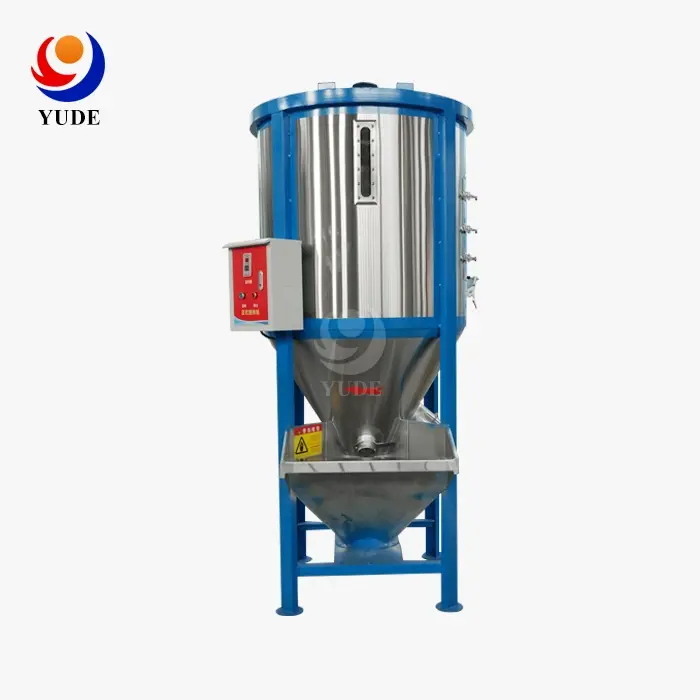
It's a batch machine that mixes things vertically, heats them safely, and dries them out. It is made up of six main parts: the vessel, the agitator, the drive system, the heating elements, the ventilation, the sensors, the controls, the loading port, and the discharge port. Then I put the material in, turn on the agitator to move the pellets around, heat the batch to the temperature I set, and watch the numbers. Finally, I empty the machine of all the material that was in it. It mostly gets rid of the water on the top during integrated drying. ABS, PC, and nylon are resins that can keep water inside the pellet because they soak it up. Because of this, heavy-duty uses may need a special dryer or a test run of the material first.
Performance Metrics Worth Testing
I judge the machine based on the whole process, not just the size of the tank or the power of the motor. Yude Plastic Machinery says that when everything is working as it should, the uniformity of the mixing should be at least 98%, and the moisture level after drying should be at least 0.5%. After all these years, I still check the cycle time, hourly output, heating rate, temperature stability, and cost of energy. What happens depends on how wet it is to begin with, the size of the particles, the shape of the blades, the speed of mixing, the shielding, and the flow of air. It is also very important to make sure that the machine is safe, so ask about overheat protection, emergency stops, temperature alarms, guarded access, and PLC controls. Checking your own work is the best way to see how things relate.
Matching Materials to the Machine
The compatibility of the materials determines whether or not a 1000kg vertical plastic particle mixer with drying function is appropriate for your plant. Different types of recycled pellets, regrind, HDPE, PP, ABS, PVC, masterbatch, powders, fillers, and stabilizers have different bulk densities, particle sizes, levels of moisture, how sensitive them are to heat, how rough they are, and how they flow. It's what I send to suppliers so they can help me build the vessel, design the blades, heat them, set up the discharge, and keep the dust under control. Because it soaks up water, ABS needs to be taken care of. It is very important to keep the temperature very low because heat can damage PVC. A powder makes you think of dust, and a rough filler makes you think of wear.
1000kg Vertical Mixer Dryer vs. Alternative Mixing Solutions
Footprint and Process Control Compared
There are different kinds of mixers and dryers, as well as ongoing machines, that get different jobs done. A horizontal mixer usually takes up more floor space than a vertical machine that can handle the same amount of material. Also, the material doesn't have to be moved from the dryer to the mixer with a vertical machine. Wet and dry processes take different amounts of time, so having separate machines lets you do more things. One steady recipe works well for systems that run all the time. Batch machines make it easier to clean between colors and can handle recipes that change a lot. How easy it is to clean, how much energy it uses, how automated it is, and how big it is are all things I think about before I buy something.
Electric vs. Thermal Oil Heating
The type of heating chosen depends on how much it costs and how much it helps. Electric heating is easy to set up because all it needs is a good power source. Heat from oil can make sense for plants that already have oil systems and want to keep the wall temperatures fixed. It does add a way to heat the house, pipes, and more work to do. I outline the price range for each choice, how much it costs to install, how much energy costs in my area, and how simple it is to get service. There are different ways to heat this size of machine, so ask each provider what their choices are. Also, get the power load in writing so your facility manager can compare it to the site's capacity.
Mixing Speed, Heat, and Dust
If you mix at high speeds, you can cut down on cycle times, but this adds heat and dust. If you want to protect fragile materials, mix at a slow speed or a speed that can be changed. You can compare your throughput to the 20 to 35 minute cycle on a 1000kg vertical plastic particle mixer with drying function. I weigh the time I save against the harm done to the pellets, fines, and static. Top speed isn't always the most important thing. If the plant's color changes a lot during the shift, cleaning access and a smooth flow of water are often more important. When making the final choice, it's important to think about the yield, changes to the recipe, moisture goals, and layout limits.
How to Choose a 1000kg Vertical Plastic Particle Mixer and Avoid Common Mistakes
Define Your Production Needs First
Before I compare quotes, I write down the daily output, batch frequency, available space, utility conditions, moisture goals, and equipment further down the line. You can figure out how many batches are made per shift by adding the time it takes to load and remove to a 20 to 35 minute run. After the party, look at what's next. A bin, tank, conveyor, or extruder feed can set the real speed. It is also important to set moisture goals. This machine should dry things to 0.5 percent or less under normal circumstances, so make sure that amount is okay for your process.
Specifications and a Complete Quotation
In order to choose the best one, you should look at the heating power, engine setup, mixing speed, temperature range, tank material, release method, and control system. Don't just look at the "1000kg" label; compare it to how the material works. When reviewing a quote for a 1000kg vertical plastic particle mixer with drying function, I look for separate lines for accessories, testing, delivery, installation, warranty, spare parts, and after-sales support. A simple price often hides extra fees. It also makes vertical mixers that are between 600kg and 10 tons in weight. So, if mass density or growth plans change, the plant can look at sizes that are close to each other.
Mistakes That Cost Money
The mistakes are in all of the goods. When buyers agree to a capacity statement, they don't check the bulk density. They do not judge drying separately, but rather all at once to make sure there is even mixing. Either they choose too much heating power, which hurts the resin, or they don't think about things like dust buildup, how to do maintenance, or the materials used. The lowest price might cost you more in the long run because of more downtime, more energy use, and quality that isn't always consistent. A 1000kg vertical plastic particle mixer with drying function should be delivered along with a written specification sheet and a test that shows the material is acceptable. For the most part, these two papers clear things up before the shipment.
How to Compare Suppliers and Decide for Different B2B Buyers
Verifying Supplier Capability
There isn't much information in a paper about what it can do. I ask about the company's experience making things, testing materials, quality control in the plant, history of exports, paperwork, and help after the sale. Between getting the parts and sending them out, Yude Plastic Machinery checks all of the stuff that goes through its production process. It also has a method for keeping customer files that keeps track of records for service and tools. They also tell me how they figure out the machine's capacity, how much moisture it can handle, what parts come with it, and if I can test some sample material first.
Questions for International Buyers
When buying a 1000kg vertical plastic particle mixer with drying function from another country, make sure to check the voltage and phase, the ocean freight packaging, the Incoterms, the customs documents, the installation support, and the supply of spare parts. It has user interfaces that can be used in more than one language, and Yude Plastic Machinery can change its machines to meet the needs of each industry. Its products are sold in more than 30 countries and regions. You can change the blade shape, the material of the vessel, the heating systems, the weighing, the PLC automation, the dust collection, the outlet height, and the connections between the lines to make it work for you. It has a service line that's open 24 hours a day, seven days a week, and I think you should write down everything you agree to.
Matching the Machine to Your Plant
Every buyer has different needs. That is why recycling plants need sturdy, easy-to-clean gear that can handle different kinds of trash and has links for washing, pelletizing, extruding, and storing. Injection molders need to be able to make batches over and over again, keep the temperature just right, make sure that the ingredients are spread out evenly, and keep the work area clean. To work well, extruders need a steady feed, to be automated, and to be able to keep up with the speed of the line. Distributors and OEMs need papers, designs that can be changed, quality that is the same, the ability to use private labels, and delivery that can be counted on. One last list should be looked over before you sign to make sure you understand the material, capacity, moisture, heating, controls, safety, testing, guaranty, and completion. A 1000kg vertical plastic particle mixer with drying function can only be placed where everything is in place.
Conclusion
A 1000kg vertical plastic particle mixer with drying function can blend, heat, and remove surface wetness all at the same time. It can hold up to 1000kg, but only if the average density is between 0.6 and 0.8 g/cm³. It can hold between 1500 and 1600 L of material, so the size of the working batch depends on the material. It is said to have a cycle time of 20 to 35 minutes, a performance level of 98 percent or higher mixing consistency, and moisture levels of 0.5 percent or less when it is used normally. Check out different choices, such as horizontal mixers and separate dryers, read a full quote, and make sure the seller is a good one before making a choice. Installing things correctly, keeping them in good shape, and keeping clear records of operations keep results safe. The best machine isn't the one with the most power or the cheapest price. It's the one that works best with the material, meets your needs, and fits your plans for future production.
FAQs
Which materials can a 1000kg vertical plastic particle mixer with drying function handle?
It can handle pellets, waste, powders, fillers, and mixed plastics such as HDPE, PP, ABS, and PVC. You should look over the material before you order it because the results will depend on its mass density, how wet it is, the size of the particles, and how sensitive it is to heat.
How much moisture can the drying step remove?
When working normally, the rated moisture level after drying should be 0.5% or less, and the cycle should be set to the initial moisture for 20 to 35 minutes. This step mostly gets rid of the water on the surface. If your resin soaks up water, it may take longer to dry. What happens in the end depends on the material, how the process is set up, and how the machine is put together.
What information should I send for a quotation?
Send details about the type of polymer, its mass density, the amount of water it contains, the product you want, how it will be powered, and what it will be used for. Tell them what kind of warmth you want, if you need automation, and where you'd like the package to be sent. Then, a good provider can suggest a good system and talk about price, ways to make it your own, and maintenance needs.
Request a 1000kg Plastic Mixer Dryer Recommendation
For a 1000kg vertical plastic particle mixer with drying function, do you need a supplier who looks at your actual needs? Talk to Yude Plastic Machinery about the type of plastic you need, its shape, how much a batch weighs, how much it needs to be heated, your power source, and where you want the machine sent. You can email sales@yudemachinery.com to test materials, make changes, send items internationally, get help with installation, get training, get a warranty, or get technical support. Visit https://yudemachinery.com/ to learn more about the item.
References
- U.S. Environmental Protection Agency, Advancing Sustainable Materials Management: 2018 Fact Sheet, 2020.
- La Mantia, F. (Ed.), Handbook of Plastic Recycling, Rapra Technology, 2002.
- Harnby, N., Edwards, M. F., and Nienow, A. W., Mixing in the Process Industries, Butterworth-Heinemann, 1992.
- Rosato, D. V., Rosato, D. V., and Rosato, M. G., Injection Molding Handbook, Kluwer Academic Publishers, 2000.
- Occupational Safety and Health Administration, Safeguarding Equipment and Protecting Employees from Amputations (OSHA 3170), 2007.
- Zweifel, H., Maier, R. D., and Schiller, M. (Eds.), Plastics Additives Handbook, Hanser Publishers, 2009.
Learn about our latest products and discounts through SMS or email