- English
- French
- German
- Portuguese
- Spanish
- Russian
- Japanese
- Korean
- Arabic
- Greek
- German
- Turkish
- Italian
- Danish
- Romanian
- Indonesian
- Czech
- Afrikaans
- Swedish
- Polish
- Basque
- Catalan
- Esperanto
- Hindi
- Lao
- Albanian
- Amharic
- Armenian
- Azerbaijani
- Belarusian
- Bengali
- Bosnian
- Bulgarian
- Cebuano
- Chichewa
- Corsican
- Croatian
- Dutch
- Estonian
- Filipino
- Finnish
- Frisian
- Galician
- Georgian
- Gujarati
- Haitian
- Hausa
- Hawaiian
- Hebrew
- Hmong
- Hungarian
- Icelandic
- Igbo
- Javanese
- Kannada
- Kazakh
- Khmer
- Kurdish
- Kyrgyz
- Latin
- Latvian
- Lithuanian
- Luxembou..
- Macedonian
- Malagasy
- Malay
- Malayalam
- Maltese
- Maori
- Marathi
- Mongolian
- Burmese
- Nepali
- Norwegian
- Pashto
- Persian
- Punjabi
- Serbian
- Sesotho
- Sinhala
- Slovak
- Slovenian
- Somali
- Samoan
- Scots Gaelic
- Shona
- Sindhi
- Sundanese
- Swahili
- Tajik
- Tamil
- Telugu
- Thai
- Ukrainian
- Urdu
- Uzbek
- Vietnamese
- Welsh
- Xhosa
- Yiddish
- Yoruba
- Zulu
Plastic Pipe Extrusion Line Installation and Training
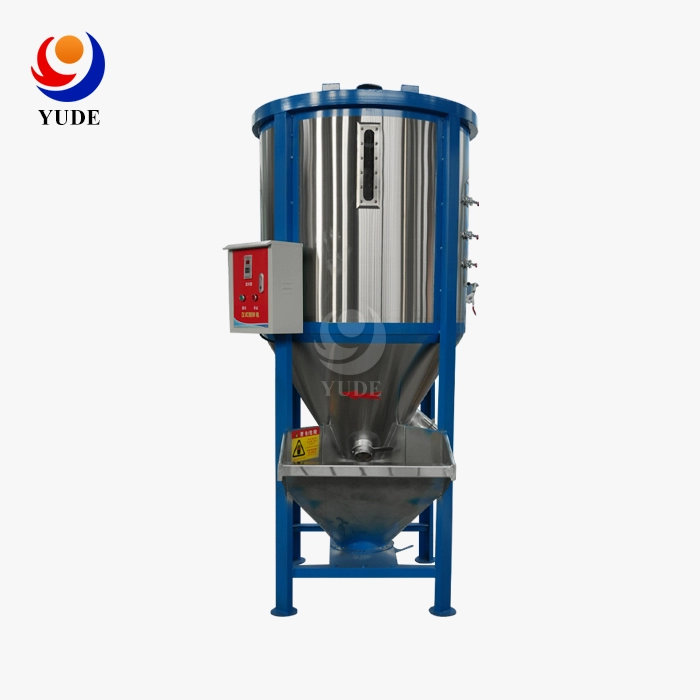
Plastic pipe extrusion line installation and training work best when you treat the mixer as the first machine in the line, not an accessory. A PVC plastic particle mixer https://www.yudemachinery.com/plastic-mixer/pvc-plastic-particle-mixerblends PVC pellets with stabilizers, lubricants, and pigments before the material reaches the extruder. Correct leveling, wiring, test runs, and operator instruction decide whether your pipe has steady color, wall thickness, and output. I recommend planning the site, verifying each machine during commissioning, and training operators before the first production shift. This guide walks through each stage, from utilities to acceptance testing, so your team can start production with fewer surprises.
Why Installation and Training Matter in PVC Pipe Production
How Setup Quality Affects Pipe Quality
The quality of the pipe, the stability of the extrusion process, the amount of energy used, and the longevity of the equipment are all directly related to how the equipment is set up and how well the workers are trained. Something will show up in the die no matter what goes wrong with the mixing because it is before the extruder. If the stabilizers and oils don't spread out evenly, the color might change, the surface might be rough, or the melt flow might not be even. PVC also doesn't handle heat well. It gives off HCN when it breaks down, which rusts metal parts and weakens the whole thing. To keep friction, vibration, and heat under control, make sure the machine is level, aligned, and tested. Instead of just following a number on a sheet, it's better to know why each choice is there on the menu.
The Hidden Costs of a Poor Setup
I see you sometimes only think about the price and not the time it takes to work. It can be hard to feed, leak dust, shake, catch fire, and take a long time to start up if you don't set it up right. When something goes wrong, it costs money in the form of wasted resin, extra work, unplanned downtime, and bearings and seals that wear out faster. Plus, dust that leaks makes it hard for your crew to clean up and breathe. It could cost more than a slightly more expensive machine that is set up with clear instructions and the right help if the mixer shows up on time but takes weeks to be set up right. It's more fair to compare deals if you know these costs ahead of time.
What to Ask a Supplier Before You Buy
More than just the price of the tools should be used to choose a seller from the US and other places. If you buy something, make sure you get clear instructions on how to set it up, a list of replacement parts, detailed drawings, and the name of someone you can call if you have any questions after the sale. You can get help from Yude Plastic Machinery any time, seven days a week. We can also make control panels that work with more than one language, and we can adapt the tools to fit the needs of the local business. Know the voltage and frequency you need before you start. This is because US power companies use 60 Hz. If you write these questions down, you won't have to fight about them.
PVC Plastic Particle Mixer Operating Principle and System Configuration
How a PVC Plastic Particle Mixer Works
With a PVC plastic particle mixer, the dwell time is controlled, the plastic is stirred manually, and the temperature is managed if needed. This makes sure that the material for extrusion is the same. What makes the difference is how the room is built, how the blades are set up, how fast the machine moves, how full it is, how it empties, and how well it checks the temperature. It's hard for materials to move when there is too much or too little filling. This wastes cycle time. Also, the time you mix is important. Adding things will stick together if the length is too short. If you let it go on too long, heat will be added, and PVC can't take that well. Automatic loading, dust-proof lids, PLC controls, and safety interlocks are some of the things that can be added to machinery. You can also mix hot and cold ones. You believe that time, speed, and fill level are all the same setting. Write down all the numbers that will work in each situation.
Yude Vertical Mixer Designed for PVC Pellets
Our spiral-shaped vertical PVC plastic particle mixer works well with the way PVC pellets are made. We set up the mixing so that it works with the thickness and flow of the pellets. That way, you can mix at least 98% of the things without them sticking together. We chose a barrel made of PVC because it will last longer, and we pair it with mixing parts that won't break down quickly. PVC pellets, injection molds, and extrusions are all made on these lines. All of them can be done by the machine. It can also mix pellets for PE films, PVC profiles, PP pipes, and ABS shells for home goods. Vertical mixers that can hold between 600 kg and 10 tons are another thing it makes. Small units that weigh 300–500 kg are another.
Particle, Powder, and High-Speed Mixers Compared
You need to buy particle mixers, powder mixers, and high-speed mixers all on their own if you want to mix things in different ways. These are the best mixers for things that don't stick together and need a slow, even flow. To take in chemicals, powder blends need more pressure and heat because they are lighter and make more dust. High-speed mixers that are hot heat things up by rubbing against them. After that, things are cooled down in a cooler mixer before they are fed or kept. You should look at more than just speed. You should also look at the recipe, the particle size, the mass density, the output you need, and the extrusion process as a whole. If you're not sure which group fits your method, our engineers will look over your data with you. You can send it to us.
Pre-Installation Planning and Step-by-Step Installation
Plan the Site, Utilities, and Documents
Extra work is lessened when plans are made before delivery. Check the PVC formulation, pipe diameter range, wall thickness, target output, batch size, mixing time, and how it can grow in the future before your PVC plastic particle mixer ships. You need to make sure that the extruder, the mixer, the cutter, storage, haul-off, and repair all have room in your plan. Make sure there is no water, air flow, dust buildup, wires, compressed air, and weight on the base. Check the height of the roof and doors to make sure there is enough space to load and unload. The drawings, wiring plans, directions, and lists of extra parts should all be signed by everyone before they are used.
Inspect, Position, and Anchor the Equipment
As of now, the package has been inspected. After getting the parts, spares, sensors, control cabinet, and transmission parts, it's important to make sure they match what was packed. Picture any damage from the move before you sign. You have to do things in a certain order when working with metal. First, set up the machine and make sure it is level. Then, lock it down, check the blade clearance, and put on the guards. Turn the shaft by hand if it says to do so to see if any parts are broken or coming together. Vibrations are kept to a minimum when leveling is done right. During long production runs, this keeps the bearings and seals safe. Keep the signed installation record safe in case you need to use it to support a warranty claim.
Wiring, Line Integration, and Test Runs
First, the electrical parts of the motor's spin are checked. Then, the links between sensors, emergency stops, interlocks, PLC settings, and alarms are looked at. Then, link the hopper to the mixing machine, the extrusion line, and the hopper so that the material can move quickly from one machine to the next. First, check it out without anything on it. Then, start with small amounts of load and add more slowly. Keep an eye out for shaking, temperature rise, output issues, and breaks in the process between the extruder and the mixing. Take care of all the problems before the full production starts. From the first day it goes through these steps, this PVC plastic particle mixer gives the printer a steady feed.
Operator Training and Performance Verification
Building the Training Program
Users and service staff can always and safely use the machines with the help of an organized training program. Train every PVC plastic particle mixer operator on start-up and shutdown, loading order, recipe settings, batch size, mixing time, temperature limits, discharge, and automatic or manual operation. Students should learn about how temperature, time, and cooling can change how well something works. Include steps for cleaning and switching between chemicals, new plastic, reclaimed material, and colors. Staffing changes and new hires are kept up to date with short training meetings and written SOPs.
Maintenance and Safety Basics
Every so often, as part of normal maintenance, you should check the safety devices, sensors, bolts, bearings, and wheels. It does matter how much wear and tear the PVC parts are, so check them often and write down what you find. It is important to know what to do in an emergency, how to keep yourself safe from dust and heat, and how to work with moving parts. The US's 29 CFR 1910.147 lockout/tagout standard tells people how to keep dangerous energy in check while work is being done. Everyone who touches the machine should sign a list of the steps.
Acceptance Testing and Handover
The PVC plastic particle mixer meets both the standards and your production needs because it worked well in tests. Take a look at the noise level, sounds, time spent stirring, motor power, blade speed, and how the dust is kept in. Make sure to look at samples to see if the additives are spreading, the color is even, and the additives are not sticking, splitting, or getting dirty. Look at the pipe to make sure it's the right size, the surface is smooth, and the process stays stable. You need to keep track of output, energy use, downtime, cycle time, and scrap to find out how much it costs to run. What does ASTM D1784 say about your compound? It needs to meet certain conditions to be a hard PVC compound. Have the operator sign off on a list of acceptable parameters, maintenance records, spare part tips, and instructions on how to handle the warranty when the machine is turned over.
Selecting, Buying, and Managing a PVC Plastic Particle Mixer Project
Match the Mixer to the Application
Each machine is different based on its technology, the number of batches, the plan, and the length of the production run. It's important to make sure the chamber is the right size for the job. If the chamber is too big, it won't work as well. Profile, wire, recycle, and color-masterbatch are some of the jobs that might need different amounts of virus control, mixing, or cleaning. Put horizontal and vertical designs next to each other and look at how much space they take up, how materials move through them, and how easy they are to maintain. You can treat carbon steel or stainless steel to make it easy to touch. These things will clean up with the products and the way you clean. We make vertical PVC plastic particle mixers that can hold up to 10 tons of stuff. We also make mixers out of stainless steel and different colors of steel.
Write a Clear RFQ
If you ask for very specific quotes, you'll get quotes that are the same. Note down the ingredients, the particle size, the bulk density, the level of moisture, the capacity, the batch size, the mixing time, the temperature range, the electricity standard, the plant conditions, the automation needs, and the ways to keep dust out. Get more than one quote for a PVC plastic particle mixer. Don't just look at price. You should also think about how much it will cost you to own it all, the design of the blades, the motor power, the control functions, the services that come with it, and the actual capability. Make a list of the terms for shipping, setup, activation, taxes, local support, delivery, and inspection. Find out how long it takes to get an answer, what the guaranty is, and what the extra parts are.
Avoid Common Mistakes
Things often go wrong because of poor planning rather than mistakes. You can't tell how much something can hold by looking at its size alone. This makes it hard for things to move, keeps the machine from being fully stocked, and wastes energy. Don't forget that temperature and living time are linked. If you don't, PVC can break down or leave additives that aren't spread out well. Things take longer to move if you don't think about where the feeder goes, how much the extruder needs, and how to clean up the dust. People should always be trained, and there should be SOPs, refreshers, and care records. Before you buy, check the supplier's response times, paperwork, guarantee coverage, and ability to help you get replacement parts.
Follow a Staged Project Workflow
It saves money and time to use a staged method. First, you need to figure out the formula, the pipe needs, the output, the utilities, and whether you need a mixer that works on its own or a full line. Ask for a technical plan that shows how it will be set up and includes a list of features, controls, prices, and tools. Third, agree on important details while the product is being made, and make plans for a review before it ships. Fourth, full setup, testing without load, test in production, and training after delivery. Last but not least, keep an eye on how it's doing and make plans to fix it often. Yude Plastic Machinery is ready to help you if you have any questions about the PVC plastic particle mixer. After the sale, they even give service.
Conclusion
It depends on how well the plastic pipe maker line is set up and trained. A PVC plastic particle mixer can help make pipes that are stable and uniform. Make sure the spot is flat, wire it, and plan it before you start building. Do staged test runs to cut down on problems with shaking, heat, and dust. When operators are trained, they learn how to manage the temperature, the mixing time, the loading order, safety, cleaning, and repairs. The next step is acceptance testing, which checks the flow rate, the consistency of the mix, and the results of extrusion. Craft a thorough ask for quotes and stick to a step-by-step project plan. This will keep buyers from making mistakes like getting the wrong size or forgetting to add the living time. The spiral shape of this vertical mixer makes it work for this method. Its parts last a long time, and at least 98% of the time, the mixing is even. For a long time, these steps will keep the lines and tools safe.
FAQ
How long does installation and commissioning take?
What happens is based on how big the machine is, how ready the spot is, and how well the line is put together. Make sure the company you pick gives you a written plan that includes time for setting up, testing without load, trial production, and worker training.
What is the difference between a particle mixer and a powder mixer?
Pellets can move around freely in a particle mixer. Lighter things that need more shear or heat make more dust. For these things, a powder mixer is used.
How do I size the right mixer?
It is important to make sure that the useful size fits how the extruder is used, how many batches are made, and how long it takes to mix. We will send you a model to look at after you send us your formulation and the result you want.
Can Yude customize the machine for my plant?
Yes. We offer user tools in more than one language, work with products and sizes that aren't standard, and adapt our tools to meet the needs of the local business.
Contact Yude Plastic Machinery for Plastic Pipe Extrusion Line Installation and Training
Are you going to build a new line or fix up an old one? Yude Plastic Machinery sells PVC plastic particle mixers. You can get help after the sale 24 hours a day, seven days a week. Their vertical mixers can hold anywhere from 600 kg to 10 tons. Our team will help you set up the machine if you email sales@yudemachinery.com with your formula, pipe range, and output goal. To find out more about this item, go to yudemachinery.com.
References
- Handbook of PVC Pipe: Design and Construction, Uni-Bell PVC Pipe Association, 2012
- ASTM D1784 Standard Specification for Rigid PVC and CPVC Compounds, ASTM International, 2020
- Control of Hazardous Energy (Lockout/Tagout), 29 CFR 1910.147, Occupational Safety and Health Administration, 1989
- Polymer Extrusion, Chris Rauwendaal, Hanser Publications, 2014
- PVC Degradation and Stabilization, George Wypych, ChemTec Publishing, 2015
- PVC Handbook, Charles Wilkes, James Summers, and Charles Daniels, Hanser Publishers, 2005
Learn about our latest products and discounts through SMS or email