- English
- French
- German
- Portuguese
- Spanish
- Russian
- Japanese
- Korean
- Arabic
- Greek
- German
- Turkish
- Italian
- Danish
- Romanian
- Indonesian
- Czech
- Afrikaans
- Swedish
- Polish
- Basque
- Catalan
- Esperanto
- Hindi
- Lao
- Albanian
- Amharic
- Armenian
- Azerbaijani
- Belarusian
- Bengali
- Bosnian
- Bulgarian
- Cebuano
- Chichewa
- Corsican
- Croatian
- Dutch
- Estonian
- Filipino
- Finnish
- Frisian
- Galician
- Georgian
- Gujarati
- Haitian
- Hausa
- Hawaiian
- Hebrew
- Hmong
- Hungarian
- Icelandic
- Igbo
- Javanese
- Kannada
- Kazakh
- Khmer
- Kurdish
- Kyrgyz
- Latin
- Latvian
- Lithuanian
- Luxembou..
- Macedonian
- Malagasy
- Malay
- Malayalam
- Maltese
- Maori
- Marathi
- Mongolian
- Burmese
- Nepali
- Norwegian
- Pashto
- Persian
- Punjabi
- Serbian
- Sesotho
- Sinhala
- Slovak
- Slovenian
- Somali
- Samoan
- Scots Gaelic
- Shona
- Sindhi
- Sundanese
- Swahili
- Tajik
- Tamil
- Telugu
- Thai
- Ukrainian
- Urdu
- Uzbek
- Vietnamese
- Welsh
- Xhosa
- Yiddish
- Yoruba
- Zulu
How to Solve 10 Common Problems in Plastic Extrusion?
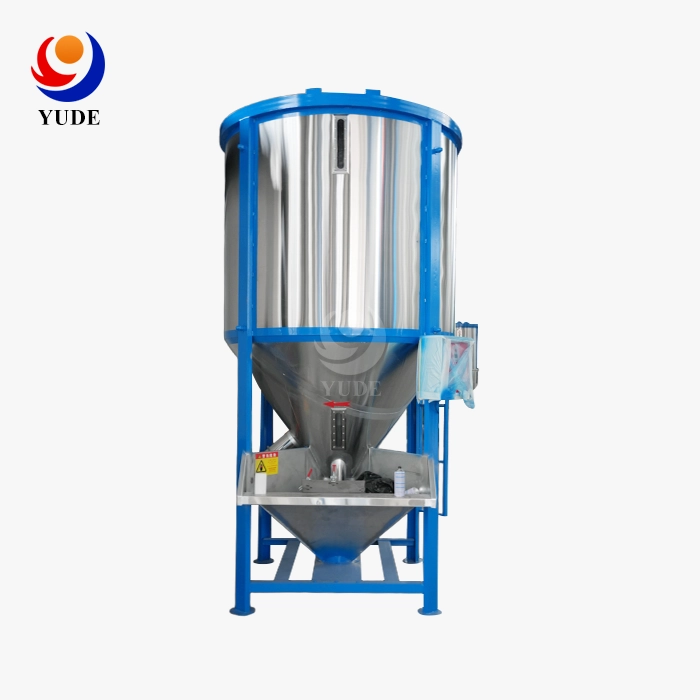
You can solve most of the 10 common problems in plastic extrusion by fixing material preparation before the resin reaches the screw. Moisture, uneven color, unstable feeding, and inconsistent batches usually start upstream. A 5 ton vertical plastic particle mixer with drying function https://www.yudemachinery.com/vertical-plastic-particle-mixer-with-drying-function/5-ton-vertical-plastic-particle-mixer-with-drying-function combines hot air drying and vertical spiral mixing in one vessel, so you remove surface moisture and blend masterbatch and additives in a single batch. It does not replace the extruder, and it cannot repair a worn die. In this guide, I walk through each problem, show how upstream control helps, and explain how to select and verify the equipment.
Why Upstream Mixing and Drying Determine Extrusion Performance
Where Extrusion Defects Start
I've seen plants change the temperature of barrels for weeks on end when the real problem was with the material. Water turns into steam inside a hot pot. When the steam goes through pipes and profiles, it leaves behind bubbles, holes, and splay marks. It makes lines and color changes when additions aren't spread out well. It changes every second how much resin falls into the feed throat when the bulk density isn't even. The output and melt pressure change because of this. Too much heat in the resin before it is pushed out can change its color, and PVC is very sensitive to heat. All of these mistakes slow down the line and make more waste. A lot of things can be taken care of by controlling the temperature, mix, and moisture before feeding. This makes it easy to run the extruder.
What the Machine Does in the Line
This is where the gear goes. There is a 5 ton vertical plastic particle mixer with drying function that can dry the new pellets, recovered particles, masterbatch, fillers, and chemicals before they are fed into the machine. After that, machinery moves the batch to the extruder. The line melts the dough, shapes it, lets it cool, and then cuts it. This machine was made by Yude Plastic Machinery to dry out PE, PP, ABS, and PVC bits, change blends, and mix colors. Do not use this step instead of the screw, die, or cooling system. It is only for getting ready. It's like making sure that the dry, well-mixed trash that goes into the bin every shift is the same.
What "5-Ton Capacity" Really Means
Some people may say that two machines have the same tonnage when they look at them, but they really mean something else. Our unit has a useful volume of about 7,500 to 8,000 liters and a bulk density of 0.6 to 0.8 g/cm³. It can hold up to 5,000 kg. It takes about 6,250 liters at 0.8 g/cm³ and 8,300 liters at 0.6 g/cm³ to move 5,000 kg. This means that materials that are very light might need a batch that is lighter than the rated weight. Check with each provider to see if the number refers to the vessel volume, the highest load, the working batch, or the hourly output. Then, compare the number to the density data you already have.
How to Solve the 10 Common Problems in Plastic Extrusion
Problems 1 to 5: Moisture, Color, Feeding, Clumping, and Recycled Material
The first five issues are moisture problems, color that doesn't stay the same, unstable feeding, clumping, and recycled material that doesn't spread out well. The 5 ton vertical plastic particle mixer with drying function dries pellets until they have less than 0.5% water in them. You can set the hot air to any temperature between room temperature and 85°C. Material from the bottom is picked up by the vertical spiral and moved around the vessel. This keeps the color and additives from running. This design makes sure that the mixing is even 98% of the time or more. Also, a more stable bulk density comes from a blend that is more even. This keeps the feeding steady. If warm, dry pellets can move around easily, they will stick together less. Since particle size, dust, and contamination can be different from one source to the next, I think you should test the recycled granules with your own mix first.
Problems 6 to 10: Energy, Heat, Surface Defects, Blockages, and Batch Variation
These are: using a lot of energy, getting damaged by heat, having flaws on the outside, getting stuck, and differences between batches. You can skip a step where you have to move things around by mixing and drying in the same pot. This saves time and heat. Because the feeding port is sealed and the insulated layer on the Q235 carbon steel barrel, hot air doesn't escape. This helps keep the temperature stable. Keep the setpoint in the range given by the glue seller to avoid damage. For PVC, this is very important. Wet or uneven feed can leave flaws on the surface. When the feed is dry and even, those flaws go away. If pellets can move around freely, they get stuck less often. If recipes, timers, and batch records are fixed, shift differences are also less noticeable. Don't just look at the motor's size; also check how much energy it uses per batch or per ton.
What Upstream Preparation Cannot Fix
I need to explain the rules. A 5 ton vertical plastic particle mixer with drying function can't fix a die that is worn out, screws that don't work right, bad cooling, or a barrel temperature profile that isn't right. Check the whole process in a certain order, as most extrusion troubleshooting guides say. If the problem is still there after you've changed the blend and moisture, check those things next. Hot air up to 85°C can also be used to dry things that don't need to dry right away. If the direction for the resin says that the amount of wetness must be less than 0.5% or the temperature must be higher for drying, add another heater after this step. You won't waste time on the wrong cause if you know these amounts.
How a 5 Ton Vertical Plastic Particle Mixer with Drying Function Works
Vertical Spiral Circulation
There is a spiral that goes up and down in the 5 ton vertical plastic particle mixer with drying function that lets the pellets fall back through the vessel. With this movement, the main glue, fillers, and chemicals are mixed over and over again. The thicker carbon steel spiral is moved by a motor that mixes things that needs to be able to handle a lot of weight. The design aims for at least 98% mixing uniformity. Because of the small number size, the vertical plan makes a small impact. You should still compare the pictures to the height of the ceiling, though. Compare the color and amount of additives in samples from the top, middle, and bottom of the container to make sure they are all the same.
The Hot Air Drying System
Hot air comes from electric heating tubes that have 80 to 100 kW of power. You can also use steam to heat the room. You can use the datasheet from the resin supplier because hot air can be heated from room temperature to 85°C. There is insulation in the barrel, and the filling port is shut so that hot air doesn't escape during the turn. There are 35 to 50 minutes between loads to mix and dry one batch, which is 6 to 8.5 tons per hour for a 5-ton lot. After drying, the amount of water drops to 0.5% or less. If your resin doesn't need more than 0.5% moisture, you can skip the separate drying step and use this 5 ton vertical plastic particle mixer with drying function instead.
Integrated Unit vs. Separate Mixer and Dryer
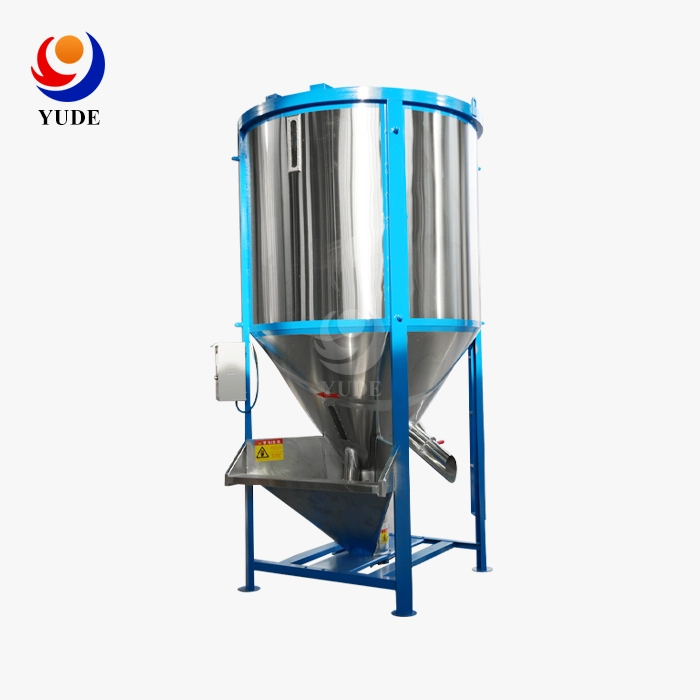
Will you buy one united machine or two? The 5 ton vertical plastic particle mixer with drying function is one example of a machine that can mix and dry at the same time. This saves time, money, and floor space. It also keeps the process under one step of supervision. That works for plants that only make a few different kinds of resin at a time. With their own tools, different extruder lines can work with different materials or dry them in different ways. Also, you should look at the different ways to heat your home. It's easy to set up electric heating, but steam heating works best in places that already have a steam source. Our unit uses Q235 carbon steel since it is inexpensive and good for many pipe and profile jobs. Yude Plastic Machinery also makes plastic mixers out of stainless steel for situations where it's more important to keep things clean or not rust.
How to Select the Best 5-Ton Plastic Pellet Mixer with Drying Function?
Start with Your Material and Process
Do not begin with the writing; instead, begin with your plastic. For each type of resin, write down the batch weight, the hourly output, the goal moisture, the number of extrusion lines, and whether the material is fed in groups or all the time. Then make sure the machine is the right size for the job. A 5 ton vertical plastic particle mixer with drying function that can also dry things out can complete a cycle in 35 to 50 minutes. To get an idea of how many tons it can hold per hour, start with 6 to 8.5 tons per hour and then subtract the time it takes to load, unload, and clean. If one machine isn't big enough for your hourly needs, ask about bigger ones or more than one. Yude makes a variety of vertical plastic mixers that can hold up to 10 tons of weight.
Specifications to Compare
Check to see if the prices listed by different sellers for the same items are the same. You should look at the maximum weight it can hold, the heating power (80 to 100 kW), the range of hot air temperatures, the cycle time, the size and height of the exit, the material of the tank, and the control level. Also, add up how much power is being used. Before any other parts are added, the mixing motor and heating tubes add up to 117 to 145 kW. Tell people right away what your voltage is. Most factories in the US use three-phase 60 Hz power at 460 to 480 V. Power per ton tells you more than motor size because the real load changes based on the mass density, fill level, and friction.
Judge the Supplier
It's important to have someone behind a good machine. Find out about the plan schemes, choices for factory tests, lists of extra parts, terms of the warranty, and how to get help. Mixers are made and sold by Yude Plastic Machinery. They look over them at every stage, from getting the raw materials to delivering them. Our service center is open seven days a week after the sale, and we work with service teams in other countries. It's also possible for us to give an interface that can be used in more than one language and change the tools to fit local specs. Big plants should buy extra wear parts with the machine, that's why I say that. They lose money when a line stops. Send your process data when you ask for a price quote on a 5 ton vertical plastic particle mixer with drying function that can also dry things out. The plan will fit your line this way.
Installation, Commissioning, and Performance Verification
Prepare Before Shipment and Site Work
Plan the spot before the box leaves the plant. Write down the final specifications, installation drawings, electrical standards, extra parts, packing, and test plans to make sure they are correct. Take a look at your plant's air flow, hot air ducting, dust collection, safety guarding, and the path from the discharge outlet to the extruder feed. Also, make sure the foundation is strong and that there is enough space above the ceiling. You can ask Yude for the weight and size of the 5 ton vertical plastic particle mixer with drying function. After that, you need to give these to your civil engineer. For big pieces of equipment, you might also need a lift plan and permits to move them. Don't miss your delivery date; make sure you take care of these things early on.
Commissioning Tests
Setting up should be done in two steps. First, check the machine out without anything on it. Take a look at the direction of rotation, noise, vibration, emergency stops, overheating and motor overload protection, and sensor readings. It's then time to test the mixture with the material. Keep track of the time it took to mix, the stable temperature, the motor current, the drying result, the discharge behavior, and the batch's consistency. Now is the time to train the workers and make a standard list and recipe for each shift. As you clean, parts wear out, how much power you use, and the state of the devices are written down. These logs help you find slow changes before they become stops, which is important for lines that work all the time.
Verify Results Against Acceptance Criteria
Do not take an empty machine as proof on its own. After drying, check the color consistency, additive distribution, mass density, contamination, and pellet temperature. Also, check the wetness level before and after drying. Before you divide the batch, get samples from the top, middle, and bottom. Then, look at how the extrusion on your line works: the output, the stable melt pressure, the surface look, the number of bubbles, the scrap rate, the energy use, and the time it takes to switch over. For the order to be accepted, write down in the purchase order what needs to be done. These should have safety functions, temperature accuracy, noise levels, cycle time, batch weight, and mixing uniformity of 98% or higher. Moisture levels should be 0.5% or less. With these numbers, a 5 ton vertical plastic particle mixer with drying function becomes a reality.
Conclusion
When you mold plastic, a lot of problems happen before the glue ever gets to the screw. Some of the things that can go wrong with a material are color differences, clumps, heat damage, and differences between batches. A vertical spiral flow and hot air drying take care of these upstream problems in a single batch step. This 5 ton vertical plastic particle mixer with drying function can dry enough in 35 to 50 minutes so that the moisture level is 0.5% or less and the mixing is even 98% of the time. If you need to limit the amount of moisture, you may need a separate dryer. It can't change screw shape or die wear. Do not choose based on the nominal capacity. Instead, choose based on the type of resin, the bulk density, the batch weight, and the power supply. This is clear from tests on your own line.
FAQ
Can this mixer replace a separate dryer?
If you use the right glue and amount of water, the machine can do it. It dries pellets to 0.5% moisture or less with hot air up to 85°C. If the datasheet for your resin says that the level of moisture needs to be lower, mix the solids together and then add a dryer.
What drying temperature should I set?
Read and follow the data sheet that comes with the resin. Up to 85°C of hot air can pass through it, and tests for moisture make sure the setting is right. PVC needs extra care because heat can change its color.
Can I process recycled plastic with a 5 ton vertical plastic particle mixer with drying function?
Pieces of PE, PP, ABS, and PVC can be used in the machine. Don't buy until you send us a sample and your density data. We'll look at the fit with you. Different sizes of recycled granules have different amounts of dust and other rubbish in them.
What should I send for a quote?
How do I get a quote? What do I send? Send the type of resin, the weight of the batch, the wattage, the humidity goal, the voltage, and a free layout space.
Request a Customized Mixing and Drying Solution from Yude Plastic Machinery
Just write down what your material is and email it to sales@yudemachinery.com. Our team will take a look at it. Our company makes a 5 ton vertical plastic particle mixer with drying function. We build the machine ourselves, make sure it meets local standards, and provide customer service 24 hours a day, seven days a week. Before you ask for a quote for your extrusion line, take a look at our full line of mixers at yudemachinery.com.
References
- Troubleshooting the Extrusion Process, Hanser Publishers, 2010
- Polymer Extrusion, Hanser Publishers, 2014
- Extrusion: The Definitive Processing Guide and Handbook, William Andrew Publishing, 2013
- Plastics Extrusion Technology, Hanser Publishers, 1997
- Plastics Additives Handbook, Hanser Publishers, 2009
- Mixing in Polymer Processing, Marcel Dekker, 1991
Learn about our latest products and discounts through SMS or email