- English
- French
- German
- Portuguese
- Spanish
- Russian
- Japanese
- Korean
- Arabic
- Greek
- German
- Turkish
- Italian
- Danish
- Romanian
- Indonesian
- Czech
- Afrikaans
- Swedish
- Polish
- Basque
- Catalan
- Esperanto
- Hindi
- Lao
- Albanian
- Amharic
- Armenian
- Azerbaijani
- Belarusian
- Bengali
- Bosnian
- Bulgarian
- Cebuano
- Chichewa
- Corsican
- Croatian
- Dutch
- Estonian
- Filipino
- Finnish
- Frisian
- Galician
- Georgian
- Gujarati
- Haitian
- Hausa
- Hawaiian
- Hebrew
- Hmong
- Hungarian
- Icelandic
- Igbo
- Javanese
- Kannada
- Kazakh
- Khmer
- Kurdish
- Kyrgyz
- Latin
- Latvian
- Lithuanian
- Luxembou..
- Macedonian
- Malagasy
- Malay
- Malayalam
- Maltese
- Maori
- Marathi
- Mongolian
- Burmese
- Nepali
- Norwegian
- Pashto
- Persian
- Punjabi
- Serbian
- Sesotho
- Sinhala
- Slovak
- Slovenian
- Somali
- Samoan
- Scots Gaelic
- Shona
- Sindhi
- Sundanese
- Swahili
- Tajik
- Tamil
- Telugu
- Thai
- Ukrainian
- Urdu
- Uzbek
- Vietnamese
- Welsh
- Xhosa
- Yiddish
- Yoruba
- Zulu
How to Control Pressure in Laboratory Extrusion Process?
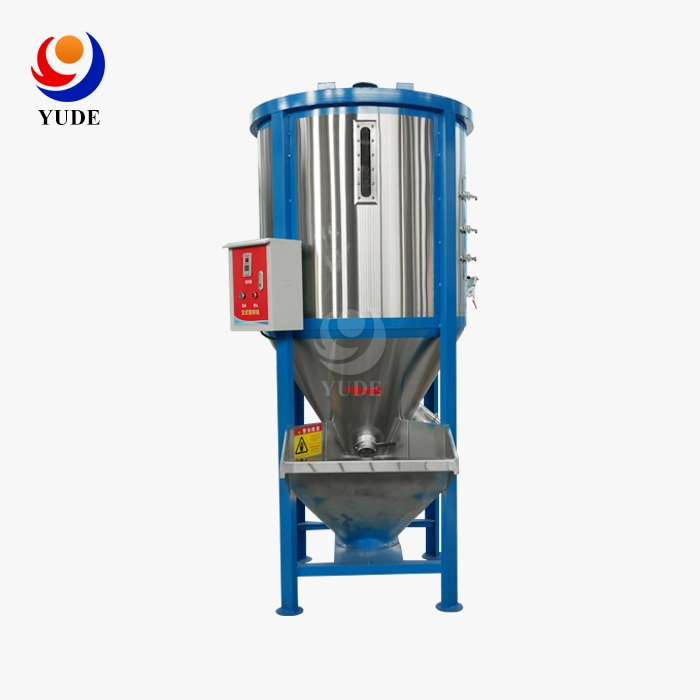
To control pressure in a laboratory extrusion process, start with consistent feedstock. Then adjust feed rate, screw speed, and temperature one at a time while you log pressure and torque. A 300kg vertical plastic particle mixer https://www.yudemachinery.com/vertical-plastic-particle-mixer-with-only-stirring-function/300kg-vertical-plastic-particle-mixersupports that first step. It blends virgin resin, recycled pellets, and masterbatch before they reach the hopper, so the extruder sees the same material from the start of the run to the end. It does not replace the extruder's pressure controls, but it removes one common source of pressure swings. Below, I cover the causes, the methods, and the buying checks.
Understanding Extrusion Pressure in the Laboratory
What Melt Pressure Measures
As the polymer moves through the screw, barrel, screen pack, adapter, die, and tools further down the line, it faces resistance. Our term for this is "melt pressure." All the rules add up to the whole. In a lab line, transducers are usually put near the die and before the screen pack. They tell different stories in each telling. If the reading goes up before the screen pack and stays the same after it, the screen is clogged. If the die rises, it means that the liquid or the die itself is hot. I always ask which monitor gave me a number before I try to figure out what it means.
Why Stable Pressure Matters for Lab Results
There is no change in output or melt when the pressure stays the same. There is also no change in size, surface quality, or color. For formulation work, this is important because it lets you see how one run compares to another. If the pressure changes on its own, you can't tell if it was because of something new or the process. Pressure spikes can also be dangerous, which is why many extruders have a high-pressure limit that stops the drive. The data can be used over and over again if the numbers stay the same. This is useful for a report, a patent application, or a plan to grow.
Common Pressure Symptoms and the Role of Feedstock
Many times, there are four patterns that show up: a slow rise, a rapid spike, low pressure, and instability after the resin or masterbatch has been changed. Most of the time, a slow rise means that trash is getting past the screens. Spikes can be caused by either a die that is stuck or a batch that is too wet. This could mean that there isn't enough feed or that the melting isn't good. It's often because the pellets aren't level that they shake after a change. Because it creates a single, even mix before extrusion, a 300kg vertical plastic particle mixer is helpful with the final group. Regular fuel helps keep the pressure stable in a roundabout way.
Diagnosing the Root Causes of Unstable Pressure
Raw Material Variables
This stuff is the cheapest, so check it out first. ASTM D1238 checks the melt flow rate to see how easily a resin flows. The pressure changes from one lot to the next when the same settings are used. The pellet size and bulk density change how much the screw picks up each turn. When water turns into steam, it can cause rushing. Recycling, fillers, and masterbatch that isn't spread out evenly cause the melt's consistency to change all the time. It changes how thick a resin is as it breaks down in the barrel. Keep track of the lot numbers and check them against each other every time the pressure changes.
Hopper and Feeding Problems
A lot of problems with pressure start above the screw. Plaques that form a curve over the throat show that the screw is hungry. Rat-holing makes a way for things to move through while keeping the rest still. The way pellets get into the throat changes when the bin is almost empty. Also, the weight you think you feed might not match the weight you get. As the pellets, fillers, or masterbatch move, the heavier ones separate. At the end, the extruder sees a different recipe than it did at the start. Watch the hopper for a while as the pressure changes.
Extruder Settings and Equipment Condition
Make sure the machine looks stable by looking at the feed and material. Pressure is changed by the screw's speed, feed rate, temperature profile, design, and dwell time. When the screen pack is clogged or the die is partly blocked, the pressure builds up over time. When the transducer isn't set up right, it gives false readings, and when the heater band isn't working right, it changes the melting point. A worn-out screw or shaft can make the pressure go down because it moves less. Sort each sign into one of three groups: care, process, or material. Because it's habit, you won't change the screw speed when the real problem is a dirty screen.
Principles and Practical Methods for Pressure Control
Begin With Material Consistency
The first thing I think about when there is a problem with pressure control is the material. The second thing I think about is the settings. Set the order in which the ingredients are mixed and dry moisture-sensitive resins the way the data sheets say to. Also, make sure that the recipe stays the same by weight. Pellets should be kept in cases that no one can open. When you try something new, make sure the batch size stays the same and the unit is fed in the same way each time. The process can be planned since the mass density and feed rate don't change. For a short time, making quick changes to the screw speed or temperature might hide the problem. But with the next batch, the problem comes back.
Change One Variable at a Time and Record Everything
Be careful at first. Don't look at the numbers until the temperature profile is stable. Set the feed rate and screw speed to slow the machine down. Slowly raise the flow while keeping an eye on the pressure and force. First, make one change. Then, wait for the line to slow down. Write down the pressure range, power, output, melt temperature, and product quality. The recipe, how to mix it, and how to press it should also be written in your log. If you change the temperature and the feed rate at the same time, you won't be able to tell which one changed the pressure. A simple log can be used over and over as proof of a lab test.
Adjust the Method to the Polymer
Different plastics need to be looked at in various ways. People are interested in the melt flow rate and the recovered material because PP and PE don't soak up a lot of water. ABS soaks up water and works better when it's dry. Being in one place for a long time or having hot spots can break down PVC because it is sensitive to heat. When compounds are filled, screws and other parts wear out faster, and masterbatch blends depend on the compounds being spread out evenly. Don't use what you've always done to figure out the drying and temperature limits. Instead, use the data sheet from the provider for each grade. You should clean or replace the screen packs every so often, and make sure the pressure sensors are set up before a trial series.
How a 300kg Vertical Plastic Particle Mixer Supports Pressure Stability
An Upstream Process-Control Unit
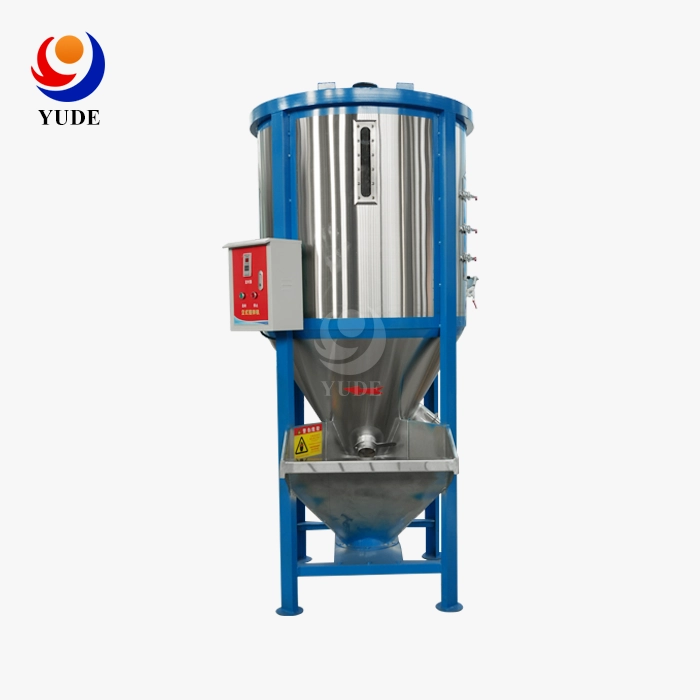
I'd like to know exactly what this machine does. A 300kg vertical plastic particle mixer is the machine that comes before it. There is no way to read or change the pressure in the extruder. It gets the mix ready to go into the hopper. To mix PE, PP, ABS, and PVC pieces before they are crushed, injected, or blown into films, the basic model is all that it can do. What are the most important parts? The tank, the vertical auger, the drive system, the hole for the discharge, and the exit for the discharge. To keep the pressure in check, the extruder's sensors, drive, and settings stay in place.
How Vertical Spiral Circulation Works
The mixer moves in a spiral pattern that goes up and down. The screw pulls pellets up from the tank's bottom. After the lift, the pellets fall back through the batch until the next lift. A lot of times, chemicals, masterbatch, new resin, and recovered pellets are mixed with the load. It could take anywhere from 8 to 15 minutes to mix something, depend on the medium. At least 98% of the mixing is even. Lots of the time, a vertical layout is better for labs that are already full because it takes up less room on the floor.
Where a Uniform Blend Helps the Extruder
When the mix is even, the extruder sees less room between the first and last pellets. That can cut down on changes in feed, patchy melting, changes in color, changes in torque, and rapid changes in pressure. People can really tell a difference when they recycle materials and masterbatch, which can settle during handling. I wouldn't promise a certain amount of weight loss because it depends on the type of resin, the screw head, and the amount of water that is there. You can use a 300kg vertical plastic particle mixer to test your own recipe with and without the mixing step. Compare the pressure and torque, and see how useful it is.
Choosing and Specifying a 300kg Vertical Plastic Particle Mixer
Match the Mixer to Your Application
If you want to blend colors, do pilot extrusion, work with recycled plastics, or make things in the lab, start with the use case. There is no way that vertical screw mixers can mix pure powder because they are designed to work with grains and pellets. You should use a horizontal mixer or a ribbon blender instead. The basic model we have doesn't dry, it only mixes. You will need to either plan for a separate dryer or ask us about other options if your resin needs to be dried. Contact surfaces made of 304 stainless steel are an option. They are easy to clean and help when you change colors a lot.
Check Capacity Carefully
It is possible to load up to 300 kg of plastic pellets with a bulk density of 0.6 to 0.8 g/cm³. The machine can hold about 500 L, but at least 80% of that is being used for mixing. You should use ASTM D1895 to help you measure your own pellets because it tells you how much space 300 kg takes up. Ask the provider what the lowest and highest filling levels should be if you want to do a lot of lab runs with a small amount of the batch. If the container is only half full, it might not mix the same way as if it were full.
Specifications and Documents to Request
Always send the same information to all of them in order to get fair quotes. This includes the type of polymer, the pellet size, the bulk density, how sensitive it is to moisture, the masterbatch ratio, the amount of recycled material, and the expected batch weight. Find out how big it is, how much power it has, how fast it works, how long it mixes, how high the discharge is, how loud it is, what the safety rules are, and how much electricity it needs. You should ask for plans, a guidebook, certificates of materials, a list of spare parts, terms of the guaranty, and proof that the mixing was done evenly. When you ship something to another country, you need to know the Incoterm, the shipping dimensions, the packaging, the customs paperwork, the training, and the voltage and phase at your US site. There are answers to these questions written by Yude Plastic Machinery. You can also change the language of the screen to any language you want.
Common Mistakes and How to Verify Improvement
Mistakes That Hide the Real Cause
Most people make the mistake of just reading the pressure. Its power, output, melt temperature, look, and scrap rate all give you clues about what it is used for. A number going down doesn't always mean improvement. It could mean that the machine is underfeeding or that a screw is worn out. When you change a lot of settings at once, it gets hard to find the root cause. If the equipment is rated at 300 kg, that doesn't mean the mixing will be even. The screw design, the filling ratio, the mixing time, and the properties of the material are all things that can change this. When you buy something, you should think about how much it will cost you in repairs, technical support, and downtime over its lifetime.
Build a Baseline Before You Change Anything
You should make more than one batch using the same recipe and the same conditions. Record the average pressure, the range of changes, the melt temperature, the torque, the output, the uniformity of the color, the sizes, the flaws on the surface, and the amount of scrap that is made. Next, make one change, like adding the step where you mix, and use the same amounts again. You can't get a better average if the swings are bigger, so compare ranges instead of single numbers. It only takes a few batches to tell the difference between a real impact and a normal mix of things.
Validate the Mixer and Document the Operating Window
Make sure the mixer works by running your real resin, recycled content, masterbatch, and additives through it. Take samples from different parts of the vessel and again after moving the pellets to the extruder because they can separate while being moved. Check to see how much color or chemical you're okay with. The task is to have a written guide that tells us how much to put into the mixer, how long to mix for, the feed rate, the screw speed, the temperatures, and the safest level of pressure. With that record, any engineer or graduate student on your team can do the run again and see drift early.
Conclusion
To keep the extrusion pressure fixed, the material must first stay the same. Then, the process must be changed one step at a time and with great care. You need to know about power, output, and melt temperature in order to understand your pressure numbers. Matter, feeding, process, and maintenance are the four main types of problems that can be found. With 8–15 minute rounds and 98% or higher consistency, a 300kg vertical plastic particle mixer produces a smooth blend that eliminates one source of feed difference. The pressure is still set by the extruder, though. Buyers should check the formulation's usefulness, as well as the building materials, documentation, and customer service. They should also test their own formulation. These tools can help you check if pressure control is better: a baseline, a written log, and a written operating window.
FAQ
Does a 300kg vertical plastic particle mixer control extruder pressure?
No, it doesn't. Instead, it makes the fuel more stable, which can lessen one reason why pressure changes. The sensors, drive, and settings on the extruder still decide how much pressure to use.
Can it blend recycled pellets?
Yes, it can handle pellets and granules made of PE, PP, ABS, and PVC. Check the size and wetness of your recycling grade first to be sure. It's not the same mixer for powders that are already pure.
What causes most pressure fluctuations?
Most of the time, it's because of moisture, uneven blends, feeding problems, clogged screens, or sensor drift. Check the feed, the process, the material, and the maintenance in that order.
What should I send for a quotation?
What kind of plastic do you need? Include the pellet size, bulk density, ratios of recycled and masterbatch, batch size, mixing time, preferred building method, and voltage at the site.
Request a 300kg Vertical Plastic Particle Mixer Quotation
Are you making a test line or lab? You can email Yude Plastic Machinery at sales@yudemachinery.com with the type of polymer you want, the pellet specs, the recycled ratio, the batch size, and the power at the site. We can recommend a setup, make sure it works, and give you a precise quote because we are the 300kg vertical plastic particle mixer manufacturer. We can also help you set up the product and provide support after the sale. Visit yudemachinery.com to learn more.
References
- Polymer Extrusion, 5th Edition (Rauwendaal), Hanser Publications, 2014.
- Extrusion: The Definitive Processing Guide and Handbook (Giles, Wagner, and Mount), William Andrew Publishing, 2005.
- Principles of Polymer Processing, 2nd Edition (Tadmor and Gogos), John Wiley & Sons, 2006.
- Screw Extrusion: Science and Technology (White and Potente), Hanser Publications, 2003.
- ASTM D1238, Standard Test Method for Melt Flow Rates of Thermoplastics by Extrusion Plastometer, ASTM International, 2023.
- ASTM D1895, Standard Test Methods for Apparent Density, Bulk Factor, and Pourability of Plastic Materials, ASTM International, 2017.
Learn about our latest products and discounts through SMS or email