- English
- French
- German
- Portuguese
- Spanish
- Russian
- Japanese
- Korean
- Arabic
- Greek
- German
- Turkish
- Italian
- Danish
- Romanian
- Indonesian
- Czech
- Afrikaans
- Swedish
- Polish
- Basque
- Catalan
- Esperanto
- Hindi
- Lao
- Albanian
- Amharic
- Armenian
- Azerbaijani
- Belarusian
- Bengali
- Bosnian
- Bulgarian
- Cebuano
- Chichewa
- Corsican
- Croatian
- Dutch
- Estonian
- Filipino
- Finnish
- Frisian
- Galician
- Georgian
- Gujarati
- Haitian
- Hausa
- Hawaiian
- Hebrew
- Hmong
- Hungarian
- Icelandic
- Igbo
- Javanese
- Kannada
- Kazakh
- Khmer
- Kurdish
- Kyrgyz
- Latin
- Latvian
- Lithuanian
- Luxembou..
- Macedonian
- Malagasy
- Malay
- Malayalam
- Maltese
- Maori
- Marathi
- Mongolian
- Burmese
- Nepali
- Norwegian
- Pashto
- Persian
- Punjabi
- Serbian
- Sesotho
- Sinhala
- Slovak
- Slovenian
- Somali
- Samoan
- Scots Gaelic
- Shona
- Sindhi
- Sundanese
- Swahili
- Tajik
- Tamil
- Telugu
- Thai
- Ukrainian
- Urdu
- Uzbek
- Vietnamese
- Welsh
- Xhosa
- Yiddish
- Yoruba
- Zulu
How do you clean a stainless steel plastic mixer?
There is a methodical way to clean a stainless steel plastic particle mixer to safeguard your equipment and the quality of your goods. Begin by carefully shutting down the computer and letting it cool. Remove replaceable parts like the mixing shaft and discharge valve. Clean interior surfaces using non-abrasive brushes or cloths and an authorised, food-safe solvent. Rinse well in clean water and dry fully before putting back together. For food-grade or medical-grade use, CIP (Clean In Place) techniques are highly advised. Cleaning it regularly minimises cross contamination and lengthens the life of your mixer.
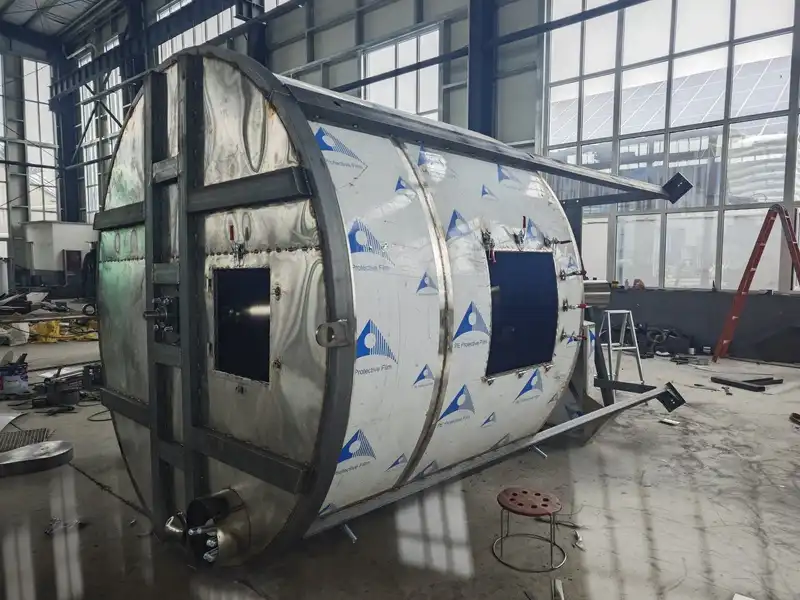
Understanding the Cleaning Challenges of Stainless Steel Plastic Mixers
Cleaning a stainless steel pellet mixer is not as straightforward as it might seem. Several factors make residue removal genuinely difficult, and ignoring them leads to batch contamination, equipment degradation, and compliance failures.
Plastic Residue Buildup and Colorant Adhesion
After each mixing cycle, the interior walls of the container are commonly covered with colourants, wax-based additives and microscopic plastic particles. Under high temperature mixing conditions, these compounds partially melt and adhere to surfaces. Even a little leftover pigment may contaminate the next batch when changing from white to black masterbatch runs.
Electrostatic Attraction in Plastic Pellet Handling
When plastic pellets are agitated, static electricity is created. This causes fine dust particles and powder to adhere obstinately to the interior of metal products. The plastic casing would be more trouble than a grounded steel chassis on a good mixer, but you'll still want to be cautious about cleaning the corners so fine powder doesn't settle.
Surface Sensitivity and Chemical Compatibility
Most cleaning solvents will not affect SUS304 stainless steel, however certain chemicals containing strong acids or chlorides may gradually erode the surface of the material. Use only detergents formulated for use on food grade stainless steel that may be slightly acid to neutral in pH. Always check the MSDS before adding any chemical to the mixer.
Step-by-Step Cleaning Process for Stainless Steel Plastic Particle Mixers
A repeatable, documented cleaning process protects product purity and keeps your mixing equipment performing at specification. Here is how to do it correctly.
Step 1 — Safe Shutdown and Disassembly
Be cautious to fully unlock and remove power from the mixer before touching any portion of the mixer. Remove the disposal port, baffles and liners, and mixing shaft assembly. Systematically taking things apart may get you to the conical base and the areas surrounding the paddle welds, which are two of the most prevalent areas for residue build-up.
Step 2 — Manual Cleaning with Approved Tools
Clean the stainless steel plastic particle mixer using a mixture of a mild alkaline cleanser and warm water, using lint-free cloths or gentle nylon brushes. Be sure to scrub the inside surfaces thoroughly, including the weld joints and any areas where the shaft is connected. In order to preserve the polished surface and prevent the accumulation of germs and colourants in consecutive runs, it is recommended to avoid using steel wool or abrasive pads.
Step 3 — CIP, Steam, or Ultrasonic Cleaning for High-Volume Lines
Plants that make plastics for food packaging or medical-grade polymers may not be able to fulfil GMP audit criteria by manual cleaning alone. The Clean-In-Place (CIP) method does not need full disassembly and uses a sealed tank to circulate a detergent solution. Dead-angle zones are more better cleaned with steam than with brushes. Ultrasonic cleaning is good for smaller detachable parts such as shaft paddles and seals because it breaks off contaminants on a microscopic scale.
Step 4 — Post-Cleaning Inspection and Reassembly
Rinse with pure or deionised water and check all interior surfaces under sufficient light. If there is any discolouration, film or odour, the cleaning has not been thorough. Dry all parts completely, moisture remaining in the chamber can promote corrosion in even high grade steel. Lubricate shaft bearings with food grade oil. Reassemble in reverse order and conduct a brief no-load test before the next manufacturing batch.
Maintenance Tips to Keep Your Plastic Pellet Mixer Clean and Efficient
Not when you feel like it, but when you have a plan. Planning ahead of time will help you cut down on the time your mixer isn't busy.
Daily and Weekly Cleaning Habits
Clean the release hole and any open parts inside at the end of each shift. Get rid of any fine pellets that are in the base. Every week, take it all apart and look for early signs of wear on the paddle tips, shaft seals, and inside the mixing drum. Small problems can be fixed before they get worse and cost more to fix.
Managing Mixing Temperature to Reduce Fouling
When the mixer is run at higher temperatures than some glue need, leftover bonding happens faster. Many times, you can mix normal HDPE pellets while they are still at room temperature. When the job needs heat, like when reactive compounding, make sure to keep an eye on the PID-controlled jacket temperature. Cut down on the rest time after the mixing cycle as well so that the surface doesn't get too oily.
Recognizing When Professional Servicing Is Needed
Cleaning the equipment won't get rid of stains if it shakes funny or doesn't mix evenly 98% of the time. In other words, the machine needs more than just regular upkeep. One who is trained should check the dynamic balance, condition of the seals, and level of roughness on the inside of the shaft assembly to make sure it still meets the requirements.
Comparing Stainless Steel Mixers to Other Material Mixers: Cleaning Perspectives
It depends on what the mixer is made of how easy it is to clean and how long it stays clean enough to meet safety standards at work.
Stainless Steel vs. Carbon Steel Mixers
CO2 mixers need coats that keep them safe so they don't rust. These layers break down over time, which makes flaking and infections more likely. SUS304 stainless steel, on the other hand, doesn't need an extra layer because it doesn't rust. Because the surface is smooth and doesn't respond with anything, it's easy to get rid of spills. There is no damage to the structure when you clean it with water over and over.
High-Speed vs. Low-Speed Mixer Cleaning Considerations
To make it more likely for colorants and ingredients to stick to the inside walls, high-speed mixers make more heat and contact. The Yude stainless steel plastic particle mixer has a speed range of 30 to 60 r/min, so it doesn't have as strong shear forces. You only need to clean it by hand every time the batch changes because this makes it easier for gunk to come off. You don't always have to use chemicals.
Manual Mixers vs. Automated Mixers
Although they need constant attention, hand mixers are convenient for moving about. It is simpler to explain automated systems that can conduct CIP during GMP tests, and the findings are more consistent. Retailers who deal with a high volume of unique stock keeping units (SKUs) daily might be wise to invest in auto-cleaning technology. Not only does it provide simpler tracking for audits, but it also saves time.
Procurement Considerations for Stainless Steel Plastic Particle Mixers with Easy Cleaning Features
Buying the right mixer upfront saves far more in cleaning labor and downtime than any post-purchase modification can recover. Here are the design features that matter most from a procurement standpoint.
Hygienic Design Elements That Simplify Cleaning
There is no place for residue to hide in equipment that has dead-angle-free geometry, mirror-polished interiors (Ra 0.8 µm), and totally welded paddle seams. Try to choose a model that allows you to remove the mixing paddles, shaft seal, and discharge valve without using any tools. Thanks to these enhancements, switching between SKUs no longer takes hours, but minutes.
Here are the core specification highlights of Yude's SUS304 plastic pellet mixer:
- Material: The barrel and the mixing parts are made of certified SUS304 stainless steel, which is resistant to corrosion and meets the standards for food-grade and medical-grade cleanliness.
- Mixing uniformity: ≥ 98%, ensuring batch-to-batch consistency for critical packaging applications.
- Shaft speed: 30–60 r/min, a low-shear operating range that reduces pellet degradation and residue adhesion.
- Motor protection: Three-phase asynchronous motor with overload, over-temperature and phase-failure protection. For steady and low-noise operation.
- Application scope: Food packaging plastics, medical polymer blending, and high-end cosmetic packaging materials.
These design choices directly address the contamination and cleaning challenges that quality managers encounter during GMP audits and daily production.
Evaluating Supplier Documentation and After-Sales Support
A mixer is only as dependable as the documentation that supports it. FDA or GMP controlled facility? Ask for the report on the material composition from 3rd party lab that certifies the actual SUS304 or SUS316. Surface roughness certificate. Validation documentation of the equipment (IQ/OQ/PQ). Be sure the provider can give written compatibility statements and enable on-site audits.
Customization for Specific Industry Cleaning Protocols
Standard equipment, right out of the box, is typically incapable of meeting the cleaning validation needs of food packaging and pharma producers. By working with a manufacturer that can change the vessel shape, change the surface finish specs, or add temperature monitoring outputs to your current process control system, you will save a lot of time in validation during your equipment certification.
Conclusion
The right way to clean a stainless steel plastic particle mixer is important for the quality of the product, the life of the tools, and following the rules. Stick to a routine that includes safe disassembly, the right cleaning products, steps that work with CIP, and a full check after cleaning. This will lower the chance of getting something dirty. It's best to buy cleaning tools that are made of SUS304, have a simple design, and come from a company that stands behind their products with proof.
FAQ
How often should I clean a stainless steel plastic pellet mixer?
For single resin, single colour production runs, a thorough clean every 24 to 48 hours of operation is typical. Facilities that change colours or resin families should clean the mixing vessel between each batch changeover to avoid cross contamination.
Can I use bleach-based cleaners on a stainless steel mixer interior?
No. Bleach attacks the chromium oxide layer of stainless steel, pitting the surface and causing long-term corrosion. Instead, choose food-safe detergents that are pH neutral or moderately alkaline.
What does CIP compatibility mean for a plastic mixer?
CIP (Clean-In-Place) implies that the mixer may spray a cleaning solution through the closed vessel without a complete disassembly. This is especially crucial for GMP controlled plants since it provides recorded, consistent cleaning performance that will satisfy the auditor.
How do I verify that cleaning was thorough enough?
The first examination is visual inspection under strong lights. In regulated settings, swab testing of interior surfaces against a set microbiological or residue threshold gives quantitative proof and is accepted in GMP audit documents.
Does shaft speed affect how difficult cleaning is?
Yes. Mixers operating at 30–60 r/min impose lower shear forces, which reduces the amount of material that bonds to internal walls during operation. Higher-speed units may require more aggressive cleaning agents or longer soak times after colorant-heavy batches.
Get a Stainless Steel Plastic Particle Mixer Built for Easy Cleaning — Contact Yude Plastic Machinery
To keep things clean, Yude Plastic Machinery makes SUS304 stainless steel plastic particle mixers that are used in places that make food and medicine. And Yude really knows a lot about stainless steel plastic particle mixers. Because they sell tanks in more than 30 countries, their after-sales service network is open 24 hours a day, seven days a week. They can also make changes to unique tank shapes. To get a price, email sales@yudemachinery.com or go to https://yudemachinery.com/.
References
- 3-A Sanitary Standards, Inc. — 3-A Sanitary Standards for Mixers, Number 20-XX, 2021.
- European Hygienic Engineering & Design Group (EHEDG) — EHEDG Guideline Document 8: Hygienic Equipment Design Criteria, 2019.
- U.S. Food and Drug Administration — Current Good Manufacturing Practice (CGMP) Regulations: Equipment Cleaning and Maintenance, 2023.
- ASM International — Corrosion of Stainless Steels, Metals Handbook, Vol. 13, 2020.
- Society of Plastics Engineers (SPE) — Plastics Technology: Compounding and Mixing Fundamentals, 2022.
- International Organization for Standardization — ISO 14159: Safety of Machinery — Hygiene Requirements for the Design of Machinery, 2002 (reviewed 2020).
Learn about our latest products and discounts through SMS or email