- English
- French
- German
- Portuguese
- Spanish
- Russian
- Japanese
- Korean
- Arabic
- Greek
- German
- Turkish
- Italian
- Danish
- Romanian
- Indonesian
- Czech
- Afrikaans
- Swedish
- Polish
- Basque
- Catalan
- Esperanto
- Hindi
- Lao
- Albanian
- Amharic
- Armenian
- Azerbaijani
- Belarusian
- Bengali
- Bosnian
- Bulgarian
- Cebuano
- Chichewa
- Corsican
- Croatian
- Dutch
- Estonian
- Filipino
- Finnish
- Frisian
- Galician
- Georgian
- Gujarati
- Haitian
- Hausa
- Hawaiian
- Hebrew
- Hmong
- Hungarian
- Icelandic
- Igbo
- Javanese
- Kannada
- Kazakh
- Khmer
- Kurdish
- Kyrgyz
- Latin
- Latvian
- Lithuanian
- Luxembou..
- Macedonian
- Malagasy
- Malay
- Malayalam
- Maltese
- Maori
- Marathi
- Mongolian
- Burmese
- Nepali
- Norwegian
- Pashto
- Persian
- Punjabi
- Serbian
- Sesotho
- Sinhala
- Slovak
- Slovenian
- Somali
- Samoan
- Scots Gaelic
- Shona
- Sindhi
- Sundanese
- Swahili
- Tajik
- Tamil
- Telugu
- Thai
- Ukrainian
- Urdu
- Uzbek
- Vietnamese
- Welsh
- Xhosa
- Yiddish
- Yoruba
- Zulu
High Efficiency PE Polyethylene Pellet Mixing Machine
When your production line needs to mix polyethylene resins precisely, the right PE plastic particle mixer is essential for running a smooth business. These specialized homogenization units mix HDPE, LDPE, and LLDPE granules with masterbatches, additives, and regrind materials to get uniform melt flow properties and get rid of flaws that cost a lot of money. High-efficiency polyethylene pellet mixing machines are different from regular blenders because they are designed to deal with specific problems like static electricity buildup, density-driven segregation, and additive dispersion at micro-percentages. These are problems that have a direct effect on your product quality and reject rates across film blowing, pipe extrusion, and injection molding.
Benefits of Using a High Efficiency PE Polyethylene Pellet Mixing Machine
Superior Mixing Uniformity and Product Quality
Getting mixing regularity at or above 98% changes the results of production by getting rid of batch-to-batch differences that make processing unstable further down the line. When the color masterbatch mixes evenly with the base resin, the color of the extruded profiles stays the same throughout the whole production run. This cuts down on customer refunds and the cost of repair. When making cars and appliances, where color matching margins are measured in delta-E values below 0.5, this level of accuracy is even more important.
Stopping material from sticking together solves a quality problem that keeps coming up in pellet processing. Agglomerates are bits of unmelted material that show up on the surface of extruded products or as weak spots in molded parts. Vertical PE plastic particle mixers made just for polyethylene use barrel materials chosen for their chemical properties along with wear-resistant mixing parts. This makes the equipment last longer and keeps the stability of the blend over thousands of rounds.
Energy Efficiency and Operational Cost Reduction
Modern PE plastic particle mixers use motors with ratings of IE3 and IE4 that meet international energy standards. This makes the system use less kilowatt-hours per kilogram of treated material. When processing several batches every day, these improvements in speed add up to big saves every year that make costs more competitive. Variable frequency drives let workers change the speed of mixing between 300 and 800 RPM. This way, they can use the least amount of energy possible for each mix of materials instead of having to run at a set top speed.
Maintenance Efficiency and Equipment Longevity
Cutting down on cycle times improves business costs even more. When PE plastic particle mixer is designed with the right paddle shape and chamber dynamics, homogenization can be done in shorter periods of time without affecting the quality of the mix. This increases the daily flow capacity within the footprints of the current facility. When production plans call for quick changes between different color formulas or material grades, this benefit is especially useful.
When switching from dark to light pigments, color changeover cleaning takes only 15 to 20 minutes with mixers that have deflector cones that can be removed without tools and air-purge shaft locks. Interior areas that are polished to a hardness of Ra ≤0.4µm make it harder for materials to stick together, which stops cross-contamination that could ruin the purity of the batch. These design features directly lead to less work being done and more time being spent on production.
Critical parts like bearings and seals work better when they are in good shape, which means less scheduled repair is needed. Dynamic balance of the main shafts keeps vibrations below 2.8 mm/s, which keeps bearing sets from wearing out too quickly. When working with glass fiber-reinforced PE materials, which speed up mechanical wear in regular seals, it is important to use air-purged seals that use positive pressure to keep gritty particles out of bearing housings.
How to Choose the Right PE Plastic Particle Mixer for Your Business?
Capacity and Production Volume Alignment
Supply engineers have to make sure that the PE plastic particle mixer capacity matches the production needs of the moment while also taking into account predictions for future growth. A factory that processes 2,000 kg of polyethylene pellets per shift needs tools that can handle batches of 600 kg to 1,000 kg. This lets them mix the pellets more than once while keeping backup stock on hand. When equipment is too small, it causes production problems that slow down the whole line, and when it's too big, it leads to inefficient partial-batch operations that raise the cost of handling each unit.
Automation Level and Integration Capabilities
Batch mixing systems are flexible for businesses that make a lot of different products every day. In contract manufacturing settings that have to meet a wide range of client needs, it is important to be able to handle different color batches or material types in a certain order without contaminating the others. Small to medium-sized businesses can use vertical mixers with capacities between 300 kg and 500 kg, while 10-ton industrial units can handle high-volume continuous extrusion lines.
Modern mixing systems have programmable logic controls that take care of the dosing of materials, the mixing time, and the discharge processes automatically. These controls cut down on the need for operator input and get rid of human mistake in batch formulation accuracy. Integrating upstream systems for moving materials and downstream systems for extrusion or molding produces smooth production flows where mixed batches go straight to process hoppers, keeping the blend uniform and cutting down on the work of moving materials.
Supplier Evaluation and After-Sales Support
Touch-screen displays that can be used in more than one language make foreign purchasing easier. Setting up equipment with choices for English, Spanish, or regional languages makes it easier to train operators across global manufacturing networks and helps international facilities follow standard operating procedures.
When you choose production partners with written quality control systems, you can be sure that the PE plastic particle mixer you receive meets all of your technical requirements. Standardized processes are used by suppliers with ISO-compliant production facilities from machining parts to putting them together for the first time. Full-process quality inspection systems check tolerances at the time of incoming material inspection, production process patrol checks, and validation of finished products before they are shipped.
Full support systems after the sale keep operations running smoothly. Manufacturers that give technical support 24 hours a day, seven days a week answer questions about their products and help with emergency fixing during busy production times. Downtime costs are kept to a minimum by domestic service networks that allow on-site responses within 24 hours. At the same time, foreign relationships with local technical teams make sure that installations in other countries get the same level of support. Systems for managing customer files that keep track of equipment serial numbers, maintenance records, and service information make it possible to plan repair ahead of time and quickly find parts.
Vertical vs Horizontal Configuration Decision
Vertical screw-type mixers work well for large-batch businesses that don't have a lot of floor room and need to mix colors evenly at standard percentages. The upward transporting action along with the gravitational flow pattern makes homogenization work well for simple mixing jobs. Vertical setups work best in places that can't add much more room and need to process 500 kilograms or more per batch.
Horizontal ribbon or paddle mixers are great for precisely mixing low-percentage additives, recipes with more than one part, or fragile fillers that need to be handled carefully. Because the convective mixing action gives you more control over the quality of the dispersion, this setup is best for uses that need additive amounts below 1% or use heat-sensitive materials that break down when they come into contact with too much friction. Horizontal designs work well in production settings that value formulation freedom and frequent recipe changes.
Procuring Your PE Plastic Particle Mixer: From Inquiry to Installation
Supplier Reputation and Certification Verification
When looking at possible PE plastic particle mixer suppliers, you need to look at their output skills and quality control systems. Manufacturers who have modern machine centers and uniform assembly methods can show that they can deliver products consistently. Suppliers who have certifications like CE safety compliance for electrical locking systems and export documentation readiness show that they are ready to do business internationally with all the necessary technical specs and customs paperwork.
Reference setups at similar sites can tell you a lot about how well a product works in real life and how responsive a seller is. Talking to current customers can show trends of equipment durability, real repair needs, and the quality of service after the sale that marketing materials might not fully express.
Price Negotiation and Customization Options
Long-term supply deals and chances to place large orders give you negotiating power for better pricing models. When suppliers make a lot of units at once, they can save money on production costs, which they can then share with customers who place large orders. Talking about the total lifetime costs instead of just the purchase price shows the real economic value. This includes things like expected service life, energy use, and repair costs.
Customization features let tools be changed to fit the needs of a particular location. Changes that meet voltage standards, motor housings that are safe from explosions for dangerous areas, or special discharge designs that work with existing material handling systems get rid of the need for expensive retrofits after delivery. Suppliers who give technical help during the development of specifications make sure that customized solutions meet operating needs without causing problems that were not planned for.
Logistics and Installation Considerations
Coordinating lead times makes sure that the delivery of the PE plastic particle mixer fits in with the needs of getting the building ready for use and planning work schedules. Most standard setups ship within the time frames that have been set, but customized units need more time for research and manufacturing. Clear information about when deliveries are expected keeps production planning from getting thrown off and makes sure that activities to prepare the facility are done in the right order.
Professional installation services make sure that the setup of the equipment meets the performance requirements set by the designer. Trained technicians make sure that the electrical connections are correct, that the mechanical alignment tolerances are met, and that the system works properly while it is loaded. Comprehensive licensing processes teach operators how to use the equipment, how to maintain it, and how to fix problems. This makes sure that the initial investment gets the best return on investment possible.
Warranty terms that cover parts and workmanship protect you financially against problems with the way the product was made. When you need service, knowing the guarantee terms, how to file a claim, and what the coverage doesn't cover will help you avoid arguments. Extended warranty choices may be a cost-effective way to protect important business tools that can't be shut down for long periods of time.
Conclusion
To choose a high-efficiency PE plastic particle mixer, you have to weigh the technical specs against the needs of your business and your budget. General mixing systems don't blend polyethylene as evenly as equipment designed to work with it. This is because general mixing systems use more energy and break down more quickly. The success of procurement relies on carefully evaluating suppliers, communicating clear specifications, and having strong support systems in place after the sale. When polyethylene processing companies invest in the right mixed technology, the quality of their products improves, waste goes down, and production efficiency goes up.
FAQ
What mixing uniformity can I expect from a quality PE plastic particle mixer?
Professional-level tools made just for processing polyethylene can mix uniformity at or above 98%, which is tested by taking statistical samples of how the additives are spread out across the batch volumes. This level of performance stops extruded products from having color streaks and gets rid of melt flow problems that make equipment further down the line unstable during processing.
How do I prevent static electricity issues when mixing PE powders?
Getting rid of static charge buildup takes a variety of approaches. To get rid of any charges that build up, equipment should have full electrical grounding of mixing tanks and stirrer shafts. De-ionizing air input bars are used in more advanced systems to remove static electricity. This keeps powder from sticking to internal surfaces and ensures accurate batch discharge.
What maintenance frequency keeps PE plastic particle mixers operating reliably?
Preventive maintenance starts with checking the state of the shaft seals, bearings, and wear parts once a month. Predictive repair scheduling is possible with detailed service logs that keep track of working hours and the types of materials that are processed. When equipment works within its design limits, air-purged seal systems and high-quality bearing assemblies make it possible for longer periods of time between big service events.
Partner with Yude Plastic Machinery for Your Polyethylene Blending Solutions
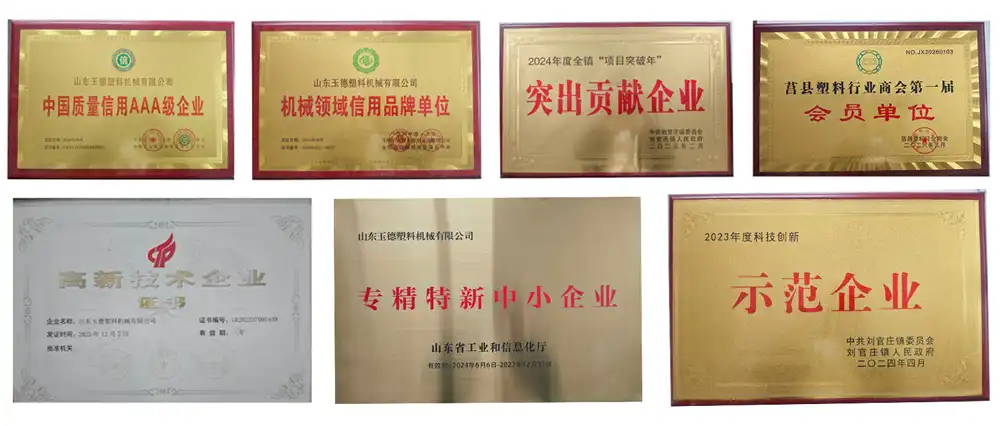
Yude Plastic Machinery is a maker of PE plastic particle mixers that serve procurement engineers and sourcing managers from all kinds of industries that need high-precision polyethylene processing equipment. Our vertical mixing systems, which can hold anywhere from 300 kg to 10 tons, have spiral mixing structures that are especially designed for the density and fluidity of PE pellets. These structures regularly achieve mixing uniformity of over 98% while keeping materials from sticking together.
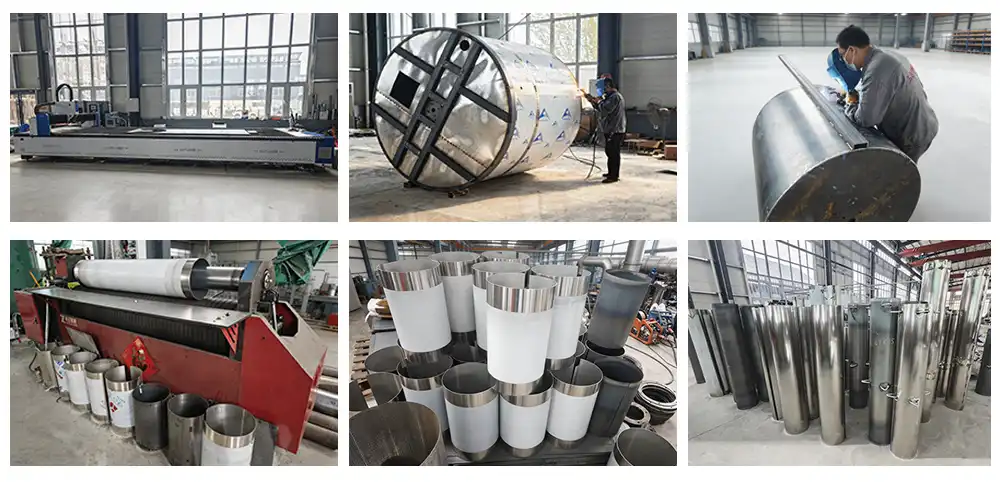
Our factory follows strict quality control rules and uses standard procedures from cutting out parts to putting them together for the first time. Before it is shipped, every mixer goes through a lot of tests to make sure it meets the speed requirements. We help foreign customers by providing detailed documents in multiple languages, customizing equipment to meet local electrical standards, and providing full installation services that ensure proper commissioning.
Contact our engineering team at sales@yudemachinery.com to discuss your unique needs for polyethylene blending. For both standard configurations and custom solutions, we give clear price information, thorough technical specs, and suggestions based on the application. Our after-sales support network is available 24 hours a day, seven days a week to help with operational questions, maintenance advice, and emergency technical help, which keeps your production going. Visit yudemachinery.com to explore our complete product range and request a consultation with our application specialists.
References
- Rauwendaal, Chris. Polymer Mixing: A Self-Study Guide. Hanser Publications, 2020.
- Tadmor, Zehev, and Costas G. Gogos. Principles of Polymer Processing. 2nd ed. John Wiley & Sons, 2013.
- Whelan, Tony, and John Goff. The Dynisco Extrusion Processors Handbook. 2nd ed. Dynisco, 2014.
- Goodship, Vannessa. Practical Guide to Injection Moulding. Rapra Technology Limited, 2004.
- Noriega, Marco, and Clemens Wortberg. "Mixing Performance Evaluation in Polymer Processing." Polymer Engineering and Science 58, no. 6 (2018): 956-967.
- Crawford, R.J., and Martin P. Kearns. Practical Guide to Rotational Moulding. 2nd ed. Smithers Rapra Technology, 2012.
Learn about our latest products and discounts through SMS or email