- English
- French
- German
- Portuguese
- Spanish
- Russian
- Japanese
- Korean
- Arabic
- Greek
- German
- Turkish
- Italian
- Danish
- Romanian
- Indonesian
- Czech
- Afrikaans
- Swedish
- Polish
- Basque
- Catalan
- Esperanto
- Hindi
- Lao
- Albanian
- Amharic
- Armenian
- Azerbaijani
- Belarusian
- Bengali
- Bosnian
- Bulgarian
- Cebuano
- Chichewa
- Corsican
- Croatian
- Dutch
- Estonian
- Filipino
- Finnish
- Frisian
- Galician
- Georgian
- Gujarati
- Haitian
- Hausa
- Hawaiian
- Hebrew
- Hmong
- Hungarian
- Icelandic
- Igbo
- Javanese
- Kannada
- Kazakh
- Khmer
- Kurdish
- Kyrgyz
- Latin
- Latvian
- Lithuanian
- Luxembou..
- Macedonian
- Malagasy
- Malay
- Malayalam
- Maltese
- Maori
- Marathi
- Mongolian
- Burmese
- Nepali
- Norwegian
- Pashto
- Persian
- Punjabi
- Serbian
- Sesotho
- Sinhala
- Slovak
- Slovenian
- Somali
- Samoan
- Scots Gaelic
- Shona
- Sindhi
- Sundanese
- Swahili
- Tajik
- Tamil
- Telugu
- Thai
- Ukrainian
- Urdu
- Uzbek
- Vietnamese
- Welsh
- Xhosa
- Yiddish
- Yoruba
- Zulu
Customized PE Plastic Granule Mixer with Durable Structure
When accuracy and regularity are key to making polyethylene products, a PE plastic particle mixer is what keeps things running smoothly. The customizable vertical mixers we make are made to handle HDPE, LDPE, and LLDPE pellets with more than 98% mixing regularity. With wear-resistant parts and barrels designed to work with polyethylene's specific density and flow properties, these machines keep materials from sticking together and work seamlessly with extrusion, injection molding, and film-blowing lines.
Customized PE Plastic Granule Mixers
Defining the Role of Polyethylene Mixing Equipment
It is an industrial homogenization machine called a PE plastic particle mixer that is designed to mix new PE pellets with color masterbatches, recovered regrind, UV stabilizers, and processing aids. Unlike regular blenders, these systems are designed to deal with the unique problems that polyethylene materials have, such as controlling the building of static electricity in LDPE powders, stopping the separation of parts with different densities, and making sure that the melt flow index stays the same from batch to batch. We've improved the vertical conical design at our factory. It has a central auger that lifts and cascades material gently, making it completely uniform without breaking pellets or making too much heat. This design is very important in situations where color streaking or changes in the concentration of additives would cause finished goods to be refused.
Working Principles Behind Effective PE Blending
The practical logic depends on mixing that is both convective and diffusive. As the spiral auger turns inside the cone-shaped chamber, pellets move up the walls of the barrel and then fall through the middle. This makes a rhythm of constant circulation that lasts for 20 to 60 minutes, based on how complicated the batch is. Computational fluid dynamics modeling has been used to find the best shape for the mixing chamber, including the cone angle and auger pitch, so that it fits PE's specific bulk density range of 0.92 to 0.96 g/cm³. High-quality stainless steel construction and mirror-polished innards (Ra ≤ 0.4µm roughness) keep iron from getting inside and allow color changes to happen in 15 to 20 minutes, which solves a common problem for processors who handle multiple product lines.
Batch Versus Continuous Mixing Systems
When procurement managers are looking at their choices, they need to know the main difference between batch and continuous mixing systems. Batch systems, which are the most common type of PE plastic particle mixer systems, handle separate loads of 300 kg to 10 tons per cycle. This method works well for businesses that need to change their formulations often or keep track of their quality, since each batch has a recorded identity from mixing to extrusion. Continuous mixers have a higher output for single formulation processes, but they are less flexible and make it harder to balance materials when recipe changes need to be made. Our work with clients who use injection molding to make ABS home appliance shells and HDPE pipe makers shows that batch mixing gives the best return on investment when production plans need flexibility.
Benefits and Features of Customized Durable PE Plastic Granule Mixers
Enhanced Mixing Uniformity Drives Quality Consistency
Statistical homogeneity directly leads to lower reject rates in processes that come after. Our PE plastic particle mixers promise mixing uniformity of more than 98%, which is proven by random sampling methods that check how the additives are distributed at different chamber levels. This level of performance stops the fisheye flaws in LDPE stretch films that are caused by anti-block agents that aren't spread out enough, and it gets rid of the structural weak spots in HDPE pressure pipes that are caused by uneven carbon black masterbatch distribution. The main shaft is perfectly balanced and stays within the shaking limits of 2.8 mm/s, so the mixing action stays the same over thousands of production cycles.
In three tough situations, these skills are very important. When 2 to 2.5 percent carbon black isn't spread out evenly in HDPE pipes for gas and water infrastructure, UV-vulnerable zones are made that make the pipes less likely to last for decades. For companies that make LLDPE film and run lines faster than 200 meters per minute, even small clumps of material can break webs and cause a chain reaction of downtime. When crushed PE powders are mixed with dry pigments in rotational molding, they must achieve a uniform pigment coating to make tanks that can withstand impact without color concentration points.
Extended Equipment Lifespan Through Engineering Excellence
The design of a mixer that lasts depends on the materials used and the making of the parts. Our barrels are made from SUS304 or SUS316 stainless steel, which was chosen because it doesn't react chemically with the antioxidants and processing stabilizers that are popular in PE formulas. Wear-resistant mixing paddles made from hardened metals keep their shape even when working with rough materials that have mineral fillers or glass fiber supports. This sturdy construction raises the average time between maintenance from 18 months, which is the norm in the industry, to 36 months or more. This lowers the total cost of ownership by lowering the need for extra parts and maintenance work.
Using air-purged shaft seals makes a positive pressure buffer that stops PE particles from getting into bearing housings. This is a very important thing to think about when working with fine regrind or powder fractions. Grounding rings in the barrel assembly and extra de-ionizing air injection bars stop the buildup of static electricity that affects PE powder mixing. This keeps materials from sticking to the chamber walls and makes sure that batch weights are correct.
Customization Options Matching Production Requirements
Our method to meeting the needs of a wide range of clients is based on flexibility. PE plastic particle mixers can be as small as 300 kg, which is good for product development labs, or as big as 10 tons, which can support three shifts of continuous extrusion operations. Variable-speed drives let workers change the level of mixing from 300 to 800 RPM, so they can use gentle action for fragile recycled flakes or intense blending for adding small amounts of additives below 1% concentration. Heating jackets that circulate hot air around hygroscopic fillers get them ready to use, and cooling choices keep recipes from softening too quickly when they contain low-melting processing aids. Customized discharge valve designs and pneumatic conveying connections make it easy for each setup to work with current material handling systems.
How to Select the Best Customized PE Plastic Particle Mixer?
Evaluating Capacity and Throughput Requirements
To find the right PE plastic particle mixer capacity, you have to look at the production amount, batch regularity, and rates of processes further downstream. If the filling and unloading take 15 minutes each, a 500 kg mixer that runs on 45-minute rounds can produce about 11 metric tons in 16 hours. This amount of output is the same as a medium-sized film line that needs 700 kg/hour or two smaller extruders working together in a combining process. When you oversize, problems happen because partly full spaces don't allow enough material to move, and when you undersize, cycles have to be sped up, which hurts uniformity. The procurement teams should figure out that the mixer's capacity is 120 to 140 percent of the biggest single-batch need. This will give them practical headroom without having to spend too much on capital.
Analyzing Energy Consumption and Operating Costs
Long-term operating costs are directly affected by how well motors work. The motors in our PE plastic particle mixers are rated IE3 or IE4, which means they use 15% to 20% less electricity than normal economy units. A 600 kg mixer with a 22kW IE3 motor uses 18.5kW of power while mixing, so it needs 13.9 kWh per cycle for 45 minutes of use. Over 8,000 hours of operation a year, this saves 2,469 kWh compared to 2,920 kWh for an IE2 comparable, which is $56 a year at an industry rate of $0.12 kWh. Even though these savings may not seem like much for a single mixer, they add up quickly when multiple units are installed. When you look at energy use, you should also think about the needs of the hydraulic system. For example, mixers that have vacuum loading built in use compressed air, which adds 2 to 4 kW of load.
Supplier Credibility and Support Infrastructure
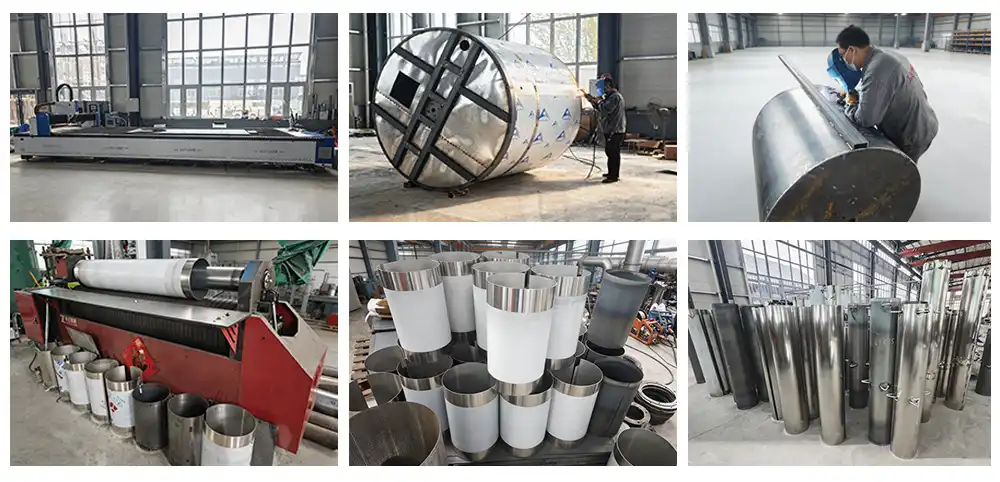
When choosing factory partners, you need to look at their production capabilities, quality systems, and how quick they are after the sale. Check that any possible sources keep records that are in line with ISO standards. These records should include the ability to track materials, certifications for welding parts that are under pressure, and electrical safety tests that meet CE or UL standards. Full-process quality inspection is used at our plant. This includes checking incoming materials, doing patrol checks while work is being done, and trying each unit's functionality before it is delivered. We've set up a 7x24-hour technical support infrastructure with both local service outlets that offer 24-hour on-site response and foreign relationships that make sure customers in North America and Europe get the same level of support. Ask for customer examples from companies that use related equipment. For example, a PE plastic particle mixer supplier that works with film processors might not know much about the needs of rotomolding companies.
Conclusion
Choosing a custom-made PE plastic particle mixer with long-lasting construction affects how well it works and the quality of the product for years after it is installed. The vertical spiral design is perfect for polyethylene's unique qualities. When you combine this with the strong stainless steel construction and precision-engineered parts, you get the 98%+ mixing regularity that you need to get rid of flaws in pipes, films, and molded products. A full study of capacity, energy usage, and supplier capability can help with making choices about what to buy. Proper operation and preventative maintenance get the most out of your investment by making tools last longer and reducing downtime.
FAQ
What distinguishes PE plastic mixers from PVC mixing equipment?
Because of differences in their properties, polyethylene and polyvinyl chloride need to be mixed in different ways. PE plastic particle mixers use lower shear intensities to stop frictional heating that softens pellets too quickly. On the other hand, PVC dry-blend mixing needs a higher intensity to coat resin particles with stabilizers and lubricants. Because of this, the shapes of the chambers are also different. For example, PE systems use auger pitches that are softer, while PVC mixers use paddle designs that are rougher. Different materials don't always work well together. For example, because PVC contains chlorine, it needs corrosion-resistant metals that aren't needed for processing harmless polyethylene.
How do I determine appropriate mixer capacity for my production scale?
Figure out your highest single-batch need by looking at how much the downstream process uses and how often batches can be made. A film line that needs to batch every 90 minutes and uses 800 kg of film per hour needs a PE plastic particle mixer that can handle 1,200 kg. Choose equipment with a capacity of 120 to 140 percent of this estimated need, or about 1,500 to 1,700 kg, to allow for operating flexibility and avoid mixing problems caused by chambers that aren't full enough.
What maintenance practices extend mixer service life?
Preventive maintenance includes checking the temperature of the bearings once a month, lubricating them every three months according to the manufacturer's instructions, and making sure the drive is aligned once a year. Check the PE plastic particle mixer paddles for wear every three months and replace them when the edge features get worn down beyond a 3mm radius. Keep the integrity of the shaft seal by visually inspecting it once a month and replacing it right away if pellet dust shows up near the bearing housings. The average time between big overhauls is now 18 to 36 months longer because of these methods.
Partner with a Trusted PE Plastic Particle Mixer Manufacturer
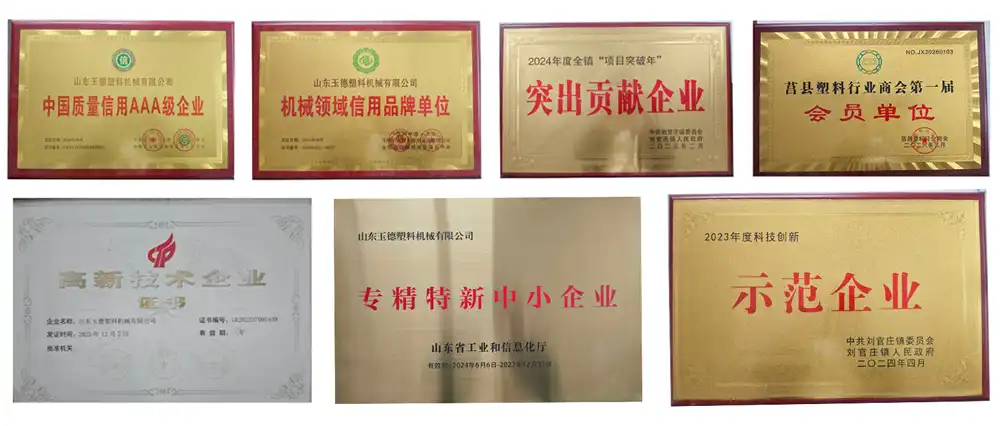
Yude Plastic Machinery is ready to design and build a vertical PE plastic particle mixer that is exactly the right size and shape for your polyethylene handling needs. We can make machines that can hold anywhere from 300 kg to 10 tons, and you can completely customize them by choosing the material contact area, drive setups, and heating or cooling systems. Our expert support team is available 7 days a week, 24 hours a day, and our warranties cover everything. We also offer low prices and quick lead times to meet the needs of your project's budget and plan. You can talk to our engineering team about your mixing needs, get exact specs, and get a full quote by emailing sales@yudemachinery.com. As a well-known provider of PE plastic particle mixers to companies across North America that make films, injection molds, and plastic pellets, we offer the precise mixing and long-lasting equipment that is necessary for successful plastics manufacturing.
References
- Rauwendaal, Chris. Polymer Mixing: A Self-Study Guide. Hanser Publications, 2020.
- Tadmor, Zehev, and Costas G. Gogos. Principles of Polymer Processing. 2nd ed., Wiley-Interscience, 2013.
- White, James L., and Han-Xiong Huang. Twin Screw Extrusion: Technology and Principles. Hanser Publications, 2018.
- Paul, Donald R., and Christopher B. Bucknall, editors. Polymer Blends: Formulation and Performance. Wiley, 2000.
- Manas-Zloczower, Ica, editor. Mixing and Compounding of Polymers: Theory and Practice. 3rd ed., Hanser Publications, 2021.
- Goodship, Vannessa, editor. Practical Guide to Injection Moulding. 2nd ed., Smithers Rapra Technology, 2017.
Learn about our latest products and discounts through SMS or email