- English
- French
- German
- Portuguese
- Spanish
- Russian
- Japanese
- Korean
- Arabic
- Greek
- German
- Turkish
- Italian
- Danish
- Romanian
- Indonesian
- Czech
- Afrikaans
- Swedish
- Polish
- Basque
- Catalan
- Esperanto
- Hindi
- Lao
- Albanian
- Amharic
- Armenian
- Azerbaijani
- Belarusian
- Bengali
- Bosnian
- Bulgarian
- Cebuano
- Chichewa
- Corsican
- Croatian
- Dutch
- Estonian
- Filipino
- Finnish
- Frisian
- Galician
- Georgian
- Gujarati
- Haitian
- Hausa
- Hawaiian
- Hebrew
- Hmong
- Hungarian
- Icelandic
- Igbo
- Javanese
- Kannada
- Kazakh
- Khmer
- Kurdish
- Kyrgyz
- Latin
- Latvian
- Lithuanian
- Luxembou..
- Macedonian
- Malagasy
- Malay
- Malayalam
- Maltese
- Maori
- Marathi
- Mongolian
- Burmese
- Nepali
- Norwegian
- Pashto
- Persian
- Punjabi
- Serbian
- Sesotho
- Sinhala
- Slovak
- Slovenian
- Somali
- Samoan
- Scots Gaelic
- Shona
- Sindhi
- Sundanese
- Swahili
- Tajik
- Tamil
- Telugu
- Thai
- Ukrainian
- Urdu
- Uzbek
- Vietnamese
- Welsh
- Xhosa
- Yiddish
- Yoruba
- Zulu
Common Problems & Troubleshooting Tips for 2000kg Vertical Plastic Particle Mixer
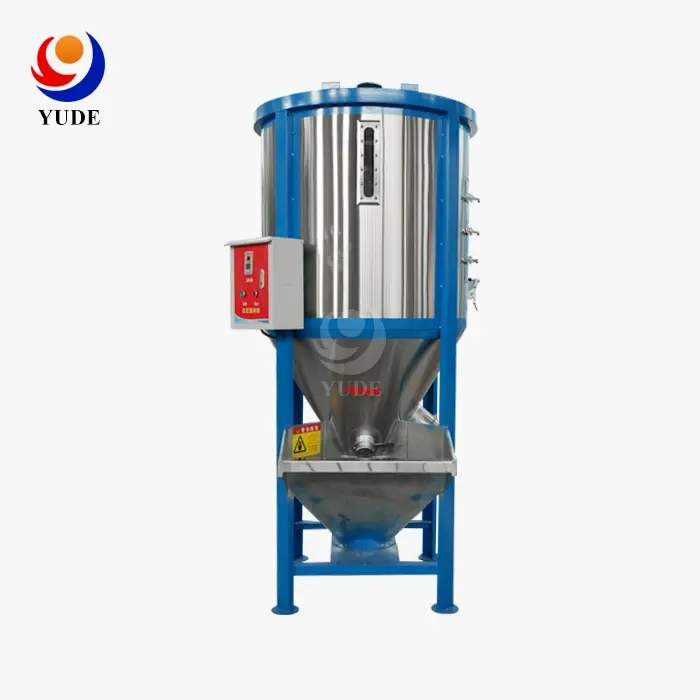
Most problems with medium-duty granulator machines come from dull knives, worn screens, wet or contaminated feedstock, uneven feeding, and loose or worn mechanical parts. Start every diagnosis by locking out the machine, then check knives, screens, motor current, and vibration. Granulated material moves on to a mixer, so particle size decides what happens next. A 2000kg vertical plastic particle mixer https://www.yudemachinery.com/vertical-plastic-particle-mixer-with-drying-function/2000kg-vertical-plastic-particle-mixer-with-drying-functionblends regrind, virgin pellets, and masterbatch in one batch, yet it delivers even color only when the granulator feeds it consistent particles. This guide shows you how to find each fault and fix it.
Why Granulator and Mixer Performance Matters in Plastic Processing
You can change how the particles are mixed, how much is made, and how good the end product is with granulators and mixers. Find out how to join and what to watch.
How Granulation and Mixing Work Together
They take trash, sprues, and rejected parts and break them up into smaller pieces that are easier to handle. The particles are then blended with new pellets, chemicals, and masterbatch using a 2000kg vertical plastic particle mixer. Every machine is weak because of the material it is made of. The amount of water, the mass density, the particle size, and the contamination all affect how each machine works. Based on ASTM D1895 people can compare different feedstocks. This is because it lets you know how thick a plastic seems and how easy it is to pour. The mixer sorts the blend into different parts if the regrind has a lot of big or small chips. This keeps the blend from getting mixed. I see mixing and granulating as the same thing, so I don't see them as two different costs.
Warning Signs You Should Not Ignore
Most of the time, people who work with machines know when something is wrong with them before they break. Watch out for things like color streaks in molded parts, new vibrations, low throughput, clogged outlets, rising motor current, and higher power bills. There are different groups of things that cause each sign. Plumps that are too small or mix together most of the time cause lines. It means the link is broken or not tight enough. The knives may be dull or the cuts may not be even if the output is low. Write down the date, the type of batch, its weight, and the sign you saw. Your tech and ours will be able to figure out what's wrong faster with these notes, so you won't have to come back.
What to Check Before You Start Troubleshooting
Put safety first. "Shut down and tag out" according to OSHA standard 29 CFR 1910.147 should be done before you open any guards or touch a knife or blade. After that, quickly check. Check the feed for metal or stones and see if the motor load is right. Check the type of material and see if you can figure out how wet it is as well. Make sure there is space between the hopper, the outlet, and the conveyor. When you clear out a blockage or fix a food problem, a lot of troubles go away. The drives, screens, knives, and bearings are the next parts that can be put together.
Common Granulator Problems and How to Fix Them
When the granulator stops working right, the mixer is likely to break too.
Low Output or Irregular Particle Size
If the material is too wet, the knife is dull, the blade clearance is off, the screen is worn or clogged, the feeds are off, or the output is low. Check the knife edges, the space between the machine and the manual, the screen holes for wear, and the bearings and fasteners to make sure they are tight after locking the machine out. Also, check the conveyor belt. If something gets stuck further down the line, it makes the whole thing move more slowly. Even particles don't do much more than make work worse. Fines make dust and static electricity, and bigger chips separate the pellets. In a 2000kg vertical plastic particle mixer, this lengthens mixing cycles and increases motor load. Figure out when to sharpen the knives, add the magnets, and keep an eye on the screen.
Motor Overload, High Energy Use, and Slow Operation
Sometimes the machine needs a lot of power and works hard. This can happen if the material is wet or thick, the knives are dull, the bearings are worn out, the shaft isn't lined up right, or there is an electrical problem. If you want to tell the difference between mechanical and electrical problems, compare the current when the motor is plugged in and when it is not. Not only should you check the connections and belts for wear, but you should also make sure that the voltage is balanced across all three stages. It doesn't load the drive or bearings, but there is a lot of power. If it only gets stronger when it's being used, it means that either the cutting tools or the feed rate are worn out. A batch that is too full or too thick and wet will cause the current to rise, so check the batch weight first. The same reasoning applies to a 2000kg vertical plastic particle mixer. A steady feed and sharp knives usually use less energy per kilogram.
Noise, Vibration, and Mechanical Wear
Is there a sudden noise or shaking? If so, turn off the power and stop the machine. Most of the time, this is due to rotors that aren't balanced, bolts that aren't tight enough, broken bearings, shafts that aren't lined up right, metal contamination, or worn-out knives, screens, belts, and gears. Write down the temperature, the rotor speed, the batch load, and the place where the vibrations are worst before you call for help. It's also important to install something so that it stays stable over time. You need a level base, the right anchors, enough space for maintenance, good grounding, and safety for the motor. Check the base right away. If you don't, you might have problems with it that a new part can't fix.
Common Mixer Problems and How to Fix Them
Make sure the granulator works first, then check the mixer.
Uneven Mixing and Inconsistent Pellet Quality
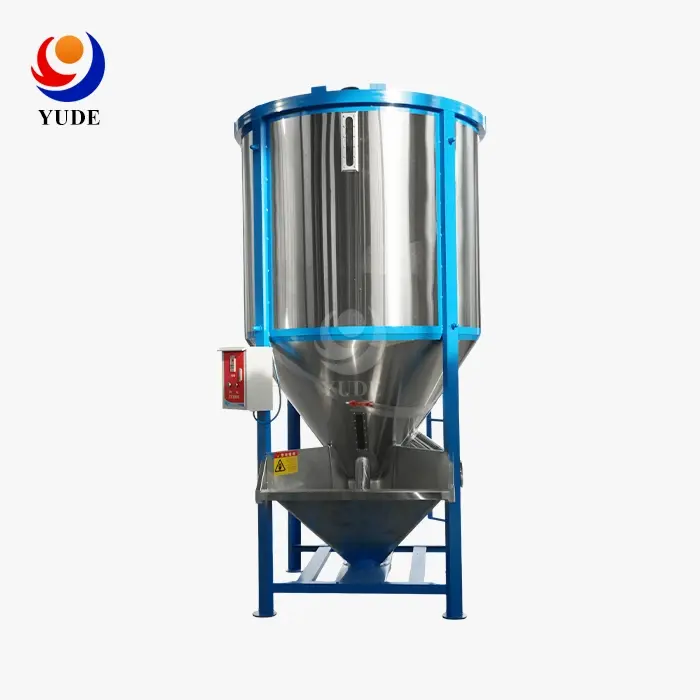
This can happen if the ratio is off, the blades are worn, there is too much weight, the particle sizes don't match, or there is a bridge. A 2000kg vertical plastic particle mixer has a center vertical screw that moves pellets from the bottom to the top. The way the water moves makes it look like a waterfall. According to Yude's unit, the mixing has to be even at least 98% of the time. The workers can change the amount of time the material is mixed between 10 and 18 minutes. Look for damage on the wall, the weights, and the screw. Also, look for empty spaces near the exit. One less test batch should be run if you see lines. A horizontal ribbon mixer might work best if most of the mix is powder.
Bridging, Clogging, and Poor Discharge
If the particles aren't round, there's a lot of moisture, the chemicals feel sticky, fines build up, or the material sits for too long, granules can bridge or clog a 2000kg vertical plastic particle mixer. Find the part of the machine where the block starts, like the mixer, storage bin, discharge gate, or outlet. Once the lockout is over, look for water, packed material, gate motors, sensors, and limits further down the line. Making changes to the way it's built can help if bigger outlets, level monitors, or an automatic gate don't work. It will not happen again if you watch how the loading and cleaning are done and write down how each way works. Our engineers can talk about unusual ways to get numbers to stick.
Heating, Moisture, and Temperature Control Problems
Some things need warm air to get rid of water before they can be shaped. Eng. plastics like nylon, ABS, and PET can bubble and get splay lines when they get wet. A 2000kg vertical plastic particle mixer with a drying function adds hot air that is controlled by a PID. Because the screw moves the pellets around, more of their surface area gets hot. A standard tool should be used to compare the readings from the sensors, heaters, and insulation before and after a test batch. The results should be the same or different. If fine dust gets close to the parts that are already on fire, it can start a fire. There are times when you don't need heat. Most of the time, mixing at room temperature is enough for new pellets and standard mix.
Troubleshooting Checklist and Performance Validation
You can avoid most shocks with an easy process and a good test. I believe this should be done every day by operators and maintenance teams.
Daily, Operating, and Scheduled Checks
- Before startup: Before you turn on the machine, make sure the barrel is clean, the guards and safety stops work, and there is enough oil in it. Make sure the packing tools are ready and check the blades and knives for damage. Also, make sure you know how much the batch is. They walk around for two minutes to look for any broken pieces or extra color before making a bad batch.
- During operation: Listen for noise, feel the temperature, jog, and check the current while the motor is running. Get a piece of the finished item to see what color it is and how smooth it is. Then watch how the stuff moves and flows. Look at each reading next to the first one. It's still possible to fix a slow rise in current over a few weeks if it's caused by wear.
- Weekly and monthly: Every week and month, check the screen for damage, the knife's space, the screws, and the oil. Check out the changes in the energy use and, if there are any, make sure the temperature sensors are set correctly. Send the recorded data to the maker if the unevenness doesn't go away, the temperature control changes, the shaft moves, or overloads happen again.
Small mistakes are caught early on by these checks, which keeps your work plan safe.
Validate Mixer Performance Before You Buy
Before moving on, check things out. If you are interested in purchasing a 2000kg vertical plastic particle mixer, you should ask the seller to let you test the material or conduct a technical review. It's also important to be honest about the type of material, its bulk density, moisture content, particle size, batch weight, cycle time, and the level of uniformity you need. Make sure you look at both the empty space and the volume. It says that Yude can hold 2000 kg of weight, has a bulk density of 0.6 to 0.8 g/cm³, and can mix things in 3000 to 3200 L. This will depend on how thick the stuff is and how big the batch really is. As the test goes on, write down the noise, shaking, amount of energy used, motor load, discharge speed, and noise. You should also plan the base, the lifting, the electricity standards, the heights for loading and unloading, the launching, the packing, the guaranty, and the paperwork as soon as possible.
Quality Checks Worth Requesting
When you open a door, the machine stops. Ask your supplier to confirm that these checks have been done: a full-load ampere test to make sure the motor stays within its rated current; a dye-penetrant check of the welds in stainless steel to make sure there are no leaks; an inner-wall finish check to make sure there are no dead corners that trap pellets during color changes; and safety interlock tests. When things come into Yude, the quality team checks them all. They also watch the work that's being done and make sure that every finished machine is perfect before it is sent out. Ask to see proof of your order.
Choosing the Right 2000kg Vertical Plastic Particle Mixer
If you make the right choice, you won't make many of the mistakes above. To make a choice based on facts, do these three things.
Match the Machine to Your Material
If you want to know how much something costs, you should know what kind of material it is, how dense it is, how wet it is, how big the particles are, the formula, how long the cycle takes, and what process comes after. A 2000kg vertical plastic particle mixer has a center screw that moves the particles around and takes up less floor space. Because of this, it can be used for pellets, regrind, and masterbatch. The best ways to mix powders are with horizontal mixers and ribbon blenders. Yude's machine is a 1600 mm wide by 2000 mm high drum. The motor is between 7.5 and 11 kW, and it makes less than 80 dB of noise. The parts that touch are made of 304 stainless steel. Three-phase 380V, 50Hz power is used by most things. Please let us know right away if your US plant has a different power or frequency. So, our staff can talk about the rules in your area.
Common Procurement Mistakes
It can be tough to use tools once you have them. You might need to look at more than just the ability to find the right product. The reason for this is that masterbatch, regrind, powders, and fresh pellets all have different bulk densities and flow rates. People also forget the whole line. Granulators, loaders, conveyors, dryers, dust collectors, scales, and storage units are some of the tools that can change the effects. You should not only look at the price, but also how much energy it uses, how much the wear parts cost, how long it takes to clean, how easy it is to maintain, how much it costs to install, and how helpful the customer service team is. Before you sign off on the design, make sure it meets your needs. Making sure it meets your power needs, warmth needs, weighing needs, output size needs, and automation needs is part of this. It costs more to make changes after production has begun than to ask questions now.
What to Look for in a Supplier
You should receive more than just a product list from a 2000kg vertical plastic particle mixer supplier. Find out how long they've been making things, if you can try them on and make changes, how they make sure the quality is good, if they can help you export, and how they treat you after the sale. Yude Plastic Machinery ships its goods to more than 30 countries and regions. It makes tall plastic mixers that can hold up to 10 tons of plastic and small particle mixers that can hold 300 kg to 500 kg of plastic. We have customer service open seven days a week, 24 hours a day. We can adapt the tools to your needs and make the language function screens look the way you want them to. Read each supplier's answer line by line to figure out the best way to get extra parts, get them delivered on time, get a warranty, and get help with the start-up.
Conclusion
When big granulators are used, the knives and screens often break down because they are dull, the feed is wet or uneven, parts are loose, or the motor load is not being watched. These flaws send non-round things further downstream, where they cause streaks, bridging, longer cycles, and a mixer to use more energy. To begin, locks, easy steps, and written records are used to figure out what's wrong with the sound. After that, the screens, knives, charge parts, sensors, blades, and knives are all looked at. When the material's actual bulk density and flow match the 2000kg vertical plastic particle mixer's anticipated loading, effective volume, and cycle time. Many of these problems can be avoided by giving a clear description of the electrical and custom needs, doing tests, and checking on a regular basis. In the event that you see grinding and mixing as two different steps, there are not as many stops that were not planned. The color doesn't change as much.
FAQ
Does a 2000kg vertical plastic particle mixer always hold 2000kg?
Not at all. The average density is between 0.6 and 0.8 g/cm³ if it weighs 2000kg vertical plastic particle mixer, and the useful mixing volume is between 3000 and 3200 L. Because light or fluffy regrind takes up more space, it may not weigh as much as it looks.
Can I mix recycled granules in a 2000kg vertical plastic particle mixer?
Yes, most of the time, as long as you keep an eye on how the density, fines, moisture, and contamination change. Before granulating, get rid of any metal. Also, make sure that the regrind bits are about the same size as the new pellets.
What causes uneven color after mixing?
Most of the time, these happen when you mix for too short of a time, use too little weight, have bits of different sizes, or have blades that are worn out. Check these first, then do a 10- to 18-minute test batch.
Can Yude customize the mixer?
Yes. The research and development team at our company can make some odd-shaped and sized things. Tell our engineers what you need and what your plan is.
Request a Technical Solution for Your Plastic Mixing and Granulation Line
Do you want a 2000kg vertical plastic particle mixer maker that will listen to what you have to say? Email Yude Plastic Machinery at sales@yudemachinery.com and tell them what kind of material you want to talk about, along with its mass density, batch weight, mix time, and voltage. Our techs will talk to you about help and a good setup after the sale. They will also talk about making things your own. You can see our range of vertical mixers at https://yudemachinery.com/ and start your inquiry right away.
References
- Mixing and Compounding of Polymers: Theory and Practice, 2009
- Polymer Extrusion, 2014
- Injection Molding Handbook, 2000
- ASTM D1895 Standard Test Methods for Apparent Density, Bulk Factor, and Pourability of Plastic Materials, 2017
- Control of Hazardous Energy (Lockout/Tagout), OSHA, 2002
- Plastics Additives Handbook, 2009
Learn about our latest products and discounts through SMS or email