- English
- French
- German
- Portuguese
- Spanish
- Russian
- Japanese
- Korean
- Arabic
- Greek
- German
- Turkish
- Italian
- Danish
- Romanian
- Indonesian
- Czech
- Afrikaans
- Swedish
- Polish
- Basque
- Catalan
- Esperanto
- Hindi
- Lao
- Albanian
- Amharic
- Armenian
- Azerbaijani
- Belarusian
- Bengali
- Bosnian
- Bulgarian
- Cebuano
- Chichewa
- Corsican
- Croatian
- Dutch
- Estonian
- Filipino
- Finnish
- Frisian
- Galician
- Georgian
- Gujarati
- Haitian
- Hausa
- Hawaiian
- Hebrew
- Hmong
- Hungarian
- Icelandic
- Igbo
- Javanese
- Kannada
- Kazakh
- Khmer
- Kurdish
- Kyrgyz
- Latin
- Latvian
- Lithuanian
- Luxembou..
- Macedonian
- Malagasy
- Malay
- Malayalam
- Maltese
- Maori
- Marathi
- Mongolian
- Burmese
- Nepali
- Norwegian
- Pashto
- Persian
- Punjabi
- Serbian
- Sesotho
- Sinhala
- Slovak
- Slovenian
- Somali
- Samoan
- Scots Gaelic
- Shona
- Sindhi
- Sundanese
- Swahili
- Tajik
- Tamil
- Telugu
- Thai
- Ukrainian
- Urdu
- Uzbek
- Vietnamese
- Welsh
- Xhosa
- Yiddish
- Yoruba
- Zulu
Choosing an Industrial Chemical Mixer for Dry Plastic Blending
The best way to choose an industrial chemical mixer for dry plastic blending is to match the machine to your materials, batch size, and cleaning needs. A stainless steel plastic particle mixer https://www.yudemachinery.com/plastic-mixer/stainless-steel-plastic-particle-mixersuits pellets, regrind, and additives that must stay clean and unmelted, because it resists corrosion, wipes down quickly, and repeats batches with steady results. I check four things first: mixing uniformity, agitator design, stainless steel grade, and supplier support. This guide explains how these mixers work, how to compare designs, and how to write a quotation request that brings back useful answers.
Start With the Process: What Dry Blending Demands
Why Mixer Selection Matters in Dry Plastic Blending
You mix colorants, fillers, pellets, and additions without cooking them when you dry blend. Since nothing melts, the mixer is the only thing that can figure out how evenly each part spreads. Broken pellets, color lines, long cycles, and slow changeovers are all signs of a bad match. There are also ashes that separate. Different parts made from the same injection mold, extruder, or blow cast will have a lumpy feed. The risk is the same for lines that process chemicals, make masterbatch, and recycle.
Things that are used to build are also important. The pellets won't rust or turn clear or light-colored, and it can handle water, cleaning products, and wear by pellets. There is a stainless steel plastic particle mixer that can be used to mix additives, pellets, and regrind that need to stay clean and not melt. Grade 304 doesn't rust because it has between 18 and 20% chromium and 8 to 10.5% nickel, according to ASTM A240. When I need to package food, medicine, or beauty products, I start here.
How a Stainless Steel Plastic Particle Mixer Works
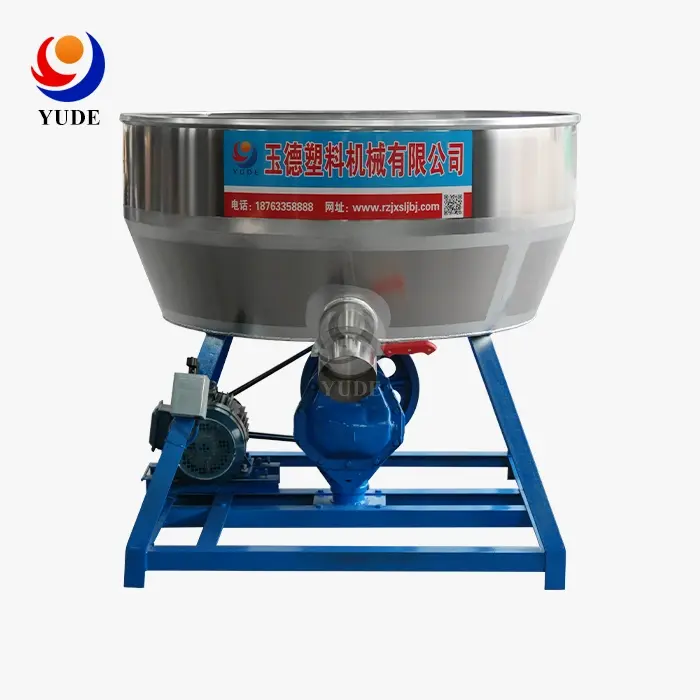
It has a shaft, a container, a stirrer, a drive system, buttons, and a hole for emptying. Stainless steel is used to make the stainless steel plastic particle mixer. The batch is usually kept in a stainless steel chamber in the shape of a cone, and an auger in the middle moves the stuff to the top. Things fall off the wall after that. This low-shear action mixes the masterbatch, chemicals, and pellets, and it doesn't hurt the pellets. There aren't as many differences in concentration when ribbon and paddle agitators move in both directions.
To find out how well it works, you need to know the particle density, the amount of water, the static electricity, the cycle time, and the fill level. Sometimes the only thing that will work is to heat or cool something. Temp can be very helpful if you want to get rid of a wet area or move something one step further. Some machines don't get it like I do. First, try it out with your own stuff. Then, decide if you want to keep an eye on the temperature.
Choosing the Right Mixer Design for Plastic Pellets and Additives
How much is being made, how fragile the materials are, how much floor room there is, and how much technology there is should all affect the design. Horizontal mixers are often the best choice when you need a high output, an easy release, and to connect to systems that move things. V-shaped mixers work well when there isn't much space or the batches aren't too big. Yude Plastic Machinery makes tall plastic mixers that can hold 10 tons of plastic. Their little plastic particle mixers can hold between 300 and 500 kg. These work for both small and large amounts.
Things move and cut in different ways with different agitators. If you have a lot of powder or pellets that are easy to break, you should be softer. If you have mixed chemicals that are thick, you might need to be stronger. Speed is also important. Faster speeds cut down on cycles, but they can also make heat and static build up. It's safer to slow down when working with soft materials, but it takes longer to mix them. The best speed for our all-purpose pellet mixing is between 30 and 60 r/min.
Compare Buying Criteria, Equipment Options, and Product Data
Key Criteria in a Stainless Steel Plastic Granule Mixer Buying Guide
List the goods you use, how much of them there are, how often you switch them out, how you clean, and how much material you use every hour. Find out about the type of stainless steel used, the finish on the outside, the number of doors and seals, any dead spots, safety features, and how often they need to be serviced. Check out how well the blend is mixed and how long the cycle lasts as well.
It's more important that you can use the amount than the label. Because things need to be able to move, most mixers can't hold everything. The rated amount is also bigger than the batch size. It's also important to look at tasks that can be done automatically, such as keeping records, controlling a PLC, keeping recipes, and counting. It's important that the stainless steel plastic particle mixer is big enough to fit the whole production line, not just the right amount of material.
Comparing Common Plastic Particle Mixing Equipment Options
Don't just look at the mixers' general specs when you compare them. Take a look at how the process works too. A carbon steel plastic particle mixer rusts more quickly and doesn't last as long as a stainless steel one. A batch mixer makes it simple and quick to change the recipe. To the other hand, continuous mixers work best for steady, large runs of the same recipe. It costs less and takes less time to make standard models. Customized units can heat in different ways, have different output heights, or hold more or less.
Think about what you can do to keep dust, changes in density, the risk of segregation, and pellets safe. Studies that look at mixed materials, like the one by Fan, Chen, and Watson, say that particles of different sizes are the main cause of sorting. And different sizes and weights also matter. The shape of the mixer and how the material comes out are very important, especially when your pellets and adds are not the same.
Yude Stainless Steel Plastic Particle Mixer Specifications
Why does Yude Plastic Machinery say this about its stainless steel plastic particle mixer made of stainless steel? It can be used for many things. 304 stainless steel is used to make the barrel and the parts that are used to mix. There is a different functional volume that can be changed for each type. At least 98% of the time, the mixing is even, and the mixing rod spins at 30 to 60 rpm. It is slow and quiet, and a three-phase asynchronous motor can handle too much power, too much heat, and a phase interruption.
The smooth stainless steel surface doesn't leave any dust behind and is easy to clean. It is clean enough that the mixer can be used with plastics that are made for food or medicine. What this means is that it can be used to make medical plastics, high-end daily chemical packaging, and plastics for food packaging. Even though we're the seller, you should still get a material report and test run with your own pellets before you give the go-ahead.
Specify, Run, and Maintain Your Mixer
How to Specify and Purchase an Industrial Plastic Particle Mixer
If you ask for a detailed quote, you'll get bids that are very close to each other. You should write down the building materials, utilities, ways of loading and unloading, the need for automation, batch weights, hourly outputs, goal mixing times, and the installation's limits. You should also say something about the pellet and powder aspects of the products. Provider needs to know where you're going so they can make sure the paperwork and voltage are right.
Check to see if a company can make what you need, if they have experience shipping, if they offer expert support, if they have the right paperwork, tests, extra parts, and if they offer service after the sale. The total cost of ownership, which includes things like work, energy, repairs, downtime, and service life, should be measured by price. In the end, you should make a plan for a plant acceptance test that checks temperatures, safety features, and even uniformity if your process uses heat. That is a lot less risk when you use a stainless steel plastic particle mixer that works with your stuff the first time.
Improving Mixing Efficiency and Product Consistency
The whole process works well, from loading and weighing to emptying and moving. Sometimes batches don't turn out the same way because of things like putting the wrong things at the wrong times, not having enough fluid in the tank, cycles that last too long, giving the wrong amounts, or not letting the tank drain enough. To make a good blend, don't mix things too much, because they can separate again.
When you load the machine, you should follow tried-and-true recipes and set the speed and time so that the pellets are strong enough and don't react badly to static electricity or heat. Also, after you mix, keep an eye on the split. It's possible for a mix that worked well in the ship to separate when it's moved over long distances or dropped from high places. Recipe controls, batch records, alarms, and automatic doses make sure you always get the same results. Plus, you can save time by not having to do it yourself.
Cleaning, Maintenance, and Long-Term Durability
Clean and fix up the tools will keep them in good shape and help them last longer. First, turn off the power. Next, get rid of any pellets or powder that are still in the container, the agitator, the shaft, or the area where the feed goes out. Inside should be smooth, with few dead spots. It should also be easy to find places to check. This speeds up the process of making changes and stops germs from spreading. That's the most important thing to know about resin that changes colors and is used to package food or medicine. The FDA's food GMP rule is 22 CFR Part 117. It says that tools should be easy to clean and that food-contact areas shouldn't rust. However, there are different rules for package converters. This is still a good way to make sure everything is clean.
Check the electrical parts, sensors, agitator wear, gears, connections, and seals to keep the machine in good shape. Talk to the company about shaft seals. Seals that make noise or let air pass through them can help keep the grease out of the area where the things are mixed. Get a list of spare parts, plans for how to grease, and instructions before you start. If you take good care of your stainless steel plastic particle mixer, it will keep mixing the same way for a long time.
Match the Mixer to Your Application and Supplier
Matching Mixer Solutions to Different B2B Applications
Plants need different things. These kinds of plants need to be able to clean up quickly, make batches of different sizes, manage recipes, and switch over without any problems. Large extrusion lines need to be able to empty quickly, have automatic conveying, and be able to work hard for long shifts without stopping. There is dirt, water, different-sized trash, and gaps in the bulk density that people have to deal with when they recycle.
To keep food packaging, medical plastics, and high-end daily chemical packing clean, there are rules. This means that a stainless steel plastic particle mixer can't make things worse. If batch makers want to change colors quickly, like from black to white, they need surfaces made of smooth stainless steel. It's possible for OEMs and sellers to need their own voltage, controls, documents, or support from time to time. Lab users, on the other hand, need proper and quick direction. Ask about blades that won't wear out as quickly if you mix more than 30% fiber with glass-fiber yarn. This is because rough fillers can damage stainless steel.
A Practical Decision Process for Selecting the Best Mixer
There is less technical risk and business risk when there is a well-organized method. First, make a list of the materials and how they break down, rust, and wear away. Also, write down how their values change and how they respond to water. Then, use the working amount to figure out how big a batch to make and how much you can make in an hour. Then add the time it takes to switch over, load, mix, empty, and clean. Next, rank how important accuracy, speed, technology, safety, size, cost, and service are to you.
A value-based comparison grid makes it easy to rate each price from one to five, give each priority a score, and add up the scores. Before you give the go-ahead, make sure that you have written down all the information you need about the contracts, papers, training, guaranty, commissioning, and tasks that need to be done after the sale. After reading this file, you can choose a stainless steel plastic particle mixer based on facts, not just price.
Why Work with an Experienced Stainless Steel Plastic Mixer Manufacturer
When a business knows a lot about things, it sells more than just machines. It has engineers who make sure that the motor's power, the range of speeds, the size of the tank, how it empties, and the temperature settings are all right for your process. In this way, you won't plan too much, mix too little, or hurt the seeds. That technical help is very helpful when a stainless steel plastic particle mixer has to follow a strict process.
Shandong Yude Plastic Machinery Co., Ltd. makes and sells vertical models, small particle mixers, stainless steel mixers, and vertical color mixers, among other types of plastic mixers. It sells its goods in more than 30 shops in Europe, the Middle East, Southeast Asia, and South America. All of the goods, from the raw materials that come in to the finished goods that leave the plant, are checked. Sometimes the tech team has to work with odd-shaped and non-standard materials. Every order is backed up 24 hours a day, seven days a week. Yude can also make control screens that can be read in more than one language and technology that fits the needs of the local business.
Conclusion
If you want to make something, you need to make sure that the stainless steel plastic particle mixer you pick is right for the job. It costs and works well based on the kind of agitator used, how fast the shaft turns, how much stuff is in the tank, and how long the cycle lasts. 304 stainless steel is easy to clean and won't rust. You can use different layouts for different volumes and formulas. Some of these are flat and tall, batch and continuous, standard and custom builds. It is safer to buy something if you get a full price quote, see clear process data, and test it in the factory. It is also important to load and move batches slowly, clean them often, and keep them in order as planned so that they are always the same. You should compare more than just prices. It's also important to look at the output, the energy use, the switching time, and the service life.
FAQs
What is a stainless steel plastic particle mixer used for?
It is not possible for pellets, regrind, masterbatch, fillers, and chemicals to melt when mixed together. Plastics used in medicine, food packaging, and high-end daily chemical packing work best because the surfaces don't get dirty between batches because they are smooth and don't rust.
Why choose 304 stainless steel over 201?
Grade 201 doesn't have as much nickel as Grade 304. Should this grade get wet or touch plastics that soak up water, it may rust. Grade 304 lasts longer and doesn't rust. To be sure of the grade, ask the seller for a material report.
How long does mixing take?
It takes 10 to 15 minutes to change pellets to pellets. It takes 15 to 20 minutes to turn pellets into powder. At these times, the shaft speed and shape of the paddle change, so test it with your own gear in the stainless steel plastic particle mixer.
Does every mixer need heating?
Of course not. The only time you should add heat or cold is when tests show that the material needs it. For example, if a glue doesn't work well with water, you shouldn't add it. Instead, add it when it works best with heat.
What should a quotation request include?
List the number of pieces, the batch size, the output per hour, the need for cleaning, the automation, the location, the plan, and the properties of the material. You can also compare offers fairly with the help of drawings and accepted factors.
Request a Technical Consultation and Quotation from Yude Plastic Machinery
Want to get in touch with a business that makes a stainless steel plastic particle mixer? Mixers made by Yude Plastic Machinery are made of 304 stainless steel and can be changed in size. They also have screens that can show information in more than one language and offer customer service 24 hours a day, seven days a week. Email us at sales@yudemachinery.com with the type of material, the amount that needs to be made, and where it needs to go. Afterward, our techs will put together a system that works well. You can also see all of our mixers at https://yudemachinery.com/.
References
- Perry's Chemical Engineers' Handbook, 9th Edition, McGraw-Hill, 2019.
- Mixing in the Process Industries, 2nd Edition, Butterworth-Heinemann, 1992.
- Plastics Additives Handbook, 6th Edition, Hanser Publishers, 2009.
- ASTM International, ASTM A240/A240M, Standard Specification for Chromium and Chromium-Nickel Stainless Steel Plate, Sheet, and Strip, 2023.
- Fan, L.T., Chen, S.J., and Watson, C.A., "Solids Mixing," Industrial & Engineering Chemistry, 1970.
- U.S. Food and Drug Administration, Code of Federal Regulations, Title 21, Part 117, 2023.
Learn about our latest products and discounts through SMS or email