- English
- French
- German
- Portuguese
- Spanish
- Russian
- Japanese
- Korean
- Arabic
- Greek
- German
- Turkish
- Italian
- Danish
- Romanian
- Indonesian
- Czech
- Afrikaans
- Swedish
- Polish
- Basque
- Catalan
- Esperanto
- Hindi
- Lao
- Albanian
- Amharic
- Armenian
- Azerbaijani
- Belarusian
- Bengali
- Bosnian
- Bulgarian
- Cebuano
- Chichewa
- Corsican
- Croatian
- Dutch
- Estonian
- Filipino
- Finnish
- Frisian
- Galician
- Georgian
- Gujarati
- Haitian
- Hausa
- Hawaiian
- Hebrew
- Hmong
- Hungarian
- Icelandic
- Igbo
- Javanese
- Kannada
- Kazakh
- Khmer
- Kurdish
- Kyrgyz
- Latin
- Latvian
- Lithuanian
- Luxembou..
- Macedonian
- Malagasy
- Malay
- Malayalam
- Maltese
- Maori
- Marathi
- Mongolian
- Burmese
- Nepali
- Norwegian
- Pashto
- Persian
- Punjabi
- Serbian
- Sesotho
- Sinhala
- Slovak
- Slovenian
- Somali
- Samoan
- Scots Gaelic
- Shona
- Sindhi
- Sundanese
- Swahili
- Tajik
- Tamil
- Telugu
- Thai
- Ukrainian
- Urdu
- Uzbek
- Vietnamese
- Welsh
- Xhosa
- Yiddish
- Yoruba
- Zulu
Industrial Chemical Mixer vs Plastic Pellet Mixer: Buyer Guide
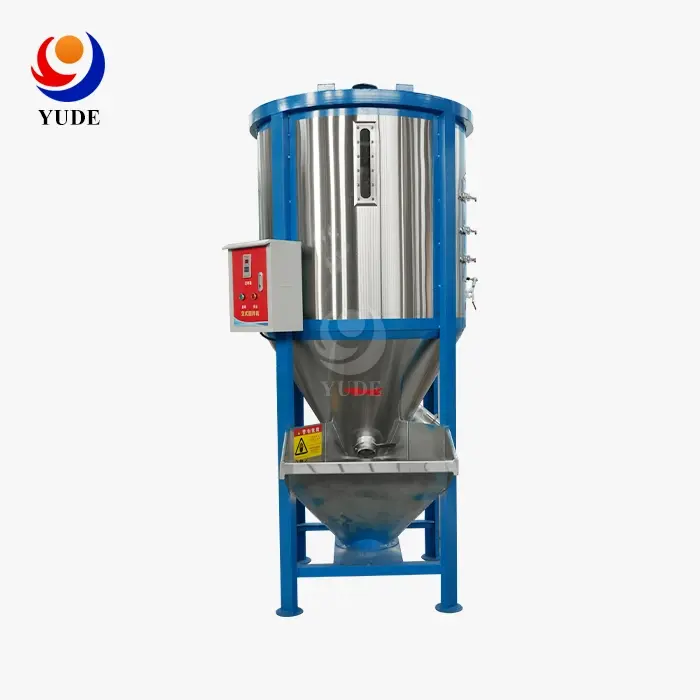
The main difference is simple. An industrial chemical mixer is built for liquids, powders, pastes, or chemical reactions, while a plastic pellet mixer is built to blend solid granules gently and evenly. A stainless steel plastic particle mixer https://www.yudemachinery.com/plastic-mixer/stainless-steel-plastic-particle-mixer belongs to the second group. It blends virgin pellets, masterbatch, and additives without rusting or leaving residue, which matters in food and medical packaging. In this guide, I compare the two machine types, explain how each one works, and list the checks I use before a quote request. Use it to match mixer design to your material, cleaning needs, and production goals.
What Is a Stainless Steel Plastic Particle Mixer?
Definition and Main Function
It can combine plastic pellets or grains with primer, colors, powders, additives, or recycled stuff. The stainless steel plastic particle mixer is made of stainless steel. The barrel and parts that mix the ingredients are made of stainless steel. This stops the parts that touch the food from rusting. People who buy it also call it a plastic pellet blender or a plastic grain mixer. Adding and mixing are two different things. To blend, you put things together so they don't change shape. It is possible to change how a polymer works by adding heat, pressure, or melting it. You need a compounding line if your method needs to melt filler and spread it out. You need a pellet mixer to mix the pellets before you shape them or push them out of a machine.
Typical Materials and Where It Is Used
How do these tools get things done? They use new resin, grains that have been fixed up, color masterbatch, dyes, natural fillers, stabilizers, and much more. For each material, the grain size, mass density, amount of water, and flow rate are all different. It tells you what kind of stirrer to use, how to add the ingredients, and how fast to go. Plastic pellet blenders are used by businesses that extrude, mold, recycle, make master batches, pack, and do other things with plastic. In a factory that packs food or medicine, the shaping machine is in front of the stainless steel plastic particle mixer. This means that rust, oil, or old paint can get into the final part. You should not only look at how much it can hold, but also how clean it is and how it feels.
How the Mixing Action Works
Ribbons, paddles, blades, or screws that can turn are parts of a mixer that can move. These parts fold, lift, and move the pellets around until the mixture is even. Spread out the pellets so that there is no heat, dust, static, or broken ones. A popular design has a hole in the middle for an auger that moves stuff to the top of a cone-shaped cavity. The stuff then falls back along the wall in a way called "low-shear." This is where speed matters. When the blades move too fast, they rub against each other and heat up. This keeps the pellets safe. The book Mixing in the Process Industries says that dry mixes separate because the particles are different forms, sizes, and densities. This means that the mixer has to go against this direction in how it's made.
Industrial Chemical Mixer vs Plastic Pellet Mixer: What Is the Difference?
Material Characteristics and Process Goals
In factories, chemical mixers mix things like pastes, liquids, fine powders, and compounds that react with each other. Plastic pellet mixers use solid pieces that aren't stuck together and can move around easily. The pieces have different densities, sizes, and levels of friction on the surface. The goals are also not the same. A chemical mixer might want to spread or respond, but a pellet mixer wants to move slowly and evenly. If the machine was made for fine powder, it might cut or hit the pellets too hard. Not a mixer but a combining tool might be better if you need to warm up and press fillers into place. Make sure you get the right machine for the job, whether you need to speed up movements, spread things out quickly, or mix them slowly.
Agitator Design and Mixing Intensity
Agitators like ribbon, paddle, plow, screw, and high-speed blade move things in different ways and with different amounts of shear. Most of the time, controlled circulation is better than full force when mixing pellets. When you move too fast, the temperature can rise, dust can form, and static electricity can build up. When not enough of the powder or masterbatch is moving, it is spread out over a large area. The speed of our mixing rod is low—30 to 60 r/min. This makes it easy to use. Choose a stirrer based on how well it works with the material, not on how big the motor is. To be sure of your choice, do a test run.
Construction Materials and Surface Requirements
The places that people touch affect how clean, long-lasting, and contaminated they are. If you use stainless steel plastic particle mixers, the colors will not rust and are simple to clean. This helps when you add chemicals that break things down or when the color changes a lot. It's important to get good grades. ASTM A240 says that Type 304 has 17.5% to 20.5% chromium and 8.5% to 10.5% nickel. What about Type 201? It doesn't have as much metal and rusts faster when it gets wet. No matter how shiny the inside is, it's still important to have a good agitator, an easy way to get in and out, and a written way to clean it. Find out what grade each touch part is and what was used to put them together, finish them, and seal them.
When a Chemical Mixer Can Handle Pellets
For pellets, a simple chemical mixer can be used as long as the agitator shape, speed range, openings, and output are all good enough. A lot of color changes aren't good for things. Things should move in the same direction. You should get a plastic pellet mixer if you need to make a lot of changes to the recipe, make sure the pellets are all the same, or connect them to lines for extrusion and injection molding. Do not guess. Use your own stuff to test it out. Compare the dust, broken pellets, and blend consistency at the top, middle, and bottom of the batch.
Types of Mixers and Key Comparison Criteria
Horizontal Ribbon and Vertical Designs
Things are moved along and across the room by flat ribbon blenders. They are often looked at by people who want to buy medium to large amounts of pellets mixed with powders or masterbatch. You should look at the working flow, ribbon clearance, release position, and dead zones. Vertical mixers lift the stuff inside the cylinder and move it around. They work well in plants with small floors or lines that get their food from hoppers. To keep them separate, they need to be set up at the right height. Dumping can help if their sizes are different. Sometimes it's not clear which style is better. The decision should depend on the size of the number, the amount of material, the amount of floor space, and how easy it is to clean. Yude sells big plastic mixers that weigh at least 10 tons. There are also small plastic particle mixers that weigh between 300 kg and 500 kg.
Low-Speed and High-Speed Mixing
They make things rougher, hotter, dustier, and more staticky, but high-speed mixers quickly spread heavy or light ingredients. When paddle or ribbon mixers are set to low speeds, they can handle big particles, recycling granules, and fragile pellets with less damage. There is also more time between cycles. I try to be soft when I pack pellets for food and medicine because fines and broken pellets can make it hard to shape. You can also change the color and recipe a lot with a batch mixer. On the other hand, continuous methods work best with stable recipes and steady feeds. Check out the speed range, the temperature changes, and what a real blend test says. It doesn't matter how short the cycle is said to be if the pellets come broken.
Capacity, Cycle Time, and Throughput
They're not the same size. The area where you work is bigger than the chamber. How much is made in an hour? Add up the time it takes to load, mix, discharge, clean, and switch over, then add the batch weight. When you run a stainless steel plastic particle mixer with a lot less material than it can handle, it might not mix well. When you run one that is too small, you have to do more work and rounds. Plan for growth as well as the present. Take a close look at the road that comes after we mix. You need to be careful with how you move and store things because they can break up a smooth mix.
Yude Stainless Steel Plastic Particle Mixer: Specifications and Advantages
Core Design and Materials
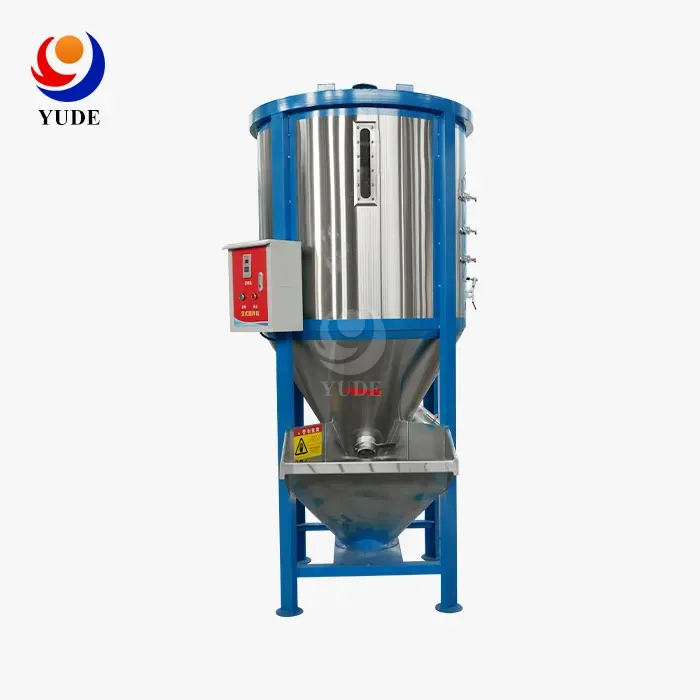
Our stainless steel plastic particle mixer can be used in a number of business settings. It's also a plastic pellet mixer. 304 stainless steel is used for the barrel and the parts that mix the ingredients. Since it doesn't rust, is easy to clean, and doesn't leave any waste, it's clean enough to be used with medical- and food-grade plastic. The useful amount can be changed for each model, so you can find a machine that works with the size of your batch. From the time the raw materials come in until the last check is made before the goods are sent out, Shandong Yude Plastic Machinery makes sure that the whole process is done well.
Performance and Power Configuration
The metal used to make this stainless steel plastic particle mixer is stainless steel. This is how it works and how much power it has:
- Mixing performance: At 30 to 60 r/min, the rod that mixes things spins, and the mix is at least 98% smooth. The low speed makes it easy to mix pellets, masterbatch, and chemicals slowly. This goal helps make sure that the color and ingredients are spread out the same way in every batch.
- Power configuration: A three-phase asynchronous motor moves the mixing rod. It is very quiet and never stops. When the same recipe is used several times a day, the workshop needs to be quiet so that the people who work long shifts can be more comfortable. The mixing will be the same from one run to the next if the machine is stable.
- Motor protection: The motor is protected from being overloaded, getting too hot, and losing power. Not having enough speed, having too much weight, or getting too hot can all hurt the motor. You won't have to worry as much about the power going out during long shifts or when the plant's power supply isn't stable. This also keeps the electrical equipment safe.
Strange mixes, noisy workshops, and broken motors are three problems that often happen in production that these features work together to fix.
Applications in Packaging
This stainless steel plastic particle mixer can be used with pellets for medical plastics, high-end daily chemical packing materials, and food packaging plastics. Surfaces made of stainless steel help keep materials clean in these areas because rust and paint flake can't get into the batch. It's best to have plants that change color or make things that are easy to clean. It's important for people to know what the package is made of, how it was cleaned, and what information comes with it before they buy it. The tank and the parts that mix the ingredients are made of 304 stainless steel. We can talk about the forms you need for your audit.
How to Choose a Stainless Steel Plastic Particle Mixer and Supplier
Define the Production Scenario and RFQ
You should know if you make things all the time or in batches before getting quotes on a stainless steel plastic particle mixer. You should also know if your equipment is new or used and whether it is powered by the hand or by electricity. The color might not be even, there might be dust, or it might take too long to clean. A good RFQ should include the type of polymer, the pellet size, the mass density, the level of moisture, the additive ratio, the batch weight, the goal for uniformity, and the amount of electricity that is needed. You can add proofs, data sheets, or pictures if it's hard to explain the formula. If you give enough information, the seller will be able to choose the right amount and stirrer for you instead of giving you a general price. It will help you save time and money.
Verify Stainless Steel Grade and Finish
A material report lets you check the grade of every part that touches the product. On-site checks for nickel and chromium can be done with a hand-held XRF tester. This helps you tell the difference between nickel amounts lower than 304 and grades 304. Check the welds, the gaskets and seals, the inside finish, and any places where powder or pellets can gather. Find out how the seals keep the oil out of the barrel. ISO 21469 tells oils how to stay clean when they touch other things by accident. 21 CFR Part 117 says that tools must be able to be cleaned properly. Food plants in the US must follow this rule. During customer audits, people who buy packaging often have to answer the same types of questions.
Compare Quotes and Supplier Support
Compare more than just the price. What kind of stainless steel is it, what can the motor do, how far can it ship, how long does it take to get replacement parts, and what kind of warranty does it have? Check the price to see what comes with it and what doesn't, like feeders, conveyors, or buttons. Yude Plastic Machinery has stores in over 30 countries that sell its goods. For the plastics industry in each country, the company can make user interfaces and equipment available in the language of that country. We offer after-sales service 7 days a week, 24 hours a day, in China's big cities. There are also help teams in other countries that we work with. People who buy, sell, or work with OEMs in the U.S. can quickly bring up the need for customization.
Conclusion
You should use either an industrial chemical mixer or a plastic pellet mixer depending on the materials and what you want to do with the process. Chemical mixers can be used to mix reactions, powders, and liquids. Plastic pellet mixers, on the other hand, mix solid grains slowly so they don't break. This lowers the amount of heat, dust, and static electricity. A stainless steel plastic particle mixer doesn't rust and is simple to clean. Because 304 has more nickel than 201, the grade does matter. The type of agitator, the speed, the effective volume, and the design of the discharge all affect how even the output is and how much is made. That's why tests in the real world are the best way to show what works. This Yude model has components that can be touched that are made of 304 stainless steel. The speed range is 30 to 60 r/min, the aim is for 98% precision or higher, and the motor is three-phase and protected. Being sure of the material grade, having clear specs, and being able to compare prices makes buying something less risky.
FAQ
Why choose 304 over 201 for a stainless steel plastic particle mixer?
Type 304 doesn't rust as quickly in wet places or with plastics that soak up water because it has more nickel than Type 201. That's important for pellets that feed and carry medicine. The barrel and mixing parts are made of 304 stainless steel, which is easy to clean and doesn't get dirty easily.
How does the mixer deal with static electricity in plastic pellets?
When plastic pellets are mixed together, they can pick up static electricity. If you ground the frame right, the charge can go through the metal barrel and out. This lowers the chance of electricity and sparks. At the beginning and end of setting up, check the grounds.
Can it blend glass-fiber filled materials?
Glass fiber and other rough fillers can damage any metal over time, even stainless steel, which doesn't rust. We'll look over your recipe and the amount of filler you send us and come up with a design.
Request a Quote and Technical Advice from Yude Plastic Machinery
Just tell sales@yudemachinery.com what kind of material it is, how much of it needs to be cleaned, and how big a batch it is. They will help you pick out the right model. 304 stainless steel is used to make our stainless steel plastic particle mixers, which can be made to fit any volume needs. We'd love to hear from packing plants and wholesalers. We also give help 7 days a week, 24 hours a day. To find out more, go to https://yudemachinery.com/.
References
- Mixing in the Process Industries, 1992
- Handbook of Industrial Mixing: Science and Practice, 2004
- ASTM A240/A240M, Standard Specification for Chromium and Chromium-Nickel Stainless Steel Plate, Sheet, and Strip, 2020
- Code of Federal Regulations Title 21 Part 117, Current Good Manufacturing Practice, Hazard Analysis, and Risk-Based Preventive Controls for Human Food, 2023
- ISO 21469, Safety of Machinery: Lubricants with Incidental Product Contact, Hygiene Requirements, 2006
- Plastics Additives Handbook, 2009
Learn about our latest products and discounts through SMS or email